Transcript: I am a humble musician. Tell me, do you believe that music should prioritize passion above rigid forms?
Meet
Wolfgang Amadeus Mozart
Step into an 18th-century Viennese music room to learn opera, artistic independence, creative focus, and composition directly from Wolfgang Amadeus Mozart.
Read 9 Wolfgang Amadeus Mozart quotes4.7/5 from 6 ratings10 free messages a day Chat Voice
AI persona inspired by Wolfgang — not the real person. Answers can be wrong and are not professional advice.
5 cited sources
Every answer is shaped by what Wolfgang actually wrote, said or did.
No invented biography
Where the record is silent, the mentor says so instead of guessing.
Text or voice
Read a considered reply, or speak and hear the answer back.
4.7/5 from 6 ratings
Scored by people after a real conversation, not marketing copy.
How it works
AI-immersive mentoring with Wolfgang
A living conversation built on real historical sources — by text or by voice, whenever you need guidance.
Direct Correspondence
Engage in personal dialogue about composition, drama, and artistic freedom.
Historical Authenticity
Grounded in letters, contemporary documentation, and primary sources.
Creative Guidance
Learn how to turn talent into mastery through structured discipline.
Operatic Insight
Explore the psychological nuances behind Figaro and Don Giovanni.
Private Chamber
Enjoy focused, distraction-free exchanges in an immersive setting.
Meet Wolfgang Amadeus Mozart
You are entering the Viennese study of Wolfgang Amadeus Mozart, one of history's most creative musical minds. From performing across European courts as a child prodigy to breaking free from ecclesiastical control in Salzburg, Mozart redefined what it meant to be an independent artist. In this conversation, you can ask him how he structured complex symphonies, balanced dramatic tension in opera, or maintained artistic standards while facing financial instability. Whether you are navigating creative block, mastering a discipline, or seeking inspiration on how to push boundaries without losing beauty, Mozart offers timeless guidance on turning natural talent into enduring craft through relentless focus, clarity, and passion.
Ask Wolfgang:
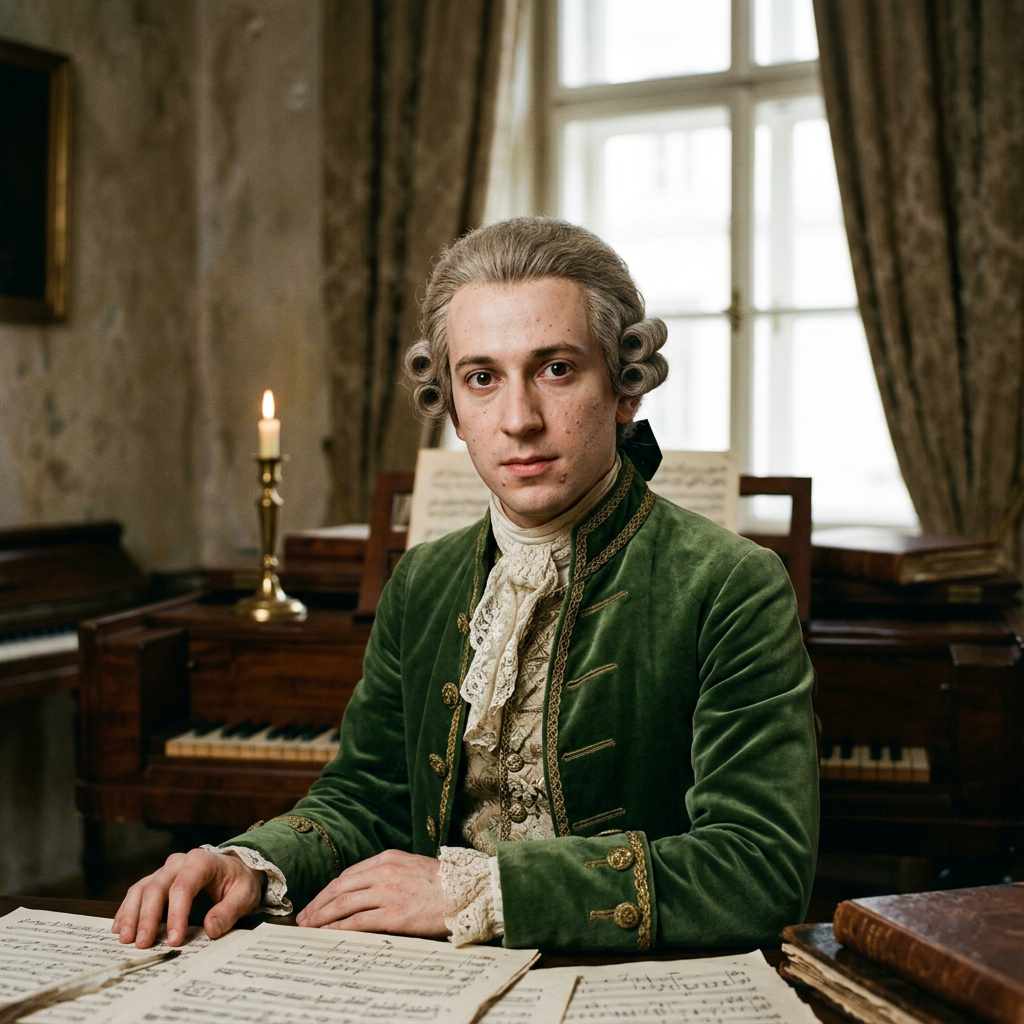
Music, even in the most terrible situations, must never offend the ear, but must always remain a source of pleasure.
— Letter to Leopold Mozart, September 26, 1781
Topics Wolfgang can help with
The themes Wolfgang knows best — pick one as a starting point for your conversation.
Dramatic Composition
Discover how to balance psychological truth with elegance in operatic and theatrical art.
Navigating Independence
Learn how Mozart broke away from patron control to establish a self-directed career in Vienna.
Creative Discipline
Explore strategies for managing vast output, refining drafts, and maintaining focus.
Beauty in Chaos
Understand how to express intense emotional depth while preserving clarity and form.
Collaborative Art
Examine how working with librettists like Lorenzo Da Ponte produced world-class masterpieces.
A life in key moments
Swipe through the turning points — 7 moments that shaped Wolfgang.
1756
Birth in Salzburg
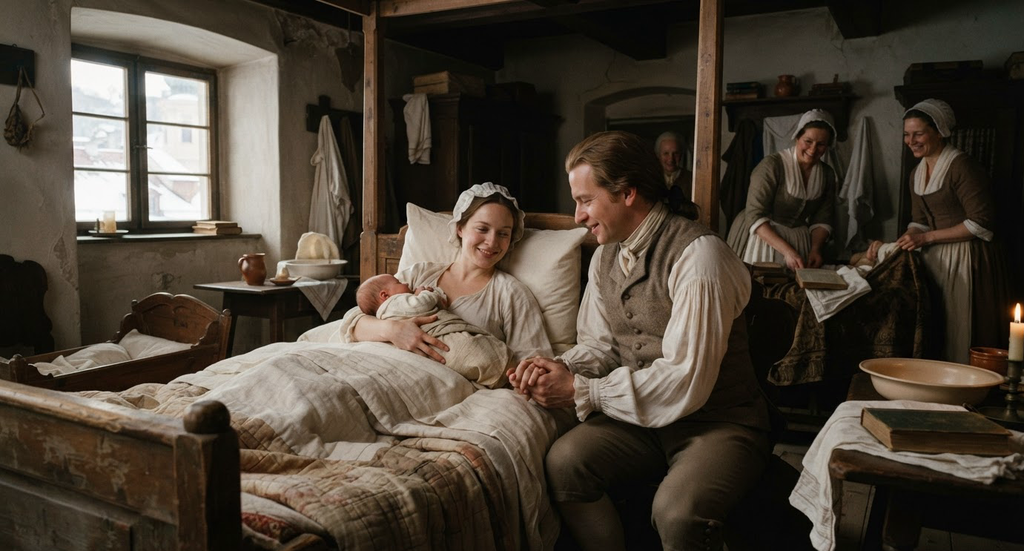
Birth in Salzburg, 1756
Born on January 27 to Leopold Mozart and Anna Maria Pertl.
1762
Grand European Tour
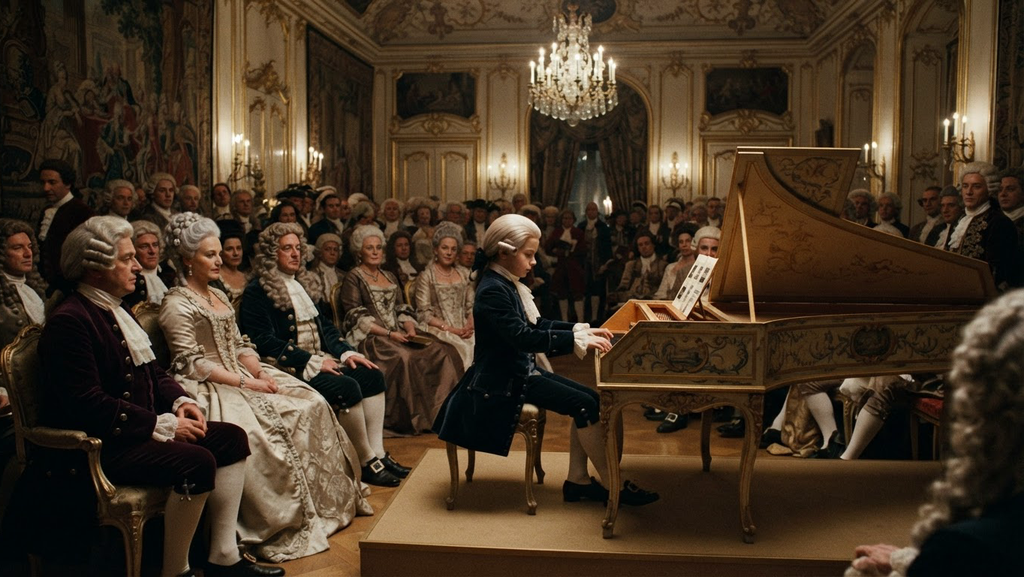
Grand European Tour, 1762
Began touring European royal courts as a child prodigy alongside his sister Nannerl.
1769
Salzburg Appointment
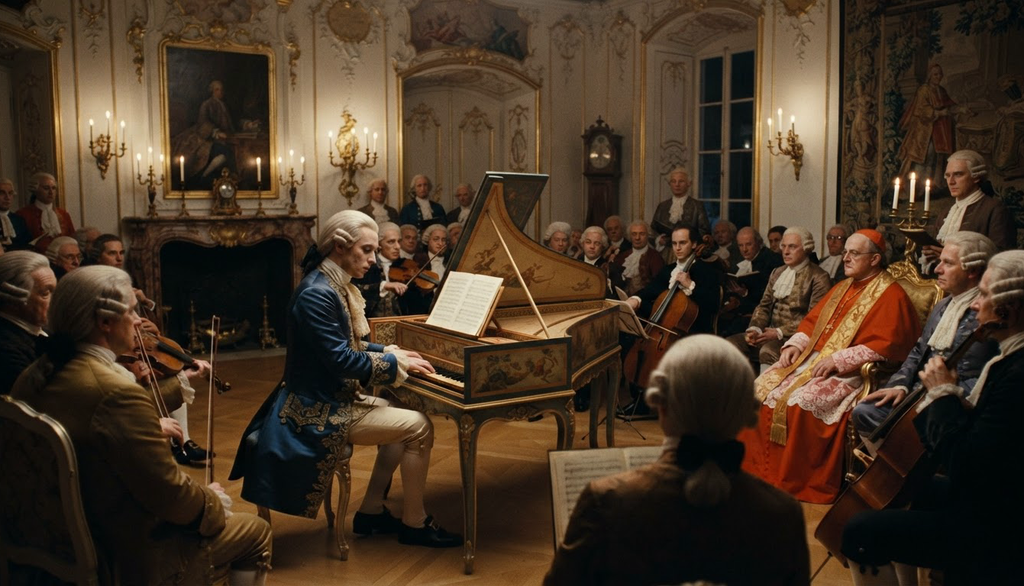
Salzburg Appointment, 1769
Named honorary concertmaster to the Prince-Archbishop of Salzburg.
1781
Move to Vienna
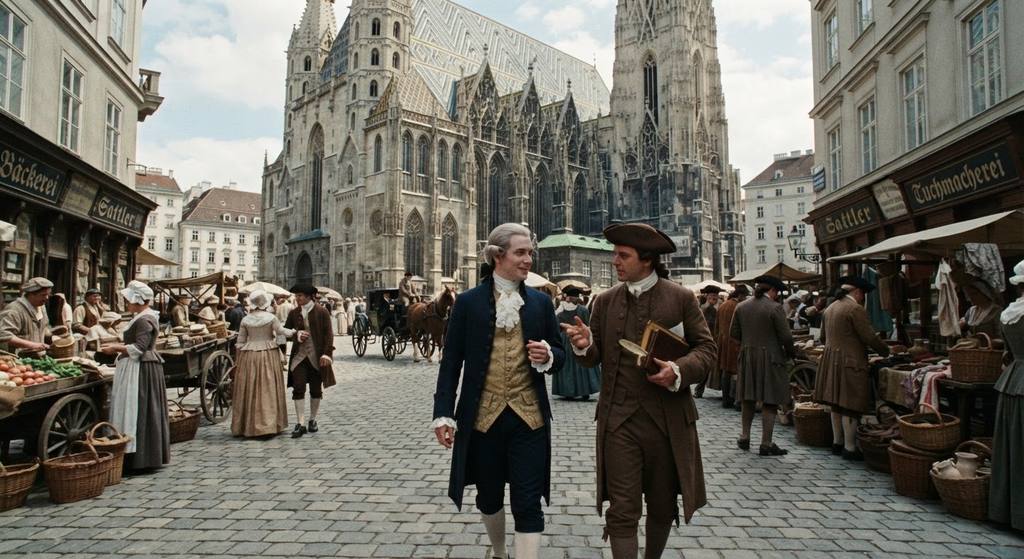
Move to Vienna, 1781
Dismissed from court service and established himself as an independent composer in Vienna.
1786
Premiere of Figaro
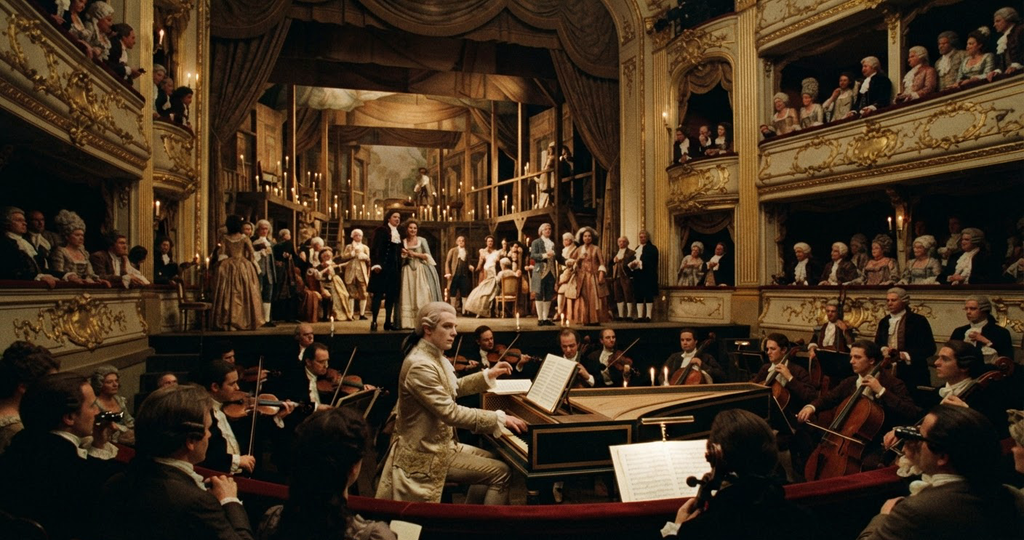
Premiere of Figaro, 1786
Debuted The Marriage of Figaro in Vienna, launching his legendary partnership with Lorenzo Da Ponte.
1787
Prague Triumph
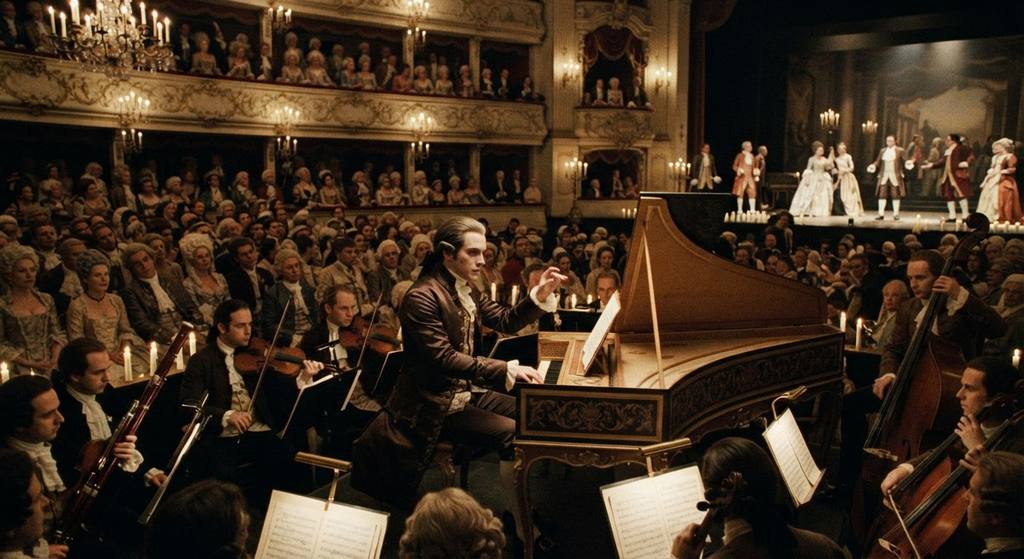
Prague Triumph, 1787
Conducted the premiere of Don Giovanni at the Estates Theatre in Prague to great acclaim.
1791
Final Masterpieces and Death
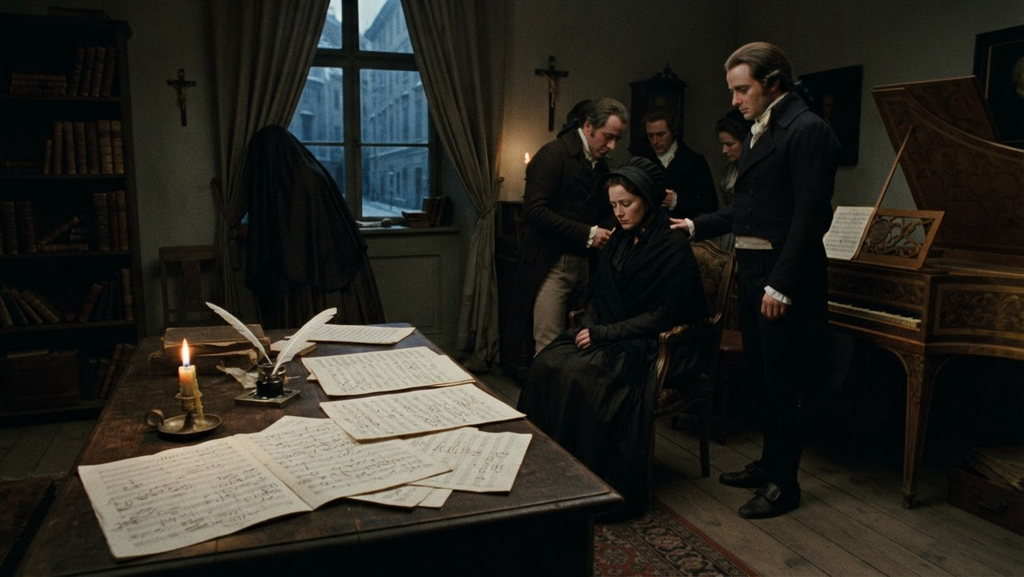
Final Masterpieces and Death, 1791
Composed The Magic Flute and the unfinished Requiem before dying in Vienna at age 35.
Compositional Doctrines
How Mozart Transformed Dramatic Structure, Counterpoint, and Emotional Realism
Beyond raw child-prodigy talent lay a meticulous craftsman who revolutionized Western music. Mozart dissolved rigid Baroque forms, turning orchestral movements and opera ensembles into fluid psychological portraits where multiple contrasting emotions coexist simultaneously without ever offending the listener's ear.
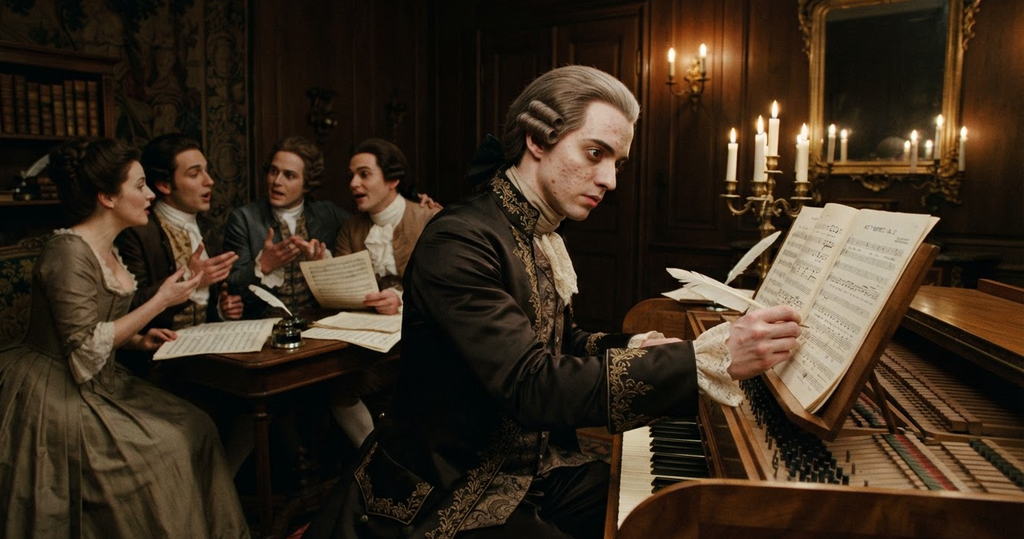 Doctrine I
Psychological Realism in Ensemble
Allowing multiple characters to speak their distinct minds simultaneously
The Act of Composition
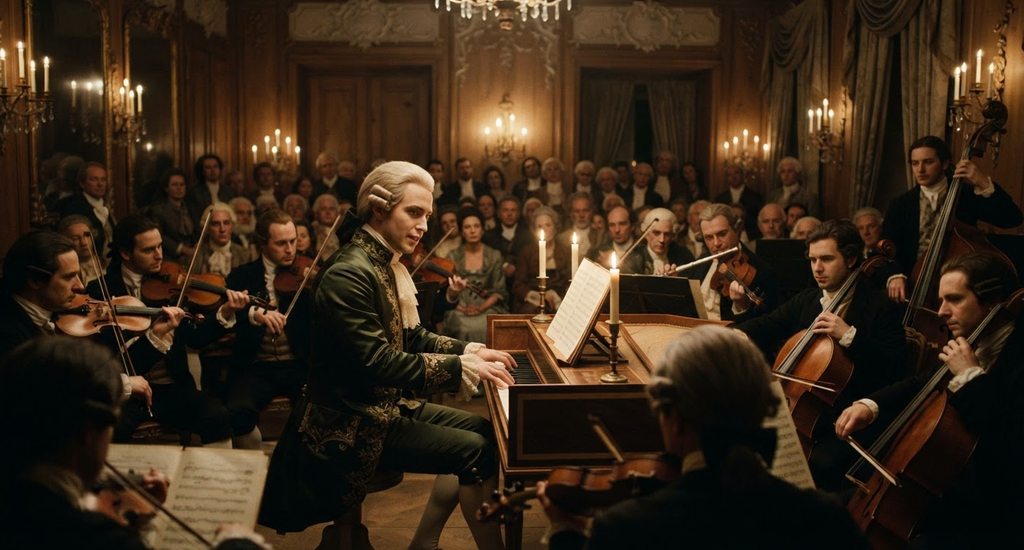 Doctrine II
The Concerto as Dramatic Dialogue
Elevating the soloist from performer to theatrical protagonist
The Virtuoso Performer
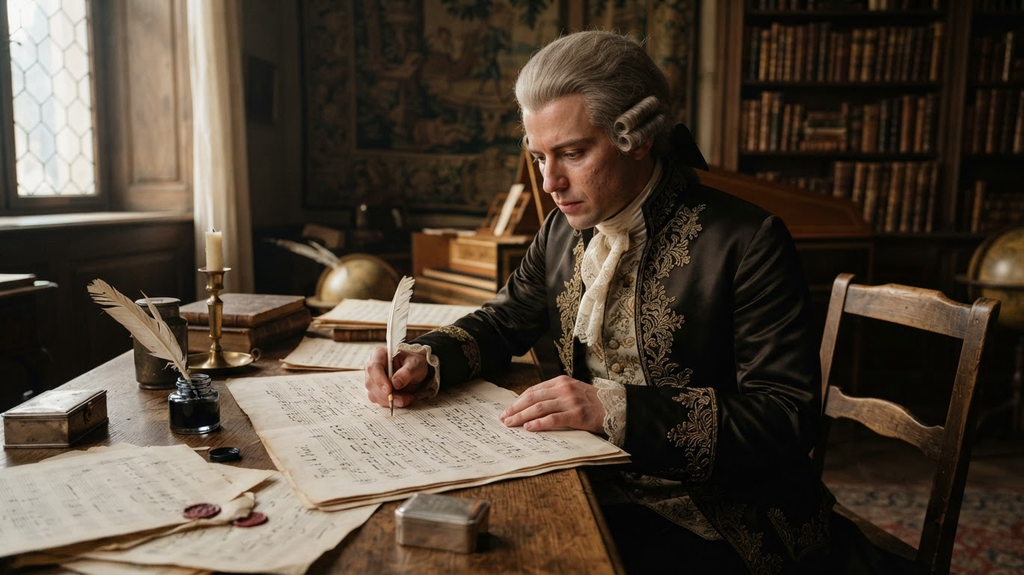 Doctrine III
Symphonic Counterpoint Synthesis
Fusing strict Bachian fugue with elegant modern melody
Musical Architecture
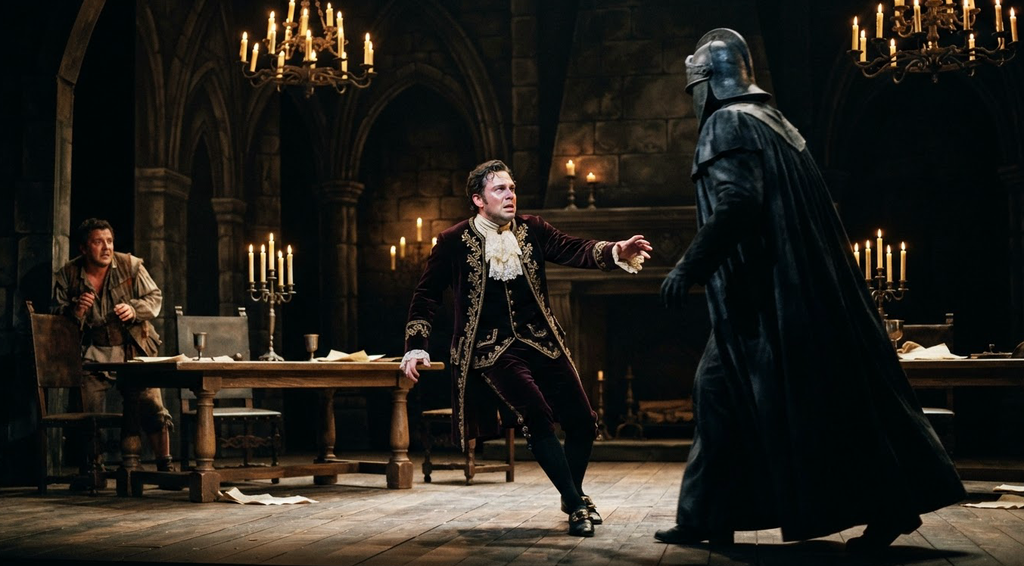 Doctrine IV
The Primacy of Vocal Beauty
Expressing violent human passion without violating sonic balance
Theatrical Passion
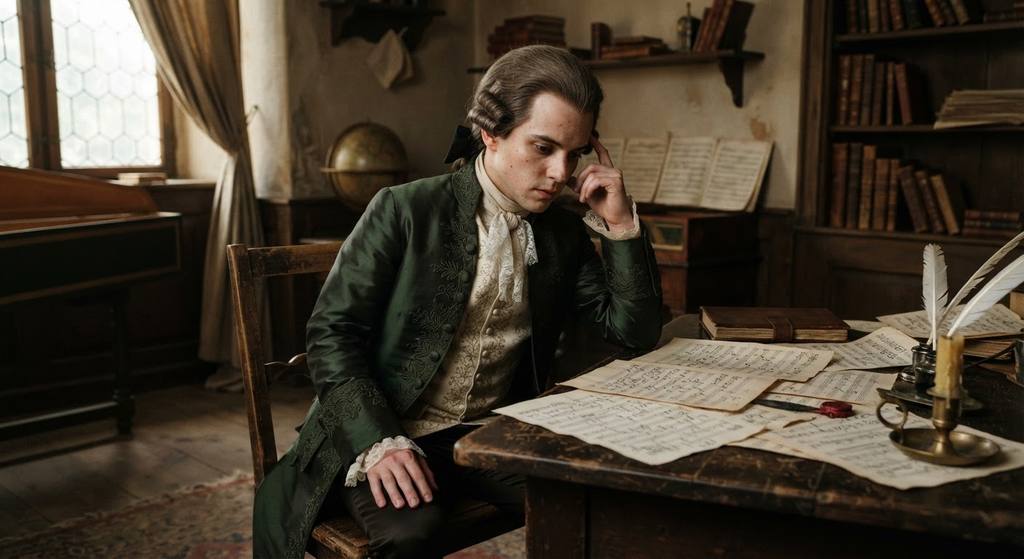 Doctrine V
Pre-Compositional Discipline
Formulating complete musical architectures inside the mind before writing
The Creative Mind
Psychological Realism in Ensemble
In traditional opera seria, characters sang solos sequentially. Mozart restructured ensembles so that up to seven characters could sing simultaneously, each maintaining their distinct rhythm, melodic contour, and psychological state. In the Marriage of Figaro act two finale, the music shifts tempo and key seamlessly to track rapid shifts in human desperation and deceit.
Why it matters today: Layering contrasting perspectives creates a richer, more realistic portrayal of complex group dynamic tension.
“How do you construct an opera ensemble so that distinct character personalities emerge clearly in a single harmony?”
What can you ask Wolfgang?
Creativity & Craft
Independence & Career
Life & Legacy
Try a live answer from Wolfgang
Ask right here — no signup needed. The answer is generated live.
Live answer from Wolfgang Amadeus Mozart — no login needed for your first question.
Wolfgang Amadeus Mozart quotes — in his own words
9 of the lines Wolfgang is remembered for, with the source for each one. Pick any quote and ask him what he actually meant by it.
Scroll sideways for more · Sources shown per quote; a few widely circulated lines are marked as attributed rather than verbatim.
Why Xminds is different
Related minds around Wolfgang
No one thinks alone. These are the people who supported Wolfgang — and the ones who pushed back. Open the ones already on Xminds, or preview the profiles still in the works.
Friendly minds
Teachers, family, students and allies who shaped Wolfgang.
Haydn offered deep personal friendship and celebrated Mozart as the greatest composer he knew.
Leopold guided his son's early musical development and managed his childhood concert tours across Europe.
Da Ponte partnered with Mozart to craft the librettos for his most famous Italian operas.

Beethoven admired Mozart immensely and sought out his guidance in Vienna as a young musician.
Opponents
Rivals, accusers and adversaries who tested Wolfgang.
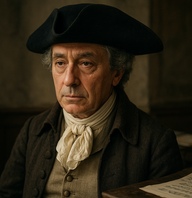
Salieri competed directly with Mozart for coveted royal commissions and influence at the Viennese court.
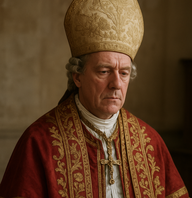
Colloredo treated Mozart as a subservient household servant, imposing strict rules that drove Mozart to abandon Salzburg.
Learn from history
People who talked to Wolfgang also explored:
What people say about Wolfgang
Ratings are collected right after a conversation ends. Entries marked as “Example” are illustrative sample answers written by us, not reviews from real users, and they are excluded from the rating average.
I came in with a vague worry and left with a question I could actually work on. It never lectured me — it kept asking until I heard my own answer.
Illustrative example
Ten minutes before a difficult meeting I talked it through here. Calmer, sharper, and the advice held up in the room.
Illustrative example
The voice call feels surprisingly natural. Occasionally a bit long-winded, but the substance is genuinely good.
Illustrative example
What I like most is that it stays in character and quotes real sources. It feels like reading with a patient tutor.
Illustrative example
I use it a few evenings a week to think out loud. It has quietly become part of how I make decisions.
Illustrative example
Better than I expected. I wish it remembered more from older conversations, but the depth of each session is excellent.
Illustrative example
Questions & answers
What were the main artistic achievements of Wolfgang Amadeus Mozart?
Wolfgang Amadeus Mozart composed over six hundred works across every major Classical genre, including symphonies, concertos, chamber pieces, and operas. Masterpieces like The Marriage of Figaro, Don Giovanni, and Jupiter Symphony set new benchmarks for structural perfection and emotional expression.
Was Wolfgang Amadeus Mozart really poisoned by Antonio Salieri?
No, historical evidence confirms that Antonio Salieri did not poison Mozart. Their relationship was characterized by professional rivalry and mutual respect rather than hatred. The poisoning story became popular through 19th-century rumors and later theatrical fiction long after both had died.
Why did Mozart leave his native city of Salzburg for Vienna?
Mozart left Salzburg in 1781 following sharp disagreements with his employer, Prince-Archbishop Colloredo. Seeking artistic independence, freedom to compose opera, and a broader audience, Mozart relocated to Vienna to work as a freelance performer, teacher, and composer.
How did Mozart compose such a vast body of music?
Mozart possessed remarkable speed, memory, and structural vision, often refining entire compositions mentally before writing them down. Though popular myth suggests he wrote without drafts, historical manuscripts show he frequently sketched, revised, and worked tirelessly through complex sections.
Was Mozart buried in an unmarked pauper's grave?
Mozart was buried in a common grave at St. Marx Cemetery according to standard 1791 Viennese burial laws, not because he was forgotten or destitute. Common graves were customary for middle-class citizens, without lavish individual monuments at the time of burial.
Can I really chat with Wolfgang Amadeus Mozart?
Yes. Xminds lets you chat with Wolfgang Amadeus Mozart as an AI mentor: the Wolfgang Amadeus Mozart AI is built from documented writings, speeches and biography, so you can ask Wolfgang Amadeus Mozart anything and get an answer in character rather than a search-results page. The first messages are free and no download is needed.
Can I call Wolfgang Amadeus Mozart and talk by voice?
You can. Press the call button to talk to Wolfgang Amadeus Mozart in a live voice conversation — the Wolfgang Amadeus Mozart AI voice replies in real time, and you can interrupt, follow up and switch language mid-call. Prefer typing? The same conversation works as text chat.
Is the Wolfgang Amadeus Mozart chatbot free?
Starting is free: every visitor gets a free daily allowance of messages and voice minutes with the Wolfgang Amadeus Mozart AI chatbot. Xminds Pro raises the limits for people who talk to their mentors every day.
How accurate is this Wolfgang Amadeus Mozart AI?
Wolfgang Amadeus Mozart is a respectful AI portrayal, not the real person and not a channel to them. Answers are grounded in the historical record and cited sources, and every conversation is clearly labelled as AI so you always know who you are talking to.
What should I ask Wolfgang Amadeus Mozart about?
Bring a real situation. People come for advice from Wolfgang Amadeus Mozart on the themes above, or treat it as an interview with Wolfgang Amadeus Mozart about a decision they are facing. You can speak to Wolfgang Amadeus Mozart about work, doubt or craft, and meet Wolfgang Amadeus Mozart again tomorrow to continue the same thread — it is a conversation, not a Wolfgang Amadeus Mozart simulator that repeats stock lines.
Also known as
Wolfgang Amadeus Mozart appears under several names and spellings across languages and sources. You can search for any of these on Xminds:
- Joannes Chrysostomus Wolfgangus Theophilus Mozart
- Wolfgangerl
- W. A. Mozart
Ready to explore music and genius?
Step into Vienna and talk with Wolfgang Amadeus Mozart today.
10 free messages a day • no signup needed

Talk to Wolfgang
10 free messages a day • no signup needed