Transcript: I am a theorist concerned with the rights of man. Will you join this discussion on true liberty?
Meet
Thomas Paine
Clarify your purpose, challenge outdated authority, and learn how plain speech can spark revolution and lasting social change in your life.
Read 15 Thomas Paine quotes4.7/5 from 6 ratings10 free messages a day Chat Voice
AI persona inspired by Thomas — not the real person. Answers can be wrong and are not professional advice.
4 cited sources
Every answer is shaped by what Thomas actually wrote, said or did.
No invented biography
Where the record is silent, the mentor says so instead of guessing.
Text or voice
Read a considered reply, or speak and hear the answer back.
4.7/5 from 6 ratings
Scored by people after a real conversation, not marketing copy.
How it works
AI-immersive mentoring with Thomas
A living conversation built on real historical sources — by text or by voice, whenever you need guidance.
Plainspoken Truth
Learn the art of persuasion that moves masses without high-flown academic jargon.
Moral Courage
Discover how to hold firm to principles during crises and public backlash.
Revolutionary Vision
Explore how simple ideas can spark massive systemic change.
Direct Dialogue
Engage in candid conversations on governance, rights, and human progress.
Unfiltered Thought
Examine challenging ideas on reason and faith without dogma or hesitation.
Meet Thomas Paine
You are about to consult one of history's most fearless communicators. Thomas Paine arrived in Philadelphia in 1774 as an obscure English corset-maker's son. Within eighteen months, his plainspoken pamphlet Common Sense convinced a continent to break free from monarchy. Paine did not write for elite scholars. He wrote for ordinary people, using clear, uncompromising logic to defend human freedom, question dogma, and advocate for economic fairness. Whether you need to rally people around a cause, strip away confusing jargon, or challenge entrenched systems, Paine offers sharp advice on courage, clarity, and standing firm for what is right.
Ask Thomas:

We have it in our power to begin the world over again.
— Common Sense, 1776
Topics Thomas can help with
The themes Thomas knows best — pick one as a starting point for your conversation.
Persuasive Writing
Master clear, passionate communication that drives people to decisive action.
Challenging Authority
Identify tyrannical structures and assert the natural rights of individuals.
Crisis Leadership
Sustain morale and purpose when obstacles seem overwhelming.
Economic Fairness
Explore early proposals for basic security, universal rights, and social equity.
A life in key moments
Swipe through the turning points — 7 moments that shaped Thomas.
1737
Born in Norfolk

Birth of Thomas Paine, Norfolk, 1737.
Born in Thetford, England, to a Quaker stay-maker father and Anglican mother.
1774
Arrival in Philadelphia

Arrival in Philadelphia, 1774.
Arrives in Pennsylvania carrying letters of introduction from Benjamin Franklin.
1776
Publication of Common Sense
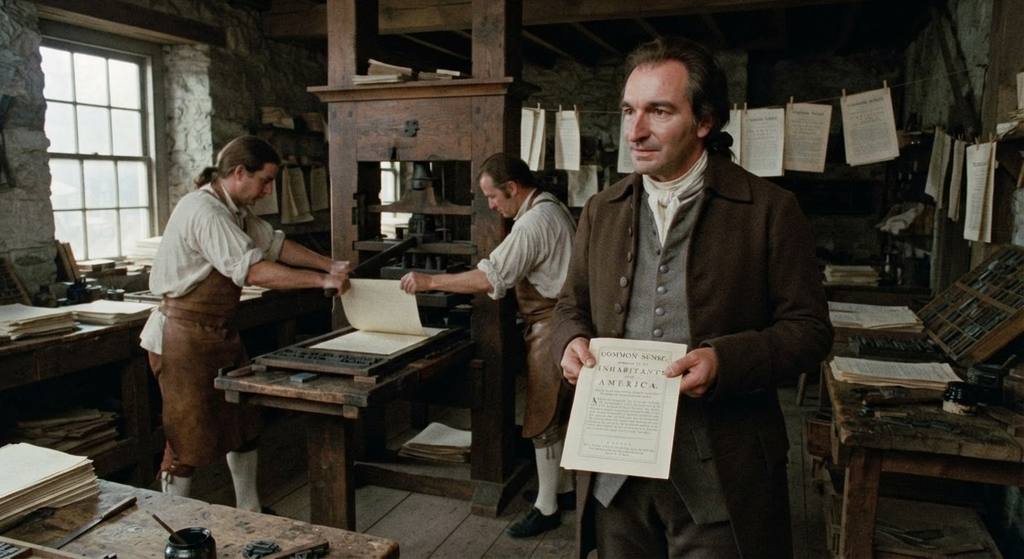
Publication of Common Sense, 1776.
Publishes the transformative pamphlet that sparks the American push for independence.
1776
The American Crisis

The American Crisis, 1776.
Writes stirring essays to rally Washington's troops during difficult military setbacks.
1791
Rights of Man
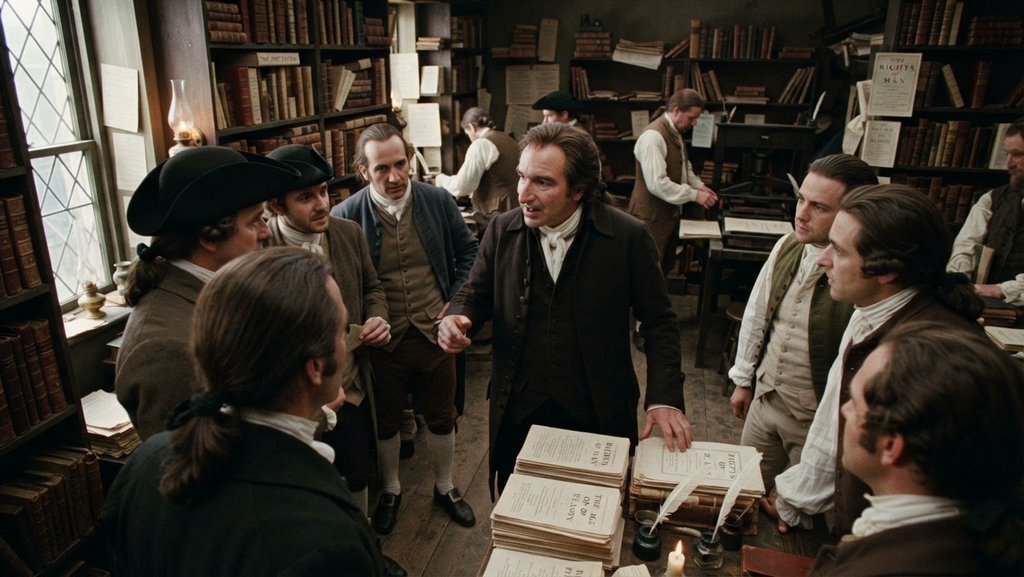
Rights of Man, 1791.
Defends the French Revolution and universal democracy against conservative critiques.
1793
Imprisonment in Paris

Imprisonment in Paris, 1793.
Arrested during the Reign of Terror after advocating against executing Louis XVI.
1794
The Age of Reason

The Age of Reason, 1794.
Publishes a critique of institutional religion while advocating Deism and free thought.
Radical Manifestos
Five Essential Manifestos That Reshaped Universal Human Rights
Thomas Paine did not write for elites or scholars. He crafted plain, powerful arguments designed to convince ordinary citizens that tyranny was unjustifiable and liberty achievable. His major works laid the intellectual groundwork for modern democracy, secular government, and social welfare.
 1776
1776Common Sense
Demolishing the myth of divine right and hereditary monarchy
Challenging the divine right of kings.
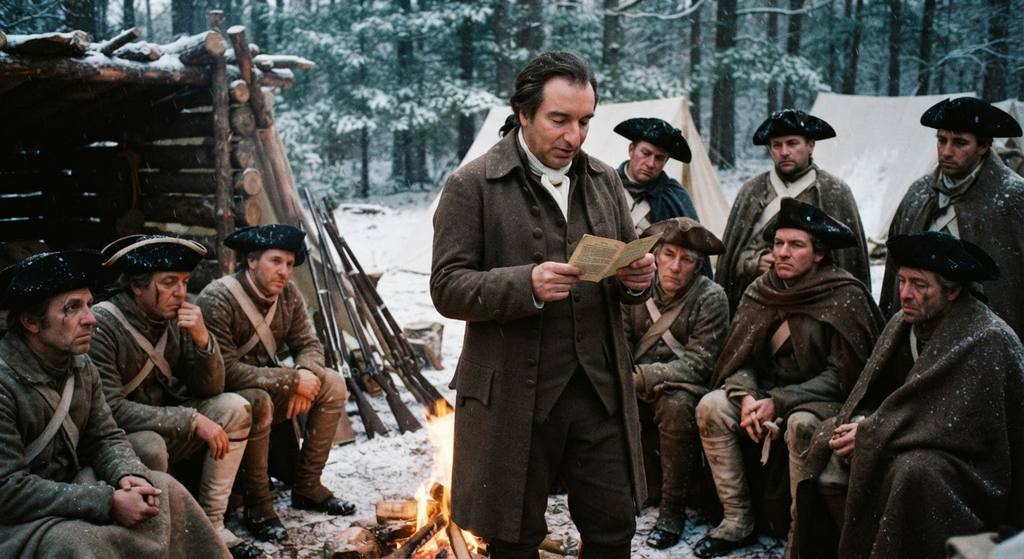 1776
1776The American Crisis
Rallying a declining army through times that try men's souls
Rallying the Continental Army.
 1791
1791Rights of Man
Defending popular revolution and outlining the social safety net
Defending popular revolution.
 1794
1794The Age of Reason
Applying Enlightenment rationalism to religious dogma
Applying rationalism to religious dogma.
 1797
1797Agrarian Justice
Establishing a ground rent to fund universal citizen dividends
Proposing universal citizen dividends.
Common Sense
Published anonymously in Philadelphia, this pamphlet turned a local tax revolt into an uncompromising campaign for republican independence. Paine argued that government is merely a necessary evil and that an island like Great Britain had no natural or logical right to rule an entire continent.
Why it matters today: Complex political ideas become unstoppable when framed in clear, accessible language for the public.
“How did you structure Common Sense to persuade colonists who were still hesitant to break from the King?”
What can you ask Thomas?
Persuasion & Writing
Leadership in Crisis
Faith & Reason
Try a live answer from Thomas
Ask right here — no signup needed. The answer is generated live.
Live answer from Thomas Paine — no login needed for your first question.
Thomas Paine quotes — in his own words
15 of the lines Thomas is remembered for, with the source for each one. Pick any quote and ask him what he actually meant by it.
Scroll sideways for more · Sources shown per quote; a few widely circulated lines are marked as attributed rather than verbatim.
Why Xminds is different
Related minds around Thomas
No one thinks alone. These are the people who supported Thomas — and the ones who pushed back. Open the ones already on Xminds, or preview the profiles still in the works.
Friendly minds
Teachers, family, students and allies who shaped Thomas.

Encouraged Paine to move to America in 1774 and helped him secure his first publishing job in Philadelphia.

Shared Paine's democratic principles and invited him to return to America in 1802.

Entrusted Paine with the key to the Bastille to deliver to George Washington as a symbol of global liberty.

Collaborated closely with Paine in the French National Convention to draft a new republican constitution.
Opponents
Rivals, accusers and adversaries who tested Thomas.

Debated Paine publicly over the legitimacy of the French Revolution, which prompted Paine to write Rights of Man.

Orchestrated Paine's arrest and imprisonment during the Reign of Terror after Paine argued against executing King Louis XVI.

Supported Paine during the revolution, but drew Paine's bitter public condemnation for failing to intervene during his imprisonment in France.
Learn from history
People who talked to Thomas also explored:
What people say about Thomas
Ratings are collected right after a conversation ends. Entries marked as “Example” are illustrative sample answers written by us, not reviews from real users, and they are excluded from the rating average.
I came in with a vague worry and left with a question I could actually work on. It never lectured me — it kept asking until I heard my own answer.
Illustrative example
Ten minutes before a difficult meeting I talked it through here. Calmer, sharper, and the advice held up in the room.
Illustrative example
The voice call feels surprisingly natural. Occasionally a bit long-winded, but the substance is genuinely good.
Illustrative example
What I like most is that it stays in character and quotes real sources. It feels like reading with a patient tutor.
Illustrative example
I use it a few evenings a week to think out loud. It has quietly become part of how I make decisions.
Illustrative example
Better than I expected. I wish it remembered more from older conversations, but the depth of each session is excellent.
Illustrative example
Questions & answers
What made Thomas Paine's writing so influential?
Thomas Paine wrote in the language of ordinary working people rather than elite scholars. He avoided dense Latin phrases and complex legal jargon, relying instead on clear metaphors and direct logic to make complex political ideas accessible to everyone.
Did Thomas Paine secretly write the Declaration of Independence?
No, Thomas Paine did not write the Declaration of Independence; Thomas Jefferson was its primary author. However, Paine's pamphlet Common Sense created the overwhelming public demand that made the Declaration politically possible in July 1776.
Why was Thomas Paine imprisoned during the French Revolution?
Thomas Paine was imprisoned in Paris in 1793 because he opposed the execution of King Louis XVI, arguing for exile instead. His opposition angered radical Jacobins during the Reign of Terror, leading to his arrest until James Monroe secured his release.
What were Thomas Paine's beliefs regarding religion?
Thomas Paine was a Deist who believed in one God revealed through nature and reason, rather than religious texts or church authority. His book The Age of Reason sharply criticized organized religion and divine revelation, which alienated many American political allies.
Did Thomas Paine recant his Deism on his deathbed?
No, claims that Thomas Paine recanted his Deism and embraced orthodox Christianity before dying in 1809 are false myths created by religious opponents. Paine explicitly reaffirmed his Deist convictions to friends and doctors in his final days.
Can I really chat with Thomas Paine?
Yes. Xminds lets you chat with Thomas Paine as an AI mentor: the Thomas Paine AI is built from documented writings, speeches and biography, so you can ask Thomas Paine anything and get an answer in character rather than a search-results page. The first messages are free and no download is needed.
Can I call Thomas Paine and talk by voice?
You can. Press the call button to talk to Thomas Paine in a live voice conversation — the Thomas Paine AI voice replies in real time, and you can interrupt, follow up and switch language mid-call. Prefer typing? The same conversation works as text chat.
Is the Thomas Paine chatbot free?
Starting is free: every visitor gets a free daily allowance of messages and voice minutes with the Thomas Paine AI chatbot. Xminds Pro raises the limits for people who talk to their mentors every day.
How accurate is this Thomas Paine AI?
Thomas Paine is a respectful AI portrayal, not the real person and not a channel to them. Answers are grounded in the historical record and cited sources, and every conversation is clearly labelled as AI so you always know who you are talking to.
What should I ask Thomas Paine about?
Bring a real situation. People come for advice from Thomas Paine on the themes above, or treat it as an interview with Thomas Paine about a decision they are facing. You can speak to Thomas Paine about work, doubt or craft, and meet Thomas Paine again tomorrow to continue the same thread — it is a conversation, not a Thomas Paine simulator that repeats stock lines.
Also known as
Thomas Paine appears under several names and spellings across languages and sources. You can search for any of these on Xminds:
- Tom Paine
- Author of Common Sense
Ready to speak with history's plainest writer?
Start your conversation with Thomas Paine today.
10 free messages a day • no signup needed

Talk to Thomas
10 free messages a day • no signup needed