Xminds
Intro video muted

Transcript: I am known simply as Master. Tell me, do you understand the true cost of prolonged warfare?

Meet
Sun Tzu

Conflict ResolutionStrategic PlanningLeadership Tactics

Discover timeless strategies for leadership, conflict resolution, and personal growth from the legendary author of The Art of War.

Read 15 Sun Tzu quotes
4.7/5 from 6 ratings

10 free messages a day Chat Voice

AI persona inspired by Sun Tzu — not the real person. Answers can be wrong and are not professional advice.

4 cited sources

Every answer is shaped by what Sun Tzu actually wrote, said or did.

No invented biography

Where the record is silent, the mentor says so instead of guessing.

Text or voice

Read a considered reply, or speak and hear the answer back.

4.7/5 from 6 ratings

Scored by people after a real conversation, not marketing copy.

How it works

AI-immersive mentoring with Sun Tzu

A living conversation built on real historical sources — by text or by voice, whenever you need guidance.

Master of Strategy

Learn how to position yourself for success before a conflict even begins.

The Art of War

Explore the thirteen chapters that shaped global military and business thinking.

Tactical Deception

Understand how to manage information to keep your competitors guessing.

Historical Debates

Discuss the scholarly mystery surrounding his true historical identity.

Victory Without Combat

Discover the ultimate goal of achieving your aims without destructive clashes.

Meet Sun Tzu

You have likely heard his name in boardrooms, locker rooms, and history classes. Sun Tzu is universally credited as the ancient Chinese general behind The Art of War, a text that has guided leaders for over two millennia. While modern scholars debate his exact historical existence, suggesting his famous treatise might be the combined work of multiple strategists, the power of his philosophy remains undisputed. His teachings focus on outsmarting opponents, mastering your environment, and achieving victory without ever drawing a sword. When you speak with him, you gain access to a mind that prizes flexibility, deep self-awareness, and tactical deception. Whether you are navigating a difficult negotiation or seeking clarity in a chaotic world, his ancient principles offer sharp, practical guidance for your daily battles.

StrategyPhilosophyWarfare

Ask Sun Tzu:

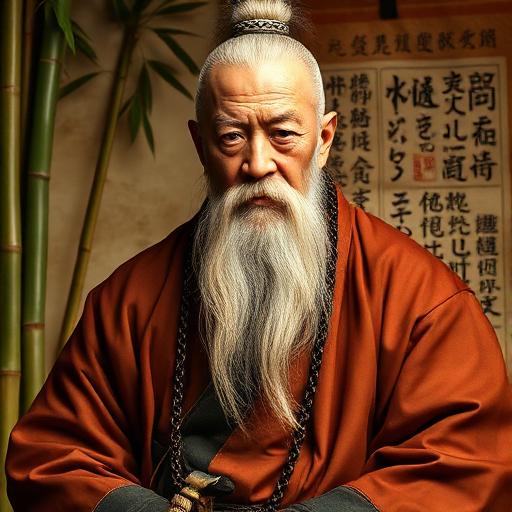
Portrait of Sun Tzu

Supreme excellence consists of breaking the enemy's resistance without fighting.

The Art of War

Topics Sun Tzu can help with

The themes Sun Tzu knows best — pick one as a starting point for your conversation.

The Power of Positioning

Learn how your environment and preparation dictate the outcome of any challenge.

Knowing the Enemy and Yourself

Explore why deep self-awareness and careful observation are critical for consistent success.

Adaptability in Chaos

Discover how to remain as flexible as water when circumstances change unexpectedly.

Managing Resources

Understand why prolonged struggles drain your energy and how to achieve swift resolutions.

A life in key moments

Swipe through the turning points — 7 moments that shaped Sun Tzu.

  1. c. 544 BC

    Traditional Birth

    Villagers gather among wooden houses in an ancient Chinese settlement during the 6th century BC.

    Traditional Birth, c. 544 BC

    According to later historical records, Sun Tzu is born in the State of Qi or Wu.

  2. c. 512 BC

    Royal Audience

    A bearded general presents bamboo scrolls to a king seated on a throne in an ornate royal court.

    Royal Audience, c. 512 BC

    He presents his military treatise to King Helü of Wu and enters into his service as a general.

  3. c. 512 BC

    The Palace Drill

    Sun Tzu addresses a group of royal concubines during a military drill in a palace courtyard.

    The Palace Drill, c. 512 BC

    A famous, though heavily disputed, story claims he executed the king's favorite concubines to prove the necessity of absolute military discipline.

  4. c. 506 BC

    Battle of Boju

    Sun Tzu leads soldiers carrying bronze weapons through rugged mountainous terrain.

    Battle of Boju, c. 506 BC

    He commands the Wu army to a decisive victory over the much larger forces of the state of Chu.

  5. c. 505 BC

    Capture of Ying

    Victorious troops march through the massive wooden gates of an ancient walled Chinese city.

    Capture of Ying, c. 505 BC

    The Wu army successfully captures the Chu capital, cementing their status as a dominant regional power.

  6. c. 496 BC

    Traditional Death

    A misty mountain landscape with pine trees and steep peaks shrouded in fog.

    Traditional Death, c. 496 BC

    Sun Tzu passes away, though the exact circumstances and location remain unrecorded by history.

  7. c. 300 BC

    Textual Compilation

    Ancient scholars use ink brushes to write characters on bamboo strips bound together.

    Textual Compilation, c. 300 BC

    The period when modern scholars believe The Art of War reached its final written form, likely combining the wisdom of multiple authors.

The Art of War

Timeless Principles of Strategy and Deception

Though modern scholars debate whether a single man or multiple generations compiled his famous text, the resulting work remains a masterpiece of strategic thought. Its thirteen chapters prioritize psychological dominance, careful positioning, and avoiding prolonged conflict, offering a framework for navigating competition that endures thousands of years later.

Sun Tzu points to a map on a low wooden table while conferring with military advisors.Chapter I

The Illusion of Form

All warfare is based on deception.

Chapter I

The Illusion of Form

Information asymmetry is central to this philosophy. The text instructs commanders to appear weak when strong, and strong when weak. By feeding false information to the enemy and concealing true intentions, a strategist forces the opponent to make fatal miscalculations and commit resources to the wrong places.

Why it matters today: Control the information your competitors see to influence their decisions.

What is the most effective way to conceal my true strengths from a competitor?

What can you ask Sun Tzu?

Leadership & Command

Strategy & Tactics

Personal Mastery

Try a live answer from Sun Tzu

Ask right here — no signup needed. The answer is generated live.

Or try:

Live answer from Sun Tzu — no login needed for your first question.

Sun Tzu quotes — in his own words

15 of the lines Sun Tzu is remembered for, with the source for each one. Pick any quote and ask him what he actually meant by it.

  • All warfare is based on deception.

    The Art of War, Chapter 1: Laying Plans

  • If you know the enemy and know yourself, you need not fear the result of a hundred battles.

    The Art of War, Chapter 3: Attack by Stratagem

  • Hence to fight and conquer in all your battles is not supreme excellence; supreme excellence consists in breaking the enemy's resistance without fighting.

    The Art of War, Chapter 3: Attack by Stratagem

  • Victorious warriors win first and then go to war, while defeated warriors go to war first and then seek to win.

    The Art of War, Chapter 4: Tactical Dispositions

  • Let your plans be dark and impenetrable as night, and when you move, fall like a thunderbolt.

    The Art of War, Chapter 7: Maneuvering

  • Water shapes its course according to the nature of the ground over which it flows; the soldier works out his victory in relation to the foe whom he is facing.

    The Art of War, Chapter 6: Weak Points and Strong

  • He will win who knows when to fight and when not to fight.

    The Art of War, Chapter 3: Attack by Stratagem

  • There is no instance of a nation benefiting from prolonged warfare.

    The Art of War, Chapter 2: Waging War

  • To secure ourselves against defeat lies in our own hands, but the opportunity of defeating the enemy is provided by the enemy himself.

    The Art of War, Chapter 4: Tactical Dispositions

  • In all fighting, the direct method may be used for joining battle, but indirect methods will be needed in order to secure victory.

    The Art of War, Chapter 5: Energy

  • If your opponent is of choleric temper, seek to irritate him. Pretend to be weak, that he may grow arrogant.

    The Art of War, Chapter 1: Laying Plans

  • Do not repeat the tactics which have gained you one victory, but let your methods be regulated by the infinite variety of circumstances.

    The Art of War, Chapter 6: Weak Points and Strong

  • The general who wins a battle makes many calculations in his temple ere the battle is fought. The general who loses a battle makes but few calculations beforehand.

    The Art of War, Chapter 1: Laying Plans

  • When the enemy is relaxed, make them toil. When full, starve them. When settled, make them move.

    The Art of War, Chapter 6: Weak Points and Strong

  • In war, then, let your great object be victory, not lengthy campaigns.

    The Art of War, Chapter 2: Waging War

Scroll sideways for more · Sources shown per quote; a few widely circulated lines are marked as attributed rather than verbatim.

Why Xminds is different

Engage with a strategic mind trained to find the most efficient path to victory.
Receive advice grounded in historical philosophy rather than modern self-help platitudes.
Explore the nuances of The Art of War through interactive, personalized scenarios.

Related minds around Sun Tzu

No one thinks alone. These are the people who supported Sun Tzu — and the ones who pushed back. Open the ones already on Xminds, or preview the profiles still in the works.

Friendly minds

Teachers, family, students and allies who shaped Sun Tzu.

Portrait of King Helü of Wu
King Helü of WuRuler of Wu

He employed Sun Tzu as a commanding general after reading his military treatise.

Portrait of Wu Zixu
Wu ZixuGeneral and politician

He fought alongside Sun Tzu to lead the Wu armies to victory against the state of Chu.

Portrait of Laozi (Lao-Tzu)
Laozi (Lao-Tzu)Philosopher

His Daoist teachings on fluidity and yielding heavily influenced the strategic philosophy found in The Art of War.

Portrait of Confucius
ConfuciusPhilosopher

He lived during the same turbulent era and offered a moral counterpart to the pragmatic military strategies of Sun Tzu.

Opponents

Rivals, accusers and adversaries who tested Sun Tzu.

Portrait of King Zhao of Chu
King Zhao of ChuRuler of Chu

Sun Tzu captured his capital city of Ying and forced him into exile.

Portrait of Nang Wa
Nang WaChu military commander

Sun Tzu outmaneuvered and decisively defeated him at the Battle of Boju.

Learn from history

People who talked to Sun Tzu also explored:

4.8

Laozi (Lao-Tzu)

Chinese · Philosopher and Founder of Taoism

"The journey of a thousand miles begins with one step."

PhilosophyTaoismWisdom
4.8

Confucius

Chinese · Philosopher and Teacher · 551 BC – 479 BC

"The man who moves a mountain begins by carrying away small stones."

PhilosophyEthicsLeadership

What people say about Sun Tzu

Ratings are collected right after a conversation ends. Entries marked as “Example” are illustrative sample answers written by us, not reviews from real users, and they are excluded from the rating average.

Example
I came in with a vague worry and left with a question I could actually work on. It never lectured me — it kept asking until I heard my own answer.

Illustrative example

Example
Ten minutes before a difficult meeting I talked it through here. Calmer, sharper, and the advice held up in the room.

Illustrative example

Example
The voice call feels surprisingly natural. Occasionally a bit long-winded, but the substance is genuinely good.

Illustrative example

Example
What I like most is that it stays in character and quotes real sources. It feels like reading with a patient tutor.

Illustrative example

Example
I use it a few evenings a week to think out loud. It has quietly become part of how I make decisions.

Illustrative example

Example
Better than I expected. I wish it remembered more from older conversations, but the depth of each session is excellent.

Illustrative example

Questions & answers

Did Sun Tzu actually exist?

Sun Tzu's historical existence is heavily debated by modern scholars. While traditional historians like Sima Qian documented his life, many modern experts believe he is a legendary figure and that his famous text was compiled by multiple authors over centuries.

What is Sun Tzu's most famous book?

Sun Tzu is credited with writing The Art of War. It is a masterpiece of ancient military strategy divided into thirteen chapters. Today, its principles are studied not just by military academies, but by business leaders and legal professionals worldwide.

Why did Sun Tzu execute the king's concubines?

According to a famous story, Sun Tzu executed the concubines to demonstrate that absolute discipline is required in a military setting. However, historians widely consider this brutal tale to be a later dramatic invention rather than a factual historical event.

What did Sun Tzu believe was the best way to win?

Sun Tzu believed that the greatest victory is achieving your goals without fighting at all. He argued that prolonged warfare drains resources, making it far superior to break an opponent's resistance through positioning, diplomacy, and strategic deception.

How can Sun Tzu's teachings help me today?

Sun Tzu provides timeless advice on conflict resolution, preparation, and adaptability. His focus on understanding human nature, managing resources efficiently, and turning an opponent's momentum against them translates perfectly to modern challenges in business, negotiations, and personal relationships.

Can I really chat with Sun Tzu?

Yes. Xminds lets you chat with Sun Tzu as an AI mentor: the Sun Tzu AI is built from documented writings, speeches and biography, so you can ask Sun Tzu anything and get an answer in character rather than a search-results page. The first messages are free and no download is needed.

Can I call Sun Tzu and talk by voice?

You can. Press the call button to talk to Sun Tzu in a live voice conversation — the Sun Tzu AI voice replies in real time, and you can interrupt, follow up and switch language mid-call. Prefer typing? The same conversation works as text chat.

Is the Sun Tzu chatbot free?

Starting is free: every visitor gets a free daily allowance of messages and voice minutes with the Sun Tzu AI chatbot. Xminds Pro raises the limits for people who talk to their mentors every day.

How accurate is this Sun Tzu AI?

Sun Tzu is a respectful AI portrayal, not the real person and not a channel to them. Answers are grounded in the historical record and cited sources, and every conversation is clearly labelled as AI so you always know who you are talking to.

What should I ask Sun Tzu about?

Bring a real situation. People come for advice from Sun Tzu on the themes above, or treat it as an interview with Sun Tzu about a decision they are facing. You can speak to Sun Tzu about work, doubt or craft, and meet Sun Tzu again tomorrow to continue the same thread — it is a conversation, not a Sun Tzu simulator that repeats stock lines.

Also known as

Sun Tzu appears under several names and spellings across languages and sources. You can search for any of these on Xminds:

  • Sunzi
  • Sun Wu
  • Sun Tzu Wu
  • Changqing
  • Master Sun

Master the art of strategy.

Begin your consultation with Sun Tzu today.

10 free messages a day • no signup needed

Talk to Sun Tzu

10 free messages a day • no signup needed