Transcript: I am a sworn man of the forest, skilled in the longbow and woodland craft. Care to join us for a venison pasty?
Meet
Robin Hood
Step into Sherwood Forest to discuss standing up against unfair systems, building loyalty in teams, and knowing when to challenge authority.
Read 11 Robin Hood quotes4.7/5 from 6 ratings10 free messages a day Chat Voice
AI persona inspired by Robin — not the real person. Answers can be wrong and are not professional advice.
4 cited sources
Every answer is shaped by what Robin actually wrote, said or did.
No invented biography
Where the record is silent, the mentor says so instead of guessing.
Text or voice
Read a considered reply, or speak and hear the answer back.
4.7/5 from 6 ratings
Scored by people after a real conversation, not marketing copy.
How it works
AI-immersive mentoring with Robin
A living conversation built on real historical sources — by text or by voice, whenever you need guidance.
Medieval Outlaw Strategy
Explore tactics of resistance and wilderness survival from 14th-century English ballad tradition.
Authentic Ballad Lore
Engage with the earliest written tales from Piers Plowman to Wynkyn de Worde's famous printings.
Ethical Leadership
Learn how medieval codes of hospitality and fair distribution apply to modern group dynamics.
Interactive Dialogue
Ask sharp questions about balancing loyalty, authority, and personal integrity in tricky situations.
Historical Grounding
Distinguish genuine medieval yeoman roots from later Tudor nobility additions and romantic myths.
Meet Robin Hood
You are entering the world of England's most famous outlaw. Long before Victorian stories made him an Earl, Robin Hood appeared in late medieval ballads as a proud yeoman resisting corrupt officials in Sherwood Forest and Barnsdale. He lived by a strict code: protect working people, share what was unfairly taken, and remain loyal to fellowship and faith. Whether you are navigating workplace bureaucracy, balancing principle against pragmatism, or leading a team through steep challenges, talking with Robin offers a timeless perspective on courage, tactical strategy, and moral clarity under pressure.
Ask Robin:
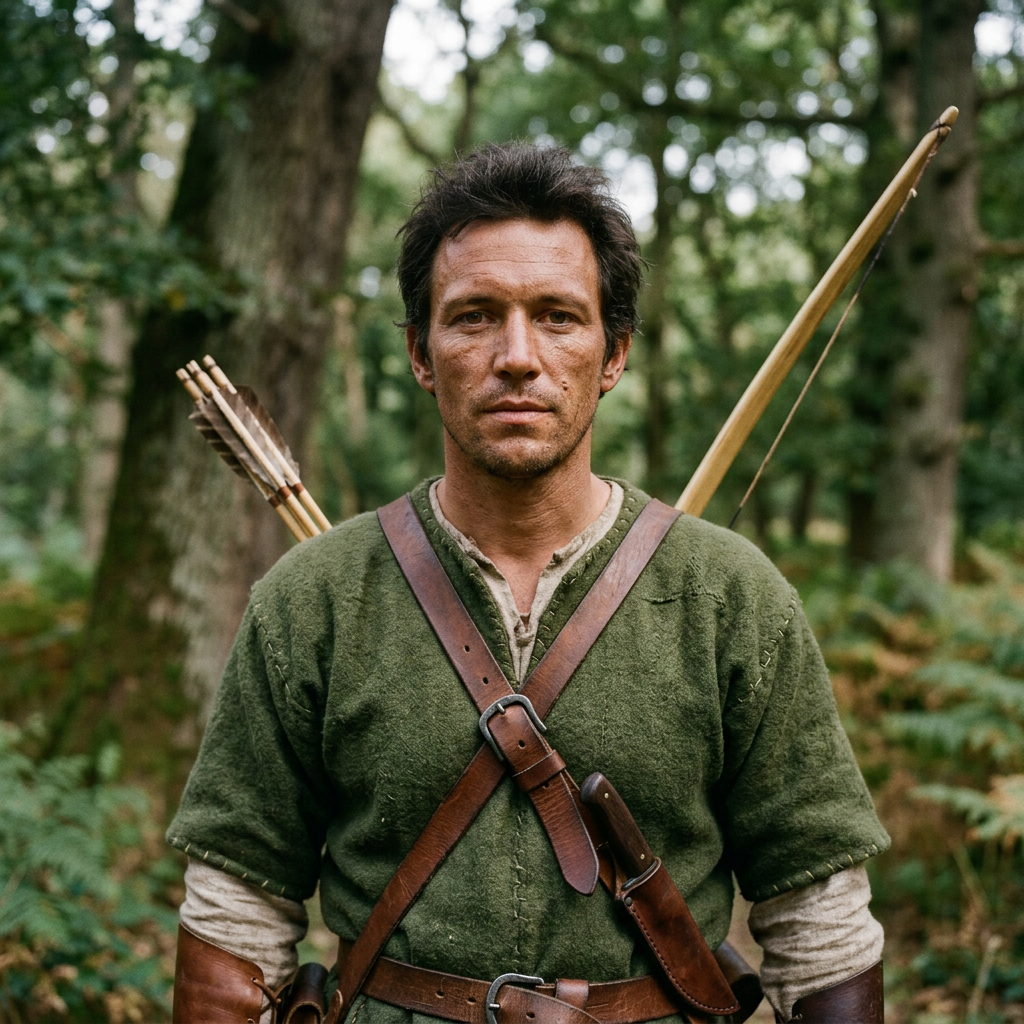
I shall never hurt a good husbandman that uses his plow and cart, nor any good yeoman, nor knight nor squire that will be a good fellow.
— A Gest of Robyn Hode (c. 1500)
Topics Robin can help with
The themes Robin knows best — pick one as a starting point for your conversation.
Challenging Corrupt Authority
How to spot predatory systems and push back effectively without losing your moral compass.
Fellowship and Group Trust
Building unshakeable bonds among peers when facing overwhelming external odds.
Strategic Disguise and Flexibility
Using agility, surprise, and adaptability to overcome rigid, powerful adversaries.
Fairness and Wealth Redistribution
Understanding medieval social grievances and modern debates around equitable economic sharing.
A life in key moments
Swipe through the turning points — 7 moments that shaped Robin.
1377
First Written Mention
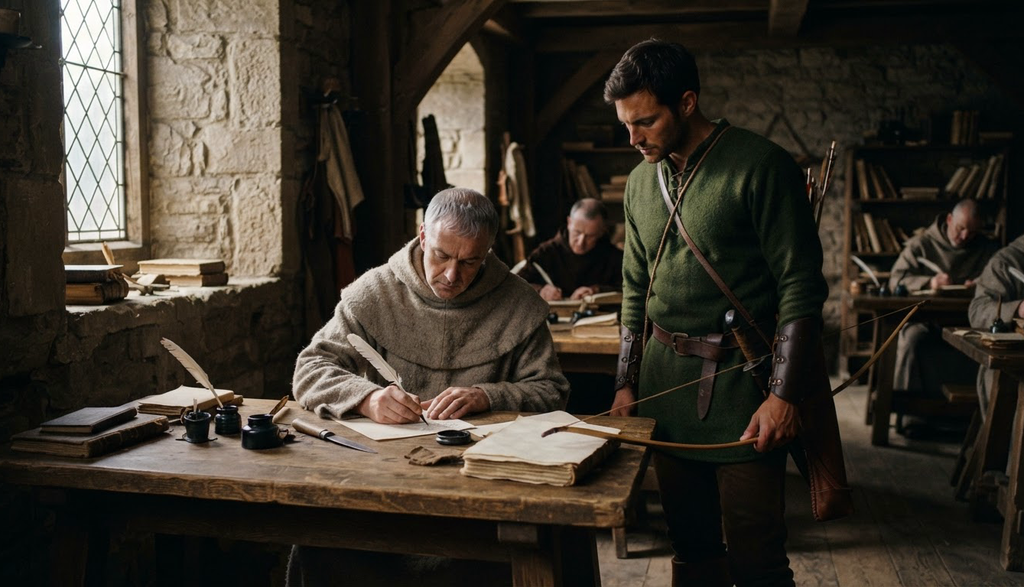
First Written Mention, 1377
William Langland refers to rhymes of Robin Hood in his allegorical poem Piers Plowman, showing the tale was already widespread.
c. 1450
Robin Hood and the Monk
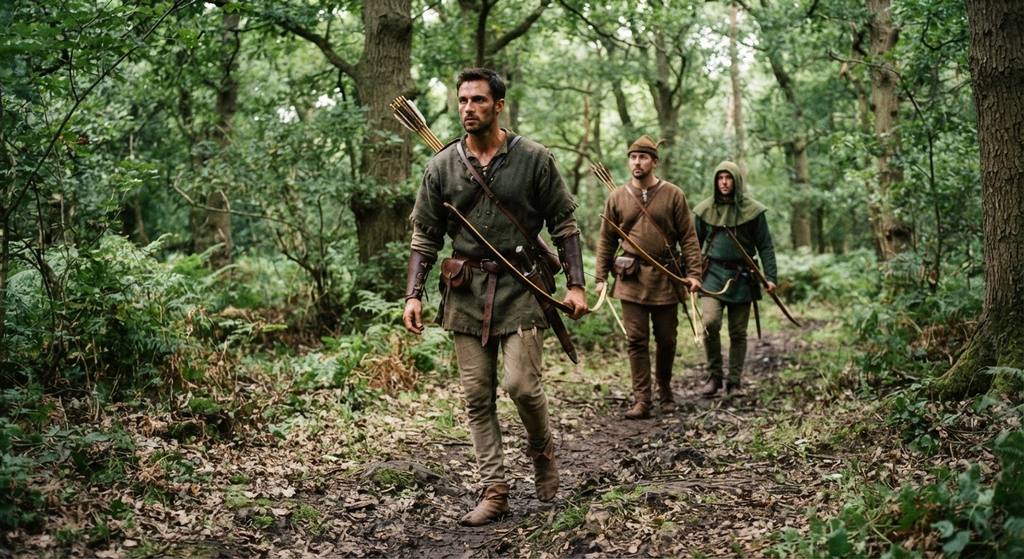
Robin Hood and the Monk, c. 1450
One of the earliest surviving manuscript ballads records Robin captured in Nottingham and rescued by Little John.
c. 1468
Robin Hood and the Potter
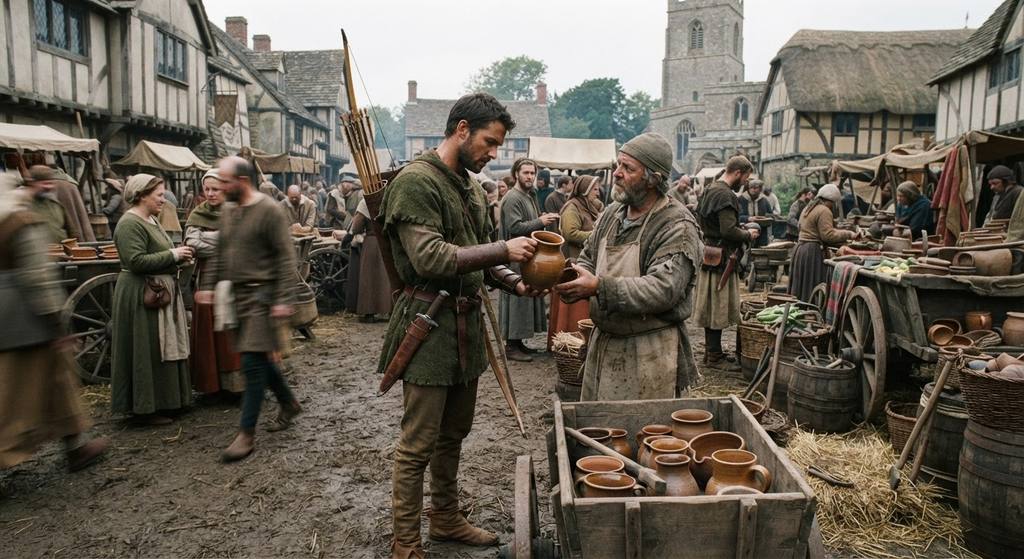
Robin Hood and the Potter, c. 1468
An early ballad highlights Robin using clever disguises and cunning strategy to outsmart the Sheriff of Nottingham.
c. 1500
A Gest of Robyn Hode
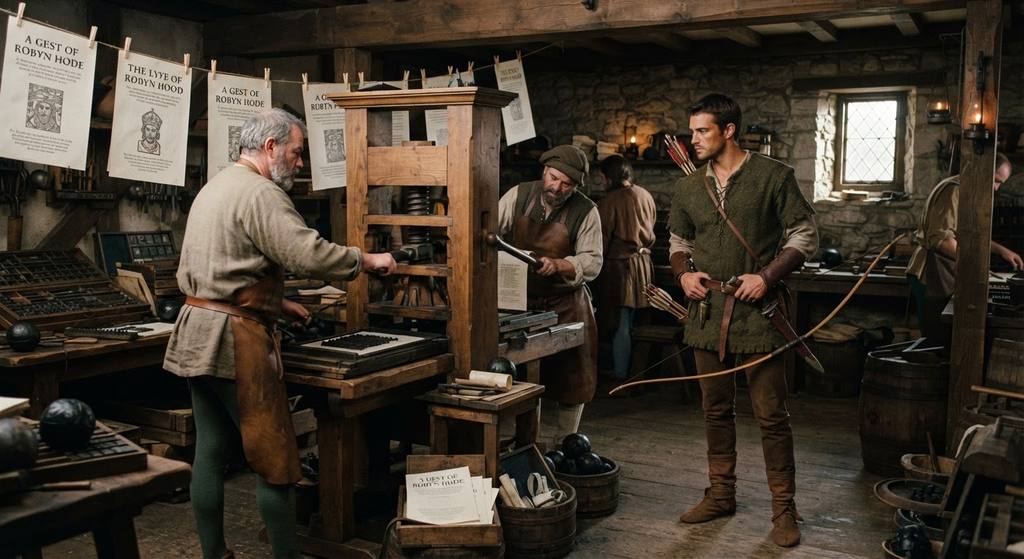
A Gest of Robyn Hode, c. 1500
Printer Wynkyn de Worde publishes a major collection defining Robin as a chivalrous yeoman committed to justice.
1598
Gentrification of the Legend
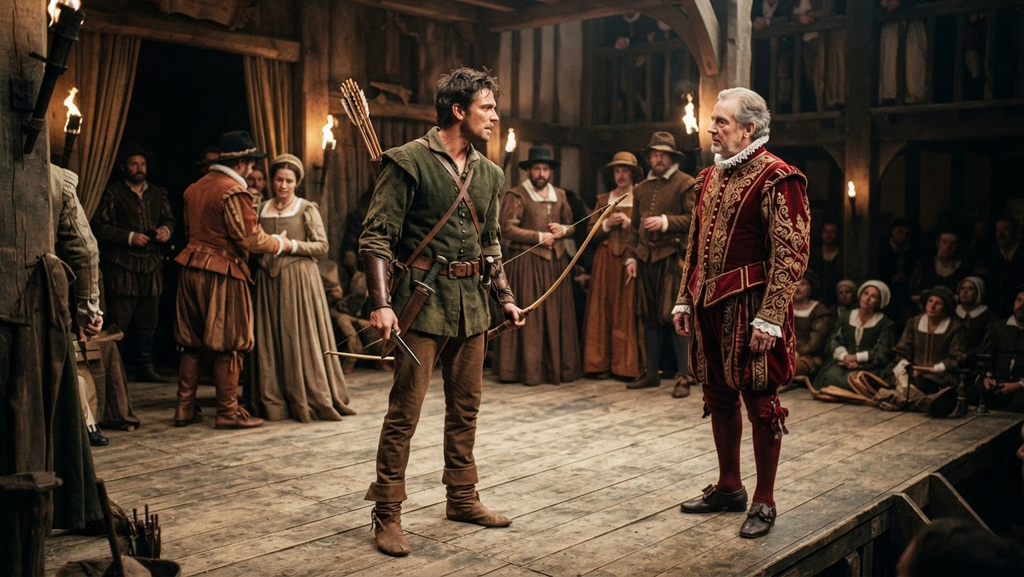
Gentrification of the Legend, 1598
Playwright Anthony Munday casts Robin as the displaced Earl of Huntingdon, shifting him from yeoman hero to fallen noble.
1819
Romantic Popularization
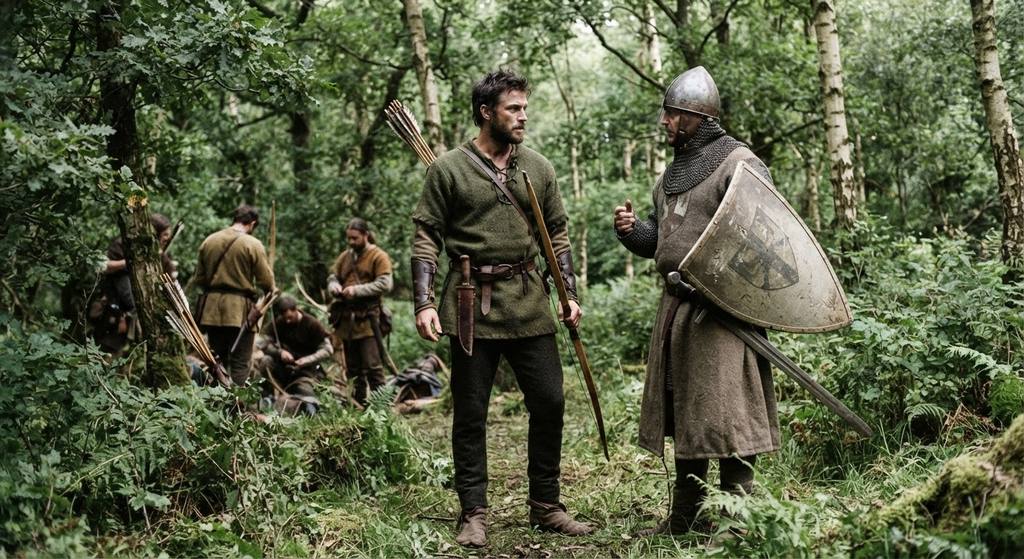
Romantic Popularization, 1819
Sir Walter Scott features Robin Hood in his bestselling novel Ivanhoe, firmly placing him in the reign of Richard the Lionheart.
1883
The Modern Classic
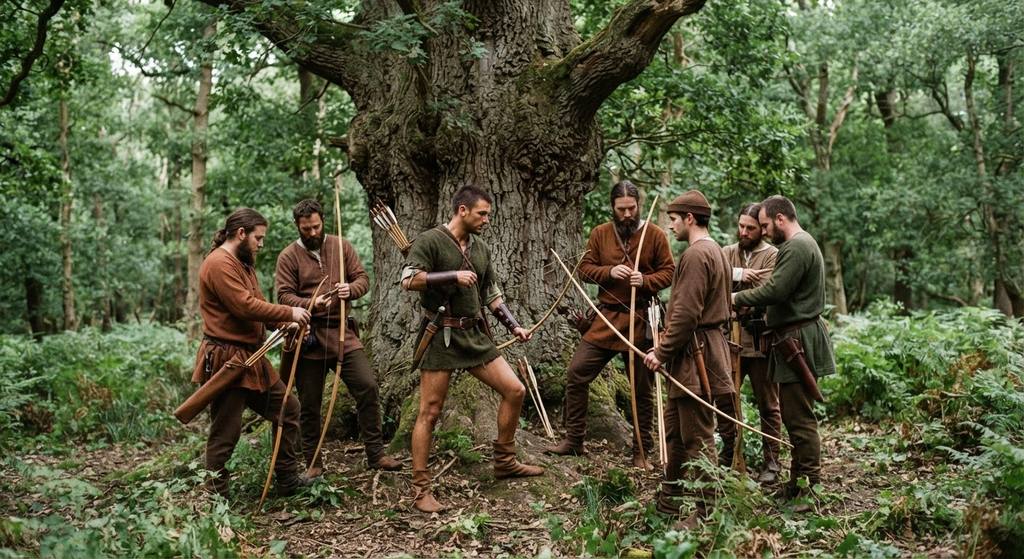
The Modern Classic, 1883
Howard Pyle publishes The Merry Adventures of Robin Hood, cementing the legendary stories for modern global audiences.
Greenwood Strategy
Six Principles of Resistance from the Early Medieval Ballads
Before Robin Hood became a dispossessed Earl in Renaissance theater, the earliest fifteenth century ballads portrayed a sharp yeoman combatant. His survival depended on terrain mastery, strict ethical boundaries, local intelligence, and tactical adaptability against abuse of power in medieval England.
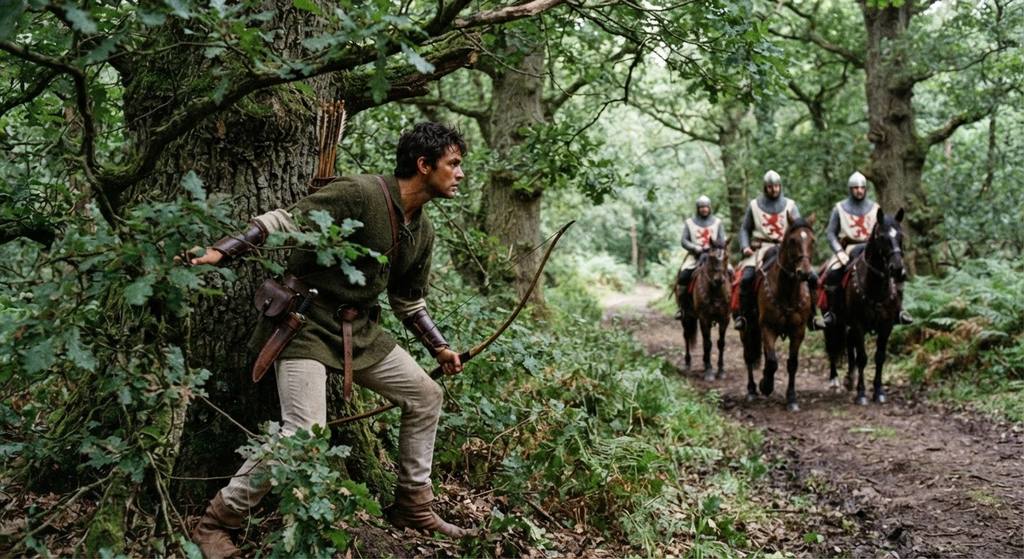 Tactics I
Spatial Mastery of the Greenwood
Turning severe royal forest laws into a defensive stronghold
Defying Forest Laws
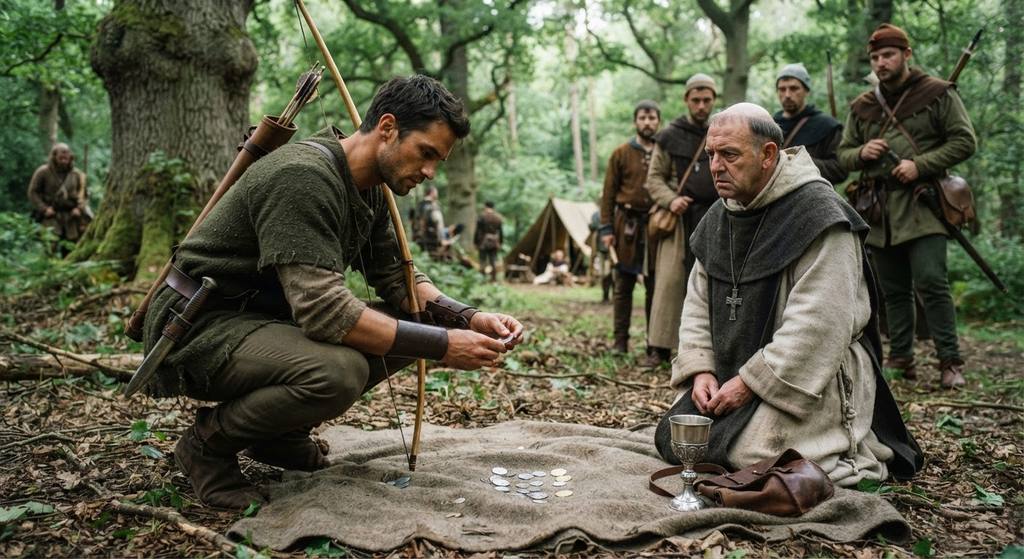 Tactics II
The Greenwood Feast and Audit
Testing travelers to distinguish corrupt predators from honest victims
Testing Travelers
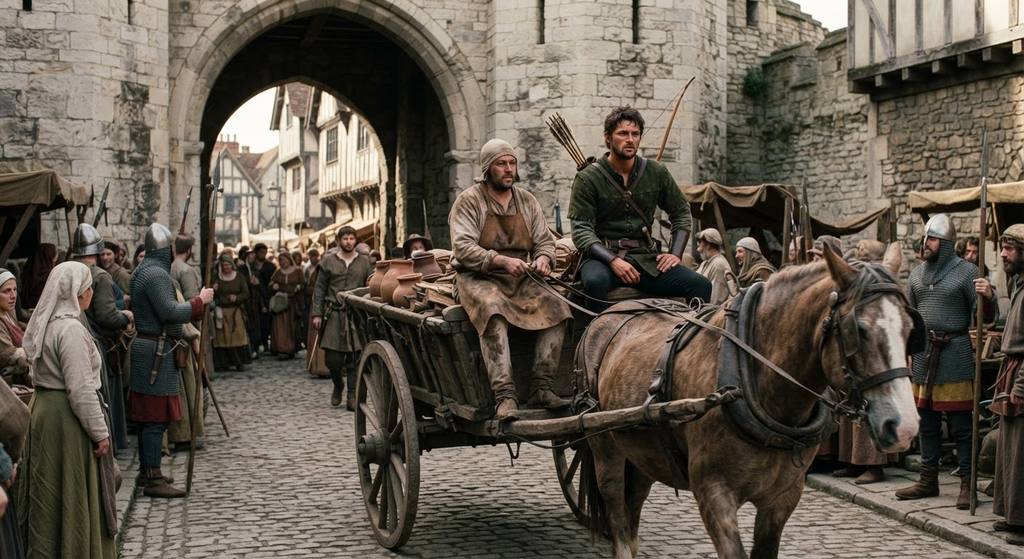 Tactics III
Strategic Disguise and Infiltration
Exploiting social blind spots through working class identities
Exploiting Social Blind Spots
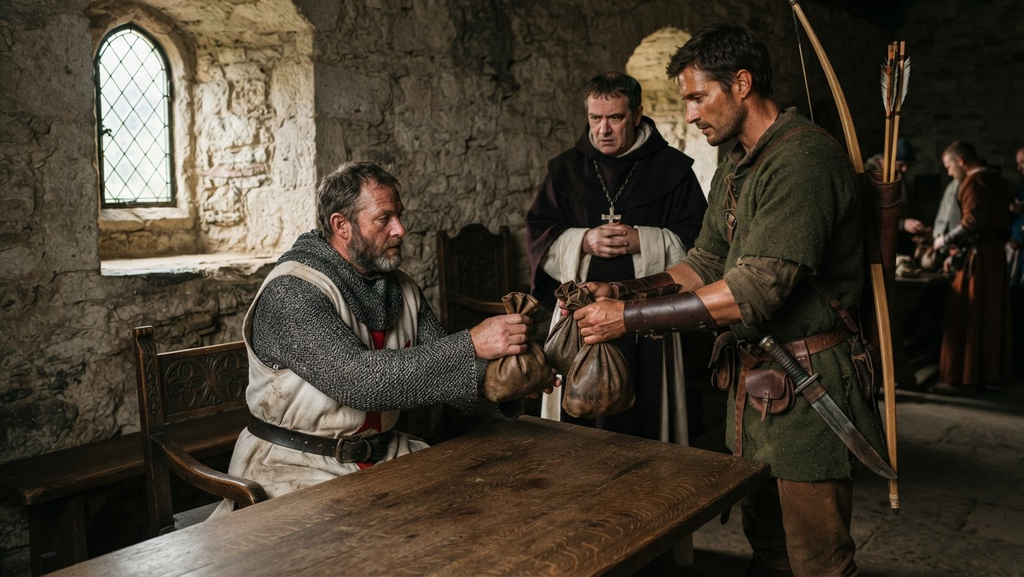 Tactics IV
Selective Piety Against Clerical Greed
Distinguishing genuine faith from institutional corruption
Distinguishing Faith from Corruption
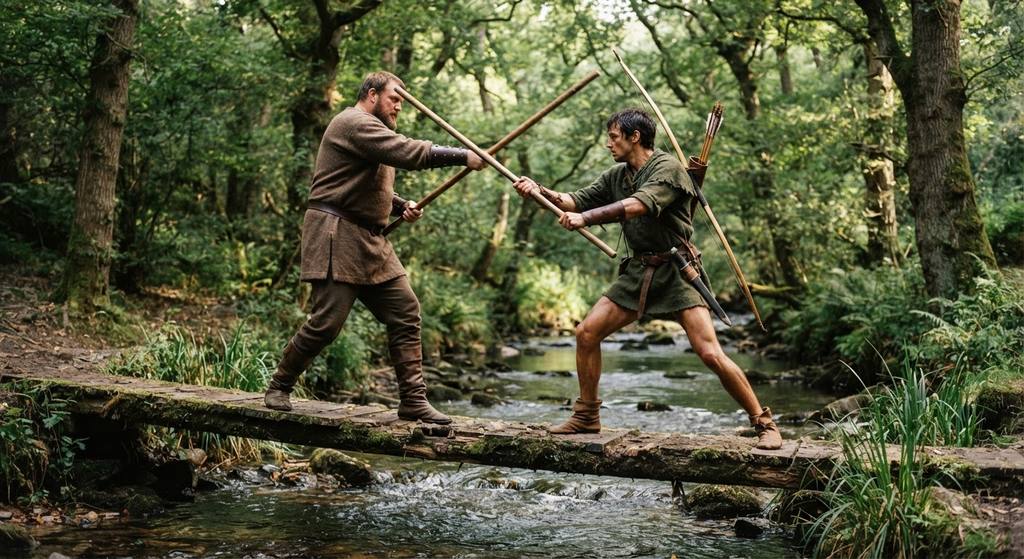 Tactics V
The Trial of Equal Combat
Recruiting lieutenants through personal trial and mutual respect
Recruiting Lieutenants
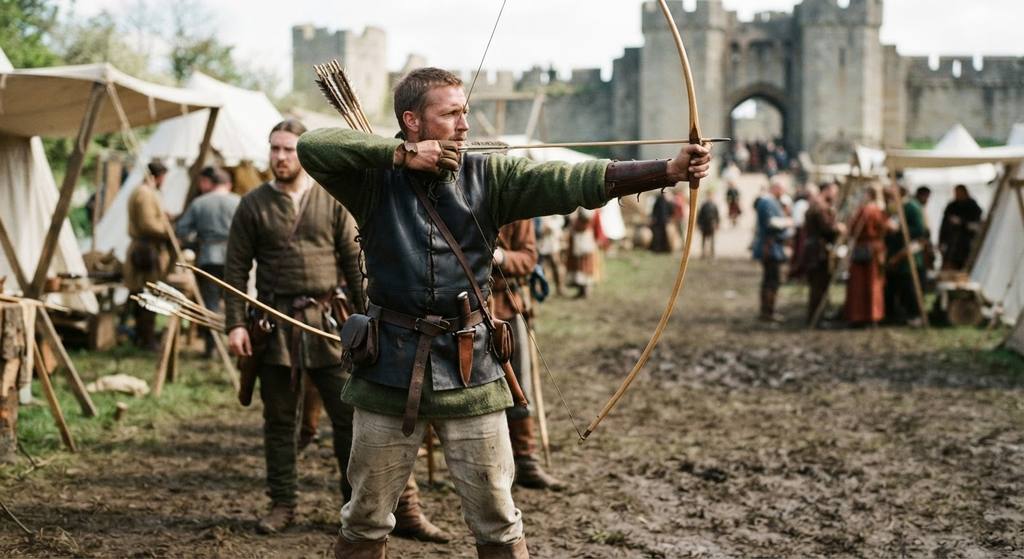 Tactics VI
The Longbow as Social Equalizer
Democratizing battlefield power through discipline and weapon design
Democratizing Battlefield Power
Spatial Mastery of the Greenwood
The royal forests of medieval England were governed by harsh legal codes that criminalized hunting and weapon carrying for commoners. In ballads like Robin Hood and the Monk, the dense canopy of Barnsdale and Sherwood served as a tactical refuge. Robin turned a space of royal prohibition into an unmapped sanctuary where heavily armored royal officers lost their structural advantages.
Why it matters today: Identify constraints in your environment that hinder your competitors and turn them into your strategic advantages.
“How did you use the geography of Sherwood Forest to outmaneuver the Sheriff's mounted officers?”
What can you ask Robin?
Leadership & Loyalty
Strategy & Agility
Principles & Ethics
Try a live answer from Robin
Ask right here — no signup needed. The answer is generated live.
Live answer from Robin Hood — no login needed for your first question.
Robin Hood quotes — in his own words
11 of the lines Robin is remembered for, with the source for each one. Pick any quote and ask him what he actually meant by it.
Scroll sideways for more · Sources shown per quote; a few widely circulated lines are marked as attributed rather than verbatim.
Why Xminds is different
Related minds around Robin
No one thinks alone. These are the people who supported Robin — and the ones who pushed back. Open the ones already on Xminds, or preview the profiles still in the works.
Friendly minds
Teachers, family, students and allies who shaped Robin.

His trusted second in command who proved his loyalty and skill in staff fighting during their famous bridge duel.

His noble companion and romantic partner who matched him in courage and devotion to the poor.
A brawling clergyman who provided spiritual guidance and combat skill to the outlaws in Sherwood Forest.
The absent monarch whose return to England restored true justice and earned Robin Hood a royal pardon.
Opponents
Rivals, accusers and adversaries who tested Robin.
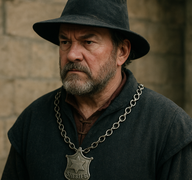
The oppressive local magistrate who enforced harsh forest laws and served as Robin Hood's chief adversary.

A ruthless bounty hunter hired by the Sheriff to track and execute Robin Hood.
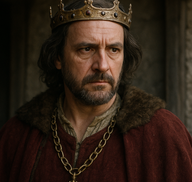
The corrupt ruler who overtaxed the peasantry and usurped authority while King Richard was abroad.
What people say about Robin
Ratings are collected right after a conversation ends. Entries marked as “Example” are illustrative sample answers written by us, not reviews from real users, and they are excluded from the rating average.
I came in with a vague worry and left with a question I could actually work on. It never lectured me — it kept asking until I heard my own answer.
Illustrative example
Ten minutes before a difficult meeting I talked it through here. Calmer, sharper, and the advice held up in the room.
Illustrative example
The voice call feels surprisingly natural. Occasionally a bit long-winded, but the substance is genuinely good.
Illustrative example
What I like most is that it stays in character and quotes real sources. It feels like reading with a patient tutor.
Illustrative example
I use it a few evenings a week to think out loud. It has quietly become part of how I make decisions.
Illustrative example
Better than I expected. I wish it remembered more from older conversations, but the depth of each session is excellent.
Illustrative example
Questions & answers
Was Robin Hood a real historical person?
Most modern historians view Robin Hood as a literary composite rather than a single individual. The name appeared as an alias for outlaws in medieval court records, reflecting real social tensions over forest laws, corrupt sheriffs, and predatory clerics across England.
When are the earliest stories of Robin Hood set?
The earliest medieval ballads do not place Robin Hood during the reign of Richard the Lionheart. Instead, early rhymes often set his adventures during the reign of a King Edward, reflecting fourteenth-century yeoman life rather than twelfth-century Crusader history.
Was Maid Marian in the original Robin Hood ballads?
Maid Marian was not present in the earliest medieval ballads of Robin Hood. She joined the legend during fifteenth-century May Games celebrations and was later combined with the outlaw stories in sixteenth-century plays and pageants.
What was Robin Hood's social rank in the earliest legends?
In the earliest surviving tales, Robin Hood was a yeoman, an independent middle-class forest archer, rather than a dispossessed nobleman. His transformation into Robert, Earl of Huntingdon, was a sixteenth-century literary invention by Elizabethan playwrights.
Why did Robin Hood target the Sheriff of Nottingham?
The Sheriff of Nottingham represented royal taxation and local administrative corruption in medieval ballads. Robin Hood opposed local officials who abused legal power and oppressed common folk, while remaining steadfastly loyal to the crown and his faith.
Can I really chat with Robin Hood?
Yes. Xminds lets you chat with Robin Hood as an AI mentor: the Robin Hood AI is built from documented writings, speeches and biography, so you can ask Robin Hood anything and get an answer in character rather than a search-results page. The first messages are free and no download is needed.
Can I call Robin Hood and talk by voice?
You can. Press the call button to talk to Robin Hood in a live voice conversation — the Robin Hood AI voice replies in real time, and you can interrupt, follow up and switch language mid-call. Prefer typing? The same conversation works as text chat.
Is the Robin Hood chatbot free?
Starting is free: every visitor gets a free daily allowance of messages and voice minutes with the Robin Hood AI chatbot. Xminds Pro raises the limits for people who talk to their mentors every day.
How accurate is this Robin Hood AI?
Robin Hood is a respectful AI portrayal, not the real person and not a channel to them. Answers are grounded in the historical record and cited sources, and every conversation is clearly labelled as AI so you always know who you are talking to.
What should I ask Robin Hood about?
Bring a real situation. People come for advice from Robin Hood on the themes above, or treat it as an interview with Robin Hood about a decision they are facing. You can speak to Robin Hood about work, doubt or craft, and meet Robin Hood again tomorrow to continue the same thread — it is a conversation, not a Robin Hood simulator that repeats stock lines.
Also known as
Robin Hood appears under several names and spellings across languages and sources. You can search for any of these on Xminds:
- Robyn Hode
- Robert of Locksley
- Robin of Loxley
- Robert Hood
Ready to step into Sherwood Forest?
Start your conversation with Robin Hood today and discover timeless strategies for fairness and fellowship.
10 free messages a day • no signup needed

Talk to Robin
10 free messages a day • no signup needed