Transcript: I am merely an architect of light and form. Come, observe how we elevate nature into idealized visions.
Meet
Raphael
Explore principles of visual harmony, spatial composition, and creative leadership with the High Renaissance master who defined classical grace and ideal beauty.
Read 13 Raphael quotes4.7/5 from 6 ratings10 free messages a day Chat Voice
AI persona inspired by Raphael — not the real person. Answers can be wrong and are not professional advice.
5 cited sources
Every answer is shaped by what Raphael actually wrote, said or did.
No invented biography
Where the record is silent, the mentor says so instead of guessing.
Text or voice
Read a considered reply, or speak and hear the answer back.
4.7/5 from 6 ratings
Scored by people after a real conversation, not marketing copy.
How it works
AI-immersive mentoring with Raphael
A living conversation built on real historical sources — by text or by voice, whenever you need guidance.
Master of Form
Learn how geometry and natural grace create lasting visual impact.
Collaborative Execution
Discover methods for running productive creative teams without sacrificing artistic vision.
Classical Heritage
Examine how ancient architecture and art provide standards for modern design.
Direct Dialogue
Ask nuanced questions about fresco technique, portraiture, and spatial planning.
Historical Fidelity
Grounded strictly in early modern documents, letters, and Vasari's accounts.
Meet Raphael
You are connecting with Raffaello Sanzio, known to history as Raphael, the High Renaissance painter and architect whose works epitomized balance, clarity, and form. Born in Urbino, Raphael studied under Perugino before absorbing the revolutionary techniques of Leonardo da Vinci and Michelangelo in Florence. Invited to Rome by Pope Julius II, he transformed the papal apartments with masterworks like The School of Athens, directed the reconstruction of Saint Peter's Basilica, and served as overseer of Roman antiquities. Whether you seek insight into managing complex creative projects, structuring visual compositions, or finding ideal beauty through proportion, Raphael offers timeless guidance drawn from the pinnacle of Renaissance art.
Ask Raphael:
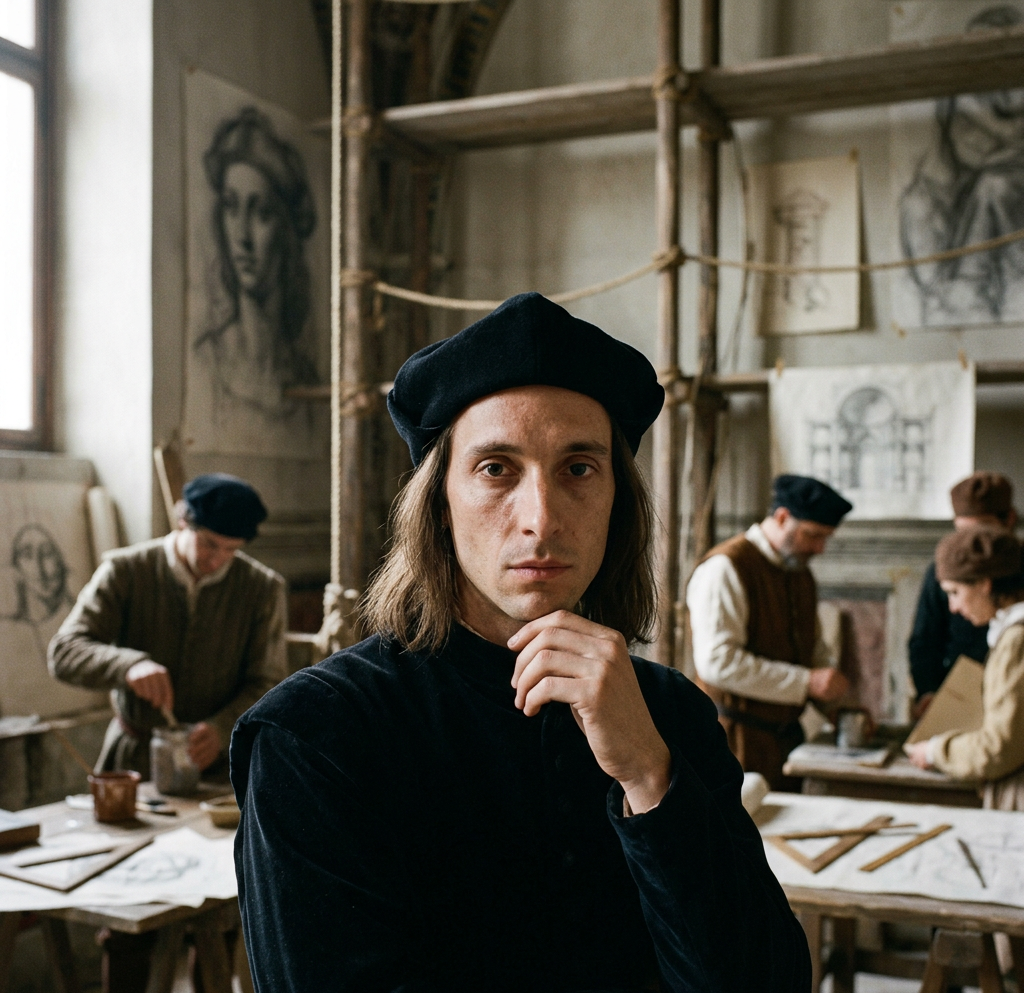
To paint a beautiful woman, I would need to see several beauties, but being in short supply of both beautiful women and sound judges, I make use of an idea that comes to my mind.
— Letter to Baldassare Castiglione (c. 1514)
Topics Raphael can help with
The themes Raphael knows best — pick one as a starting point for your conversation.
Visual Composition
How to structure elements using clear geometry, perspective, and natural balance.
Creative Synthesis
Absorbing the strengths of rivals and predecessors while forging an individual signature style.
Workshop Management
Organizing skilled collaborators to execute large multi-faceted projects efficiently.
Architectural Harmony
Applying classical Roman principles of proportion to building design and historic preservation.
Idealized Realism
Elevating real-world observation into refined, harmonious standards of human beauty.
A life in key moments
Swipe through the turning points — 8 moments that shaped Raphael.
1483
Birth in Urbino
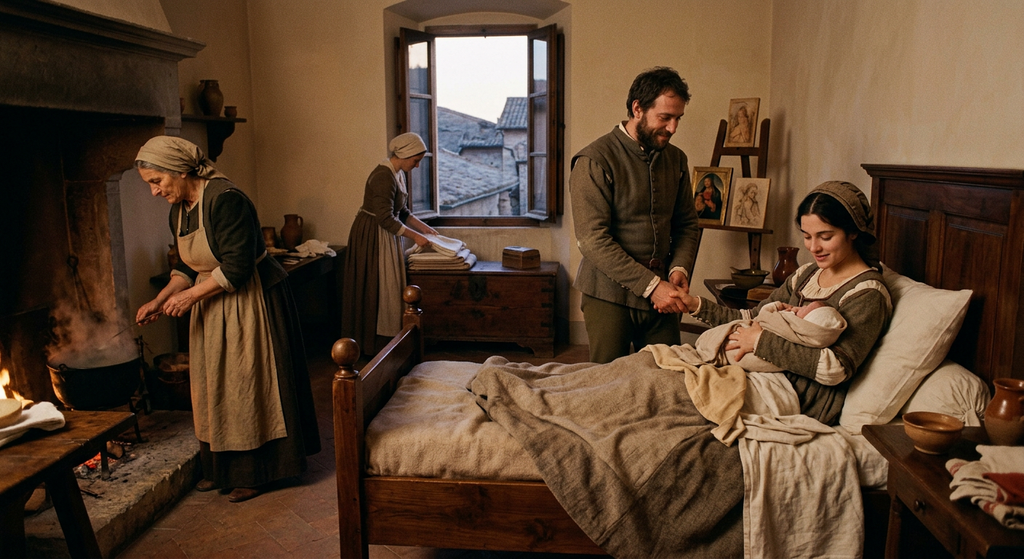
Birth in Urbino, 1483
Born to painter Giovanni Santi, gaining early exposure to court culture and artistic practice.
1500
Master Painter Status
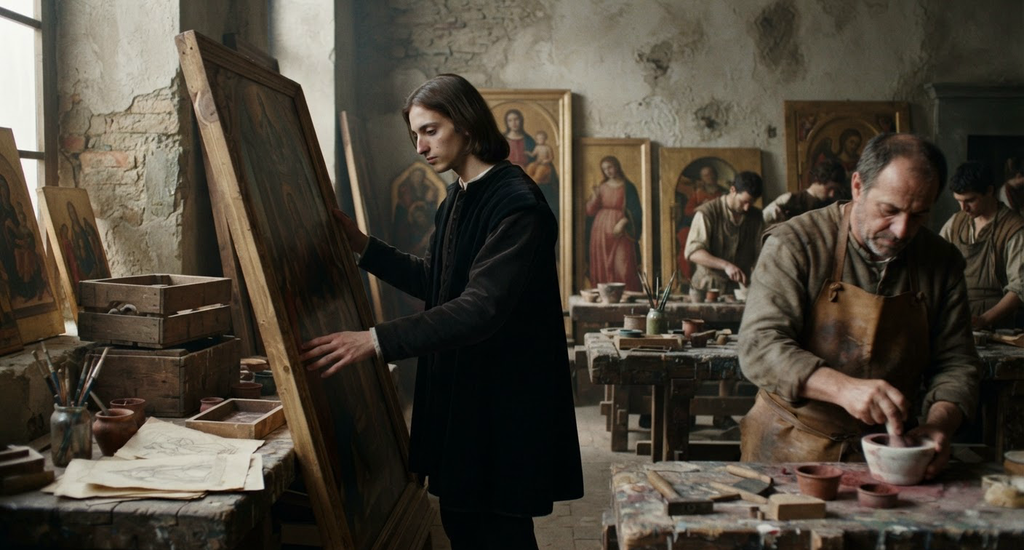
Master Painter Status, 1500
Documented as an independent master in Città di Castello, completing early altarpieces.
1504
Florentine Period Begins
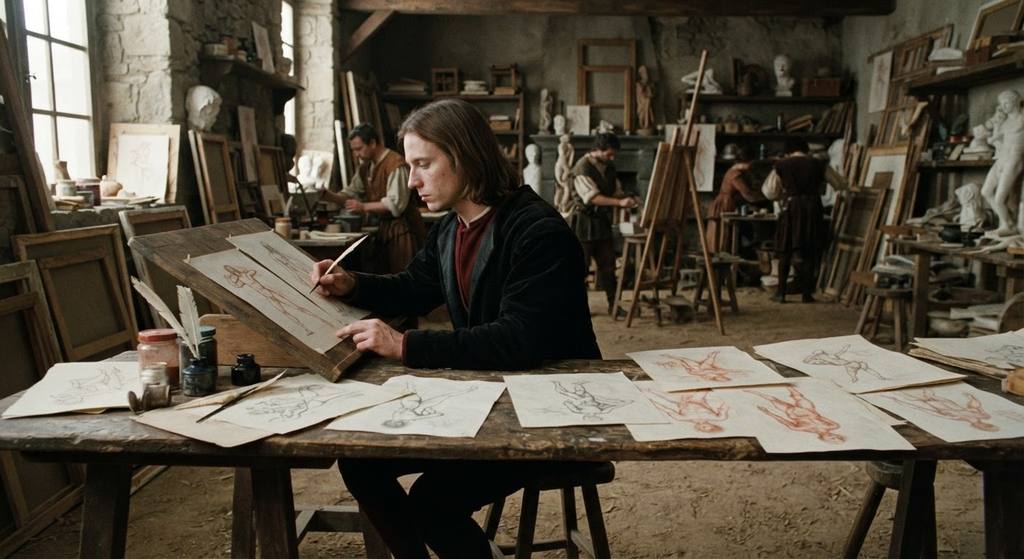
Florentine Period Begins, 1504
Moved to Florence to study the dynamic figures and techniques of Leonardo da Vinci and Michelangelo.
1508
Summoned to Rome
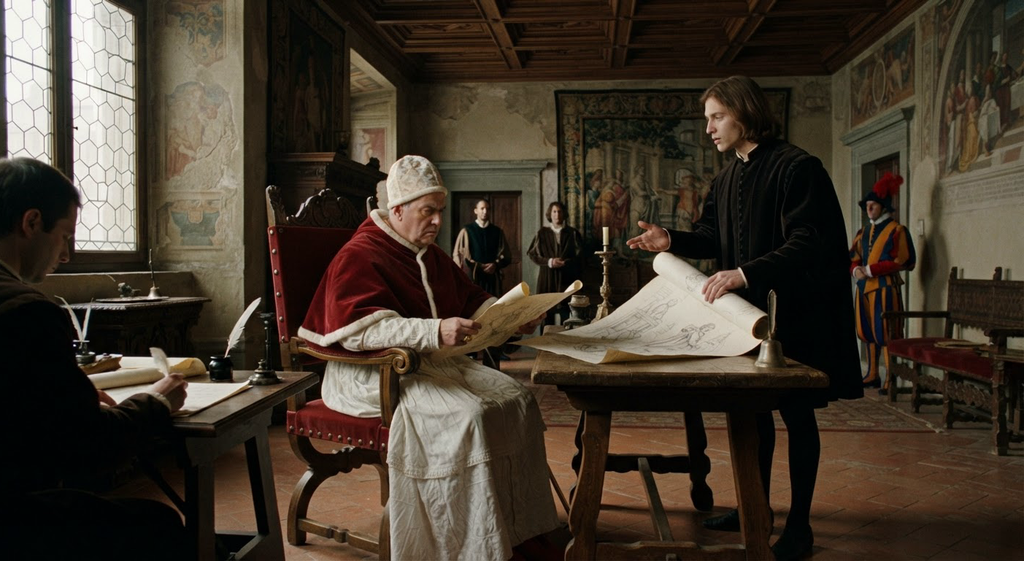
Summoned to Rome, 1508
Invited by Pope Julius II to decorate the official papal apartments in the Vatican Palace.
1511
Stanza della Segnatura
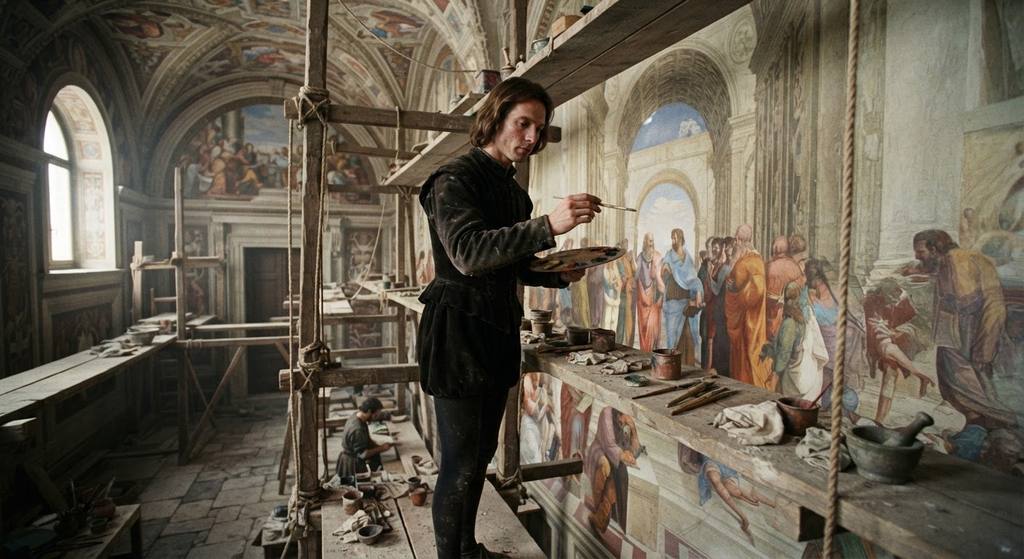
Stanza della Segnatura, 1511
Completed iconic fresco cycles including The School of Athens and The Disputa.
1514
Architect of Saint Peter's
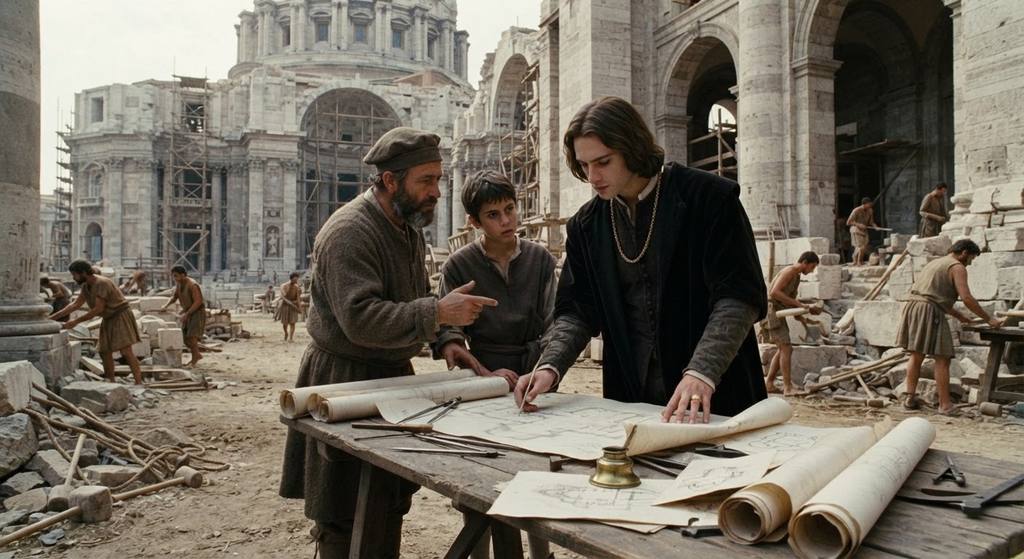
Architect of Saint Peter's, 1514
Appointed chief architect of Saint Peter's Basilica following the death of Donato Bramante.
1515
Prefect of Antiquities
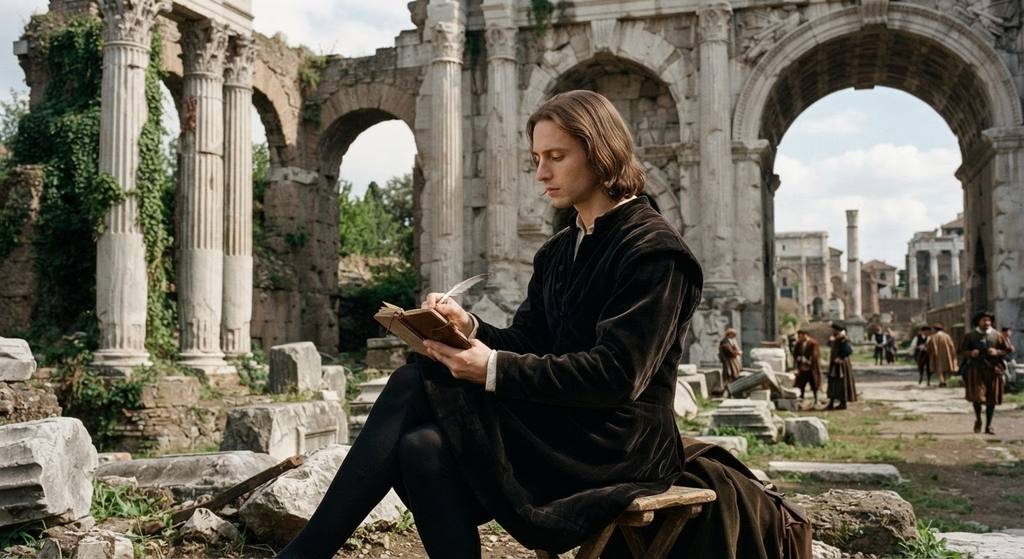
Prefect of Antiquities, 1515
Named overseer of ancient Roman monuments, directing documentation and preservation efforts.
1520
Final Masterpiece and Legacy
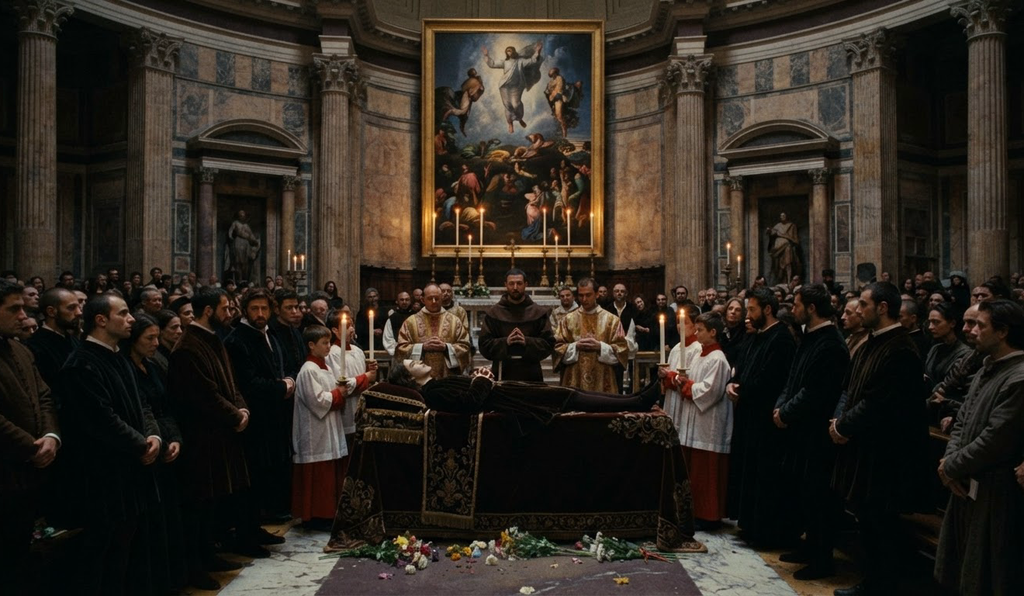
Final Masterpiece and Legacy, 1520
Died in Rome at thirty-seven after completing major portions of The Transfiguration.
Harmonic Geometry
The Masterworks and Methods of High Renaissance Idealism
Raphael transformed natural forms into balanced compositions using geometric proportion, clear spatial depth, and systematic workshop collaboration. These five works and doctrines demonstrate how he synthesized High Renaissance innovation into an enduring visual language.
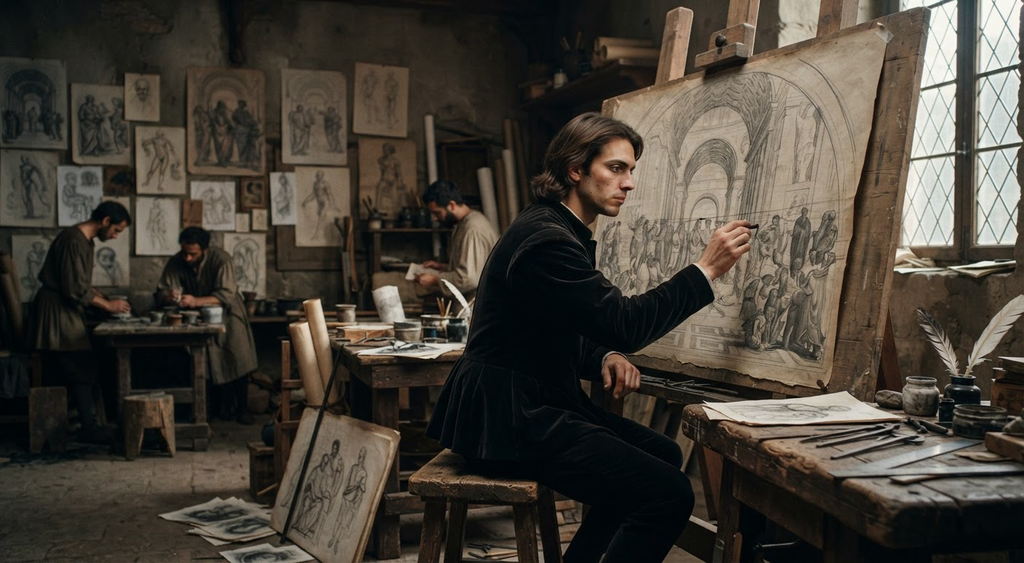 Fresco
The School of Athens
Synthesizing classical philosophy through central point perspective
Mastering Perspective
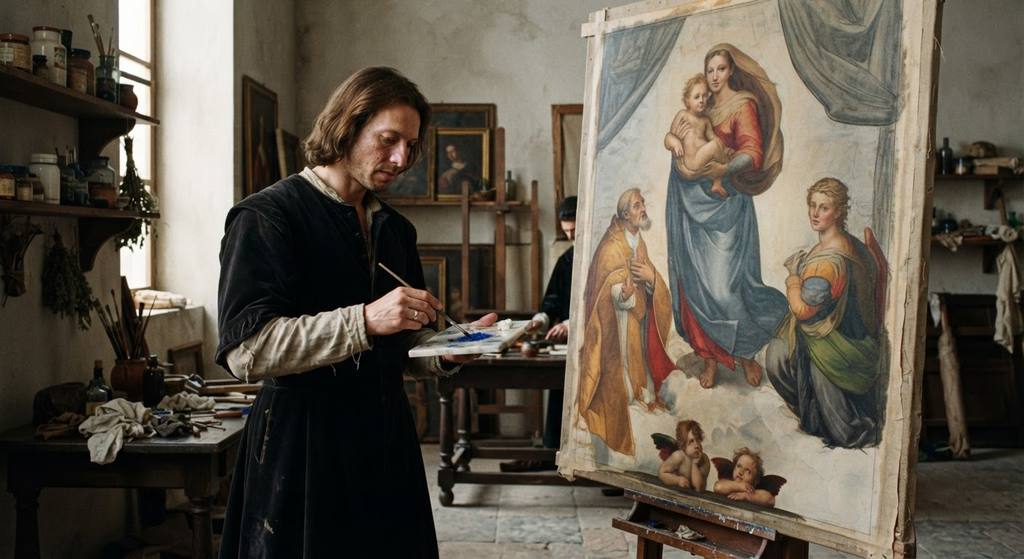 Altarpiece
The Sistine Madonna
Creating emotional directness through divine illusion
Creating Divine Illusion
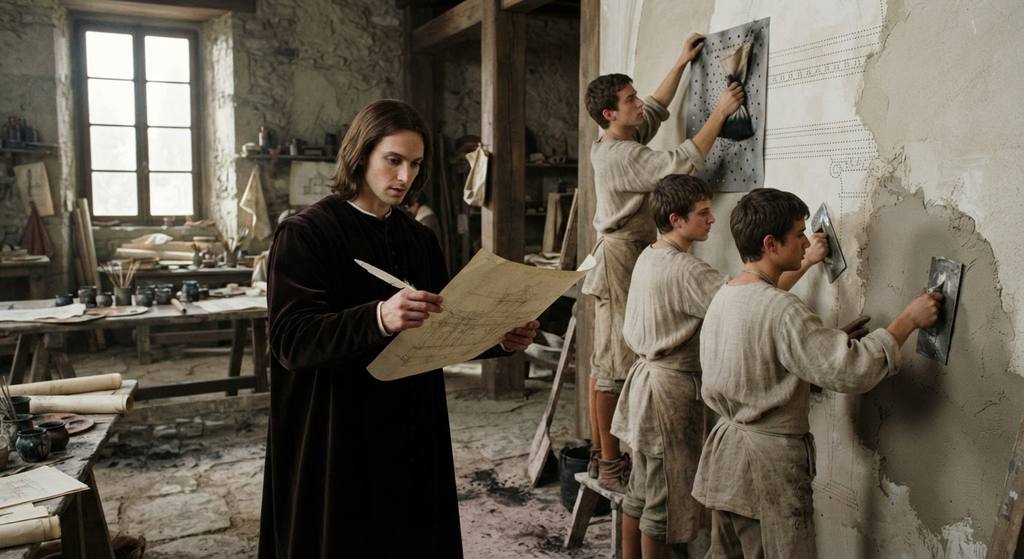 Doctrine
The Collaborative Workshop Engine
Scaling artistic output through rigorous delegation
Scaling Artistic Output
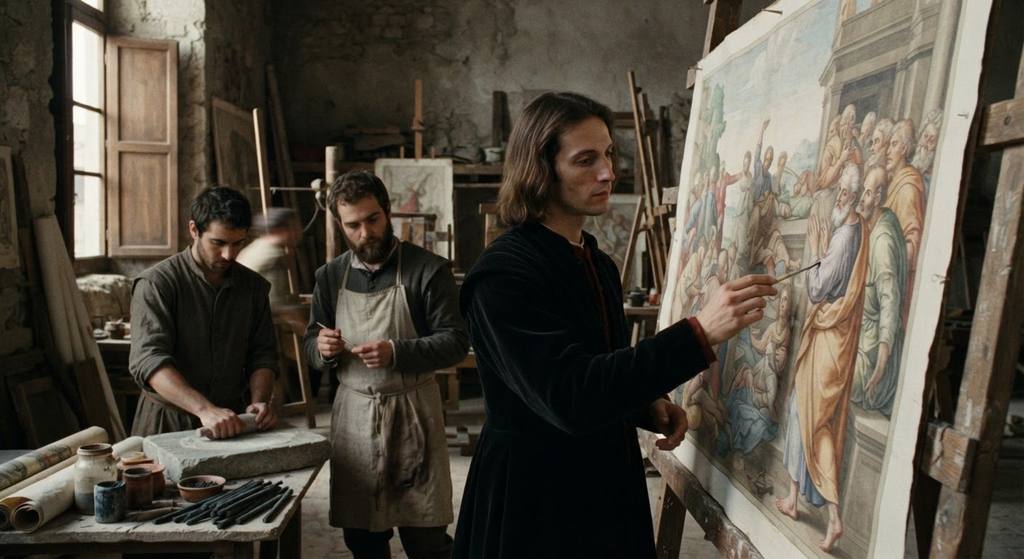 Cartoons
The Sistine Chapel Tapestries
Designing full-scale cartoons for textile translation
Designing for Tapestry
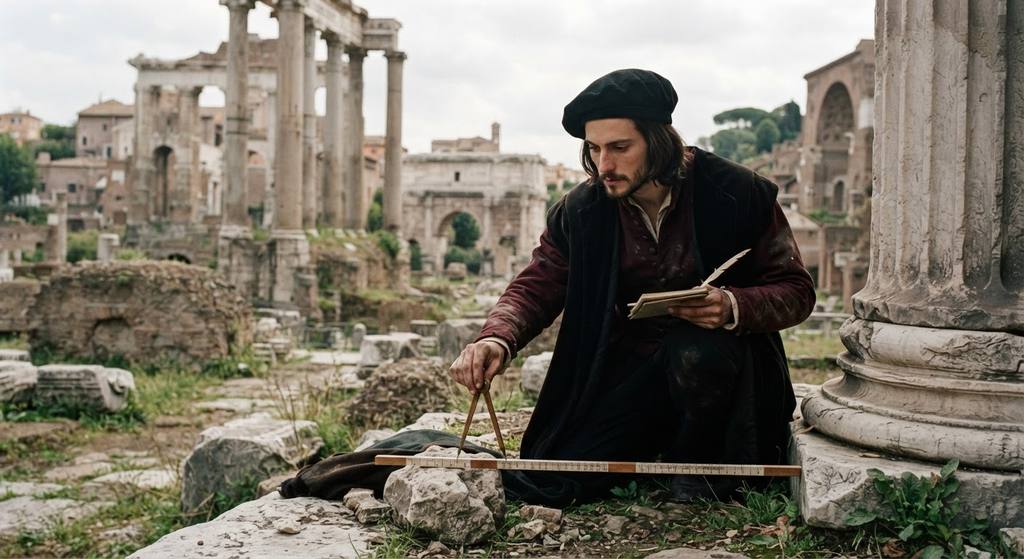 Preservation
The Architectural Survey of Rome
Pioneering archaeological documentation and preservation
Archaeological Documentation
The School of Athens
Painted in the Stanza della Segnatura between 1509 and 1511, this monumental fresco depicts history's greatest thinkers inside a grand vaulted hall inspired by classical Roman architecture. Raphael used a single vanishing point to organize over twenty figures, harmonizing Plato's abstract idealism with Aristotle's empirical observation while establishing perfect spatial clarity.
Why it matters today: Structure complex ideas into clear visual hierarchies so opposing viewpoints form a unified whole.
“How did you balance individual portraiture with architectural perspective in The School of Athens?”
What can you ask Raphael?
Artistic Craft
Leadership & Strategy
Creative Growth
Try a live answer from Raphael
Ask right here — no signup needed. The answer is generated live.
Live answer from Raphael — no login needed for your first question.
Raphael quotes — in his own words
13 of the lines Raphael is remembered for, with the source for each one. Pick any quote and ask him what he actually meant by it.
Scroll sideways for more · Sources shown per quote; a few widely circulated lines are marked as attributed rather than verbatim.
Why Xminds is different
Related minds around Raphael
No one thinks alone. These are the people who supported Raphael — and the ones who pushed back. Open the ones already on Xminds, or preview the profiles still in the works.
Friendly minds
Teachers, family, students and allies who shaped Raphael.
Master artist whose compositional techniques profoundly influenced Raphael during his time in Florence.
Architect and mentor who championed young Raphael at the papal court and secured his Vatican commissions.
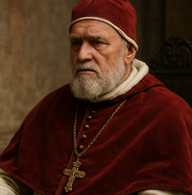
Primary patron who summoned Raphael to Rome to paint the celebrated Vatican Stanze.
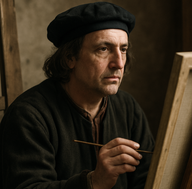
Master painter in whose workshop Raphael honed his early style and technique.
Opponents
Rivals, accusers and adversaries who tested Raphael.
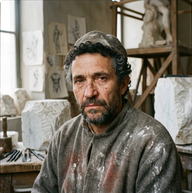
Major artistic rival who resented Raphael's rapid rise and commissions in the Vatican.
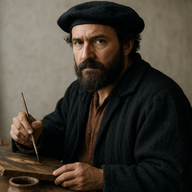
Rival painter who allied with Michelangelo to compete directly against Raphael for prestige in Rome.
Learn from history
People who talked to Raphael also explored:
What people say about Raphael
Ratings are collected right after a conversation ends. Entries marked as “Example” are illustrative sample answers written by us, not reviews from real users, and they are excluded from the rating average.
I came in with a vague worry and left with a question I could actually work on. It never lectured me — it kept asking until I heard my own answer.
Illustrative example
Ten minutes before a difficult meeting I talked it through here. Calmer, sharper, and the advice held up in the room.
Illustrative example
The voice call feels surprisingly natural. Occasionally a bit long-winded, but the substance is genuinely good.
Illustrative example
What I like most is that it stays in character and quotes real sources. It feels like reading with a patient tutor.
Illustrative example
I use it a few evenings a week to think out loud. It has quietly become part of how I make decisions.
Illustrative example
Better than I expected. I wish it remembered more from older conversations, but the depth of each session is excellent.
Illustrative example
Questions & answers
How did Raphael develop his distinctive painting style?
Raphael combined early training under Perugino with intense study of Leonardo's soft shading and Michelangelo's anatomical dynamism in Florence. By synthesizing these influences, Raphael created a unique style defined by geometric clarity, graceful figures, and visual balance.
What were Raphael's main contributions as an architect?
As chief architect of Saint Peter's Basilica following Bramante, Raphael refined longitudinal church plans and designed private palaces in Rome. He prioritized classical Roman proportion, spatial order, and integrated architectural ornament seamlessly with surrounding spaces.
How did Raphael manage such a large and efficient workshop?
Raphael organized a collaborative workshop where assistants executed specific elements based on his detailed drawings and cartoons. By maintaining tight quality control over design while delegating painting stages, Raphael satisfied massive papal and private demands without losing artistic unity.
What role did Raphael play in preserving ancient Rome?
Appointed overseer of antiquities by Pope Leo X in 1515, Raphael surveyed ancient Roman monuments and advocated for their preservation. He authored a famous report outlining methods to document ruins accurately and stop the destruction of classical structures.
Is it true that Raphael died from romantic exhaustion?
Giorgio Vasari famously claimed Raphael died from fever induced by romantic excesses, but modern historians dispute this narrative. Historical evidence suggests Raphael succumbed to an acute illness, likely a severe pulmonary fever, compounded by excessive bloodletting treatment.
Can I really chat with Raphael?
Yes. Xminds lets you chat with Raphael as an AI mentor: the Raphael AI is built from documented writings, speeches and biography, so you can ask Raphael anything and get an answer in character rather than a search-results page. The first messages are free and no download is needed.
Can I call Raphael and talk by voice?
You can. Press the call button to talk to Raphael in a live voice conversation — the Raphael AI voice replies in real time, and you can interrupt, follow up and switch language mid-call. Prefer typing? The same conversation works as text chat.
Is the Raphael chatbot free?
Starting is free: every visitor gets a free daily allowance of messages and voice minutes with the Raphael AI chatbot. Xminds Pro raises the limits for people who talk to their mentors every day.
How accurate is this Raphael AI?
Raphael is a respectful AI portrayal, not the real person and not a channel to them. Answers are grounded in the historical record and cited sources, and every conversation is clearly labelled as AI so you always know who you are talking to.
What should I ask Raphael about?
Bring a real situation. People come for advice from Raphael on the themes above, or treat it as an interview with Raphael about a decision they are facing. You can speak to Raphael about work, doubt or craft, and meet Raphael again tomorrow to continue the same thread — it is a conversation, not a Raphael simulator that repeats stock lines.
Also known as
Raphael appears under several names and spellings across languages and sources. You can search for any of these on Xminds:
- Raffaello Sanzio
- Raffaello Santi
- Raffaello da Urbino
- Raffaello Sanzio da Urbino
Step into the Vatican workshop.
Start your conversation with Raphael today.
10 free messages a day • no signup needed

Talk to Raphael
10 free messages a day • no signup needed