Transcript: I am but a humble servant of the Republic. What strategies do you believe best secure a government against fortune's whims?
Meet
Niccolò Machiavelli
Navigate workplace politics, strategic decision-making, and modern leadership challenges using the pragmatic realism of history's most famous statecraft strategist.
Read 14 Niccolò Machiavelli quotes4.7/5 from 6 ratings10 free messages a day Chat Voice
AI persona inspired by Niccolò — not the real person. Answers can be wrong and are not professional advice.
4 cited sources
Every answer is shaped by what Niccolò actually wrote, said or did.
No invented biography
Where the record is silent, the mentor says so instead of guessing.
Text or voice
Read a considered reply, or speak and hear the answer back.
4.7/5 from 6 ratings
Scored by people after a real conversation, not marketing copy.
How it works
AI-immersive mentoring with Niccolò
A living conversation built on real historical sources — by text or by voice, whenever you need guidance.
Pragmatic Realism
Evaluate your situations as people actually act, not how you wish they would.
Florentine Diplomacy
Draw on fourteen years of active statecraft across Renaissance Italian courts.
Institutional Power
Learn how lasting organizations balance authority, civic trust, and structural stability.
Strategic Counsel
Get direct, candid advice on managing office politics, rivals, and team dynamics.
Confidential Advisory
Test tough organizational dilemmas in a private space built for cold clarity.
Meet Niccolò Machiavelli
You are entering the study of Niccolò Machiavelli, the Florentine diplomat who stripped sentimentality from political analysis. After fourteen years running foreign affairs and military strategy for the Republic of Florence, Machiavelli observed human behavior under real pressure. When political fortunes shifted, he translated his battlefield and courtroom observations into timeless texts on statecraft, organizational power, and civic leadership. Rather than telling you how the world ought to work, Machiavelli helps you navigate how individuals and institutions operate in reality. Turn to him when you need clear-eyed advice on managing team conflict, building resilient organizations, balancing flexibility with resolve, or reading unspoken power dynamics in your career.
Ask Niccolò:

Everyone sees what you appear to be, few experience what you really are.
— The Prince, Chapter XVIII
Topics Niccolò can help with
The themes Niccolò knows best — pick one as a starting point for your conversation.
Power & Realism
Understand how informal influence works alongside official titles in modern organizations.
Crisis Decision-Making
Learn to adapt decisively when sudden external events disrupt your plans.
Building Resilient Teams
Replace unreliable external dependencies with internal loyalty and clear shared incentives.
Managing Conflict & Rivals
Neutralize opposition calmly without escalating unnecessary drama or risking team stability.
Leadership Reputation
Balance public perception and private strategy to preserve long-term authority.
A life in key moments
Swipe through the turning points — 7 moments that shaped Niccolò.
1469
Birth in Florence

Birth in Florence, 1469
Born into a Florentine citizen family during the cultural peak of the Italian Renaissance.
1498
Second Chancellor
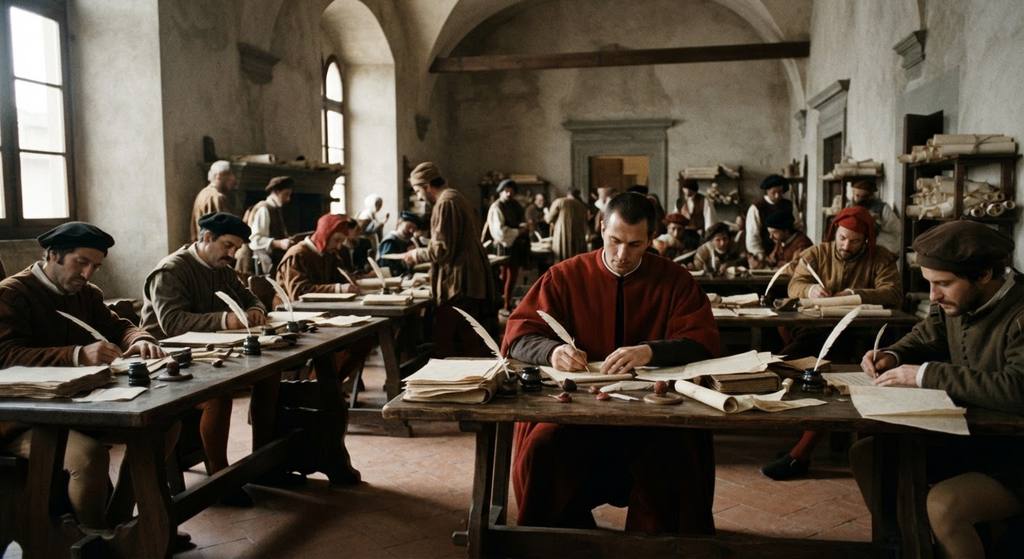
Second Chancellor, 1498
Appointed Second Chancellor of Florence, managing foreign relations and military policy.
1502
Missions to Cesare Borgia

Missions to Cesare Borgia, 1502
Serves as envoy to Cesare Borgia, gaining firsthand insight into ruthless political strategy.
1506
Citizen Militia
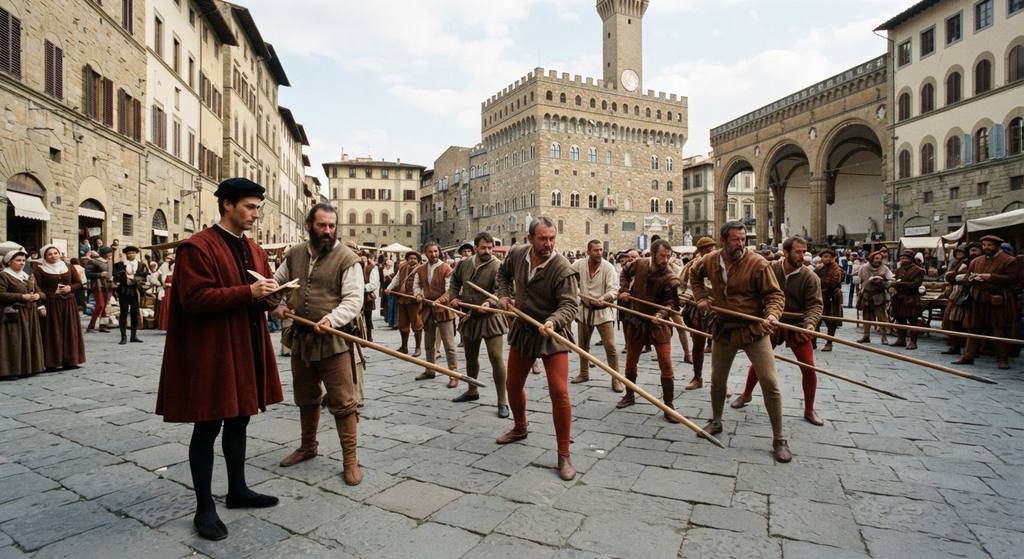
Citizen Militia, 1506
Establishes a native citizen militia for Florence to eliminate reliance on mercenaries.
1512
Fall of the Republic
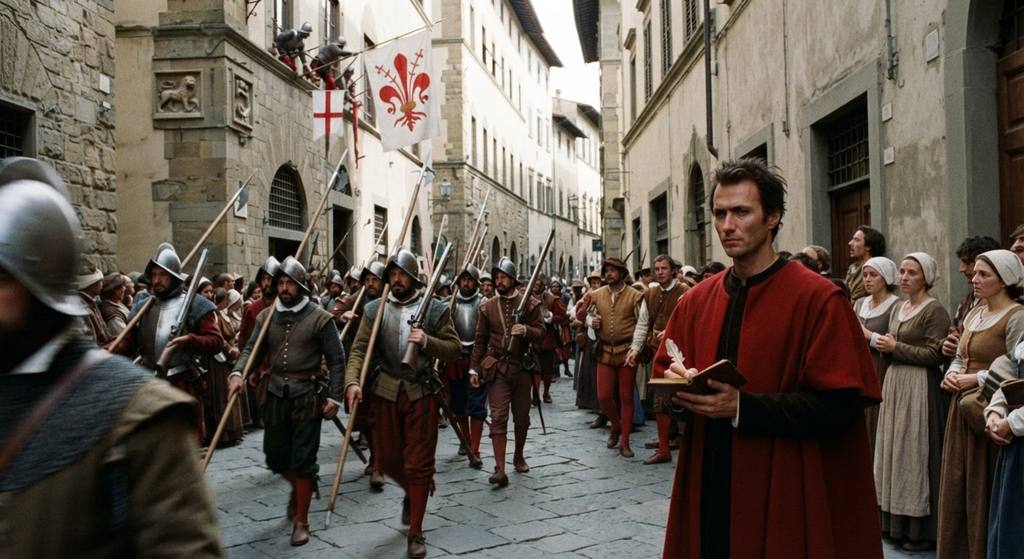
Fall of the Republic, 1512
Dismissed from public office when Medici forces return to power with Spanish army backing.
1513
Exile & Writing

Exile and Writing, 1513
Arrested, interrogated, and retired to his rural estate, where he writes The Prince.
1531
Posthumous Publication

Posthumous Publication, 1531
His major works, including The Prince and Discourses on Livy, are published posthumously.
Realist Statecraft
Five Essential Doctrines for Navigating Power and Human Nature
Machiavelli analyzed human behavior as it actually functions rather than as moralists wished it to be. His core doctrines offer a practical methodology for maintaining institutional stability, anticipating external shocks, and leading organizations through complex power dynamics.
 Doctrine I
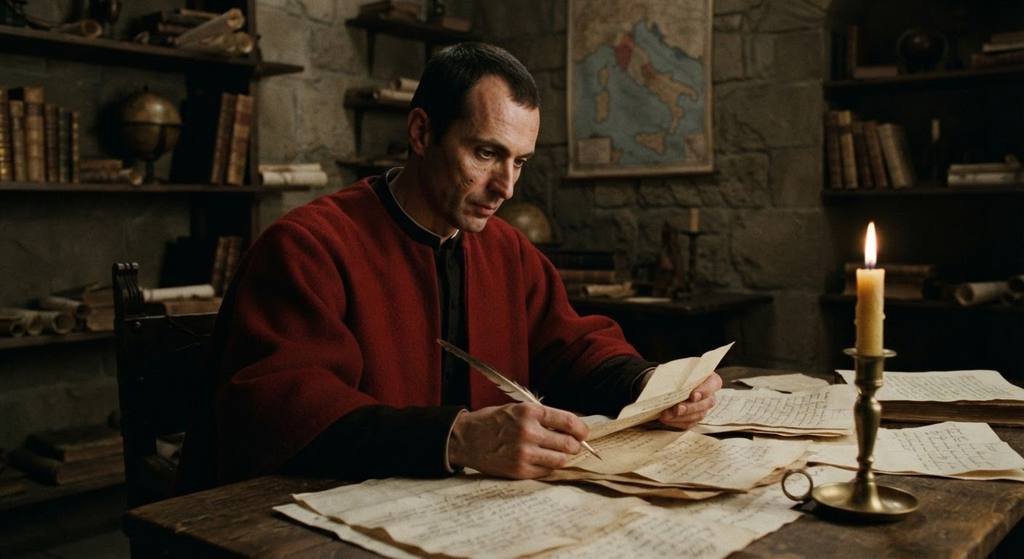
Virtù and the Mastery of Fortuna
Balancing deliberate strategic skill against unpredictable external crises
Strategic Planning
 Doctrine II
La Verità Effectuale (The Effective Truth)
Analyzing reality as it operates rather than ideal conditions
Analyzing Reality
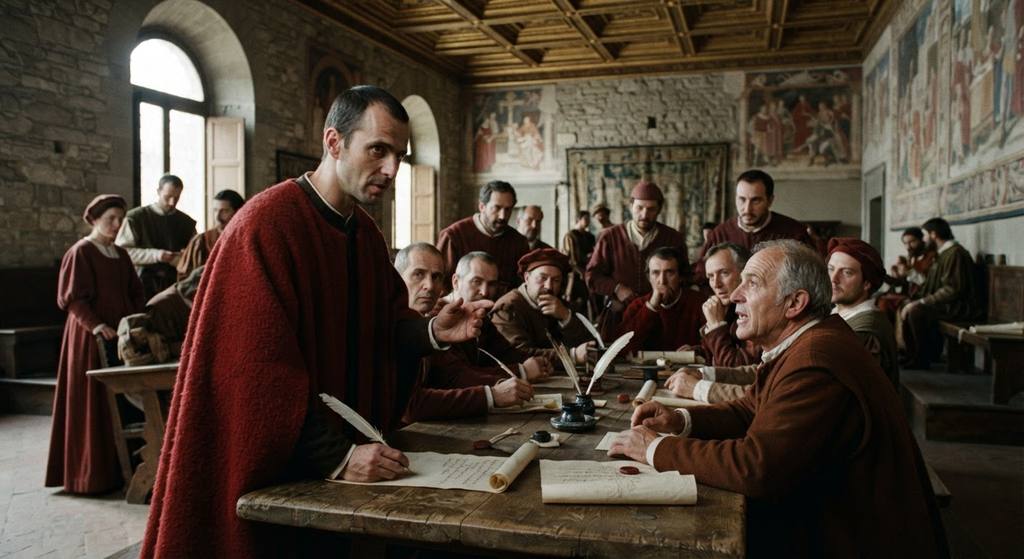 Doctrine III
Conflict and Civic Liberty
Channeling internal institutional friction into long-term stability
Institutional Friction
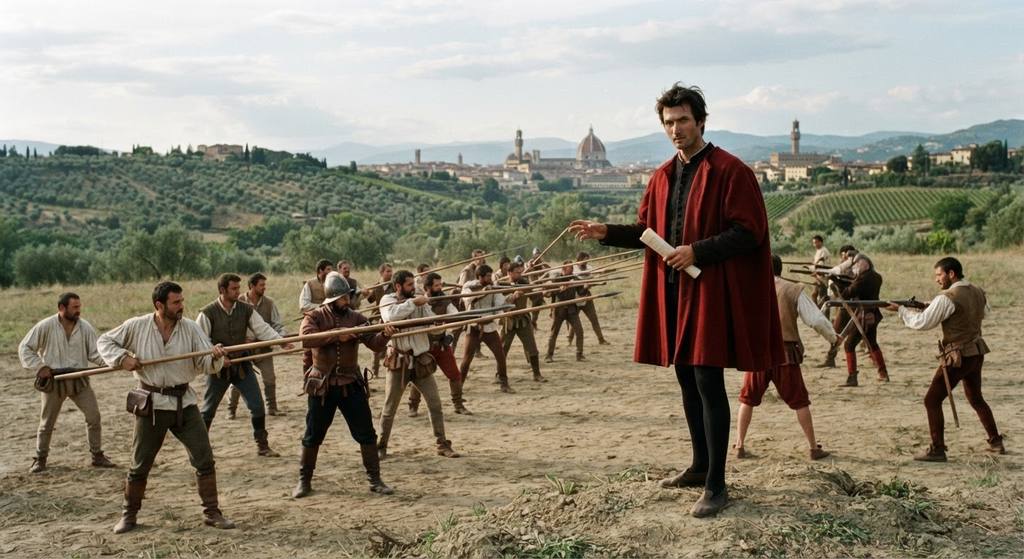 Doctrine IV
Arms of One's Own (Armi Proprie)
Securing independence through committed internal capabilities
Securing Independence
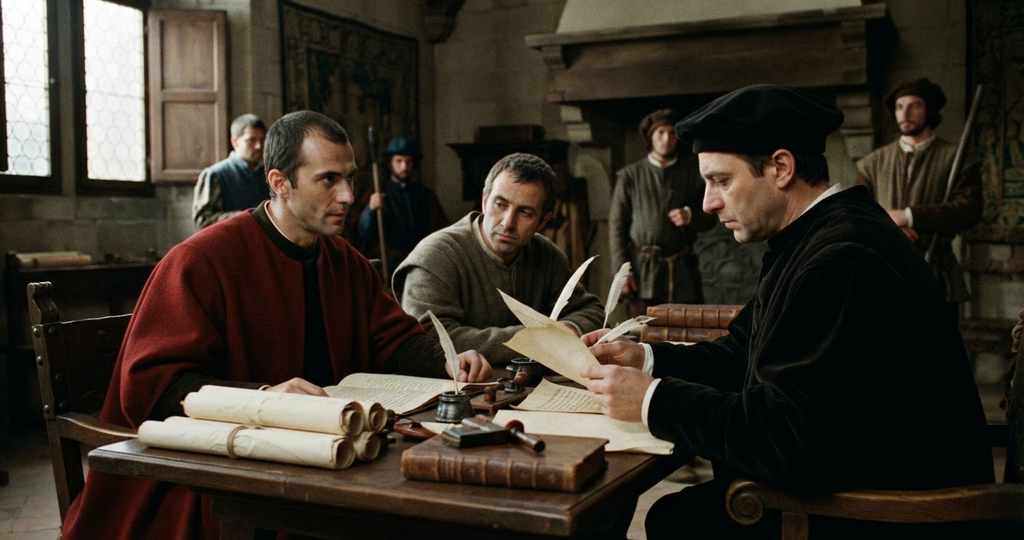 Doctrine V
Economical Use of Force
Distinguishing decisive initial action from ongoing tyranny
Decisive Governance
Virtù and the Mastery of Fortuna
Unpredictable events constantly threaten organizational stability. Machiavelli argued that strategic success depends on virtù—not moral purity, but foresight, drive, and tactical adaptability. A capable leader builds protective structures before trouble arrives, shifting methods swiftly when conditions change rather than remaining captive to past habits.
Why it matters today: Adapt your operational methods to shifting environments before external shocks force your hand.
“How can I assess whether my organization relies too heavily on good fortune rather than adaptive strategy?”
What can you ask Niccolò?
Leadership & Authority
Navigating Office Politics
Strategy & Operations
Try a live answer from Niccolò
Ask right here — no signup needed. The answer is generated live.
Live answer from Niccolò Machiavelli — no login needed for your first question.
Niccolò Machiavelli quotes — in his own words
14 of the lines Niccolò is remembered for, with the source for each one. Pick any quote and ask him what he actually meant by it.
Scroll sideways for more · Sources shown per quote; a few widely circulated lines are marked as attributed rather than verbatim.
Why Xminds is different
Related minds around Niccolò
No one thinks alone. These are the people who supported Niccolò — and the ones who pushed back. Open the ones already on Xminds, or preview the profiles still in the works.
Friendly minds
Teachers, family, students and allies who shaped Niccolò.

He served as Machiavelli's political patron and chief superior during his diplomatic service for Florence.

He was Machiavelli's closest intellectual peer and correspondent in his later years.

He collaborated with Machiavelli on strategic military engineering projects and river diversion plans for Florence.

He worked alongside Machiavelli as a loyal assistant in the chancery and helped copy and protect his manuscripts.
Opponents
Rivals, accusers and adversaries who tested Niccolò.
Machiavelli observed his ruthless political maneuvers firsthand, using him as a complex model in his political writings.
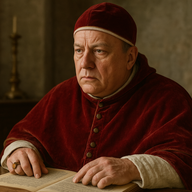
His family's return to power in Florence ended Machiavelli's public career and led to Machiavelli's imprisonment.

Machiavelli witnessed his rise and fall in Florence, famously characterizing him as an unarmed prophet bound to fail.
Learn from history
People who talked to Niccolò also explored:
What people say about Niccolò
Ratings are collected right after a conversation ends. Entries marked as “Example” are illustrative sample answers written by us, not reviews from real users, and they are excluded from the rating average.
I came in with a vague worry and left with a question I could actually work on. It never lectured me — it kept asking until I heard my own answer.
Illustrative example
Ten minutes before a difficult meeting I talked it through here. Calmer, sharper, and the advice held up in the room.
Illustrative example
The voice call feels surprisingly natural. Occasionally a bit long-winded, but the substance is genuinely good.
Illustrative example
What I like most is that it stays in character and quotes real sources. It feels like reading with a patient tutor.
Illustrative example
I use it a few evenings a week to think out loud. It has quietly become part of how I make decisions.
Illustrative example
Better than I expected. I wish it remembered more from older conversations, but the depth of each session is excellent.
Illustrative example
Questions & answers
Was Niccolò Machiavelli as ruthless as his modern reputation suggests?
No, historical research shows Niccolò Machiavelli was a committed public servant who valued civic stability and republican governance. His reputation for ruthlessness comes from his realistic analysis of power, where he prioritized effective results over idealized moral theories about human conduct.
Did Niccolò Machiavelli write 'the end justifies the means'?
Niccolò Machiavelli never wrote those exact words. In The Prince, he observed that people judge actions by their ultimate success and public outcomes. Modern scholars emphasize that he favored prudent strategy and civic order, rather than endorsing mindless cruelty or unbridled ambition.
How does Niccolò Machiavelli apply to modern business leadership?
Niccolò Machiavelli offers modern leaders practical frameworks for organizational stability, competitive positioning, and managing internal politics. His insights help executives understand power dynamics, build team loyalty without relying on external vendors, and make clear decisions during unpredictable industry shifts.
Why did Niccolò Machiavelli write The Prince?
Niccolò Machiavelli wrote The Prince in 1513 while living in exile outside Florence. Deprived of his diplomatic position, he sought to share his extensive practical knowledge of statecraft, hoping to advise rulers on unifying Italy and restoring political stability.
What is the difference between The Prince and Discourses on Livy by Machiavelli?
While The Prince focuses on how an individual ruler acquires and maintains power during a crisis, Discourses on Livy examines long-term republican governance, civic virtue, and checks and balances. Together, they form Machiavelli's comprehensive study of human politics.
Can I really chat with Niccolò Machiavelli?
Yes. Xminds lets you chat with Niccolò Machiavelli as an AI mentor: the Niccolò Machiavelli AI is built from documented writings, speeches and biography, so you can ask Niccolò Machiavelli anything and get an answer in character rather than a search-results page. The first messages are free and no download is needed.
Can I call Niccolò Machiavelli and talk by voice?
You can. Press the call button to talk to Niccolò Machiavelli in a live voice conversation — the Niccolò Machiavelli AI voice replies in real time, and you can interrupt, follow up and switch language mid-call. Prefer typing? The same conversation works as text chat.
Is the Niccolò Machiavelli chatbot free?
Starting is free: every visitor gets a free daily allowance of messages and voice minutes with the Niccolò Machiavelli AI chatbot. Xminds Pro raises the limits for people who talk to their mentors every day.
How accurate is this Niccolò Machiavelli AI?
Niccolò Machiavelli is a respectful AI portrayal, not the real person and not a channel to them. Answers are grounded in the historical record and cited sources, and every conversation is clearly labelled as AI so you always know who you are talking to.
What should I ask Niccolò Machiavelli about?
Bring a real situation. People come for advice from Niccolò Machiavelli on the themes above, or treat it as an interview with Niccolò Machiavelli about a decision they are facing. You can speak to Niccolò Machiavelli about work, doubt or craft, and meet Niccolò Machiavelli again tomorrow to continue the same thread — it is a conversation, not a Niccolò Machiavelli simulator that repeats stock lines.
Also known as
Niccolò Machiavelli appears under several names and spellings across languages and sources. You can search for any of these on Xminds:
- Niccolò di Bernardo dei Machiavelli
- Machiavellus
Stop operating on wishful thinking.
Talk to Niccolò Machiavelli about political realism and strategic leadership.
10 free messages a day • no signup needed

Talk to Niccolò
10 free messages a day • no signup needed