Transcript: I am a restless mind seeking stillness. What brings you to this quiet mountain?
Meet
Miyamoto Musashi
Learn how to cut through distraction, adapt under extreme pressure, and master your craft with Japan's legendary undefeated strategist and artist.
Read 12 Miyamoto Musashi quotes4.7/5 from 6 ratings10 free messages a day Chat Voice
AI persona inspired by Miyamoto — not the real person. Answers can be wrong and are not professional advice.
4 cited sources
Every answer is shaped by what Miyamoto actually wrote, said or did.
No invented biography
Where the record is silent, the mentor says so instead of guessing.
Text or voice
Read a considered reply, or speak and hear the answer back.
4.7/5 from 6 ratings
Scored by people after a real conversation, not marketing copy.
How it works
AI-immersive mentoring with Miyamoto
A living conversation built on real historical sources — by text or by voice, whenever you need guidance.
Undefeated Track Record
Engage with a strategist who survived over sixty life-and-death duels through unmatched perception.
The Way of Five Rings
Explore practical tactics derived directly from Musashi's timeless masterpiece on strategy.
Direct Dialogue
Receive sharp, unvarnished advice tailored to your modern personal and professional challenges.
Fluid Strategy
Master the art of adapting instantly to changing situations without rigid preconceptions.
Unshakable Mindset
Develop emotional detachment and physical balance to remain effective during high-stakes conflict.
Meet Miyamoto Musashi
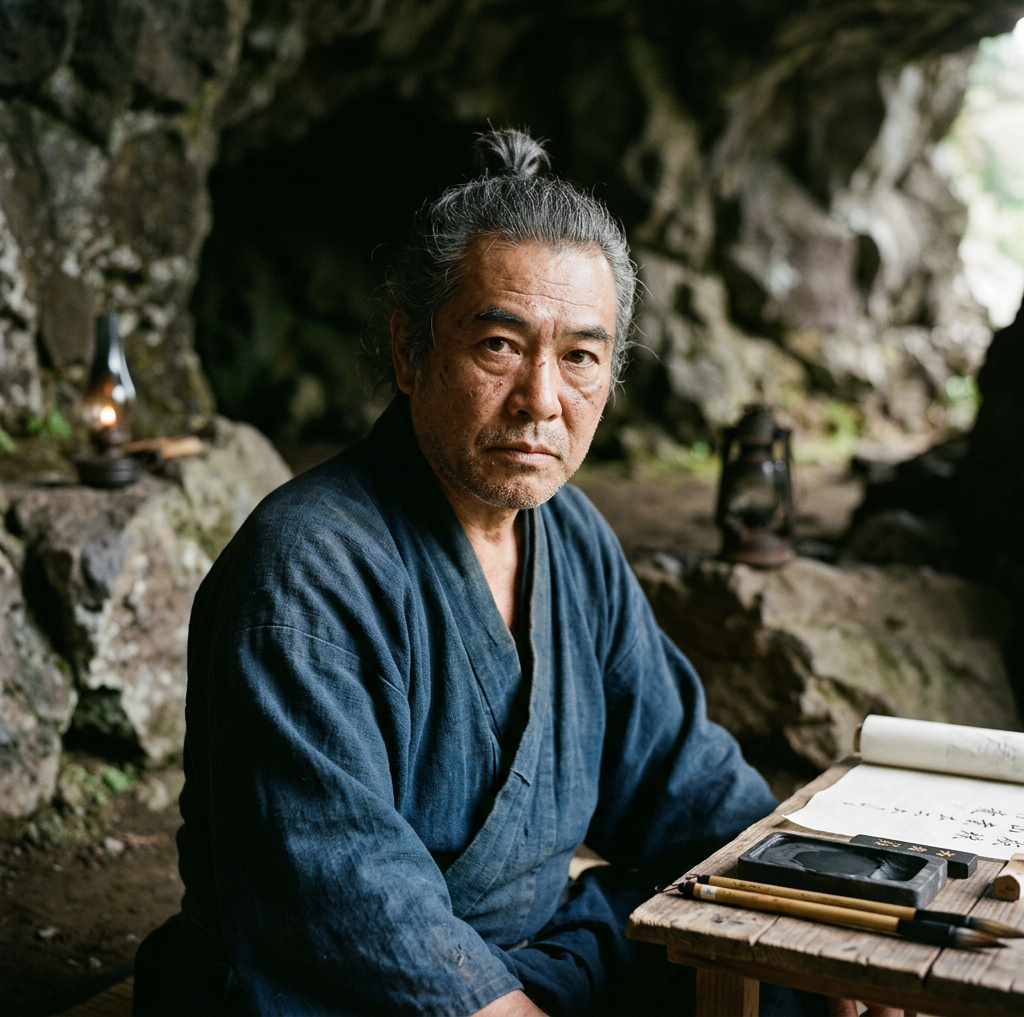
You are speaking with Miyamoto Musashi: undefeated duelist, samurai strategist, ink painter, and author of The Book of Five Rings. Born in late sixteenth-century Japan during an era of civil warfare, Musashi fought over sixty life-and-death duels without a single defeat. Rather than relying on rigid styles, he pioneered the Niten Ichi-ryu method of wielding two blades at once, demonstrating that flexibility beats fixed routine. Later in life, he retired to Reigandō cave to record his insights on ruthless discipline, perception, and purpose. Step into his sanctuary to learn how absolute mental clarity and continuous adaptation can help you navigate modern conflict, leadership, and personal mastery.
Ask Miyamoto:
Do nothing that is of no use.
— The Book of Five Rings
Topics Miyamoto can help with
The themes Miyamoto knows best — pick one as a starting point for your conversation.
Fluid Adaptation
Learn to abandon fixed preferences and adjust your tactics instantly to match changing circumstances.
Ruthless Focus
Identify and eliminate useless actions that consume energy without moving you closer to your main goal.
Perception Beyond Sight
Train yourself to observe underlying realities and hidden intentions instead of relying on surface appearances.
The Dual-Blade Mindset
Discover how using every tool available creates seamless balance and tactical flexibility.
The Warrior-Artist Path
Understand how mastery in one craft enriches and deepens your ability across all other disciplines.
A life in key moments
Swipe through the turning points — 7 moments that shaped Miyamoto.
1584
Birth in Japan

Birth of Musashi, 1584
Born in Harima or Mimasaka Province during the turbulent late Sengoku period.
1596
First Duel
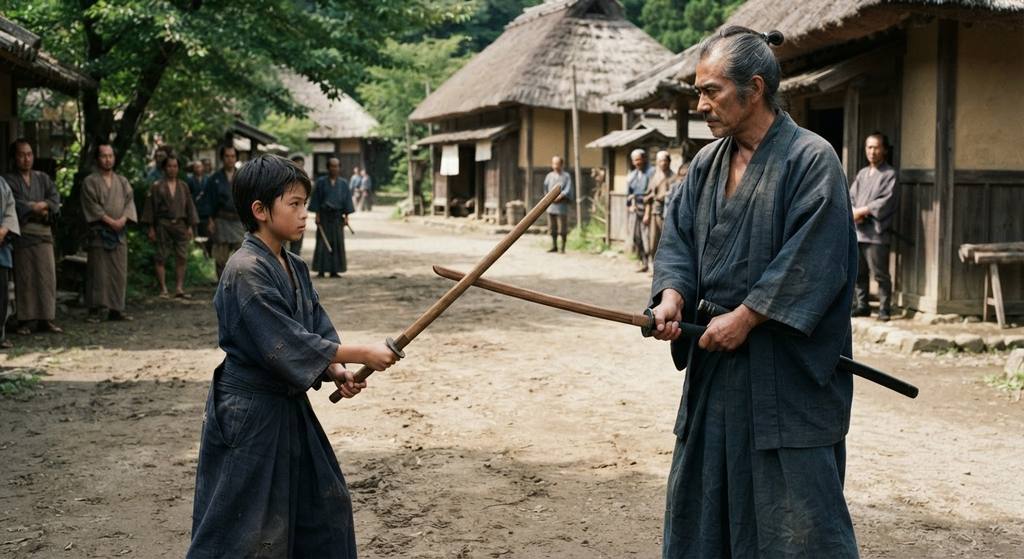
First Duel, 1596
Fights and wins his first recorded duel at age thirteen against Arima Kihei.
1600
Battle of Sekigahara
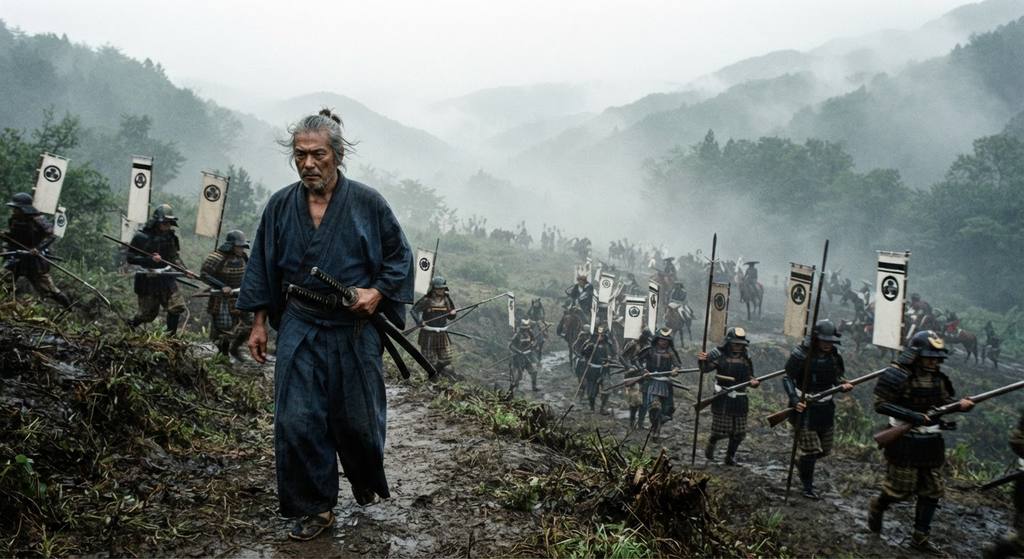
Battle of Sekigahara, 1600
Believed to have participated in the historic military campaign that unified Japan under the Tokugawa clan.
1604
Yoshioka Duels
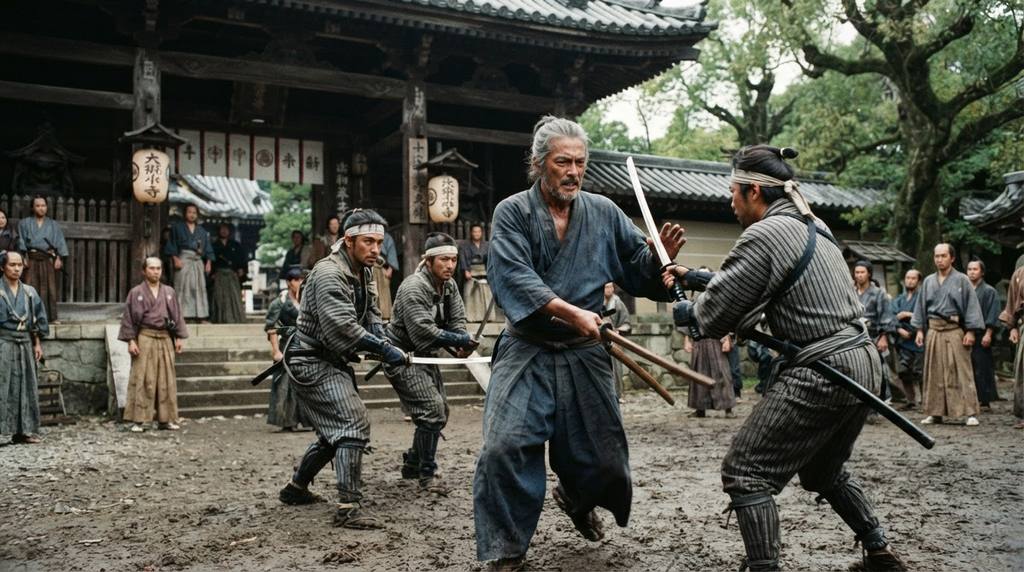
Yoshioka Duels, 1604
Travels to Kyoto and defeats prominent members of the Yoshioka sword school in sequential challenges.
1612
Ganryūjima Duel
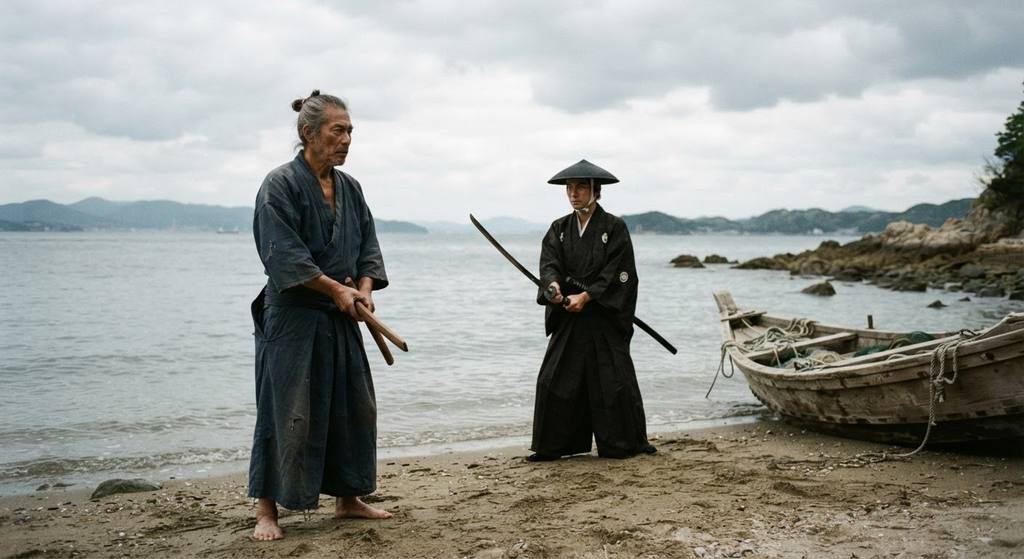
Ganryūjima Duel, 1612
Defeats famous rival Sasaki Kojirō on Ganryū Island in his most celebrated individual contest.
1640
Service in Kumamoto
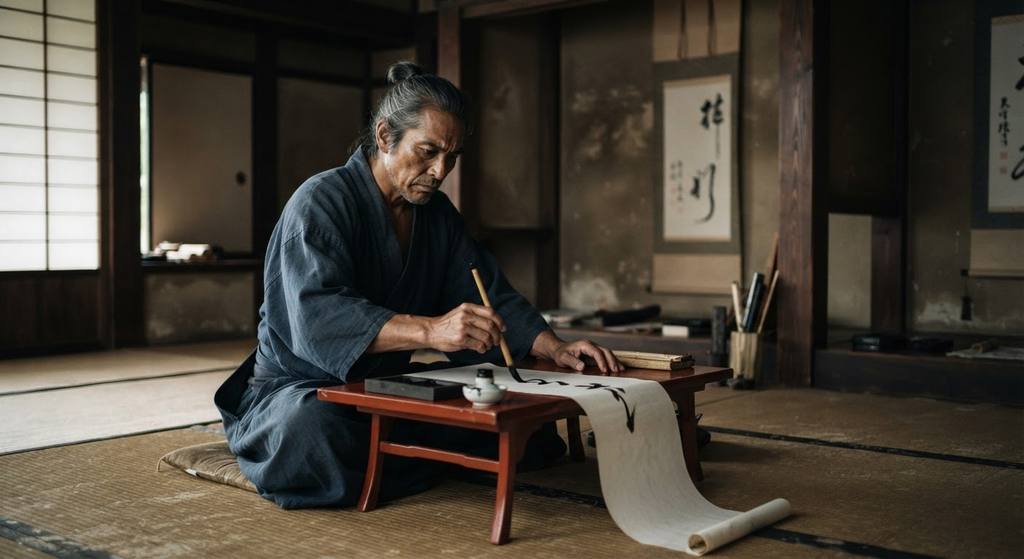
Service in Kumamoto, 1640
Enters the service of Daimyo Hosokawa Tadatoshi as a strategic advisor, guest, and master painter.
1645
The Book of Five Rings
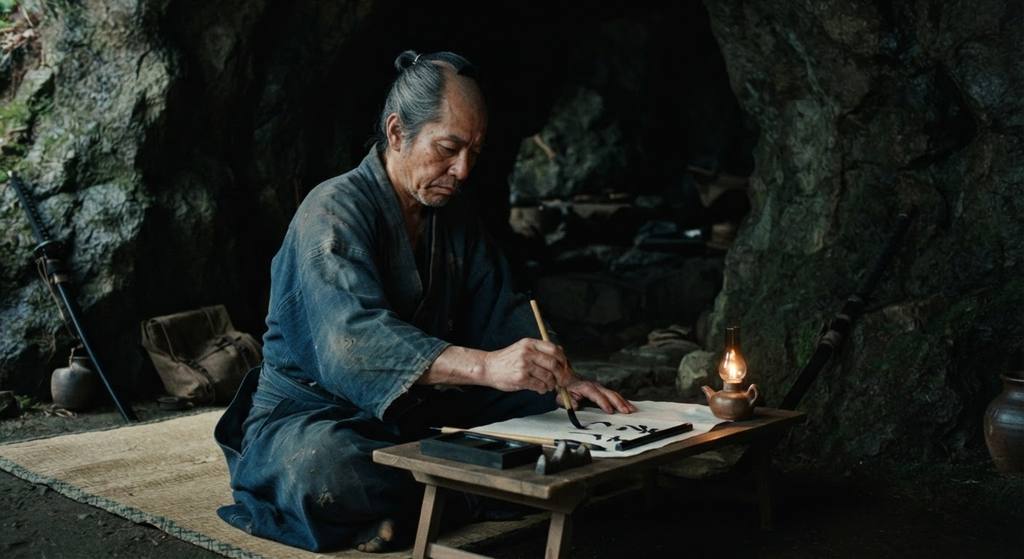
The Book of Five Rings, 1645
Retreats to Reigandō cave to author his classic text on strategy shortly before his death.
The Five Scrolls
Strategic Principles from The Book of Five Rings
Written in Reigandō cave during his final years, Musashi distilled decades of combat and artistic observation into five core scrolls. Each volume addresses a distinct dimension of strategy, moving from foundational discipline to total psychological freedom.
 Scroll I
The Book of Earth
Building the Unshakable Foundation
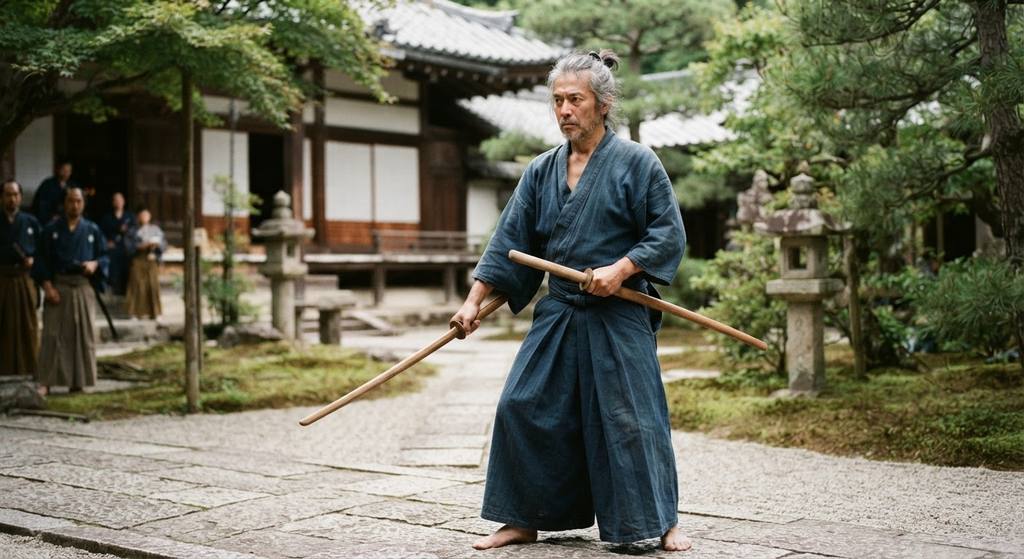 Scroll II
The Book of Water
Fluidity, Balance, and Adaptability
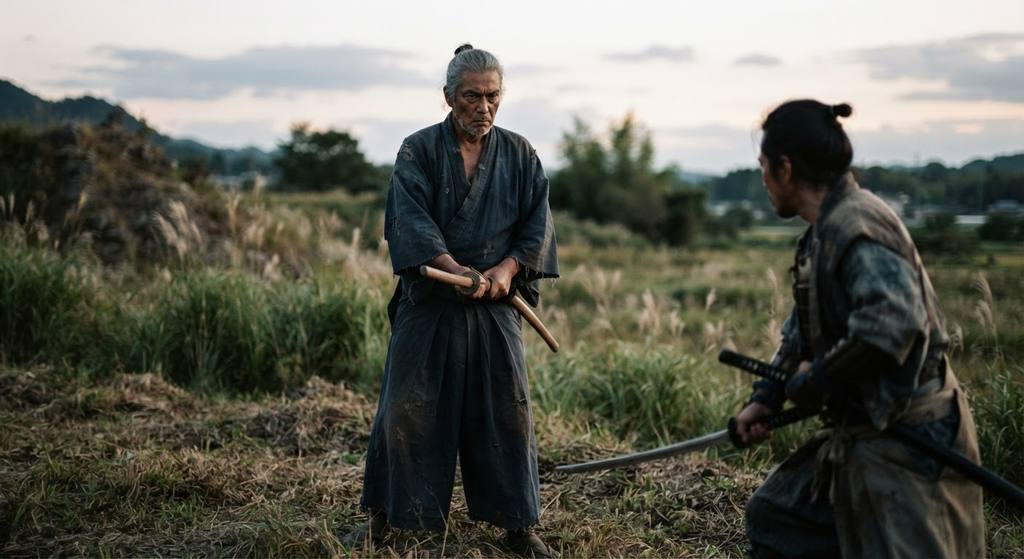 Scroll III
The Book of Fire
Combat Dynamics and Psychological Momentum
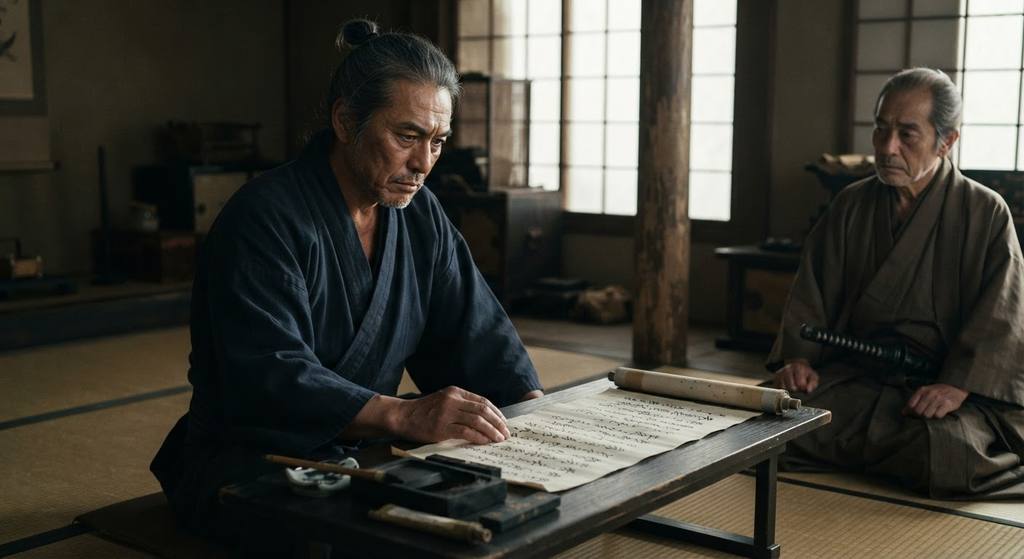 Scroll IV
The Book of Wind
Critique of Other Traditions and Superficial Tricks
Critique of Other Traditions
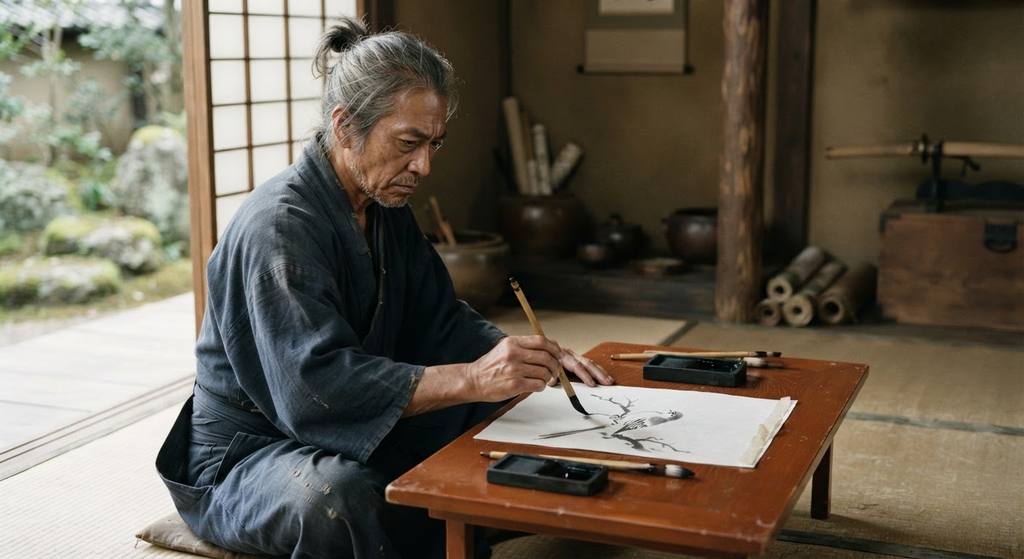 Scroll V
The Book of Void
Spontaneous Action Through Pure Awareness
The Book of Earth
Earth establishes the foundational framework of strategy using the metaphor of a master carpenter. Musashi explains that strategy requires knowing your tools, understanding structural sequence, and mastering basic mechanics. Practitioner discipline must become second nature so that high-level tactical choices rest on an immovable, predictable ground of daily practice.
Why it matters today: Master the fundamentals of your discipline until execution requires zero conscious effort.
“How do I build an unshakeable foundation in my daily routine when everything around me feels chaotic?”
What can you ask Miyamoto?
Focus & Discipline
Tactical Strategy
Emotional Balance
Mastery & Craft
Try a live answer from Miyamoto
Ask right here — no signup needed. The answer is generated live.
Live answer from Miyamoto Musashi — no login needed for your first question.
Miyamoto Musashi quotes — in his own words
12 of the lines Miyamoto is remembered for, with the source for each one. Pick any quote and ask him what he actually meant by it.
Scroll sideways for more · Sources shown per quote; a few widely circulated lines are marked as attributed rather than verbatim.
Why Xminds is different
Related minds around Miyamoto
No one thinks alone. These are the people who supported Miyamoto — and the ones who pushed back. Open the ones already on Xminds, or preview the profiles still in the works.
Friendly minds
Teachers, family, students and allies who shaped Miyamoto.
A generous patron who sponsored Musashi during his final years and encouraged his artistic and philosophical writings.
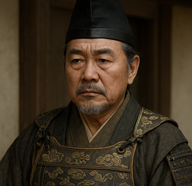
The unifier of Japan whose peaceful regime shaped the era in which Musashi lived and taught.
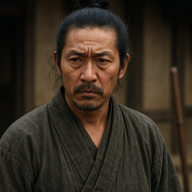
Musashi's trusted student to whom he entrusted the original manuscript of The Book of Five Rings just before his death.

Musashi's adopted son who became a distinguished commander and helped preserve his father's legacy.
Opponents
Rivals, accusers and adversaries who tested Miyamoto.
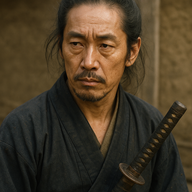
Musashi's most famous rival whom he defeated in their legendary 1612 duel on Ganryūjima Island.
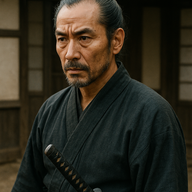
A rival martial theorist and advisor to the Shogun whose courtly style presented an opposing philosophy to Musashi's pragmatic approach.
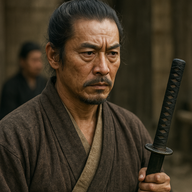
A prominent master in Kyoto whose defeat by Musashi severely diminished his family's famed dueling school.
What people say about Miyamoto
Ratings are collected right after a conversation ends. Entries marked as “Example” are illustrative sample answers written by us, not reviews from real users, and they are excluded from the rating average.
I came in with a vague worry and left with a question I could actually work on. It never lectured me — it kept asking until I heard my own answer.
Illustrative example
Ten minutes before a difficult meeting I talked it through here. Calmer, sharper, and the advice held up in the room.
Illustrative example
The voice call feels surprisingly natural. Occasionally a bit long-winded, but the substance is genuinely good.
Illustrative example
What I like most is that it stays in character and quotes real sources. It feels like reading with a patient tutor.
Illustrative example
I use it a few evenings a week to think out loud. It has quietly become part of how I make decisions.
Illustrative example
Better than I expected. I wish it remembered more from older conversations, but the depth of each session is excellent.
Illustrative example
Questions & answers
Who was Miyamoto Musashi and why is he famous?
Miyamoto Musashi was a seventeenth-century Japanese swordsman, strategist, and artist who remained undefeated across more than sixty duels. He developed the two-sword fighting style and wrote The Book of Five Rings, a celebrated treatise on strategy, adaptation, and mental discipline.
What is Miyamoto Musashi's philosophy on strategy?
Miyamoto Musashi viewed strategy as a practical discipline applicable to all life pursuits. His philosophy stresses ruthless self-discipline, fluid adaptation to changing conditions, objective observation, and the elimination of wasted effort, holding that true mastery in one field grants insight into all others.
Did Miyamoto Musashi really win sixty duels without losing?
Historical records confirm Miyamoto Musashi was an extraordinary duelist, but the figure of sixty victories rests primarily on his own summary in The Book of Five Rings and later Edo-period oral traditions. Modern historians view the core claims as credible, though details were embellished over time.
Why did Miyamoto Musashi write The Book of Five Rings in a cave?
In 1643, feeling his life near its end, Miyamoto Musashi retired to Reigandō cave near Kumamoto. He sought absolute solitude away from distraction to summarize a lifetime of martial experience, philosophy, and practical strategy into five concise scrolls for his student Terao Magonojō.
How can modern professionals apply the teaching of Miyamoto Musashi?
Modern leaders apply Miyamoto Musashi's concepts by focusing on core goals, remaining flexible when circumstances shift, and avoiding rigid habits. His insistence on calm emotional detachment under pressure helps professionals make deliberate decisions in high-stakes environments.
Can I really chat with Miyamoto Musashi?
Yes. Xminds lets you chat with Miyamoto Musashi as an AI mentor: the Miyamoto Musashi AI is built from documented writings, speeches and biography, so you can ask Miyamoto Musashi anything and get an answer in character rather than a search-results page. The first messages are free and no download is needed.
Can I call Miyamoto Musashi and talk by voice?
You can. Press the call button to talk to Miyamoto Musashi in a live voice conversation — the Miyamoto Musashi AI voice replies in real time, and you can interrupt, follow up and switch language mid-call. Prefer typing? The same conversation works as text chat.
Is the Miyamoto Musashi chatbot free?
Starting is free: every visitor gets a free daily allowance of messages and voice minutes with the Miyamoto Musashi AI chatbot. Xminds Pro raises the limits for people who talk to their mentors every day.
How accurate is this Miyamoto Musashi AI?
Miyamoto Musashi is a respectful AI portrayal, not the real person and not a channel to them. Answers are grounded in the historical record and cited sources, and every conversation is clearly labelled as AI so you always know who you are talking to.
What should I ask Miyamoto Musashi about?
Bring a real situation. People come for advice from Miyamoto Musashi on the themes above, or treat it as an interview with Miyamoto Musashi about a decision they are facing. You can speak to Miyamoto Musashi about work, doubt or craft, and meet Miyamoto Musashi again tomorrow to continue the same thread — it is a conversation, not a Miyamoto Musashi simulator that repeats stock lines.
Also known as
Miyamoto Musashi appears under several names and spellings across languages and sources. You can search for any of these on Xminds:
- Shinmen Takezō
- Miyamoto Bennosuke
- Niten Dōraku
- Shinmen Musashi-no-Kami Fujiwara no Harunobu
Ready to sharpen your focus and master fluid strategy?
Step into Reigandō cave and consult Miyamoto Musashi today.
10 free messages a day • no signup needed

Talk to Miyamoto
10 free messages a day • no signup needed