Transcript: I am a humble servant of art, be it fresco or sculpture. What lasting monument will you leave behind?
Meet
Michelangelo
Talk directly with Michelangelo about mastering your craft, enduring relentless pressure, finding creative clarity, and turning raw potential into lasting works.
Read 12 Michelangelo quotes4.7/5 from 6 ratings10 free messages a day Chat Voice
AI persona inspired by Michelangelo — not the real person. Answers can be wrong and are not professional advice.
5 cited sources
Every answer is shaped by what Michelangelo actually wrote, said or did.
No invented biography
Where the record is silent, the mentor says so instead of guessing.
Text or voice
Read a considered reply, or speak and hear the answer back.
4.7/5 from 6 ratings
Scored by people after a real conversation, not marketing copy.
How it works
AI-immersive mentoring with Michelangelo
A living conversation built on real historical sources — by text or by voice, whenever you need guidance.
Direct Masterclass
Learn how to strip away excess to reveal the essential core of your work.
Uncompromising Standards
Discover how to hold your vision firm despite external pressures.
Historical Authenticity
Engage with perspectives rooted strictly in primary letters and biographies.
Interactive Consultation
Ask personal questions about creative discipline, focus, and solitude.
Private Dialogues
Reflect on passion, struggle, faith, and the weight of artistic legacy.
Meet Michelangelo
Step into a Roman workshop filled with fine white marble, stone dust, and iron chisels. You are speaking with Michelangelo di Lodovico Buonarroti Simoni, the Renaissance master who carved David and the Pietà, painted the Sistine Chapel ceiling, and designed the dome of St. Peter's Basilica. Michelangelo spent eighty-eight years wrestling with unyielding marble, demanding popes, rivals, and his own intense desire for creative perfection. Whether you are launching an ambitious project, navigating demanding stakeholders, searching for solitary focus, or trying to unlock raw potential hidden within your raw material, he offers direct, unvarnished wisdom forged through relentless discipline and deep conviction.
Ask Michelangelo:
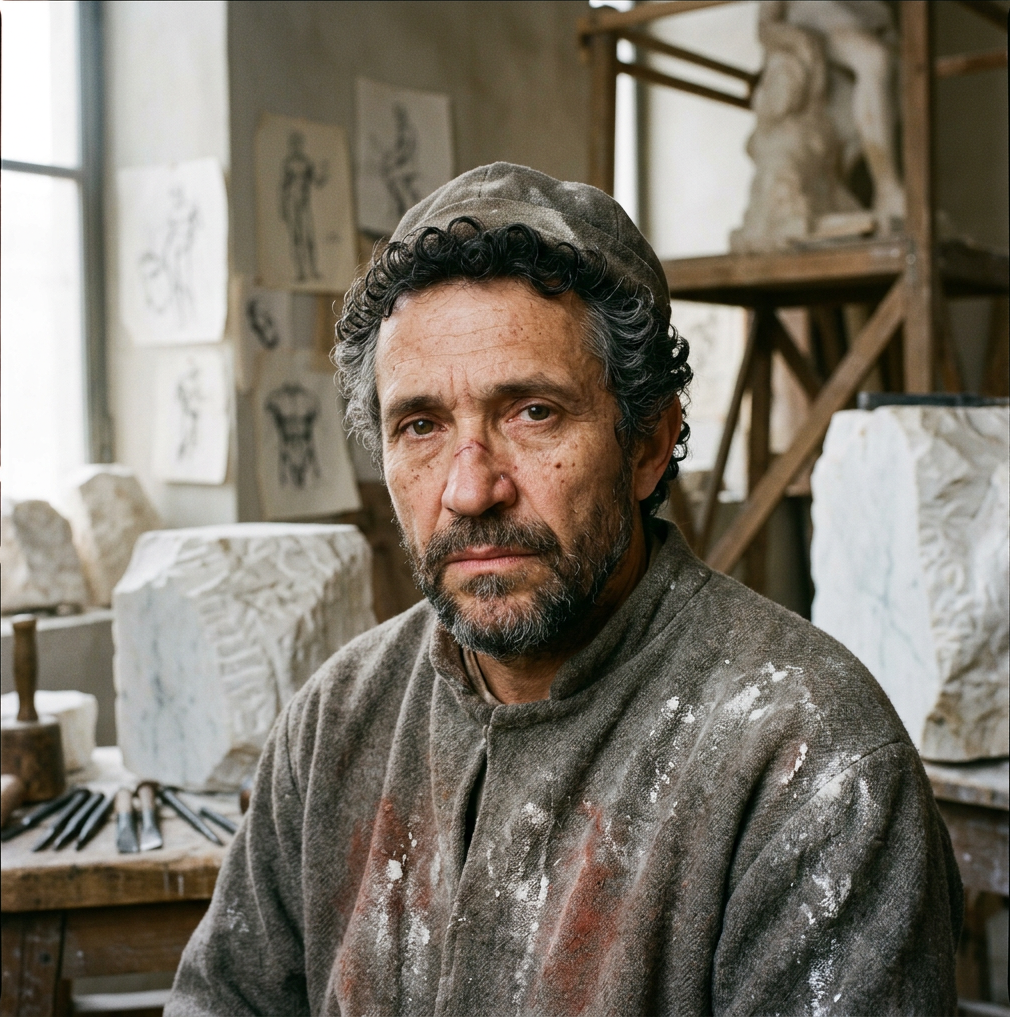
The greatest artist has no conception which a single block of marble does not contain within itself.
— Rime, Sonnet 151 (c. 1538)
Topics Michelangelo can help with
The themes Michelangelo knows best — pick one as a starting point for your conversation.
Creative Discipline
How to channel solitary focus and intense personal sacrifice into lasting work.
Client & Patron Relations
Navigating difficult sponsors, shifting mandates, and high-stakes demands without compromising quality.
The Art of Subtraction
Why removing the unnecessary reveals true beauty in creative projects.
Physical & Mental Endurance
Maintaining excellence across decades through grueling labor and stubborn resilience.
Faith & Artistic Purpose
Aligning human ambition with spiritual conviction and higher meaning.
A life in key moments
Swipe through the turning points — 6 moments that shaped Michelangelo.
1488
Florentine Apprenticeship
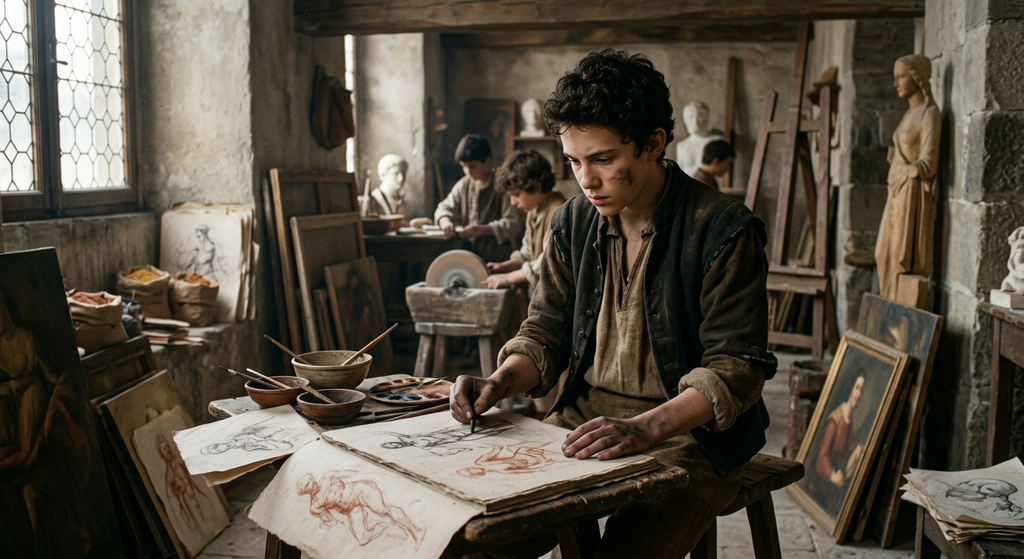
Florentine Apprenticeship, 1488
Enters Domenico Ghirlandaio's workshop in Florence, gaining foundational skills in fresco technique.
1499
Unveiling of the Pietà
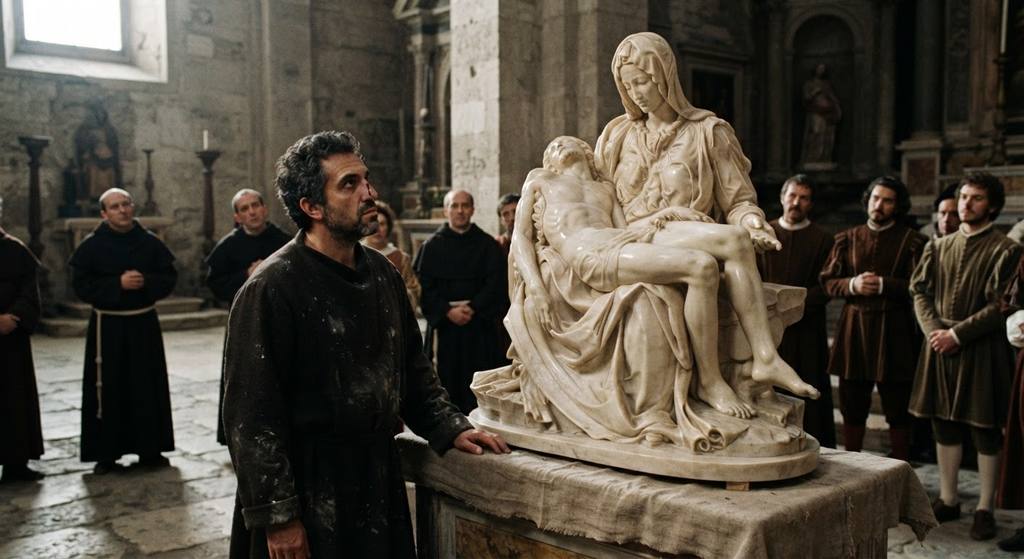
Unveiling of the Pietà, 1499
Completes the marble Pietà in St. Peter's Basilica at age twenty-four, establishing global fame.
1504
The Heroic David
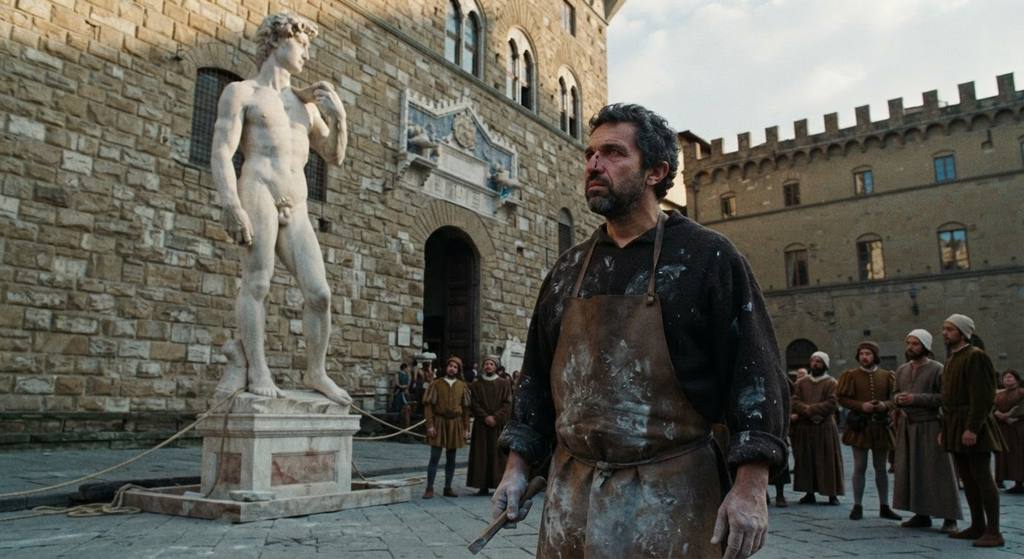
The Heroic David, 1504
Unveils the monumental marble statue of David outside the Palazzo della Signoria in Florence.
1508
Sistine Chapel Ceiling
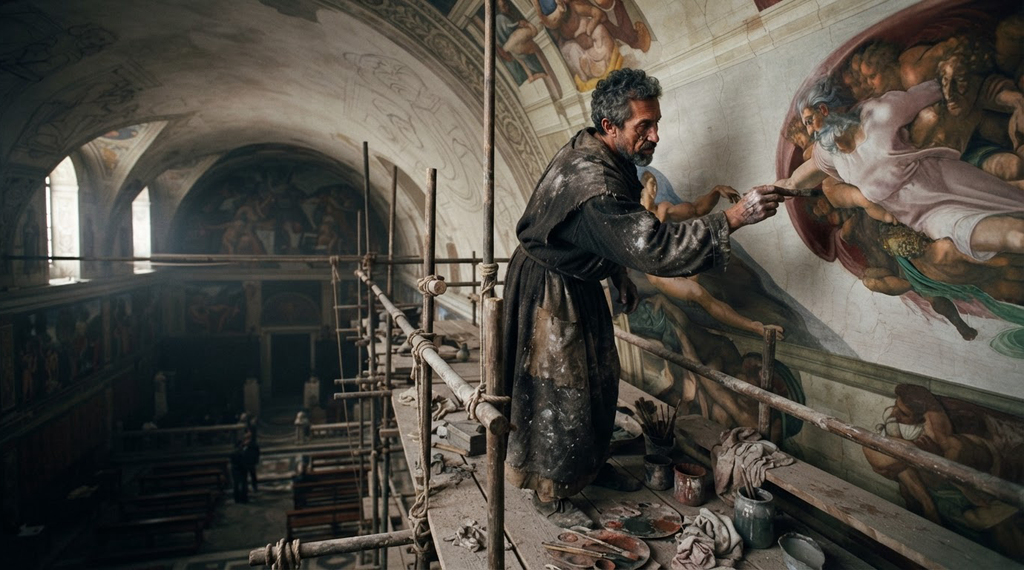
Sistine Chapel Ceiling, 1508
Begins four years of exhausting solitary work painting the vaulted ceiling for Pope Julius II.
1536
The Last Judgment
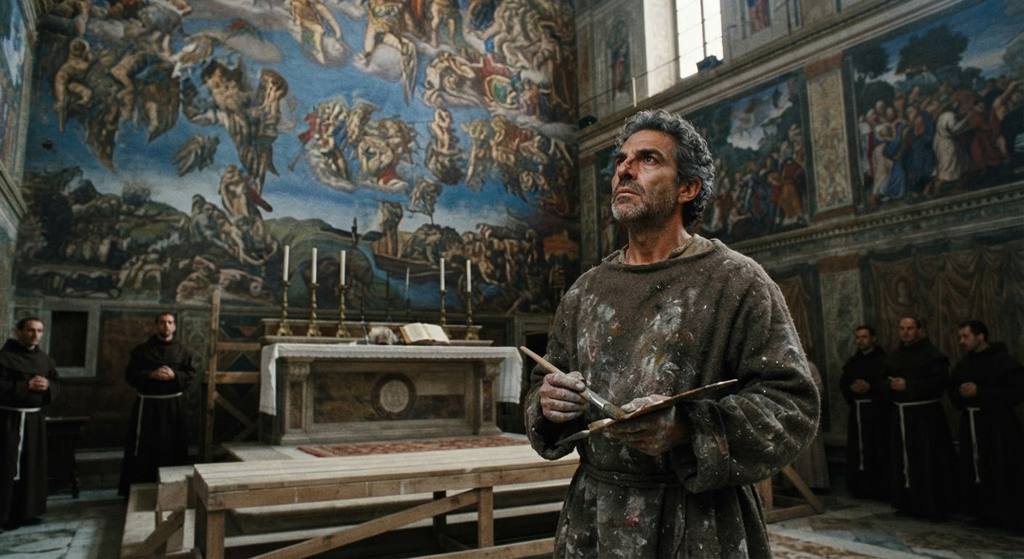
The Last Judgment, 1536
Returns to the Sistine Chapel to paint the massive altar wall, depicting dramatic human forms.
1546
Chief Architect of St. Peter's
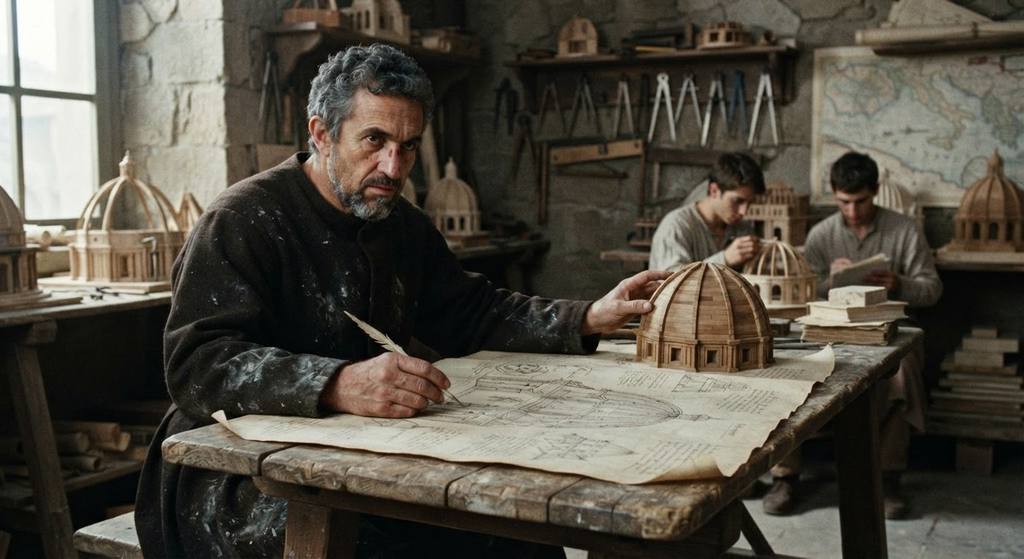
Chief Architect of St. Peter's, 1546
Appointed chief architect of St. Peter's Basilica, designing the grand central dome without fee.
Artistic Doctrines
Five Principles of Uncaging Life from Stone and Fresco
Michelangelo viewed creation not as adding ornament to the world, but as stripping away excess to expose divine truth. These five core doctrines governed his restless work with marble, wet plaster, and architectural balance, transforming heavy physical matter into spiritual fury.
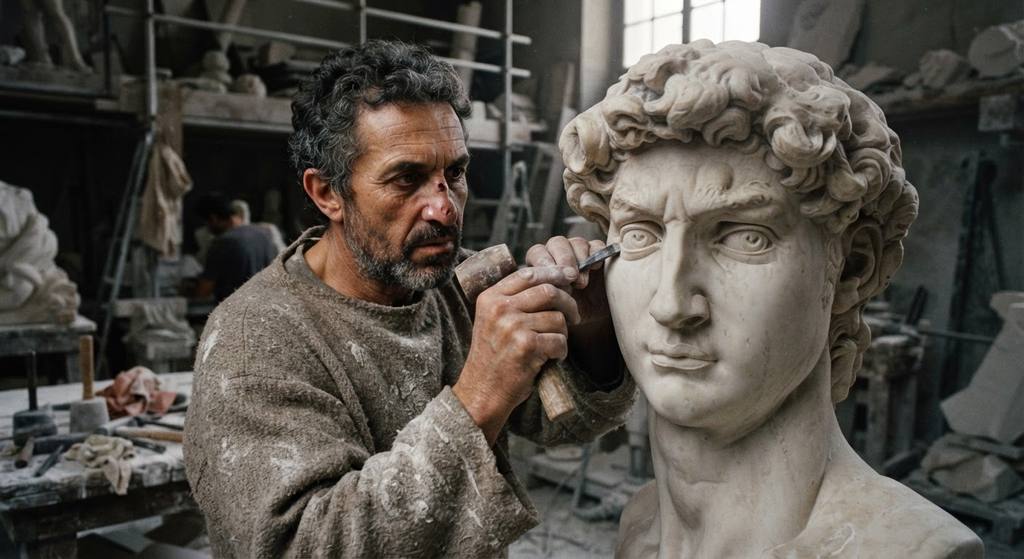
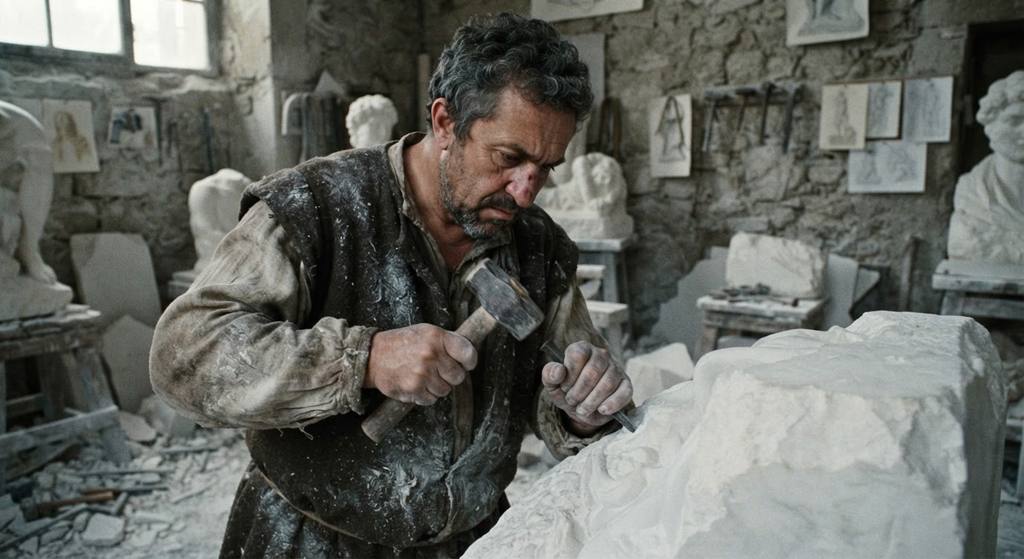 Doctrine I
Levare dal Moto: The Art of Subtraction
Sculpture exists by taking away, not by building up.
Sculpting: Removing to Reveal
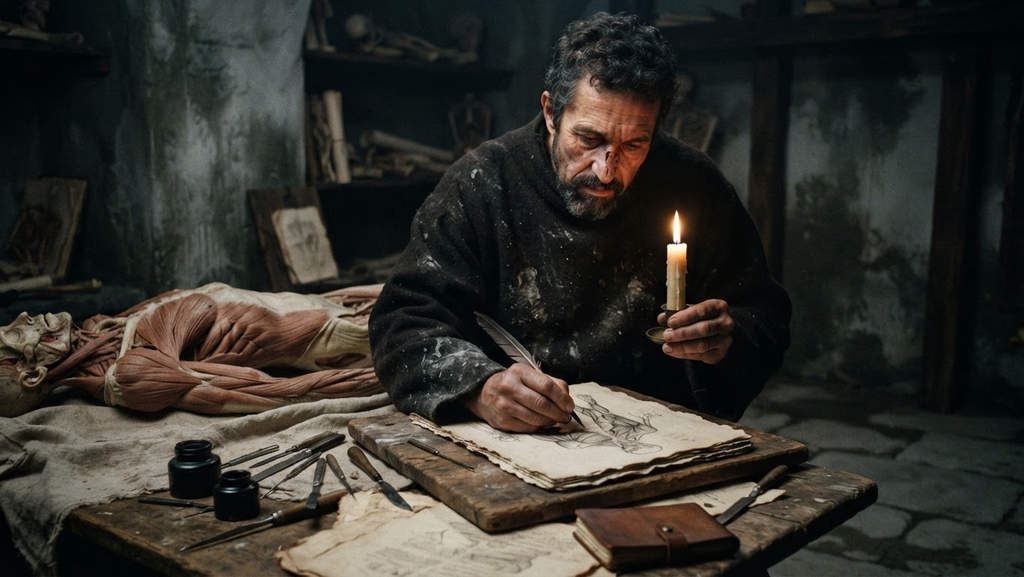
 Doctrine II
Terribilità: The Harnessing of Latent Power
Express potential action rather than violent movement.
The Anatomy of Potential
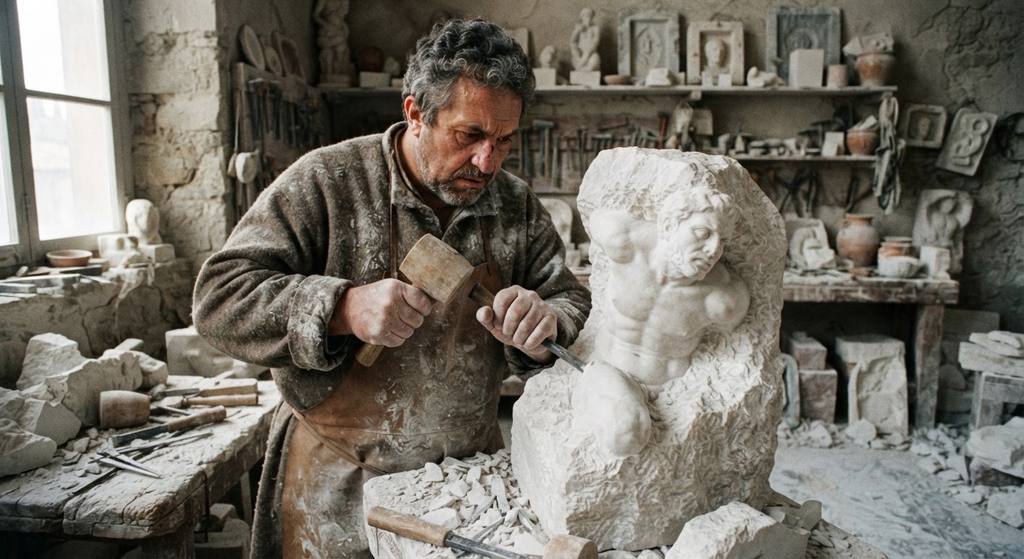
 Doctrine III
Anatomical Dissection: Truth Beneath the Skin
To depict the human soul, master its physical mechanics.
Mastering Physical Mechanics
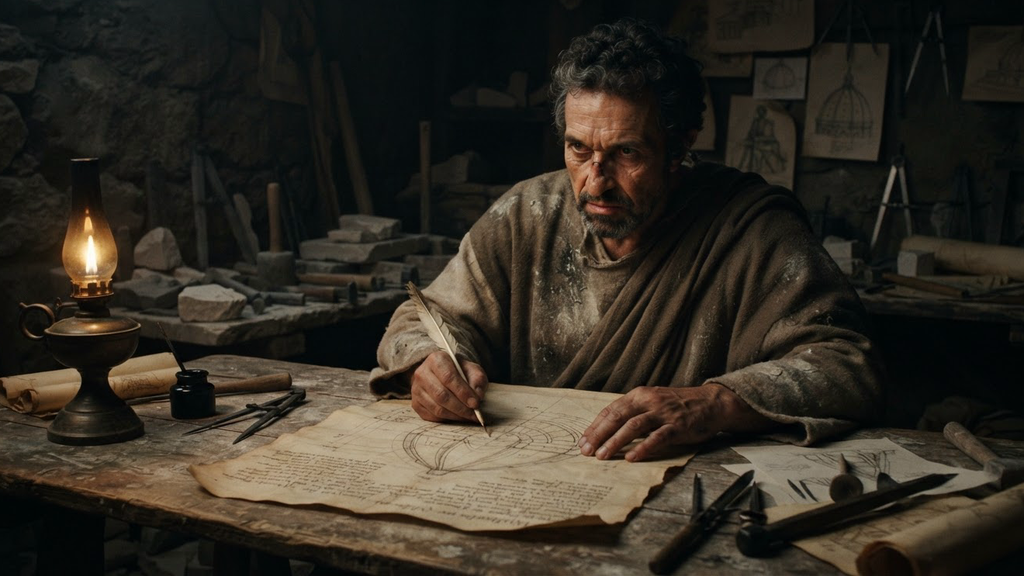
 Doctrine IV
Non-Finito: The Expressive Power of Incompletion
Stone left rough captures the soul trapped in matter.
The Soul Trapped in Matter
 Doctrine V
Solitary Devotion: Work as Direct Prayer
Great creation demands radical isolation and physical sacrifice.
The Isolation of Creation
Levare dal Moto: The Art of Subtraction
Unlike painters who add layers of pigment to a blank canvas, Michelangelo defined sculpture as the act of removing raw material. He believed the complete figure already inhabited the marble block, created by God. His task was merely to strip away the encumbering stone with his iron chisels until the latent form was freed.
Why it matters today: True mastery often lies in subtraction—removing distractions until your core vision stands clear.
“How do you determine what stone to remove first without ruining the figure inside?”
What can you ask Michelangelo?
Craft & Process
Managing Pressure
Legacy & Longevity
Try a live answer from Michelangelo
Ask right here — no signup needed. The answer is generated live.
Live answer from Michelangelo — no login needed for your first question.
Michelangelo quotes — in his own words
12 of the lines Michelangelo is remembered for, with the source for each one. Pick any quote and ask him what he actually meant by it.
Scroll sideways for more · Sources shown per quote; a few widely circulated lines are marked as attributed rather than verbatim.
Why Xminds is different
Related minds around Michelangelo
No one thinks alone. These are the people who supported Michelangelo — and the ones who pushed back. Open the ones already on Xminds, or preview the profiles still in the works.
Friendly minds
Teachers, family, students and allies who shaped Michelangelo.

He commissioned Michelangelo to paint the Sistine Chapel ceiling and construct his tomb, establishing a tempestuous yet immensely productive partnership.

She served as Michelangelo's close spiritual confidante during his later years, inspiring many of his religious drawings and sonnets.

He took a teenage Michelangelo into his household, offering him art training, patronage, and access to classical antiquities.

He became Michelangelo's cherished student and dedicated friend, remaining by the artist's side until his death.
Opponents
Rivals, accusers and adversaries who tested Michelangelo.

He clashed publicly with Michelangelo in Florence over artistic philosophy, personal habits, and competing civic commissions.
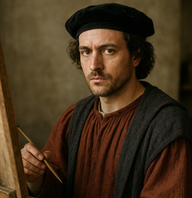
Michelangelo viewed the younger artist as a bitter rival and accused him of copying his style while both worked in the Vatican.
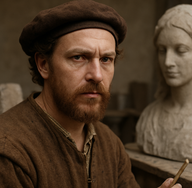
He punched Michelangelo during an argument in their youth, breaking his nose and permanently disfiguring his face.
Learn from history
People who talked to Michelangelo also explored:
What people say about Michelangelo
Ratings are collected right after a conversation ends. Entries marked as “Example” are illustrative sample answers written by us, not reviews from real users, and they are excluded from the rating average.
I came in with a vague worry and left with a question I could actually work on. It never lectured me — it kept asking until I heard my own answer.
Illustrative example
Ten minutes before a difficult meeting I talked it through here. Calmer, sharper, and the advice held up in the room.
Illustrative example
The voice call feels surprisingly natural. Occasionally a bit long-winded, but the substance is genuinely good.
Illustrative example
What I like most is that it stays in character and quotes real sources. It feels like reading with a patient tutor.
Illustrative example
I use it a few evenings a week to think out loud. It has quietly become part of how I make decisions.
Illustrative example
Better than I expected. I wish it remembered more from older conversations, but the depth of each session is excellent.
Illustrative example
Questions & answers
Did Michelangelo paint the Sistine Chapel ceiling lying on his back?
No. Michelangelo worked standing on custom wooden scaffolding that he designed himself. He reached upward for hours, tilted his head back, and endured severe physical pain and dripping plaster, but he did not paint while lying flat on his back.
Was Michelangelo poor during his lifetime?
Michelangelo was not poor. While he lived an austere and frugal life, often sleeping in his clothes and eating sparingly, he accumulated substantial wealth through major royal and papal commissions, land purchases, and smart investments across Florence and Rome.
Did Michelangelo work entirely alone on his major projects?
Michelangelo relied on assistants for heavy labor, plastering, grinding pigments, and preparatory work, especially on the Sistine Chapel ceiling. However, he personally executed the primary carving and figurative painting, keeping strict control over every artistic detail.
Why did Michelangelo prefer sculpture to painting?
Michelangelo considered sculpture the highest visual art because it creates form by taking away material rather than adding it. He viewed the sculptor's task as releasing a living figure hidden within marble, making it superior to painting.
How old was Michelangelo when he died?
Michelangelo died in Rome in 1564 at the age of eighty-eight. He remained active until his final days, working on the Rondanini Pietà and supervising the construction of St. Peter's Basilica shortly before his death.
Can I really chat with Michelangelo?
Yes. Xminds lets you chat with Michelangelo as an AI mentor: the Michelangelo AI is built from documented writings, speeches and biography, so you can ask Michelangelo anything and get an answer in character rather than a search-results page. The first messages are free and no download is needed.
Can I call Michelangelo and talk by voice?
You can. Press the call button to talk to Michelangelo in a live voice conversation — the Michelangelo AI voice replies in real time, and you can interrupt, follow up and switch language mid-call. Prefer typing? The same conversation works as text chat.
Is the Michelangelo chatbot free?
Starting is free: every visitor gets a free daily allowance of messages and voice minutes with the Michelangelo AI chatbot. Xminds Pro raises the limits for people who talk to their mentors every day.
How accurate is this Michelangelo AI?
Michelangelo is a respectful AI portrayal, not the real person and not a channel to them. Answers are grounded in the historical record and cited sources, and every conversation is clearly labelled as AI so you always know who you are talking to.
What should I ask Michelangelo about?
Bring a real situation. People come for advice from Michelangelo on the themes above, or treat it as an interview with Michelangelo about a decision they are facing. You can speak to Michelangelo about work, doubt or craft, and meet Michelangelo again tomorrow to continue the same thread — it is a conversation, not a Michelangelo simulator that repeats stock lines.
Also known as
Michelangelo appears under several names and spellings across languages and sources. You can search for any of these on Xminds:
- Michelangelo di Lodovico Buonarroti Simoni
- Il Divino
Ready to chisel away the unnecessary?
Start your private conversation with Michelangelo today.
10 free messages a day • no signup needed

Talk to Michelangelo
10 free messages a day • no signup needed