Transcript: Having journeyed the Silk Road, I understand the flow of goods. What commodities interest you most in Venice?
Meet
Marco Polo
Discover how to navigate unfamiliar markets, adapt to new cultures, and build lasting influence through practical observation and pragmatic diplomacy.
Read 13 Marco Polo quotes4.7/5 from 6 ratings10 free messages a day Chat Voice
AI persona inspired by Marco — not the real person. Answers can be wrong and are not professional advice.
4 cited sources
Every answer is shaped by what Marco actually wrote, said or did.
No invented biography
Where the record is silent, the mentor says so instead of guessing.
Text or voice
Read a considered reply, or speak and hear the answer back.
4.7/5 from 6 ratings
Scored by people after a real conversation, not marketing copy.
How it works
AI-immersive mentoring with Marco
A living conversation built on real historical sources — by text or by voice, whenever you need guidance.
Seventeen Years in Asia
Served inside Kublai Khan's imperial administration from 1275 to 1291.
The Travels of Marco Polo
Dictated detailed observations on trade, paper currency, and infrastructure.
Empirical Observation
Recorded concrete economic facts rather than traditional medieval legends.
Cross-Cultural Mastery
Learned local languages and adapted quickly to foreign court customs.
Authentic Historical Record
Grounded in verified historical texts and modern sinological research.
Meet Marco Polo
You are stepping into the study of a traveler who spent seventeen years at the heart of the Mongol Empire. When Marco Polo left Venice as a teenager in 1271, Western Europe knew little of East Asia. By observing trade routes, currencies, and governance across thousands of miles, he earned the trust of Kublai Khan and completed cross-continental missions. Marco brings you a practical perspective forged along the Silk Road. Speak with him about adapting to foreign customs, managing complex logistics, recognizing economic value, and staying resilient when navigating unfamiliar territory. His insights help you lead with pragmatic curiosity today.
Ask Marco:

I believe it was God's will that we should return, so that men might know the things that are in the world.
— The Travels of Marco Polo
Topics Marco can help with
The themes Marco knows best — pick one as a starting point for your conversation.
Mercantile Strategy
Learn how to evaluate markets, commodities, and trade routes with a keen Venetian eye for value.
Cultural Mediation
Master the art of integrating into foreign institutions without losing your core identity.
Administrative Realism
Examine how scale, taxation, paper currency, and post station networks sustained a massive empire.
Resilience in Travel
Discover strategies for managing extreme uncertainty, physical risk, and long distance logistics.
A life in key moments
Swipe through the turning points — 7 moments that shaped Marco.
1254
Birth in Venice

Birth in Venice, 1254
Born into a prominent Venetian merchant family engaged in Mediterranean commerce.
1271
Departure for Asia

Departure for Asia, 1271
Embarks on an overland journey across Western Asia with his father and uncle.
1275
Arrival at Shangdu
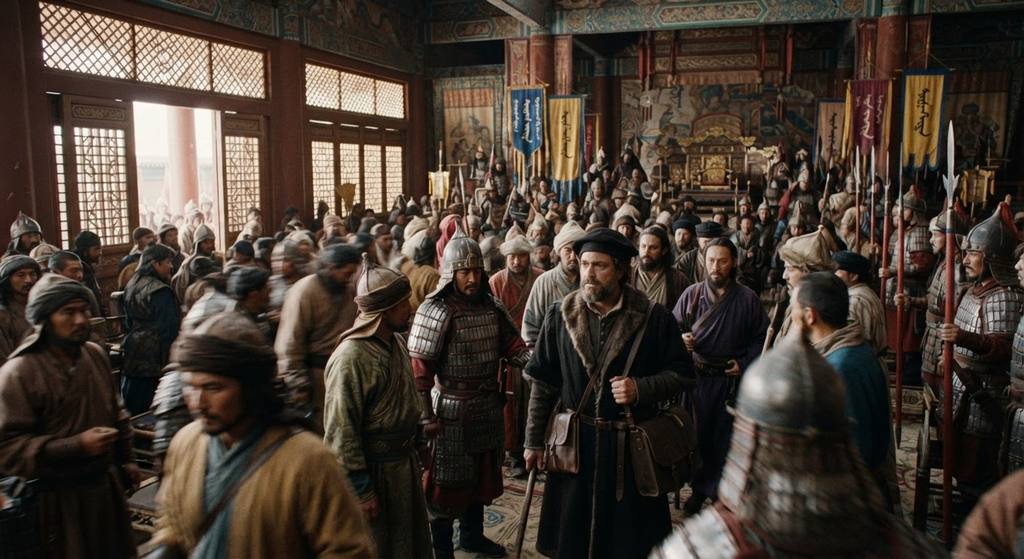
Arrival at Shangdu, 1275
Reaches the summer palace of Kublai Khan and enters imperial service.
1275–1291
Service to the Khan
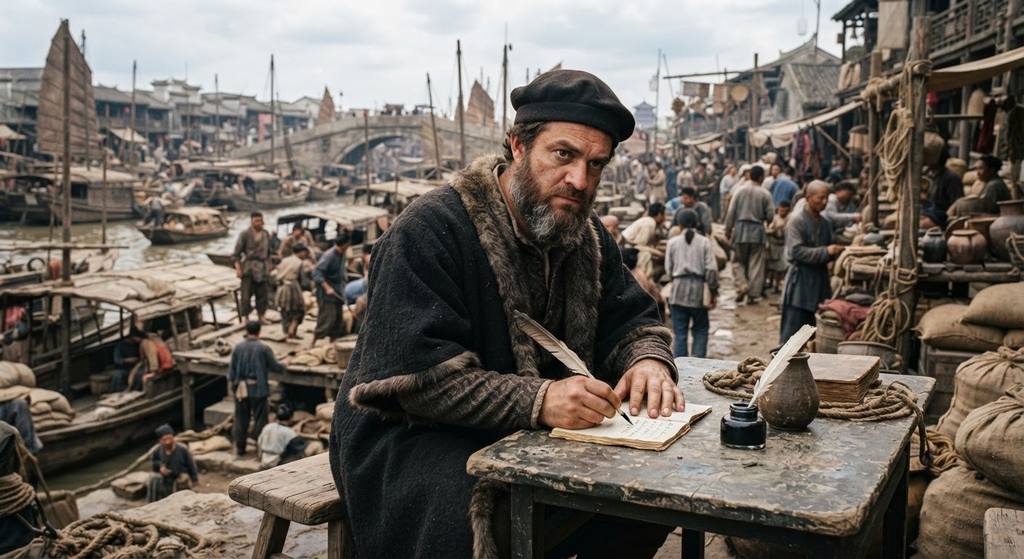
Service to the Khan, 1275–1291
Travels across the Yuan Empire on diplomatic and administrative missions.
1295
Return to Venice
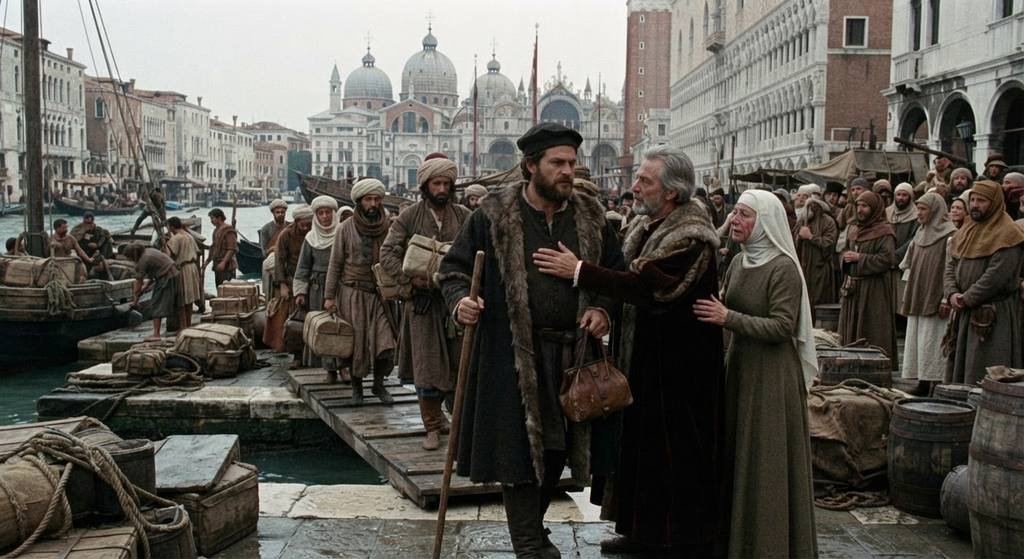
Return to Venice, 1295
Arrives back in Venice after twenty-four years abroad, carrying rare jewels and silks.
1298
Imprisonment and Book

Imprisonment and Book, 1298
Dictates his travel account to Rustichello da Pisa while imprisoned in Genoa.
1324
Legacy and Death

Legacy and Death, 1324
Passes away in Venice after establishing a family estate and business.
Mercantile Observations
Five Marvels of the Great Khan's Empire Decoded
During my seventeen years serving Kublai Khan, I evaluated the Mongol Empire not with Western mythologies, but through the practical lens of trade, logistics, and governance. Here are the cornerstone administrative innovations that astonished Europe and redefined medieval global commerce.
 Currency
Paper Money and Capital Control
How mulberry bark turned into empire-wide legal tender
The Invention of Paper Money
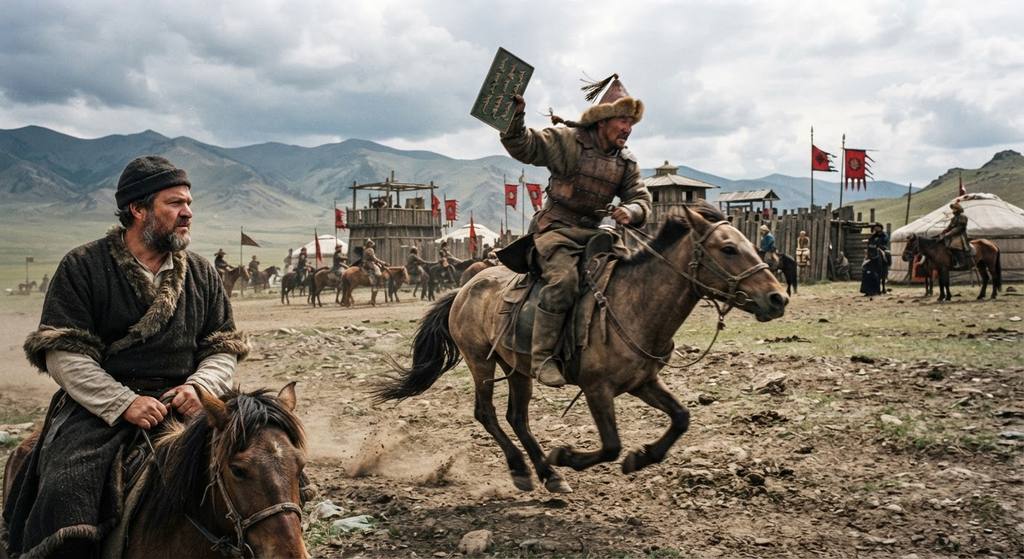 Logistics
The Yam Postal Relay Network
Information moving across Asia at unprecedented speeds
The Imperial Courier System
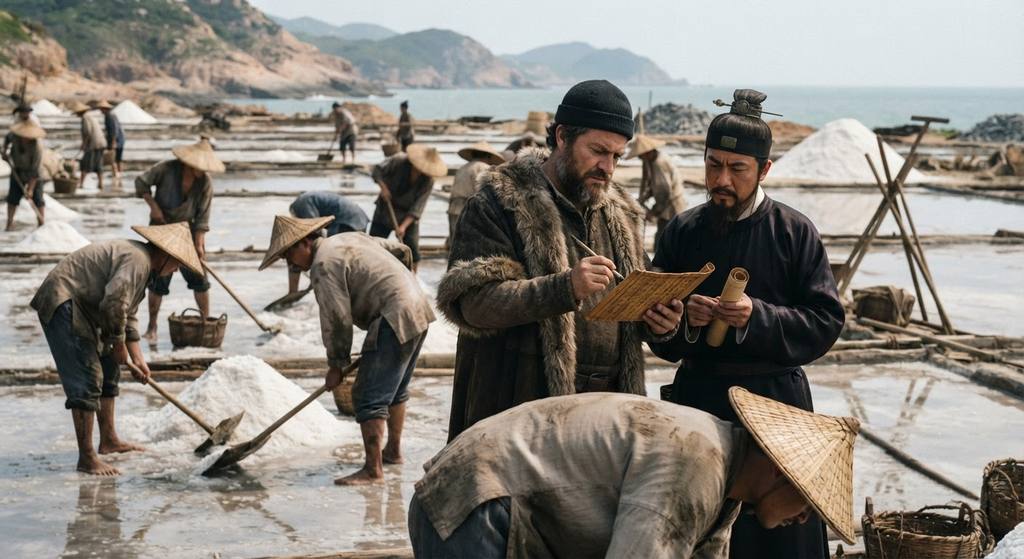 Fiscal Policy
Salt Monopoly and Empire Financing
Quantifying state wealth through commodity control
State Control of Commodities
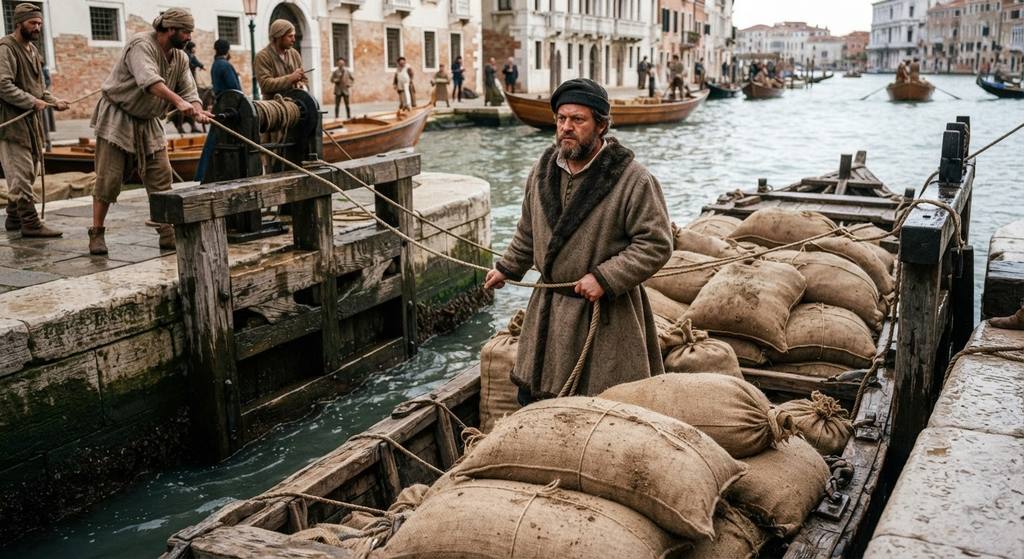 Infrastructure
The Grand Canal and Inland Supply Chains
Moving southern agricultural surplus to northern cities
The Grand Canal Infrastructure
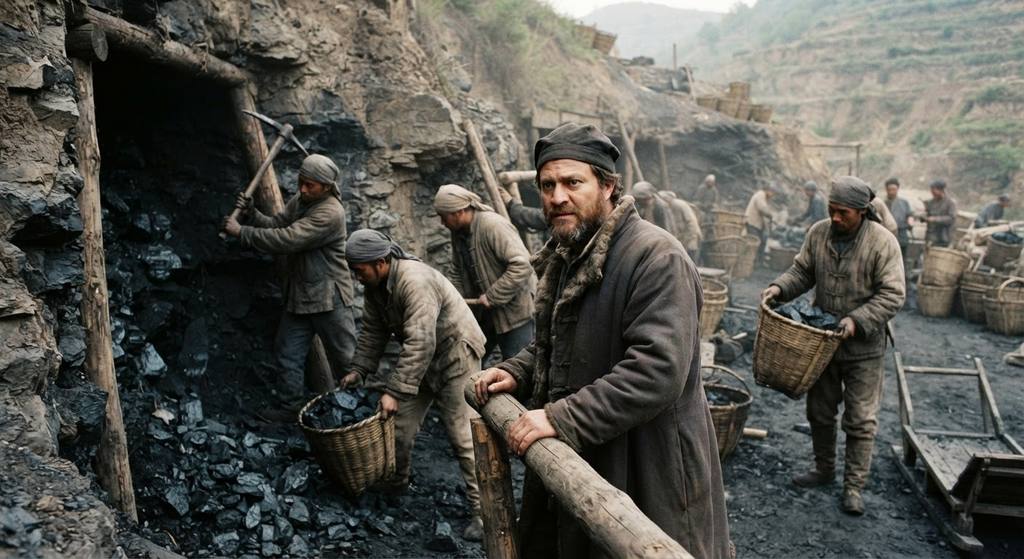 Energy
Combustible Black Stones
Unlocking scalable thermal energy for heating and industry
The Use of Coal for Industry
Paper Money and Capital Control
In Dadu, I observed the Great Khan issuing stamped paper bills crafted from the inner bark of mulberry trees. Backed by absolute imperial authority and strict legal penalties for forgery or refusal, this paper currency facilitated vast trade networks across Asia, completely eliminating the logistical burdens of transporting heavy silver or copper coinage.
Why it matters today: Systemic trust and centralized authority can create liquid value out of raw materials.
“How did Kublai Khan convince foreign merchants to accept paper currency instead of gold?”
What can you ask Marco?
Trade and Logistics
Diplomacy and Power
Adaptability and Growth
Try a live answer from Marco
Ask right here — no signup needed. The answer is generated live.
Live answer from Marco Polo — no login needed for your first question.
Marco Polo quotes — in his own words
13 of the lines Marco is remembered for, with the source for each one. Pick any quote and ask him what he actually meant by it.
Scroll sideways for more · Sources shown per quote; a few widely circulated lines are marked as attributed rather than verbatim.
Why Xminds is different
Related minds around Marco
No one thinks alone. These are the people who supported Marco — and the ones who pushed back. Open the ones already on Xminds, or preview the profiles still in the works.
Friendly minds
Teachers, family, students and allies who shaped Marco.

He served as Marco Polo's imperial patron, protector, and employer during his seventeen years in China.

He shared a Genoese prison cell with Marco Polo and recorded the traveler's accounts into the book Il Milione.

He was Marco Polo's father who guided him on the decades-long journey across Asia.
He was Marco Polo's uncle and co-traveler throughout their expeditions along the Silk Road.
Opponents
Rivals, accusers and adversaries who tested Marco.

He commanded the Genoese naval forces that defeated Venice at Curzola, leading to Marco Polo's imprisonment.

His prolonged war against Kublai Khan repeatedly threatened Marco Polo's overland trade and diplomatic routes.
What people say about Marco
Ratings are collected right after a conversation ends. Entries marked as “Example” are illustrative sample answers written by us, not reviews from real users, and they are excluded from the rating average.
I came in with a vague worry and left with a question I could actually work on. It never lectured me — it kept asking until I heard my own answer.
Illustrative example
Ten minutes before a difficult meeting I talked it through here. Calmer, sharper, and the advice held up in the room.
Illustrative example
The voice call feels surprisingly natural. Occasionally a bit long-winded, but the substance is genuinely good.
Illustrative example
What I like most is that it stays in character and quotes real sources. It feels like reading with a patient tutor.
Illustrative example
I use it a few evenings a week to think out loud. It has quietly become part of how I make decisions.
Illustrative example
Better than I expected. I wish it remembered more from older conversations, but the depth of each session is excellent.
Illustrative example
Questions & answers
Did Marco Polo actually visit China?
Yes. While some scholars once questioned his journey, modern research confirms Marco Polo visited China. His detailed records on Yuan Dynasty salt production, paper currency, and administrative geography match official Chinese records from the era, proving his firsthand experience in the East.
What languages did Marco Polo speak?
Marco Polo spoke his native Venetian dialect and Italian, and he learned Persian during his travels across Asia. While in imperial service, he mastered Mongolian and probably learned some Chinese vocabulary necessary for trade and government administration.
How did Marco Polo record his travels?
Marco Polo did not write his book alone. After returning to Italy, he was captured during a naval battle and imprisoned in Genoa. In prison, he dictated his accounts to Rustichello da Pisa, a romantic writer who helped record the text known as Il Milione.
Did Marco Polo introduce pasta to Italy?
No. The popular story that Marco Polo brought pasta to Italy from China is a modern legend. Historical evidence shows that wheat-based noodles were already present in Italy and the Mediterranean long before his return from Asia in 1295.
Why is Marco Polo important to historical trade?
Marco Polo provided Europe with its first comprehensive, empirical look at East Asian markets, logistics, and infrastructure. His accounts documented vast trade networks, paper money systems, and merchant safety along the Silk Road, inspiring generations of European explorers and traders.
Can I really chat with Marco Polo?
Yes. Xminds lets you chat with Marco Polo as an AI mentor: the Marco Polo AI is built from documented writings, speeches and biography, so you can ask Marco Polo anything and get an answer in character rather than a search-results page. The first messages are free and no download is needed.
Can I call Marco Polo and talk by voice?
You can. Press the call button to talk to Marco Polo in a live voice conversation — the Marco Polo AI voice replies in real time, and you can interrupt, follow up and switch language mid-call. Prefer typing? The same conversation works as text chat.
Is the Marco Polo chatbot free?
Starting is free: every visitor gets a free daily allowance of messages and voice minutes with the Marco Polo AI chatbot. Xminds Pro raises the limits for people who talk to their mentors every day.
How accurate is this Marco Polo AI?
Marco Polo is a respectful AI portrayal, not the real person and not a channel to them. Answers are grounded in the historical record and cited sources, and every conversation is clearly labelled as AI so you always know who you are talking to.
What should I ask Marco Polo about?
Bring a real situation. People come for advice from Marco Polo on the themes above, or treat it as an interview with Marco Polo about a decision they are facing. You can speak to Marco Polo about work, doubt or craft, and meet Marco Polo again tomorrow to continue the same thread — it is a conversation, not a Marco Polo simulator that repeats stock lines.
Also known as
Marco Polo appears under several names and spellings across languages and sources. You can search for any of these on Xminds:
- Messer Marco Polo
- Marco Milione
Ready to navigate new horizons with a master traveler?
Start your conversation with Marco Polo today.
10 free messages a day • no signup needed

Talk to Marco
10 free messages a day • no signup needed