Transcript: I am a physician and philosopher. I invite you to explore how logic can strengthen your faith.
Meet
Maimonides
Seek clarity in times of confusion with advice on balancing reason, faith, physical well-being, and structured ethical decision-making.
Read 13 Maimonides quotes4.7/5 from 6 ratings10 free messages a day Chat Voice
AI persona inspired by Maimonides — not the real person. Answers can be wrong and are not professional advice.
4 cited sources
Every answer is shaped by what Maimonides actually wrote, said or did.
No invented biography
Where the record is silent, the mentor says so instead of guessing.
Text or voice
Read a considered reply, or speak and hear the answer back.
4.7/5 from 6 ratings
Scored by people after a real conversation, not marketing copy.
How it works
AI-immersive mentoring with Maimonides
A living conversation built on real historical sources — by text or by voice, whenever you need guidance.
Structured Logic
Break complex problems into clear, rational steps grounded in systematic thought.
Historical Authority
Consult a renowned philosopher, physician, and legal scholar who advised royal courts.
Holistic Method
Integrate physical wellness and emotional balance directly into intellectual work.
Direct Dialogue
Engage in tailored, step-by-step conversations to resolve real personal dilemmas.
Private Reflection
Explore your doubts and core beliefs in a completely secure, confidential space.
Meet Maimonides
When life feels overwhelmed by conflicting advice and moral uncertainty, turn to Moses ben Maimon, known as Maimonides. As a court physician in Cairo, leading legal scholar, and master philosopher, he spent his life guiding people through complex decisions. Maimonides believed that clear thinking, physical health, and emotional balance are inseparable. You can consult him to break down complex problems, weigh faith alongside evidence, manage stress through disciplined habits, and make principled ethical choices. Step into his Fustat study and discover how medieval wisdom brings modern clarity to your mind, body, and everyday decisions.
Ask Maimonides:

Accept the truth from whatever source it comes.
— Eight Chapters (Introduction to Commentary on the Mishnah)
Topics Maimonides can help with
The themes Maimonides knows best — pick one as a starting point for your conversation.
Reason and Belief
Harmonize logical analysis with sacred traditions and personal value systems.
Preventive Health
Cultivate daily physical habits that support optimal focus and mental clarity.
Ethical Action
Apply systematic standards to charity, leadership, and personal conduct.
Managing Perplexity
Navigate doubt, conflicting choices, and intellectual uncertainty with calm.
A life in key moments
Swipe through the turning points — 8 moments that shaped Maimonides.
1138
Birth in Cordoba

Birth in Cordoba, 1138
Born into a prominent family of scholars and communal leaders in Al-Andalus.
1148
Flight from Cordoba

Flight from Cordoba, 1148
Forced to leave Cordoba following the conquest of the city by the Almohad Dynasty.
1160
Residencies in Morocco

Residencies in Morocco, 1160
Pursued medical studies and authored early works while residing in Fez.
1166
Settlement in Fustat

Settlement in Fustat, 1166
Settled permanently in Fustat (Old Cairo), Egypt, following the loss of family assets.
1170
Completion of Mishneh Torah

Completion of Mishneh Torah, 1170
Finished his fourteen-volume legal code organizing all oral rabbinic law.
1187
Court Physician Appointment

Court Physician Appointment, 1187
Appointed personal physician to Al-Qadi al-Fadil, vizier to Sultan Saladin.
1190
The Guide for the Perplexed

The Guide for the Perplexed, 1190
Published his philosophical masterpiece written in Judeo-Arabic to harmonize logic and faith.
1204
Death in Fustat

Death in Fustat, 1204
Passed away in Egypt after decades of service as a physician, scholar, and community leader.
Frameworks of Wisdom
Five Pillars for Harmonizing Reason, Health, and Ethics
Maimonides left behind a blueprint for living rationally in a complex world. By bridging Aristotelian logic, preventive medicine, and ethical law, he created practical frameworks designed to elevate human intellect while protecting physical well-being.
 Ethics
The Ladder of Ethical Charity
Elevating giving from mere aid to self-sufficiency
The ethics of charity
 Philosophy
The Limits of Divine Description
Understanding truth by defining what it is not
Defining truth through negation
 Character
The Middle Path of Emotional Balance
Avoiding extremes to cultivate character
The path of the golden mean
 Medicine
Preventive Health and Mental Clarity
Physical vigor as the foundation for intellectual work
Physical health and the intellect
 Logic
LogicThe Unity of Truth Across Sources
Accepting truth regardless of who speaks it
Accepting truth from any source
The Ladder of Ethical Charity
In the Mishneh Torah, Maimonides established eight distinct tiers of charitable giving. The highest degree is helping a person become self-sufficient through a gift, loan, or partnership, ensuring they never need charity again. Lower tiers depend on whether giving is done anonymously or begrudgingly.
Why it matters today: Design support systems that build independence and dignity rather than temporary reliance.
“How can I apply your highest level of charity to modern mentorship and philanthropy?”
What can you ask Maimonides?
Decision Making & Logic
Health & Well-being
Ethics & Purpose
Try a live answer from Maimonides
Ask right here — no signup needed. The answer is generated live.
Live answer from Maimonides — no login needed for your first question.
Maimonides quotes — in his own words
13 of the lines Maimonides is remembered for, with the source for each one. Pick any quote and ask him what he actually meant by it.
Scroll sideways for more · Sources shown per quote; a few widely circulated lines are marked as attributed rather than verbatim.
Why Xminds is different
Related minds around Maimonides
No one thinks alone. These are the people who supported Maimonides — and the ones who pushed back. Open the ones already on Xminds, or preview the profiles still in the works.
Friendly minds
Teachers, family, students and allies who shaped Maimonides.

His rationalist commentaries on Aristotle deeply influenced Maimonides' own philosophical work.

He appointed Maimonides as physician to his royal court in Cairo, offering protection and high status.

He translated Maimonides' major philosophical work into Hebrew while corresponding directly with him.
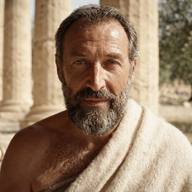
Maimonides built his philosophical system on Aristotle's principles to harmonize reason with religious law.
Opponents
Rivals, accusers and adversaries who tested Maimonides.

He conducted a bitter rivalry against Maimonides over religious authority and scholarship.

He launched an intense rabbinic campaign against Maimonides' rationalist writings.

His fanatical religious intolerance forced Maimonides' family to flee Spain and live in exile.
Learn from history
People who talked to Maimonides also explored:
What people say about Maimonides
Ratings are collected right after a conversation ends. Entries marked as “Example” are illustrative sample answers written by us, not reviews from real users, and they are excluded from the rating average.
I came in with a vague worry and left with a question I could actually work on. It never lectured me — it kept asking until I heard my own answer.
Illustrative example
Ten minutes before a difficult meeting I talked it through here. Calmer, sharper, and the advice held up in the room.
Illustrative example
The voice call feels surprisingly natural. Occasionally a bit long-winded, but the substance is genuinely good.
Illustrative example
What I like most is that it stays in character and quotes real sources. It feels like reading with a patient tutor.
Illustrative example
I use it a few evenings a week to think out loud. It has quietly become part of how I make decisions.
Illustrative example
Better than I expected. I wish it remembered more from older conversations, but the depth of each session is excellent.
Illustrative example
Questions & answers
What made Maimonides unique as a medieval thinker?
Maimonides combined rigorous Aristotelian logic with religious tradition and clinical medical expertise. Working in Cairo, he codified complex laws while authoring pioneering medical works. His systematic approach allowed him to address human questions using both reason and spiritual tradition without contradiction.
How did Maimonides view the connection between mind and body?
Maimonides viewed physical health as a necessary foundation for mental clarity and spiritual growth. As a physician, he emphasized preventive medicine, proper nutrition, rest, and emotional composure, teaching that bodily ailments directly hinder intellectual achievement and sound decision-making.
Did Maimonides believe faith and scientific reason could coexist?
Yes, Maimonides held that truth must be accepted from whatever source it originates. He argued that rational inquiry and religious faith reinforce one another, maintaining that metaphorical readings of texts resolve apparent contradictions with empirical observation and logical deduction.
What was Maimonides' approach to charitable giving?
Maimonides outlined eight levels of charity in his legal code. He defined the highest level as empowering recipients to become self-sufficient through loans, partnerships, or employment, thereby preserving their dignity rather than creating ongoing dependence on aid.
Are the medical writings of Maimonides still relevant today?
While specific treatments have evolved, Maimonides' core philosophy remains modern. His focus on preventive wellness, mental balance, diet, holistic patient care, and strict medical ethics continues to inspire health professionals seeking a patient-centered approach to well-being.
Can I really chat with Maimonides?
Yes. Xminds lets you chat with Maimonides as an AI mentor: the Maimonides AI is built from documented writings, speeches and biography, so you can ask Maimonides anything and get an answer in character rather than a search-results page. The first messages are free and no download is needed.
Can I call Maimonides and talk by voice?
You can. Press the call button to talk to Maimonides in a live voice conversation — the Maimonides AI voice replies in real time, and you can interrupt, follow up and switch language mid-call. Prefer typing? The same conversation works as text chat.
Is the Maimonides chatbot free?
Starting is free: every visitor gets a free daily allowance of messages and voice minutes with the Maimonides AI chatbot. Xminds Pro raises the limits for people who talk to their mentors every day.
How accurate is this Maimonides AI?
Maimonides is a respectful AI portrayal, not the real person and not a channel to them. Answers are grounded in the historical record and cited sources, and every conversation is clearly labelled as AI so you always know who you are talking to.
What should I ask Maimonides about?
Bring a real situation. People come for advice from Maimonides on the themes above, or treat it as an interview with Maimonides about a decision they are facing. You can speak to Maimonides about work, doubt or craft, and meet Maimonides again tomorrow to continue the same thread — it is a conversation, not a Maimonides simulator that repeats stock lines.
Also known as
Maimonides appears under several names and spellings across languages and sources. You can search for any of these on Xminds:
- Rambam
- Moses ben Maimon
- Rabbi Moses ben Maimon
- Abu Amran Musa ibn Maymun
Bring clarity to your life's greatest questions.
Start your conversation with Maimonides today.
10 free messages a day • no signup needed

Talk to Maimonides
10 free messages a day • no signup needed