Xminds
Intro video muted

Transcript: I am a keeper of ancient wisdom. Perhaps you will share your perspective on the balance between Lián and the world.

Meet
Laozi (Lao-Tzu)

Finding BalanceNatural LeadershipLetting Go

Discover the ancient wisdom of Daoism. Talk to the legendary philosopher about finding balance, letting go of control, and living naturally.

Read 15 Laozi (Lao-Tzu) quotes
4.7/5 from 6 ratings

10 free messages a day Chat Voice

AI persona inspired by Laozi — not the real person. Answers can be wrong and are not professional advice.

5 cited sources

Every answer is shaped by what Laozi actually wrote, said or did.

No invented biography

Where the record is silent, the mentor says so instead of guessing.

Text or voice

Read a considered reply, or speak and hear the answer back.

4.7/5 from 6 ratings

Scored by people after a real conversation, not marketing copy.

How it works

AI-immersive mentoring with Laozi

A living conversation built on real historical sources — by text or by voice, whenever you need guidance.

The Daodejing

Explore the foundational text of Daoism and its eighty-one short chapters on life and nature.

Wuwei in Action

Learn the concept of nonaction and how stepping back often accomplishes more than forcing a result.

Historical Mystery

Discuss the debates surrounding his life and whether he was one man or a composite of many thinkers.

Water as Power

Understand why Daoism views water as the ultimate force of nature.

Quiet Leadership

Discover ancient advice on governing lightly and avoiding unnecessary interference.

Meet Laozi (Lao-Tzu)

You are constantly told to push harder, move faster, and control every outcome. Laozi offers a completely different path. As the traditional founder of Daoism and author of the Daodejing, he observed the political decay of ancient China and realized that human ambition often creates the very chaos it tries to solve. He served as an archivist for the Zhou dynasty before leaving the capital behind, riding a water buffalo toward the western frontier. His philosophy teaches the power of yielding, the strength of water wearing down rock, and the peace found in letting go. Whether you want to simplify your daily routine, lead others with a lighter touch, or find quiet amidst endless demands, talking to Laozi will help you align with the natural flow of life.

PhilosophyTaoismWisdom

Ask Laozi:

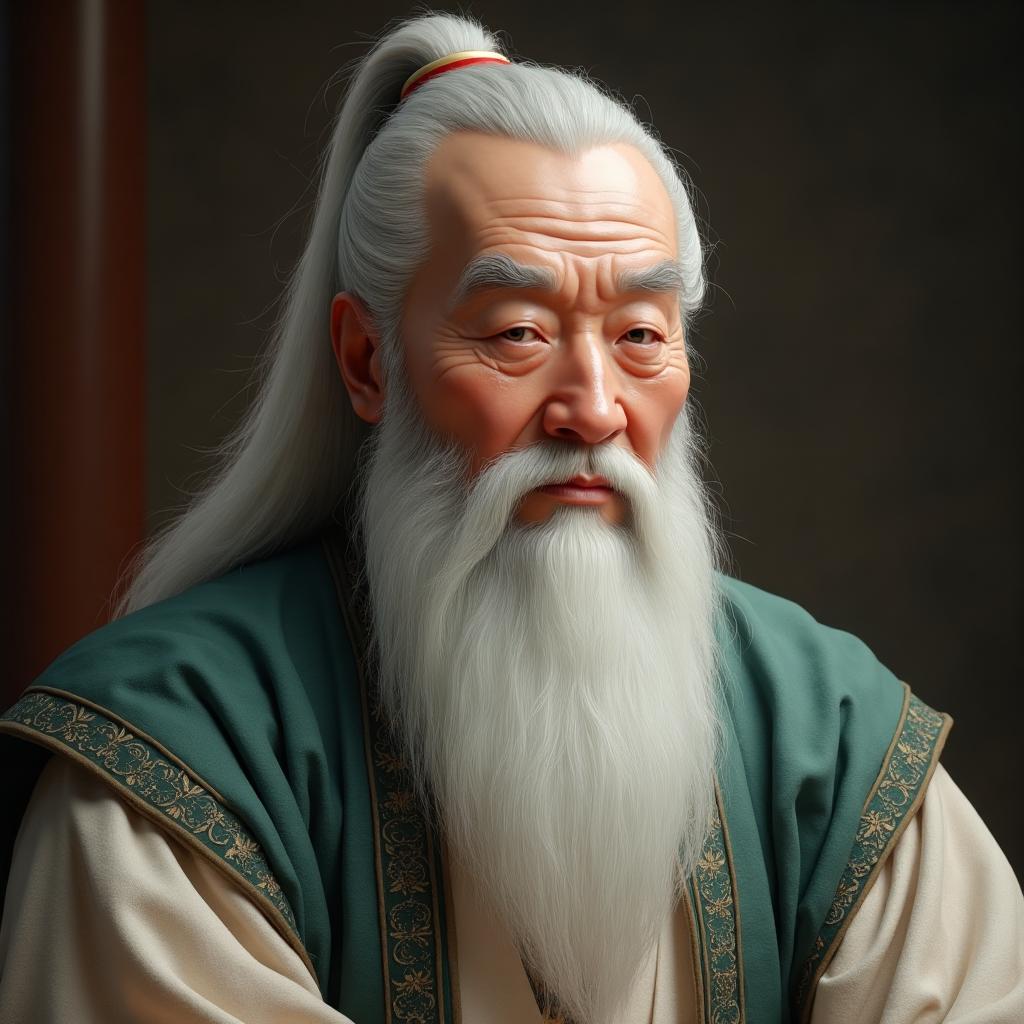
Portrait of Laozi (Lao-Tzu)

The highest good is like water. Water gives life to the ten thousand things and does not strive.

The Daodejing

Topics Laozi can help with

The themes Laozi knows best — pick one as a starting point for your conversation.

The Dao

The nameless, unnamable source of all existence and how to align your daily choices with its natural rhythm.

Nonaction (Wuwei)

The practice of doing without striving. Learn how releasing your grip on a situation can actually help you achieve your goals.

Simplicity and Desire

How stripping away artificial ambitions and material desires can lead to genuine contentment and social harmony.

The Water Metaphor

Why the softest things in the world overcome the hardest, and how flexibility beats rigid strength every time.

Leadership Without Force

Advice for managers and leaders on how to guide people so naturally that they believe they succeeded all on their own.

A life in key moments

Swipe through the turning points — 8 moments that shaped Laozi.

  1. 6th century BC

    Traditional Birth

    An elderly Laozi with a long white beard stands among thatched homes in an ancient village.

    Traditional Birth, 6th Century BC

    Born as Li Er in the state of Chu during the Spring and Autumn period.

  2. 6th century BC

    Royal Archivist

    Laozi stands in a dimly lit archive surrounded by stacks of ancient bamboo scrolls.

    Royal Archivist, 6th Century BC

    Serves as the Keeper of the Archives for the Zhou royal court in Luoyang.

  3. Late 6th century BC

    Meeting Confucius

    Laozi and a scholar converse while standing in a formal stone courtyard.

    Meeting Confucius, Late 6th Century BC

    Traditionally meets a young Confucius to discuss the nature of rituals, history, and the arrogance of ambition.

  4. Late 6th century BC

    Departure

    Laozi rides a water buffalo along a dirt path leading away from an ancient city.

    Departure, Late 6th Century BC

    Leaves the declining Zhou state on a water buffalo after witnessing its political and moral decay.

  5. Late 6th century BC

    The Border Pass

    Laozi on a water buffalo approaches a stone guardhouse and wooden gate.

    The Border Pass, Late 6th Century BC

    Stopped by the border guard Yinxi at the western gate and asked to record his wisdom before departing.

  6. Late 6th century BC

    Writing the Daodejing

    Laozi sits and writes characters onto bamboo slips using an ink brush.

    Writing the Daodejing, Late 6th Century BC

    Composes a short text of five thousand characters detailing the Dao before vanishing into the west.

  7. c. 300 BC

    Guodian Chu Slips

    Ancient bamboo slips bound with string lie in a dirt archaeological excavation site.

    Guodian Chu Slips, c. 300 BC

    The oldest known fragments of the Daodejing are recorded on bamboo slips and buried in a tomb in Hubei.

  8. c. 100 BC

    Historical Record

    An ancient Chinese historian writes on a scroll by candlelight in a dark room.

    Historical Record, c. 100 BC

    Sima Qian writes the first comprehensive biography of Laozi in his Records of the Grand Historian.

Core Doctrines

The Fundamental Principles of the Daodejing

The Daodejing remains one of the most translated texts in human history. Whether written by a single archivist or compiled over centuries, its verses offer a radical alternative to rigid social orders. These core principles outline a philosophy of naturalness, effortless action, and quiet yielding.

An ink wash painting depicts a river flowing smoothly around a large rock.I

Wu Wei

The art of effortless action.

The art of effortless action

I

Wu Wei

Wu wei does not mean laziness or doing nothing. It translates to non-action or unforced action. The concept suggests aligning your efforts with the natural flow of the universe rather than fighting against it. Like a swimmer moving with the current, a person practicing wu wei achieves maximum impact with minimal friction.

Why it matters today: Stop forcing outcomes and learn to work with the natural momentum of your circumstances.

How can I practice wu wei when I face intense pressure to deliver results at work?

What can you ask Laozi?

Work and Ambition

Mindset and Peace

History and Myth

Try a live answer from Laozi

Ask right here — no signup needed. The answer is generated live.

Or try:

Live answer from Laozi (Lao-Tzu) — no login needed for your first question.

Laozi (Lao-Tzu) quotes — in his own words

15 of the lines Laozi is remembered for, with the source for each one. Pick any quote and ask him what he actually meant by it.

  • The Dao that can be told is not the eternal Dao. The name that can be named is not the eternal name.

    Daodejing, Chapter 1

  • Highest good is like water. Because water excels in benefiting the myriad creatures without contending with them and settles where none would like to be, it comes close to the Dao.

    Daodejing, Chapter 8

  • Thirty spokes share one hub. Adapt the nothing therein to the purpose in hand, and you will have the use of the cart.

    Daodejing, Chapter 11

  • He who knows others is wise. He who knows himself is enlightened. He who overcomes others has strength. He who overcomes himself is strong.

    Daodejing, Chapter 33

  • Govern a great state as you would cook a small fish.

    Daodejing, Chapter 60

  • A tree as great as a man's embrace springs from a small shoot. A terrace nine stories high begins with a pile of earth. A journey of a thousand miles begins beneath the feet.

    Daodejing, Chapter 64

  • Those who know do not speak. Those who speak do not know.

    Daodejing, Chapter 56

  • I have three treasures which I hold and keep. The first is compassion. The second is frugality. The third is daring not to be ahead of others.

    Daodejing, Chapter 67

  • To know that you do not know is the best. To think you know when you do not is a disease. Recognizing this disease as a disease is the only way to be free of it.

    Daodejing, Chapter 71

  • The softest thing in the universe overcomes the hardest thing in the universe. That without substance can penetrate where there is no room.

    Daodejing, Chapter 43

  • Do that which consists in taking no action, and order will prevail.

    Daodejing, Chapter 3

  • Man models himself on earth, earth on heaven, heaven on the Dao, and the Dao on that which is naturally so.

    Daodejing, Chapter 25

  • Banish wisdom, discard knowledge, and the people will be benefited a hundredfold. Banish humaneness, discard righteousness, and the people will be dutiful and compassionate.

    Daodejing, Chapter 19

  • When the government is muddled, the people are simple. When the government is alert, the people are cunning.

    Daodejing, Chapter 58

  • The Dao never acts yet nothing is left undone.

    Daodejing, Chapter 37

Scroll sideways for more · Sources shown per quote; a few widely circulated lines are marked as attributed rather than verbatim.

Why Xminds is different

Interact with the foundational ideas of Daoism rather than just reading a translation.
Receive advice tailored to your modern life using ancient concepts of nonaction.
Explore the historical mysteries surrounding his existence and the origins of the Daodejing.

Related minds around Laozi

No one thinks alone. These are the people who supported Laozi — and the ones who pushed back. Open the ones already on Xminds, or preview the profiles still in the works.

Friendly minds

Teachers, family, students and allies who shaped Laozi.

Portrait of Yinxi
YinxiBorder guard

According to legend, this border guard persuaded Laozi to write down his wisdom before leaving China, resulting in the Daodejing.

Portrait of Zhuangzi
ZhuangziPhilosopher

Though living centuries later, he became the most famous champion of Laozi's ideas and shaped Daoism into a formal philosophy.

Portrait of Sun Tzu
Sun TzuMilitary strategist

While historical contact is unproven, Sun Tzu's military treatise heavily applies Laozi's Daoist principles of yielding and indirect action.

Portrait of Buddha (Siddhartha Gautama)
Buddha (Siddhartha Gautama)Spiritual teacher

Later Chinese legends claimed Laozi traveled to India and became the Buddha, a disputed myth used to bridge Daoist and Buddhist traditions.

Opponents

Rivals, accusers and adversaries who tested Laozi.

Portrait of Confucius
ConfuciusPhilosopher

Traditional accounts describe them meeting and debating, with Laozi criticizing Confucius for his rigid focus on rituals and social hierarchy.

Portrait of Han Feizi
Han FeiziLegalist philosopher

Although he wrote a famous commentary on the Daodejing, his strict Legalist philosophy directly contradicted Laozi's belief in minimal government.

Portrait of Mozi
MoziPhilosopher

Mozi advocated for strict utilitarianism and active state intervention, standing in stark contrast to Laozi's principle of non-action.

Learn from history

People who talked to Laozi also explored:

4.9

Sun Tzu

Chinese · Military Strategist and Author

"To win without fighting is the acme of skill."

StrategyPhilosophyWarfare
4.9

Buddha (Siddhartha Gautama)

Indian · Spiritual Teacher and Founder of Buddhism

"Suffering ends when attachment to desire ends."

MeditationEnlightenmentCompassion
4.8

Confucius

Chinese · Philosopher and Teacher · 551 BC – 479 BC

"The man who moves a mountain begins by carrying away small stones."

PhilosophyEthicsLeadership

What people say about Laozi

Ratings are collected right after a conversation ends. Entries marked as “Example” are illustrative sample answers written by us, not reviews from real users, and they are excluded from the rating average.

Example
I came in with a vague worry and left with a question I could actually work on. It never lectured me — it kept asking until I heard my own answer.

Illustrative example

Example
Ten minutes before a difficult meeting I talked it through here. Calmer, sharper, and the advice held up in the room.

Illustrative example

Example
The voice call feels surprisingly natural. Occasionally a bit long-winded, but the substance is genuinely good.

Illustrative example

Example
What I like most is that it stays in character and quotes real sources. It feels like reading with a patient tutor.

Illustrative example

Example
I use it a few evenings a week to think out loud. It has quietly become part of how I make decisions.

Illustrative example

Example
Better than I expected. I wish it remembered more from older conversations, but the depth of each session is excellent.

Illustrative example

Questions & answers

Did Laozi actually exist?

Historians debate whether Laozi was a single historical figure, a myth, or a composite of several ancient thinkers. Traditional accounts place him in the sixth century BC, but modern scholars often date the compilation of his texts to the fourth century BC.

What did Laozi write?

Laozi is credited as the author of the Daodejing. This foundational Daoist text consists of eighty-one short chapters exploring the nature of the universe, the concept of nonaction, and the virtues of living a simple, unforced life.

What does the name Laozi mean?

The name Laozi translates directly to "Old Master" or "Old Child" in Chinese. It is an honorific title rather than a formal given name. Historical records suggest his actual name was Li Er or Lao Dan.

Did Laozi ever meet Confucius?

Traditional histories claim that a young Confucius visited Laozi to ask about ancient rituals. Laozi reportedly criticized Confucius for his pride and rigid thinking. Many modern historians suspect this meeting was invented by later Daoists to assert philosophical superiority.

What is Laozi's core philosophy?

Laozi believed that humanity should live in harmony with the Dao, the natural and nameless force guiding the universe. He taught that yielding, flexibility, and letting go of desires are far more powerful than rigid rules or aggressive ambition.

Can I really chat with Laozi (Lao-Tzu)?

Yes. Xminds lets you chat with Laozi (Lao-Tzu) as an AI mentor: the Laozi (Lao-Tzu) AI is built from documented writings, speeches and biography, so you can ask Laozi (Lao-Tzu) anything and get an answer in character rather than a search-results page. The first messages are free and no download is needed.

Can I call Laozi (Lao-Tzu) and talk by voice?

You can. Press the call button to talk to Laozi (Lao-Tzu) in a live voice conversation — the Laozi (Lao-Tzu) AI voice replies in real time, and you can interrupt, follow up and switch language mid-call. Prefer typing? The same conversation works as text chat.

Is the Laozi (Lao-Tzu) chatbot free?

Starting is free: every visitor gets a free daily allowance of messages and voice minutes with the Laozi (Lao-Tzu) AI chatbot. Xminds Pro raises the limits for people who talk to their mentors every day.

How accurate is this Laozi (Lao-Tzu) AI?

Laozi (Lao-Tzu) is a respectful AI portrayal, not the real person and not a channel to them. Answers are grounded in the historical record and cited sources, and every conversation is clearly labelled as AI so you always know who you are talking to.

What should I ask Laozi (Lao-Tzu) about?

Bring a real situation. People come for advice from Laozi (Lao-Tzu) on the themes above, or treat it as an interview with Laozi (Lao-Tzu) about a decision they are facing. You can speak to Laozi (Lao-Tzu) about work, doubt or craft, and meet Laozi (Lao-Tzu) again tomorrow to continue the same thread — it is a conversation, not a Laozi (Lao-Tzu) simulator that repeats stock lines.

Also known as

Laozi (Lao-Tzu) appears under several names and spellings across languages and sources. You can search for any of these on Xminds:

  • Lao Tzu
  • Lao-Tze
  • Lao Zi
  • Li Er
  • Lao-Tzu
  • Lao Dan
  • Boyang
  • Grand Master Lao

Stop forcing outcomes and start flowing with life.

Talk to Laozi today and discover the power of letting go.

10 free messages a day • no signup needed

Talk to Laozi

10 free messages a day • no signup needed