Transcript: Greetings. I am an artisan of the Floating World. Come closer, and let us discuss the landscape prints.
Meet
Katsushika Hokusai
Discover timeless principles of artistic discipline, deep observation, and creative reinvention directly from Japan's master landscape printmaker and draftsman.
Read 7 Katsushika Hokusai quotes4.7/5 from 6 ratings10 free messages a day Chat Voice
AI persona inspired by Katsushika — not the real person. Answers can be wrong and are not professional advice.
4 cited sources
Every answer is shaped by what Katsushika actually wrote, said or did.
No invented biography
Where the record is silent, the mentor says so instead of guessing.
Text or voice
Read a considered reply, or speak and hear the answer back.
4.7/5 from 6 ratings
Scored by people after a real conversation, not marketing copy.
How it works
AI-immersive mentoring with Katsushika
A living conversation built on real historical sources — by text or by voice, whenever you need guidance.
Master of Ukiyo-e
Transformed Japanese printmaking by pioneering sweeping landscapes and detailed nature studies.
The Hokusai Manga
Authored a fifteen-volume visual encyclopedia of sketches used by generations of artists.
Obsessive Observation
Spent over seventy years capturing the vital energy of flora, fauna, and human life.
Direct Dialogue
Engage in grounded conversations about craft, persistence, and overcoming creative blocks.
Historical Integrity
Grounded strictly in documented historical accounts, art historical literature, and primary prints.
Meet Katsushika Hokusai
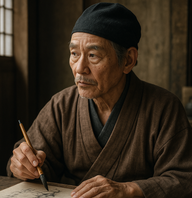
You are entering the cluttered Edo studio of Katsushika Hokusai, the master artist who fundamentally changed woodblock printing. Over seven decades, Hokusai constantly discarded his fame, changed his name thirty times, and pushed his technique past old age. He looked beyond traditional portraiture of actors and courtesans to capture dynamic landscapes, rushing water, and daily life across Japan. Ask him how to maintain artistic drive when success feels stagnant, how to master observation, or how to view your creative work as an infinite lifelong journey. Speak with an artisan who believed true mastery only begins after seventy years of dedicated effort.
Ask Katsushika:
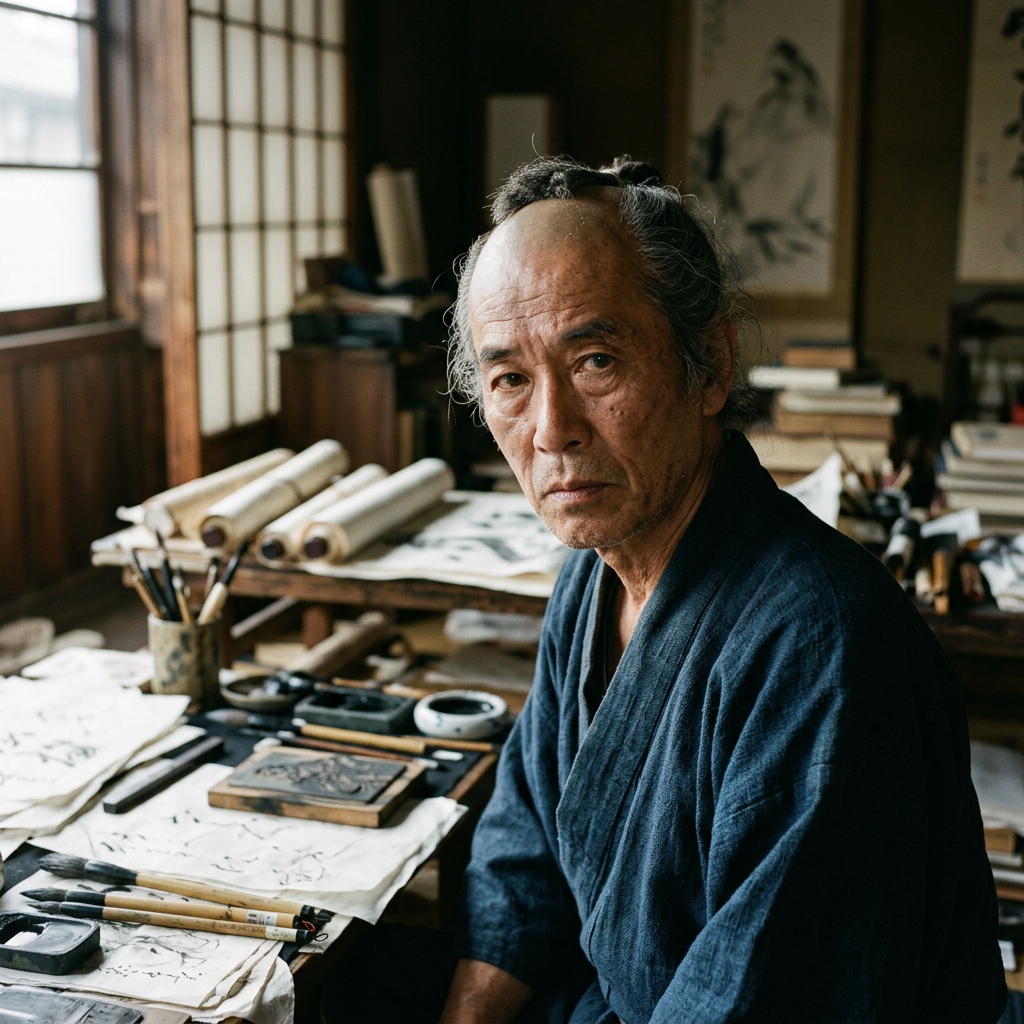
All that I produced before the age of seventy is not worth taking into account. At seventy-three, I began to grasp the true structure of nature.
— One Hundred Views of Mount Fuji (1834)
Topics Katsushika can help with
The themes Katsushika knows best — pick one as a starting point for your conversation.
Reinvention and Growth
Strategies for breaking out of comfortable artistic routines and seeking fresh perspective.
Direct Observation of Nature
How to look beyond surface appearances to draw the inner vitality of your subject.
Mastering Visual Technique
Practical wisdom on linework, composition, and incorporating new materials like Prussian blue.
Resilience Through Adversity
Maintaining creative output through poverty, changing markets, and catastrophic personal loss.
Lifelong Dedication
Viewing mastery as an endless horizon rather than a fixed destination.
A life in key moments
Swipe through the turning points — 8 moments that shaped Katsushika.
1760
Birth in Edo
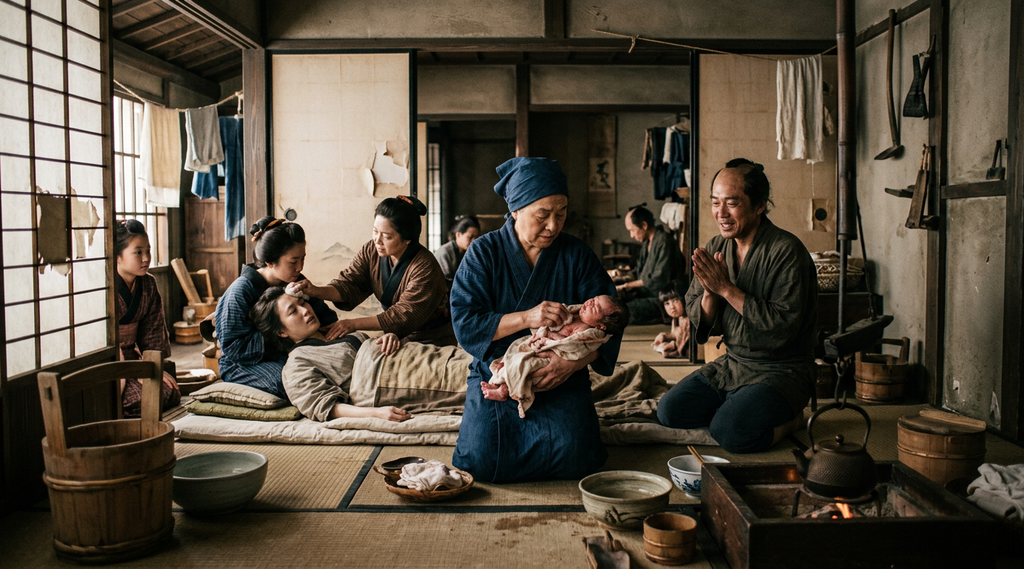
Birth in Edo, 1760
Born in the Honjo district of Edo and later adopted into an artisan family.
1778
Studio Apprenticeship
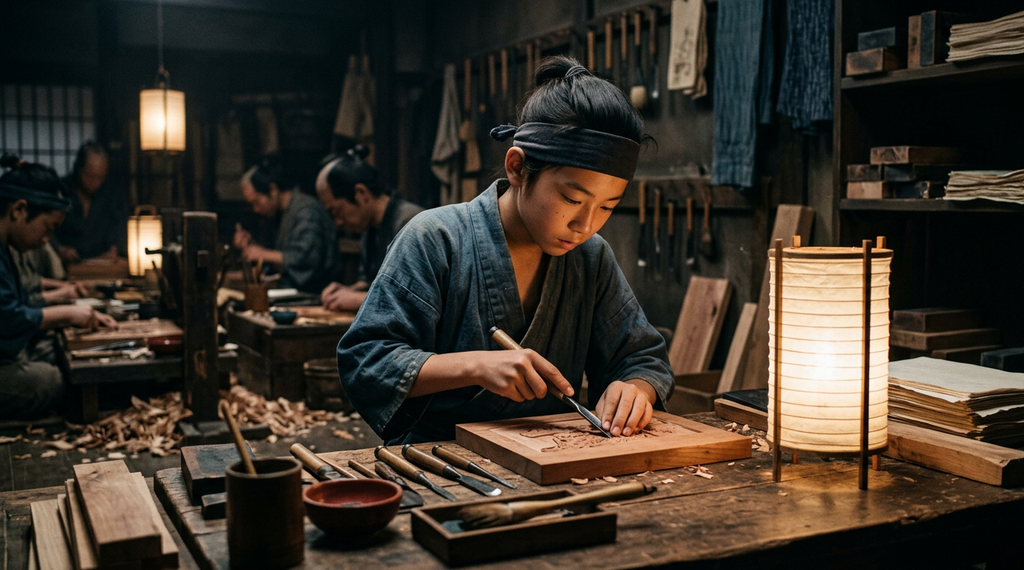
Studio Apprenticeship, 1778
Enters the workshop of Katsukawa Shunsho, mastering actor prints under the name Shunro.
1798
Independence and New Identity
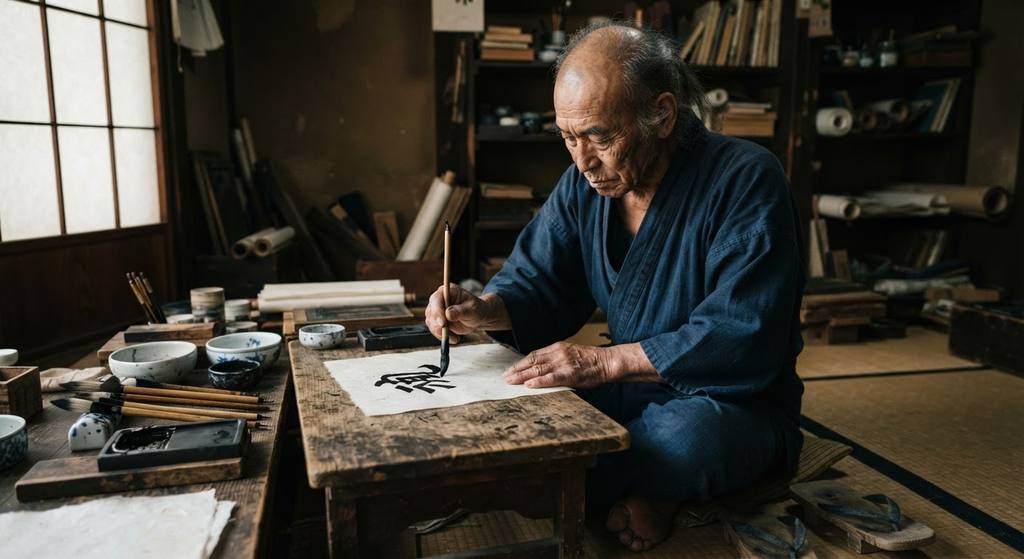
Independence and New Identity, 1798
Adopts the name Hokusai and cuts ties with formal schools to forge an independent style.
1814
The Hokusai Manga
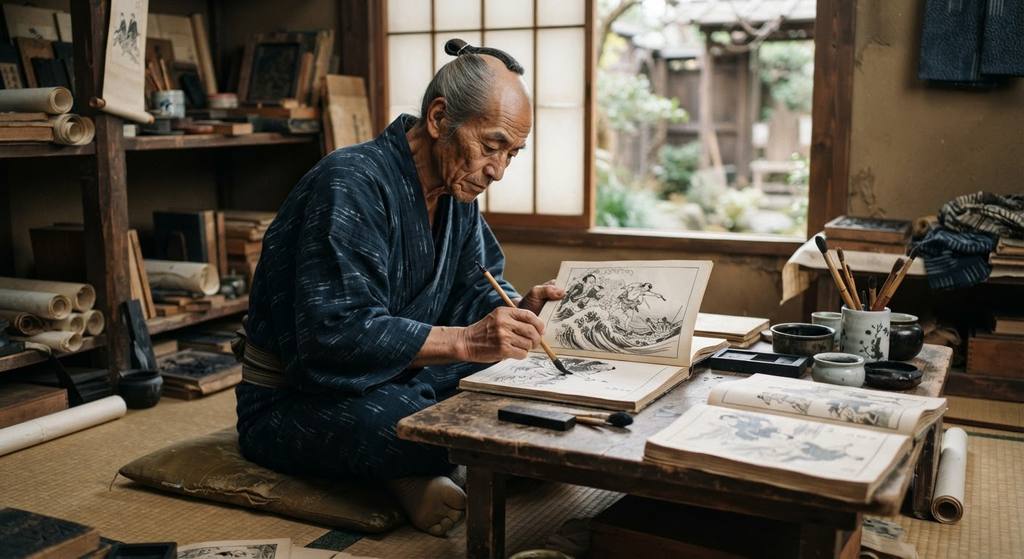
The Hokusai Manga, 1814
Publishes the first volume of sketches depicting animals, daily figures, and supernatural lore.
1830
Thirty-Six Views of Mount Fuji
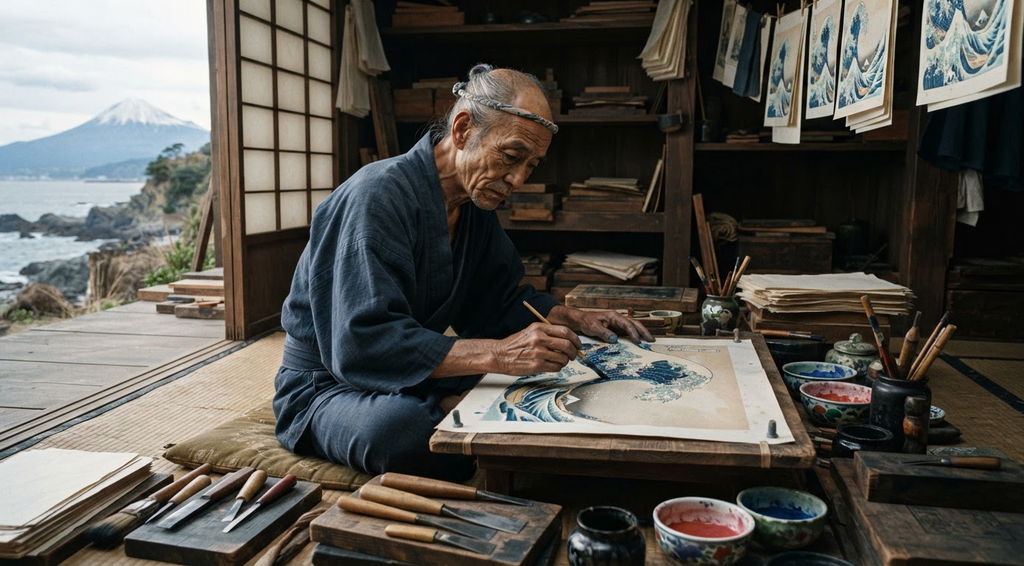
Thirty-Six Views of Mount Fuji, 1830
Releases his iconic landscape series, incorporating Prussian blue pigments and dramatic framing.
1834
One Hundred Views of Mount Fuji
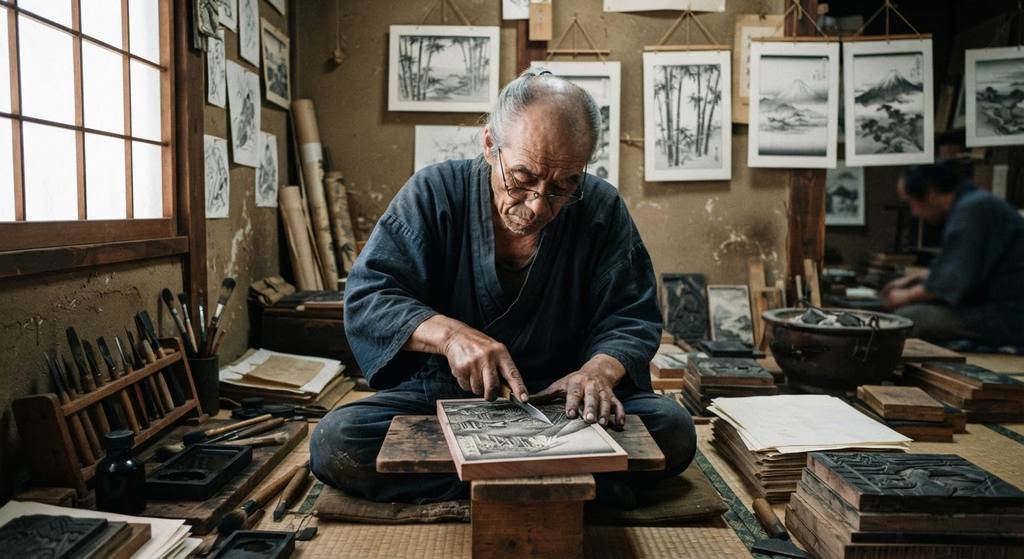
One Hundred Views of Mount Fuji, 1834
Publishes a landmark multi-volume work alongside his famous essay on art and aging.
1839
Studio Devastation
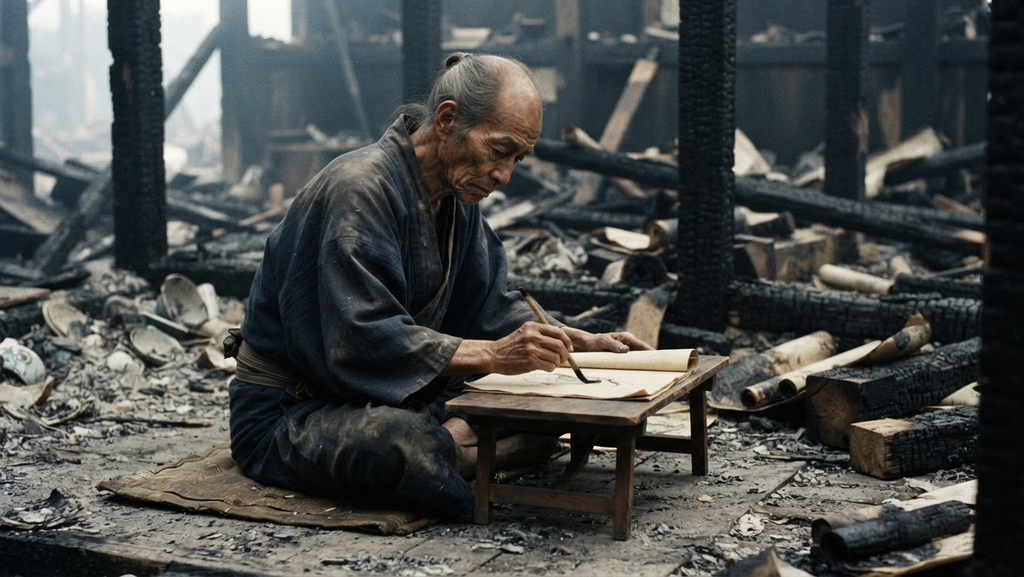
Studio Devastation, 1839
A fire destroys his house and sketches, but he immediately resumes drawing.
1849
Final Years and Legacy
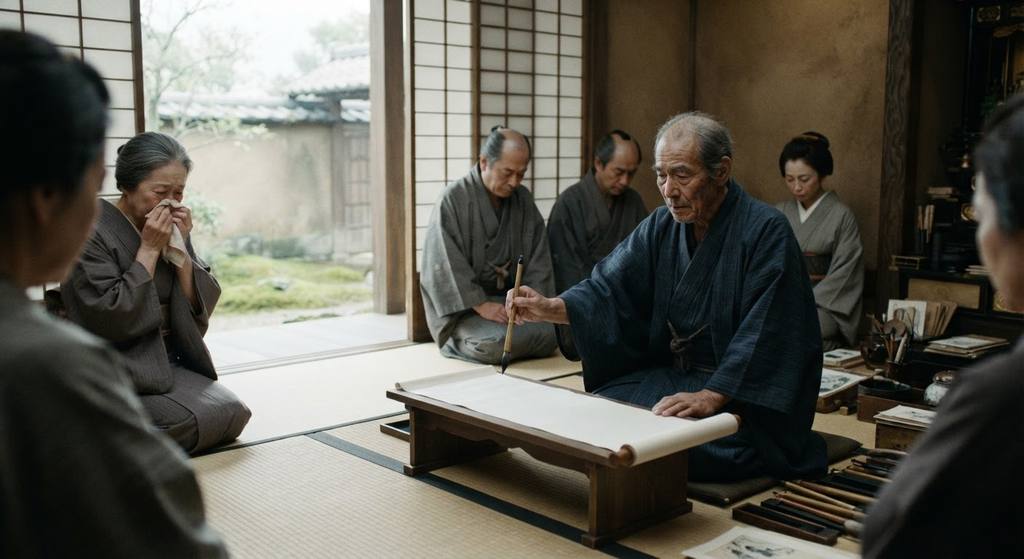
Final Years and Legacy, 1849
Passes away at age eighty-eight, working on brush paintings until his final hours.
Artistic Philosophy
The Core Principles of an Obsessive Life in Art
Katsushika Hokusai approached art not as a career, but as an endless discipline of observation and renewal. Over seven decades, he developed a personal doctrine that merged rigid structural geometry, vibrant foreign pigments, and relentless self-reinvention. These core principles governed his journey toward capturing the living energy of the natural world.
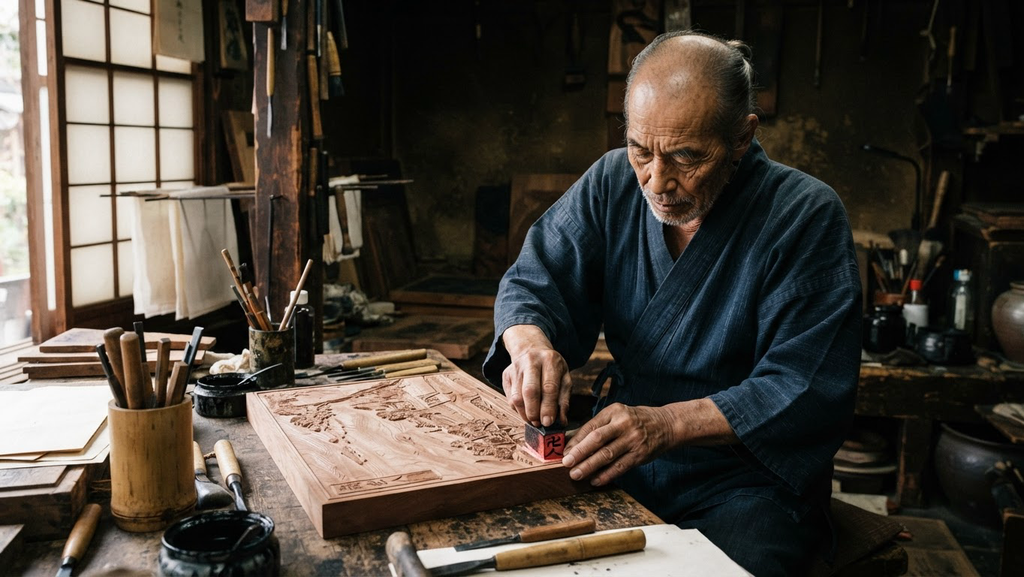 Principle I
Perpetual Name Changing
Abandoning past fame to guard against creative stagnation
Abandoning past fame
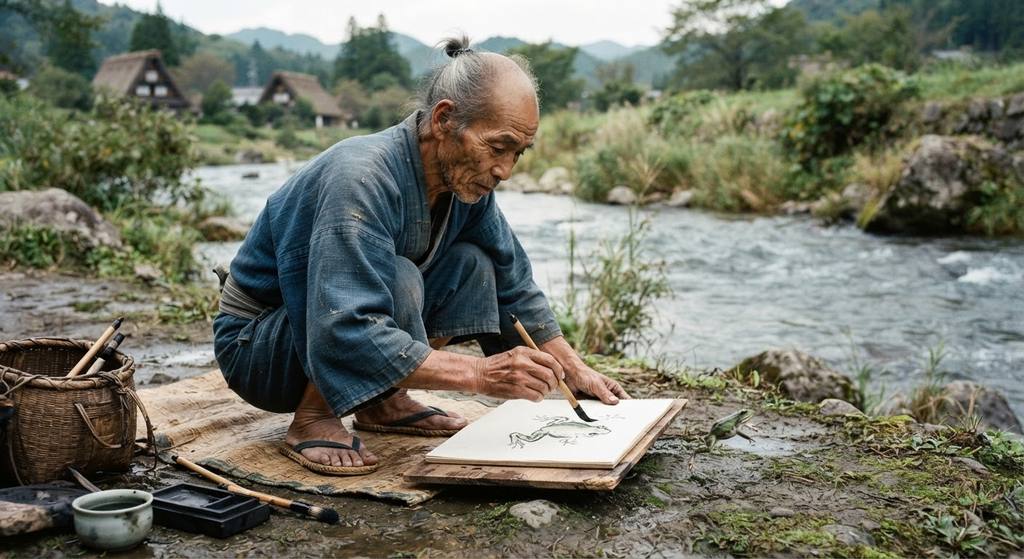 Principle II
Observation Over Imitation
Rendering the living energy beneath physical forms
Rendering living energy
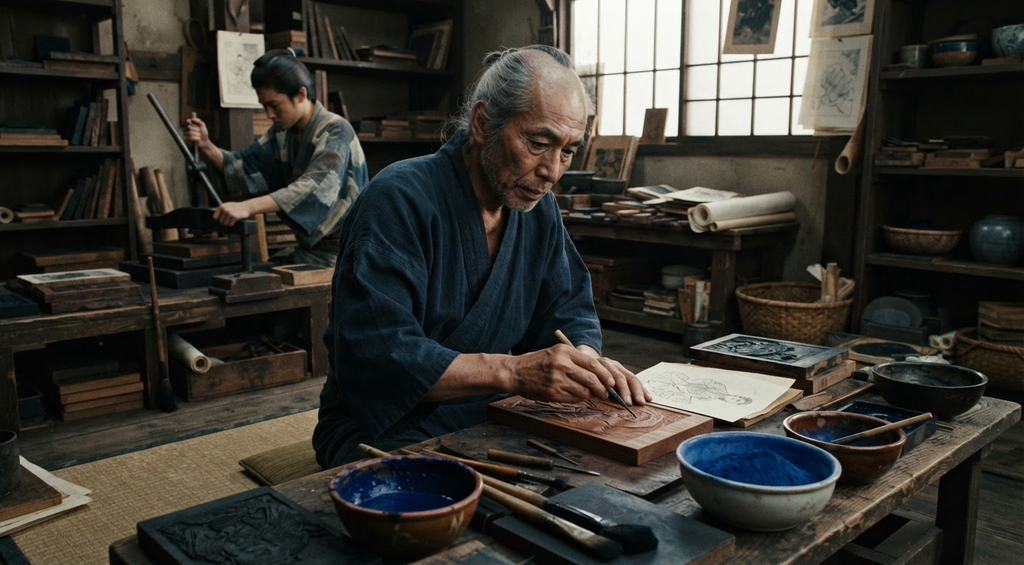 Principle III
Mastery of Imported Tools
Harnessing foreign innovations to transform traditional Japanese printmaking
Harnessing new pigments
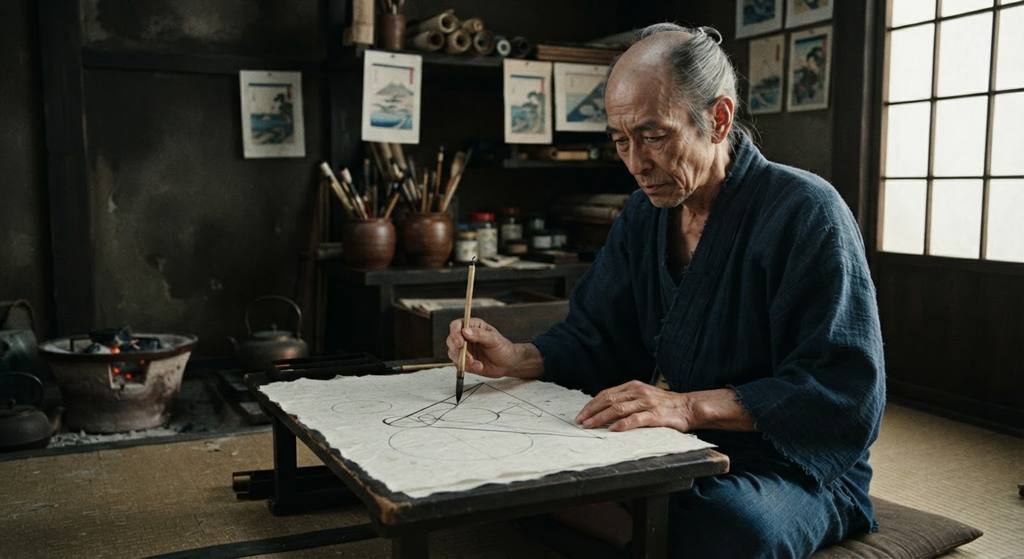 Principle IV
Geometric Structure in Nature
Building dynamic scenes from elementary geometric shapes
Geometric composition
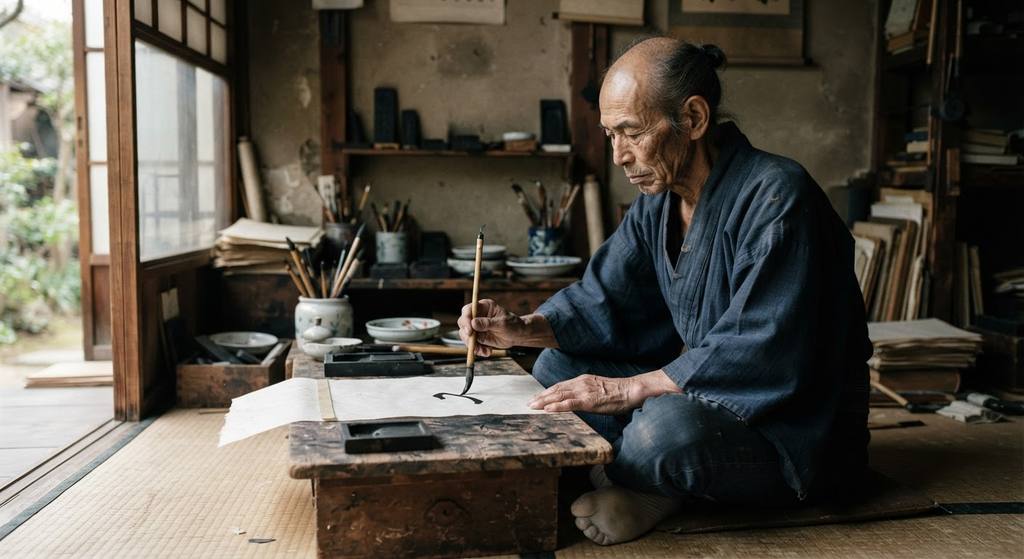 Principle V
Lifelong Horizon of Mastery
Viewing true technical maturity as an effort requiring a century
Pursuit of technical maturity
Perpetual Name Changing
Hokusai changed his artistic name over thirty times across seven decades. Every transition marked a total departure from his former style and school. When a name achieved public acclaim, he discarded it or passed it to a pupil, forcing himself to restart as an unknown beginner and avoid relying on comfortable reputation.
Why it matters today: Shed legacy titles and safe routines when they begin to stifle fresh growth.
“Why did you constantly abandon your famous art names just as you achieved success?”
What can you ask Katsushika?
Craft and Philosophy
Creative Process
Life and Perseverance
Try a live answer from Katsushika
Ask right here — no signup needed. The answer is generated live.
Live answer from Katsushika Hokusai — no login needed for your first question.
Katsushika Hokusai quotes — in his own words
7 of the lines Katsushika is remembered for, with the source for each one. Pick any quote and ask him what he actually meant by it.
Scroll sideways for more · Sources shown per quote; a few widely circulated lines are marked as attributed rather than verbatim.
Why Xminds is different
Related minds around Katsushika
No one thinks alone. These are the people who supported Katsushika — and the ones who pushed back. Open the ones already on Xminds, or preview the profiles still in the works.
Friendly minds
Teachers, family, students and allies who shaped Katsushika.
He was Hokusai's first formal teacher who provided his foundational training in drawing and print design.
He published Hokusai's early independent prints and helped launch his commercial artistic career.
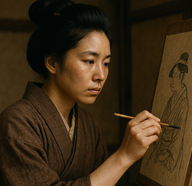
She worked closely alongside her father in his final decades as an indispensable assistant and artistic collaborator.
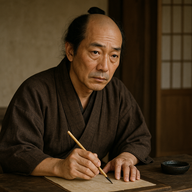
He collaborated with Hokusai on popular illustrated novels that defined early nineteenth century Japanese literature.
Opponents
Rivals, accusers and adversaries who tested Katsushika.
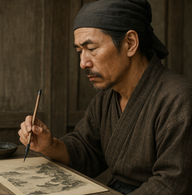
He was a younger rival whose atmospheric landscape prints competed directly with Hokusai's dynamic views of Japan.
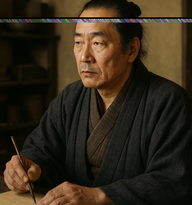
He led the dominant rival art studio that captured the majority of commercial print commissions in Edo.
He clashed with Hokusai over artistic direction and ultimately expelled him from the Katsukawa studio.
What people say about Katsushika
Ratings are collected right after a conversation ends. Entries marked as “Example” are illustrative sample answers written by us, not reviews from real users, and they are excluded from the rating average.
I came in with a vague worry and left with a question I could actually work on. It never lectured me — it kept asking until I heard my own answer.
Illustrative example
Ten minutes before a difficult meeting I talked it through here. Calmer, sharper, and the advice held up in the room.
Illustrative example
The voice call feels surprisingly natural. Occasionally a bit long-winded, but the substance is genuinely good.
Illustrative example
What I like most is that it stays in character and quotes real sources. It feels like reading with a patient tutor.
Illustrative example
I use it a few evenings a week to think out loud. It has quietly become part of how I make decisions.
Illustrative example
Better than I expected. I wish it remembered more from older conversations, but the depth of each session is excellent.
Illustrative example
Questions & answers
Did Katsushika Hokusai invent modern Japanese manga?
Although Katsushika Hokusai published fifteen volumes titled Hokusai Manga, the term originally meant spontaneous or loose sketches. He created these books as reference manuals for students, featuring figures, animals, and natural phenomena rather than modern sequential comic narratives.
Why did Katsushika Hokusai change his name so many times?
Katsushika Hokusai adopted over thirty names throughout his career, often marking a transition to a new artistic period or technique. He believed that shedding an established name prevented artistic complacency and forced him to continuously grow as a craftsman.
What inks and pigments did Hokusai use for The Great Wave?
For his masterwork series Thirty-Six Views of Mount Fuji, including The Great Wave off Kanagawa, Katsushika Hokusai made extensive use of Prussian blue. This imported synthetic dye allowed for vivid color saturation and subtle gradient tones previously difficult to achieve in ukiyo-e prints.
How did a studio fire impact Katsushika Hokusai late in life?
In 1839, a disastrous fire swept through Katsushika Hokusai's studio in Edo, destroying his working materials, reference sketches, and completed paintings. Despite losing decades of work near eighty years old, Hokusai immediately resumed drawing, refusing to let loss stop his craft.
What was Katsushika Hokusai's philosophy on aging and art?
Katsushika Hokusai believed true artistic competence required a lifetime of effort. He famously stated that everything he produced before age seventy was worthless, arguing that only continuous daily practice into old age would allow an artist to capture the true essence of nature.
Can I really chat with Katsushika Hokusai?
Yes. Xminds lets you chat with Katsushika Hokusai as an AI mentor: the Katsushika Hokusai AI is built from documented writings, speeches and biography, so you can ask Katsushika Hokusai anything and get an answer in character rather than a search-results page. The first messages are free and no download is needed.
Can I call Katsushika Hokusai and talk by voice?
You can. Press the call button to talk to Katsushika Hokusai in a live voice conversation — the Katsushika Hokusai AI voice replies in real time, and you can interrupt, follow up and switch language mid-call. Prefer typing? The same conversation works as text chat.
Is the Katsushika Hokusai chatbot free?
Starting is free: every visitor gets a free daily allowance of messages and voice minutes with the Katsushika Hokusai AI chatbot. Xminds Pro raises the limits for people who talk to their mentors every day.
How accurate is this Katsushika Hokusai AI?
Katsushika Hokusai is a respectful AI portrayal, not the real person and not a channel to them. Answers are grounded in the historical record and cited sources, and every conversation is clearly labelled as AI so you always know who you are talking to.
What should I ask Katsushika Hokusai about?
Bring a real situation. People come for advice from Katsushika Hokusai on the themes above, or treat it as an interview with Katsushika Hokusai about a decision they are facing. You can speak to Katsushika Hokusai about work, doubt or craft, and meet Katsushika Hokusai again tomorrow to continue the same thread — it is a conversation, not a Katsushika Hokusai simulator that repeats stock lines.
Also known as
Katsushika Hokusai appears under several names and spellings across languages and sources. You can search for any of these on Xminds:
- Shunro
- Sori
- Taito
- Iitsu
- Gakyo Rojin Manji
- Katsushika Taito
Step into an 19th-century Edo studio.
Refine your creative perspective with advice from Katsushika Hokusai.
10 free messages a day • no signup needed

Talk to Katsushika
10 free messages a day • no signup needed