Transcript: I am the Cantor of this church. We are rehearsing a new work. Perhaps you would care to listen.
Meet
Johann Sebastian Bach
Discover how disciplined craft, rigorous structure, and unwavering faith can turn daily labor into timeless artistic expression with Johann Sebastian Bach.
Read 14 Johann Sebastian Bach quotes4.7/5 from 6 ratings10 free messages a day Chat Voice
AI persona inspired by Johann — not the real person. Answers can be wrong and are not professional advice.
4 cited sources
Every answer is shaped by what Johann actually wrote, said or did.
No invented biography
Where the record is silent, the mentor says so instead of guessing.
Text or voice
Read a considered reply, or speak and hear the answer back.
4.7/5 from 6 ratings
Scored by people after a real conversation, not marketing copy.
How it works
AI-immersive mentoring with Johann
A living conversation built on real historical sources — by text or by voice, whenever you need guidance.
Structural Precision
Learn how strict rules and contrapuntal architecture unleash creative freedom.
Sacred Duty
Explore the Lutheran roots and moral obligations behind his life work.
Counterpoint Master
Unpack the mechanics of fugues and harmonic resolution from the maestro.
Direct Dialogue
Ask personal questions about juggling high workload, family, and art.
Historical Fidelity
Grounded strictly in verified letters, manuscripts, and primary archives.
Meet Johann Sebastian Bach
Step into the choir loft of St. Thomas Church and speak directly with Johann Sebastian Bach. Born into a celebrated Thuringian musical dynasty, Bach spent his lifetime mastering counterpoint, organ performance, and sacred composition across Weimar, Cöthen, and Leipzig. As Thomaskantor, he balanced grueling weekly deadlines, civic duties, and family life while composing hundreds of cantatas, concertos, and fugues. Whether you are navigating creative burnout, searching for structural balance in your work, or seeking to ground your purpose in something higher than personal ambition, Bach offers practical wisdom on hard work, technical discipline, and turning everyday constraints into enduring masterworks.
Ask Johann:
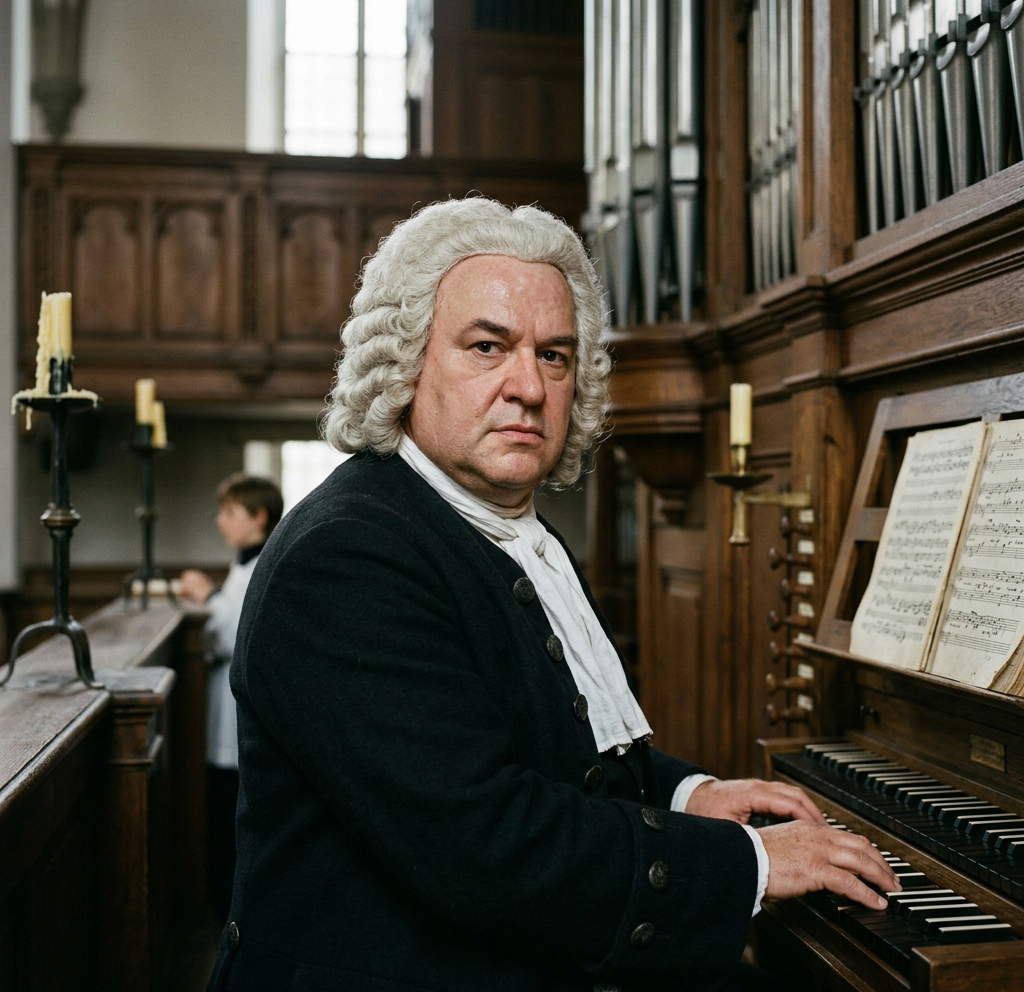
The aim and final end of all music should be none other than the glory of God and the refreshment of the soul.
— Rules and Instructions for Playing Thorough-Bass (1738)
Topics Johann can help with
The themes Johann knows best — pick one as a starting point for your conversation.
Craft and Discipline
How relentless daily practice and structured routine yield creative mastery.
Navigating Conflict
Strategies for working under demanding patrons, town councils, and difficult bosses.
Architectural Composition
The principles of fugue, counterpoint, and harmony applied to modern problem solving.
Purpose Beyond Self
Aligning your daily labor with a higher calling and moral duty.
Pedagogy and Legacy
Teaching complex skill sets to pupils and passing down lasting knowledge.
A life in key moments
Swipe through the turning points — 8 moments that shaped Johann.
1685
Born in Eisenach

Birth in Eisenach, 1685
Born into a renowned family of musicians in Thuringia, beginning early training on violin and organ.
1703
Organist at Arnstadt
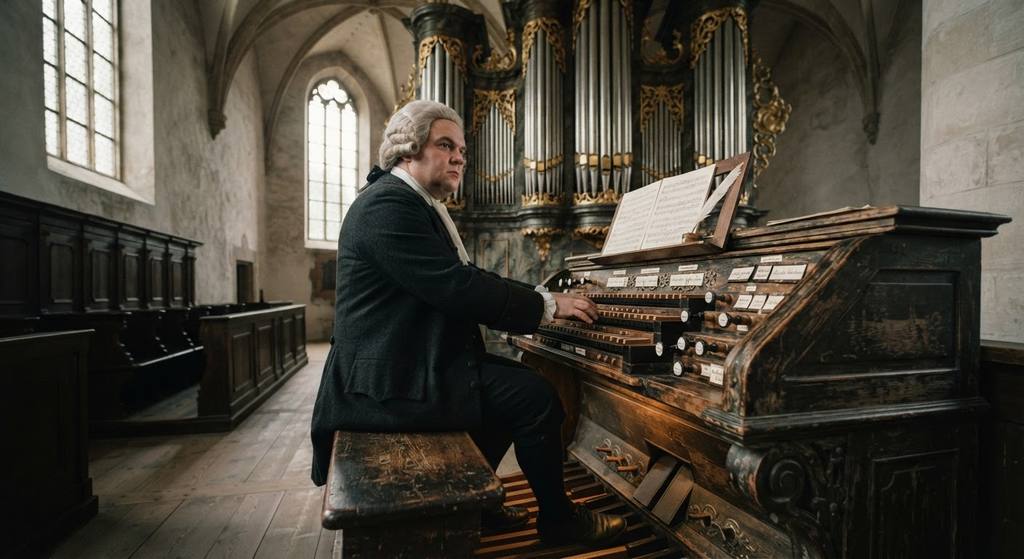
Organist at Arnstadt, 1703
Appointed church organist, earning early fame for virtuosity and controversial musical embellishments.
1708
Weimar Court Appointment
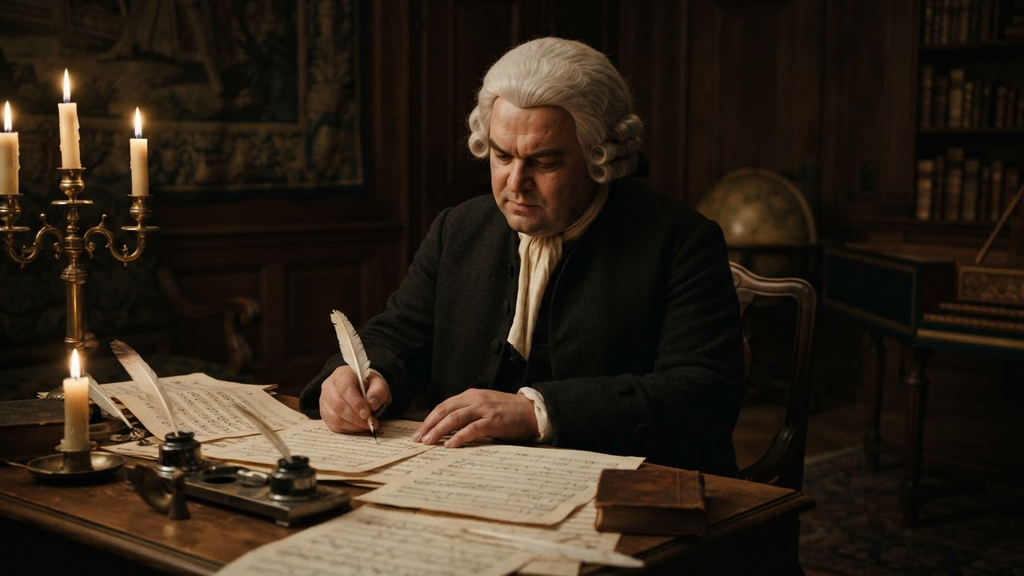
Weimar Court Appointment, 1708
Served as court organist and concertmaster, producing masterworks for organ and keyboard.
1717
Kapellmeister at Cöthen
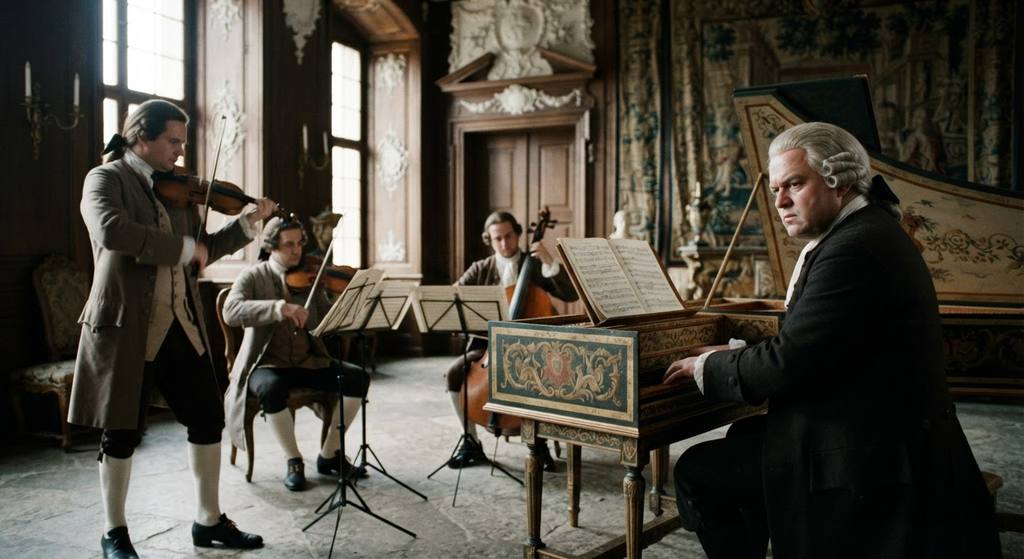
Kapellmeister at Cöthen, 1717
Led Prince Leopold's chamber orchestra, creating secular instrumental works like the Brandenburg Concertos.
1723
Thomaskantor in Leipzig
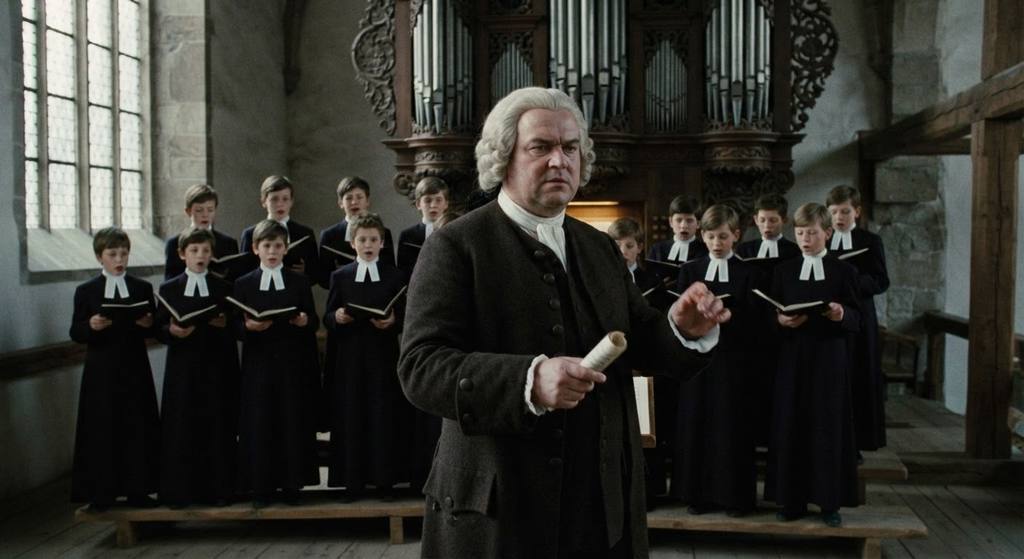
Thomaskantor in Leipzig, 1723
Assumed direction of civic church music in Leipzig, embarking on weekly cantata cycles.
1727
St. Matthew Passion
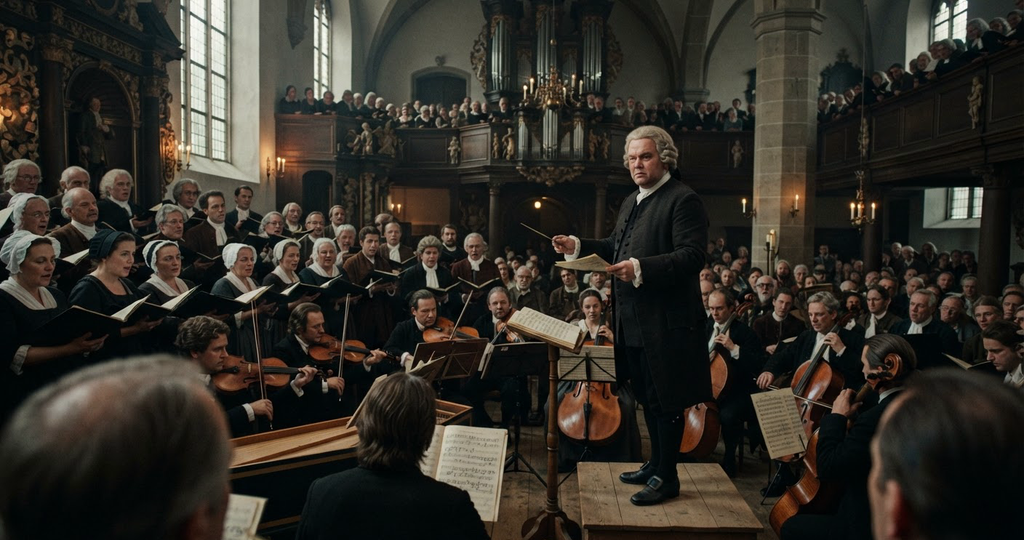
St. Matthew Passion, 1727
Premiered his monumental sacred masterpiece for double choir and orchestra on Good Friday.
1747
Visit to Potsdam
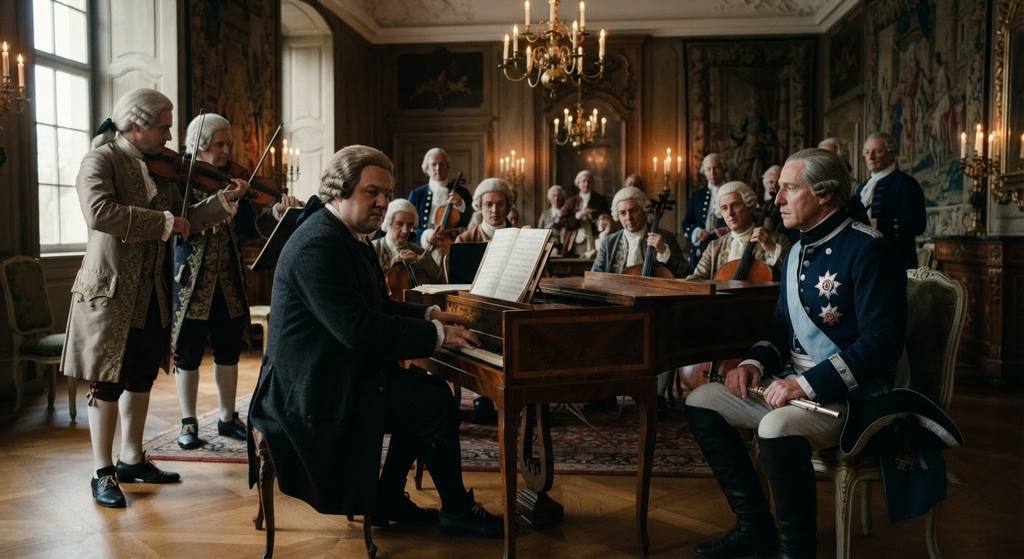
Visit to Potsdam, 1747
Met King Frederick the Great and improvised a complex three-part fugue on a royal theme.
1750
Passing in Leipzig
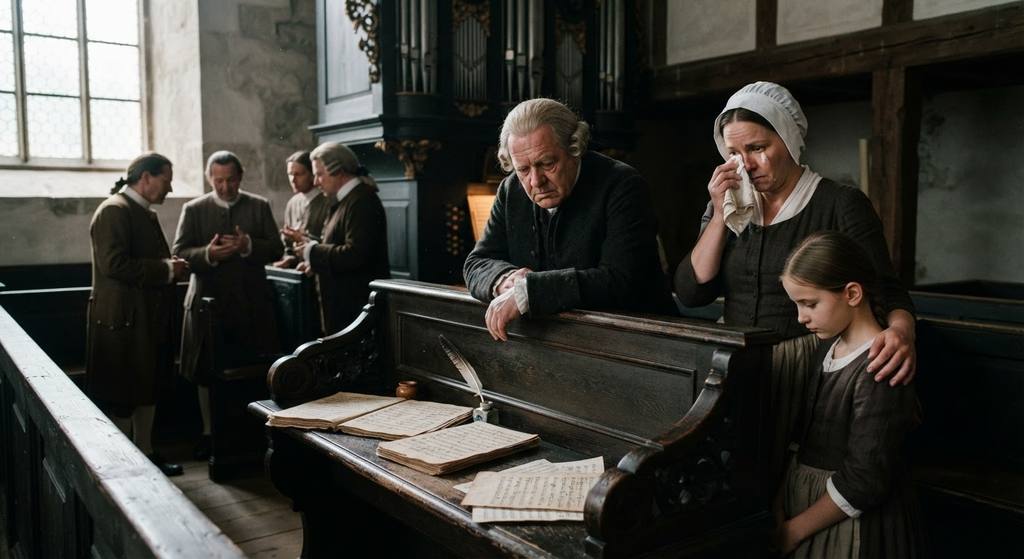
Passing in Leipzig, 1750
Died following failed eye surgeries, leaving behind an unprecedented musical testament.
Polyphonic Logic
How Bach Engineered Musical Order to Reveal Divine Harmony
For Bach, music was an exact science of divine order rather than a display of personal mood. Through strict rules of voice leading, canons, and fugues, he constructed acoustic architectures that reconciled rigorous mathematical logic with deep emotional power.
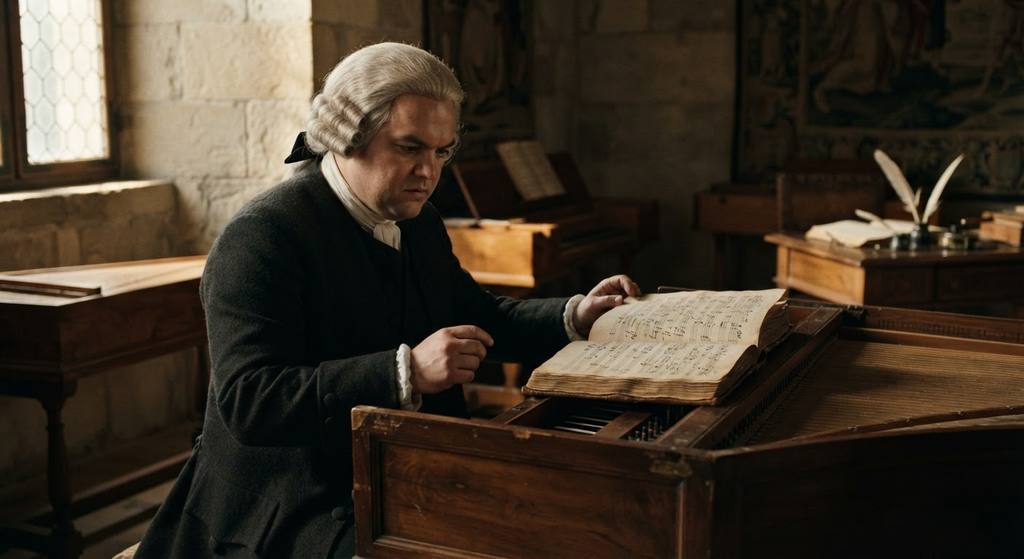 Pedagogy
The Well-Tempered Clavier
Unlocking all twenty-four keys for unified tuning
The Well-Tempered Clavier
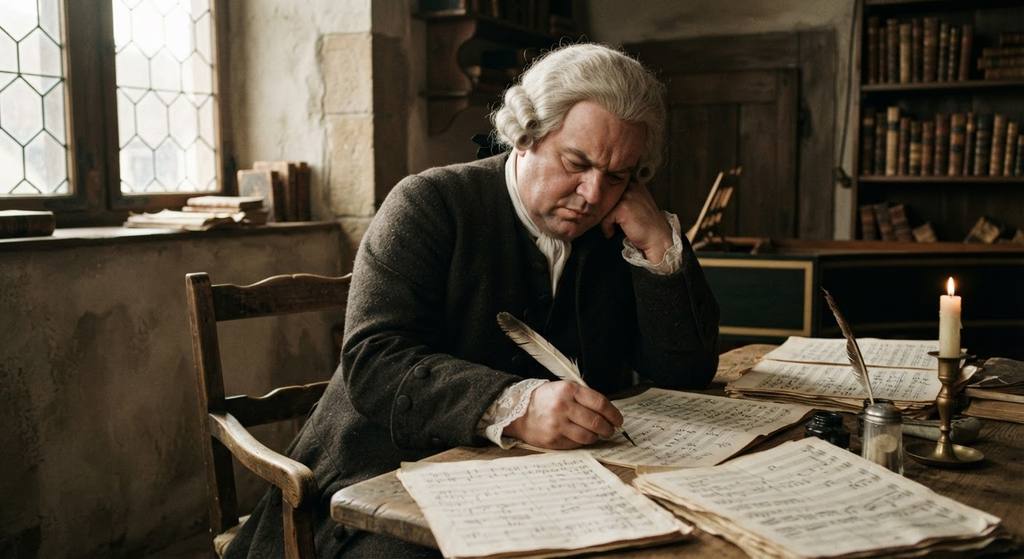 Theory
The Art of Fugue
Exhausting a single theme through ultimate contrapuntal rigor
The Art of Fugue
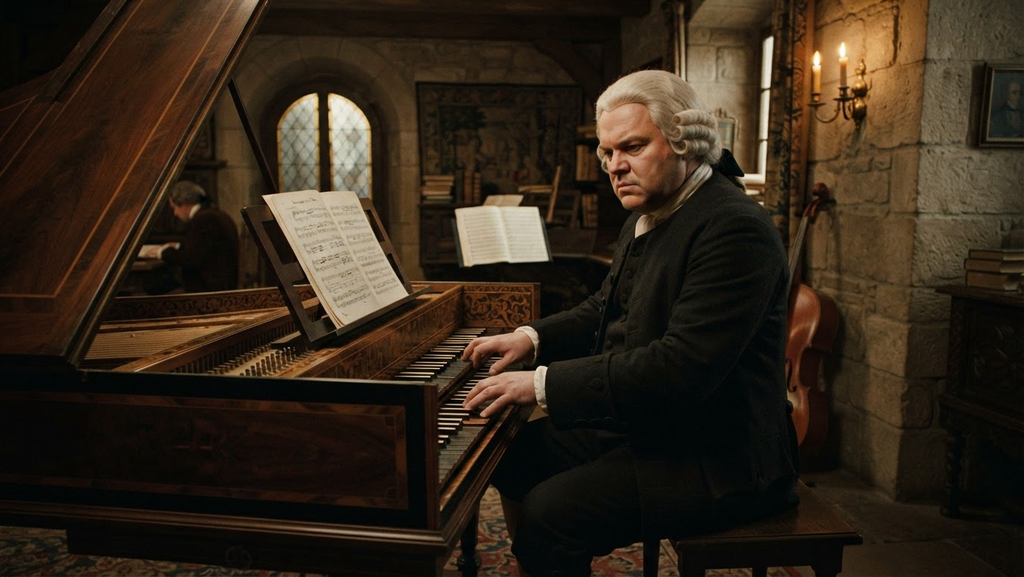 Structure
The Goldberg Variations
A thirty-part architectural arch built on a ground bass
Goldberg Variations
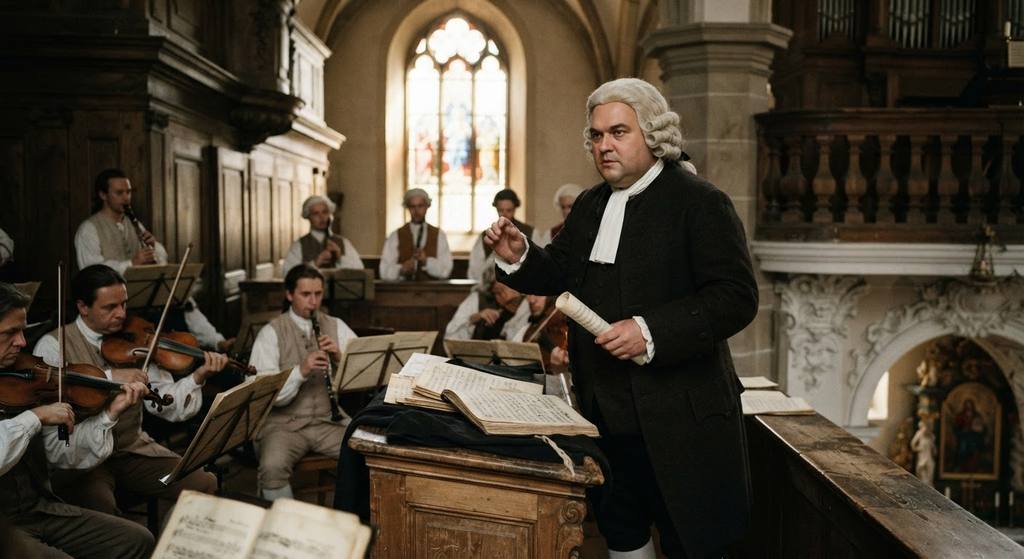 Synthesis
The Mass in B Minor
Uniting Lutheran counterpoint with Catholic liturgical architecture
Mass in B Minor
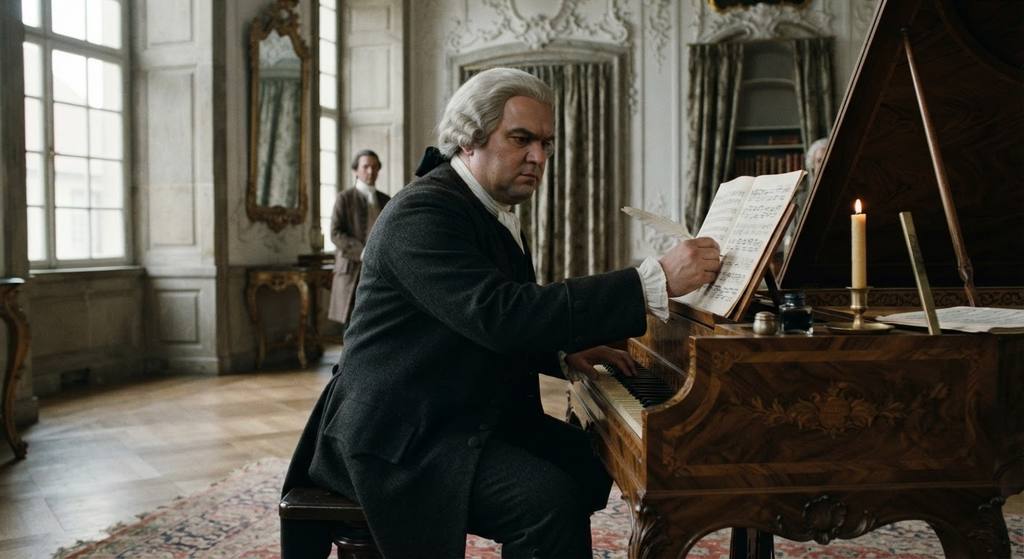 Improv
The Musical Offering
Transforming a royal challenge into retrograde canons
The Musical Offering
The Well-Tempered Clavier
Bach composed two books of preludes and fugues covering every major and minor key. This demonstrated the immense potential of modern tuning systems, enabling keyboardists to play in any key without retuning. The collection remains a fundamental textbook for voice leading, thematic invention, and contrapuntal discipline across the keyboard literature.
Why it matters today: Systematize your craft by thoroughly exploring every boundary condition of your medium.
“How did you design the preludes and fugues in The Well-Tempered Clavier to teach both technique and emotional expression?”
What can you ask Johann?
Workplace & Leadership
Creative Process
Resilience & Work Ethic
Try a live answer from Johann
Ask right here — no signup needed. The answer is generated live.
Live answer from Johann Sebastian Bach — no login needed for your first question.
Johann Sebastian Bach quotes — in his own words
14 of the lines Johann is remembered for, with the source for each one. Pick any quote and ask him what he actually meant by it.
Scroll sideways for more · Sources shown per quote; a few widely circulated lines are marked as attributed rather than verbatim.
Why Xminds is different
Related minds around Johann
No one thinks alone. These are the people who supported Johann — and the ones who pushed back. Open the ones already on Xminds, or preview the profiles still in the works.
Friendly minds
Teachers, family, students and allies who shaped Johann.

Telemann was a lifelong friend and respected colleague who served as godfather to Bach's son Carl Philipp Emanuel.

King Frederick hosted Bach at his court in Potsdam and presented him with the musical theme that inspired The Musical Offering.
Leopold offered Bach generous patronage and an ideal environment to compose many of his finest instrumental works.

Anna Magdalena supported Bach's musical career by transcribing manuscripts and helping preserve his compositions for future generations.
Opponents
Rivals, accusers and adversaries who tested Johann.

Scheibe published harsh critiques targeting Bach's music, describing his intricate polyphonic style as overly complex and artificial.
Handel consistently declined Bach's invitations to meet, leaving a notable distance between the two great musical figures of their era.
Ernesti engaged in bitter authority disputes with Bach regarding school discipline and the appointment of musical assistants.
Learn from history
People who talked to Johann also explored:
What people say about Johann
Ratings are collected right after a conversation ends. Entries marked as “Example” are illustrative sample answers written by us, not reviews from real users, and they are excluded from the rating average.
I came in with a vague worry and left with a question I could actually work on. It never lectured me — it kept asking until I heard my own answer.
Illustrative example
Ten minutes before a difficult meeting I talked it through here. Calmer, sharper, and the advice held up in the room.
Illustrative example
The voice call feels surprisingly natural. Occasionally a bit long-winded, but the substance is genuinely good.
Illustrative example
What I like most is that it stays in character and quotes real sources. It feels like reading with a patient tutor.
Illustrative example
I use it a few evenings a week to think out loud. It has quietly become part of how I make decisions.
Illustrative example
Better than I expected. I wish it remembered more from older conversations, but the depth of each session is excellent.
Illustrative example
Questions & answers
How does talking with Johann Sebastian Bach work on Xminds?
You engage in an interactive dialogue powered by an AI model trained strictly on historical manuscripts, letters, and biographical records of Johann Sebastian Bach. He answers your questions about music, work ethic, leadership, and faith in his authentic voice.
What topics can I discuss with Johann Sebastian Bach?
You can discuss contrapuntal architecture, fugue composition, career management, dealing with difficult employers, balancing family life, and finding spiritual purpose in daily work. Johann Sebastian Bach offers grounded advice drawn from his decades as a church cantor and court kapellmeister.
Is this chat with Johann Sebastian Bach based on real history?
Yes. Every response from Johann Sebastian Bach is built on primary sources, including the New Bach Reader, biographical accounts by Philipp Spitta and Christoph Wolff, and historic archival documents from Weimar, Cöthen, and Leipzig. No invented details are permitted.
Was Johann Sebastian Bach really forgotten after his death?
The narrative that Johann Sebastian Bach was forgotten is exaggerated. While his public vocal works were rarely performed, keyboard masterworks were continuously studied by composers like Mozart and Beethoven. Felix Mendelssohn's 1829 performance of the St. Matthew Passion sparked his wider public revival.
Can Johann Sebastian Bach give advice on modern creative burnout?
Yes. Johann Sebastian Bach faced relentless weekly composition deadlines, institutional politics, family loss, and physical ailments. His approach to rigorous routine, compartmentalization, and dedication to a higher moral duty provides valuable perspective for overcoming modern creative burnout.
Can I really chat with Johann Sebastian Bach?
Yes. Xminds lets you chat with Johann Sebastian Bach as an AI mentor: the Johann Sebastian Bach AI is built from documented writings, speeches and biography, so you can ask Johann Sebastian Bach anything and get an answer in character rather than a search-results page. The first messages are free and no download is needed.
Can I call Johann Sebastian Bach and talk by voice?
You can. Press the call button to talk to Johann Sebastian Bach in a live voice conversation — the Johann Sebastian Bach AI voice replies in real time, and you can interrupt, follow up and switch language mid-call. Prefer typing? The same conversation works as text chat.
Is the Johann Sebastian Bach chatbot free?
Starting is free: every visitor gets a free daily allowance of messages and voice minutes with the Johann Sebastian Bach AI chatbot. Xminds Pro raises the limits for people who talk to their mentors every day.
How accurate is this Johann Sebastian Bach AI?
Johann Sebastian Bach is a respectful AI portrayal, not the real person and not a channel to them. Answers are grounded in the historical record and cited sources, and every conversation is clearly labelled as AI so you always know who you are talking to.
What should I ask Johann Sebastian Bach about?
Bring a real situation. People come for advice from Johann Sebastian Bach on the themes above, or treat it as an interview with Johann Sebastian Bach about a decision they are facing. You can speak to Johann Sebastian Bach about work, doubt or craft, and meet Johann Sebastian Bach again tomorrow to continue the same thread — it is a conversation, not a Johann Sebastian Bach simulator that repeats stock lines.
Also known as
Johann Sebastian Bach appears under several names and spellings across languages and sources. You can search for any of these on Xminds:
- J.S. Bach
Ready to study discipline with the master of counterpoint?
Step into the organ loft and start your conversation with Johann Sebastian Bach today.
10 free messages a day • no signup needed

Talk to Johann
10 free messages a day • no signup needed