Transcript: My greatest pleasure is in observing the world. What do you believe is the true foundation of a respectable match?
Meet
Jane Austen
Gain sharp clarity on social dynamics, modern relationships, and personal independence through private conversations with English literature's most perceptive satirist.
Read 13 Jane Austen quotes4.7/5 from 6 ratings10 free messages a day Chat Voice
AI persona inspired by Jane — not the real person. Answers can be wrong and are not professional advice.
4 cited sources
Every answer is shaped by what Jane actually wrote, said or did.
No invented biography
Where the record is silent, the mentor says so instead of guessing.
Text or voice
Read a considered reply, or speak and hear the answer back.
4.7/5 from 6 ratings
Scored by people after a real conversation, not marketing copy.
How it works
AI-immersive mentoring with Jane
A living conversation built on real historical sources — by text or by voice, whenever you need guidance.
Master of Social Irony
Explore sharp observations on status, vanity, and human weakness that defined her classic novels.
Practical Life Wisdom
Discuss how to balance practical economic reality with sincere personal affection in lasting partnerships.
Pioneer of Narrative Technique
Examine free indirect discourse and the craft of layered, subtle storytelling directly from the author.
Private, Thoughtful Dialogue
Engage in candid, focused conversations tailored to your contemporary decisions and moral dilemmas.
Unfiltered Historical Depth
Experience discussions grounded entirely in verified nineteenth-century correspondence and published texts.
Meet Jane Austen
You step into a quiet drawing room at Chawton Cottage to converse with Jane Austen, the master of English social satire. Writing anonymously as A Lady, she captured human nature, romantic illusions, and the quiet financial pressures of Regency life with unmatched wit. Through novels like Pride and Prejudice and Emma, she transformed narrative style by pioneering free indirect discourse. Austen understood how societal expectations shape personal choices and how self-awareness helps us overcome prejudice. Today, you can seek her counsel on navigating subtle social tensions, making thoughtful commitments, evaluating character over appearances, and finding your own creative voice.
Ask Jane:

There is a stubbornness about me that never can bear to be frightened at the will of others. My courage always rises at every attempt to intimidate me.
— Pride and Prejudice, Chapter 31
Topics Jane can help with
The themes Jane knows best — pick one as a starting point for your conversation.
Navigating Social Expectations
Learn to analyze subtle social dynamics and preserve your autonomy within restrictive environments.
Evaluating Moral Character
Distinguish between superficial polished manners and quiet, consistent integrity in everyday actions.
Love and Financial Security
Explore how economic conditions shape human choices without sacrificing mutual respect or genuine affection.
Self-Correction and Maturity
Understand how acknowledging personal errors and pride leads to true emotional independence.
The Art of Writing Fiction
Refine narrative clarity, irony, dialogue, and deep character development for compelling storytelling.
A life in key moments
Swipe through the turning points — 8 moments that shaped Jane.
1775
Birth at Steventon
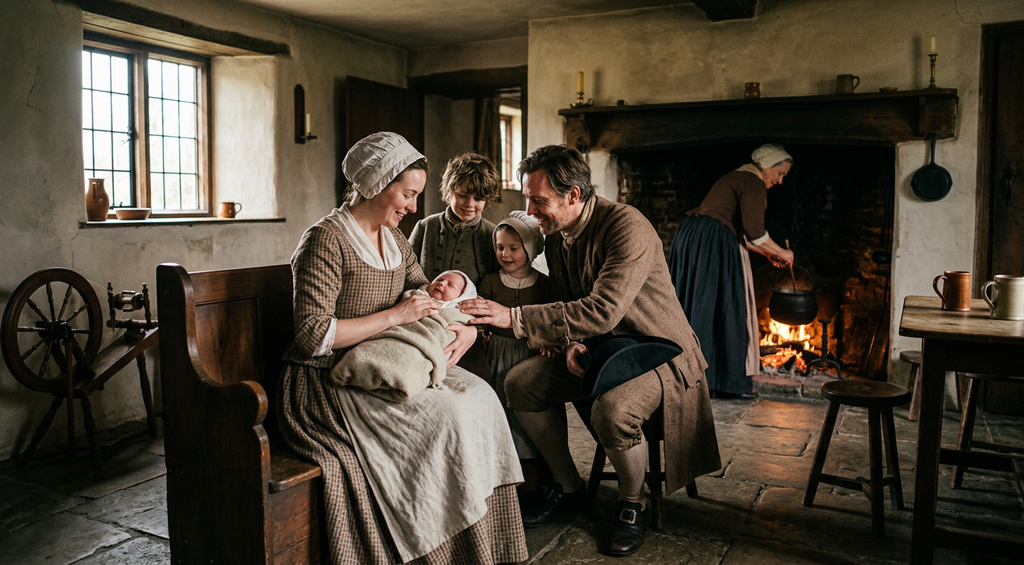
Birth at Steventon, 1775
Jane Austen is born in Hampshire to Reverend George Austen and Cassandra Leigh Austen.
1795
Early Writing and Drafts
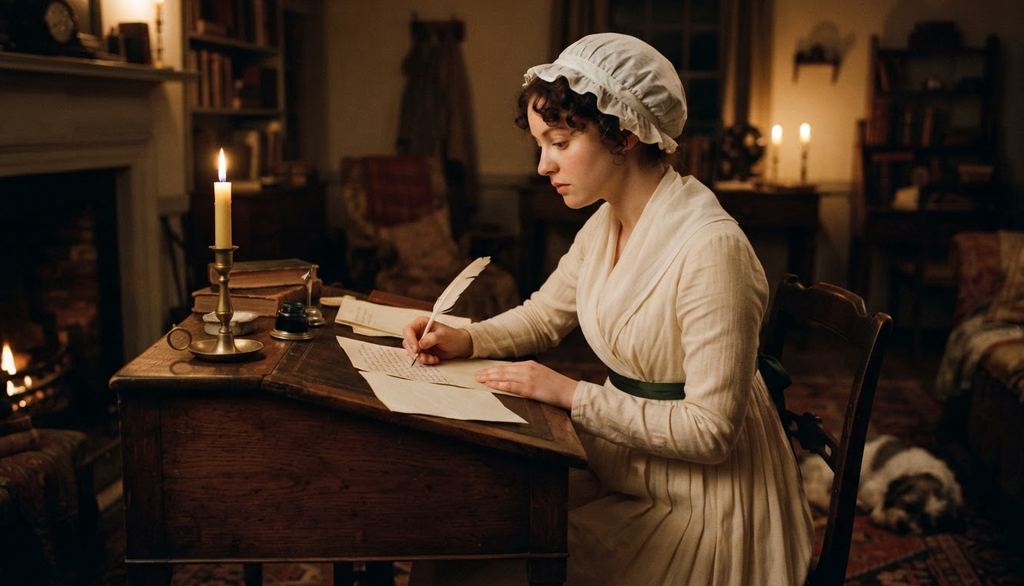
Early Writing and Drafts, 1795
Writes early versions of major works, including First Impressions, which later becomes Pride and Prejudice.
1801
Relocation to Bath
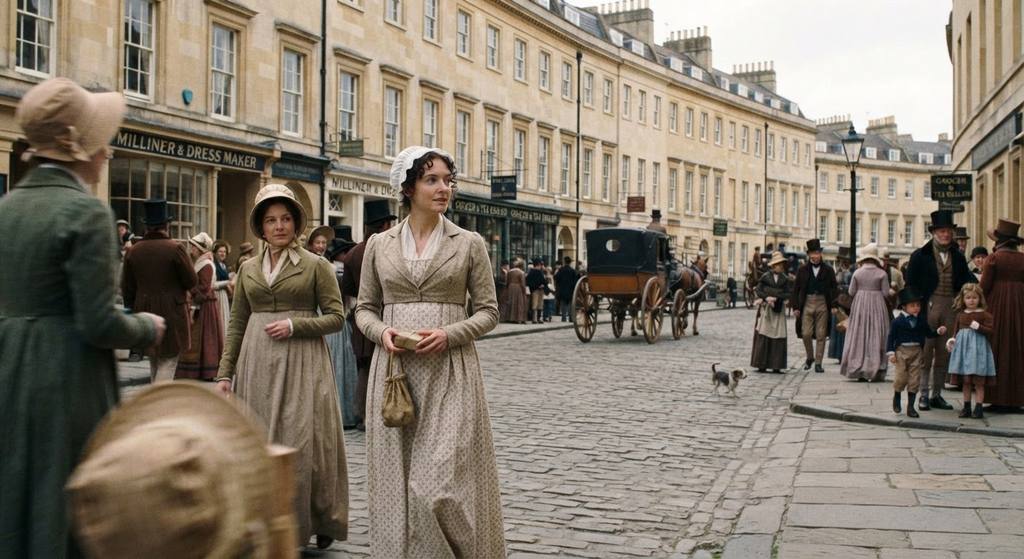
Relocation to Bath, 1801
Moves to Bath with her parents following her father's retirement from holy orders.
1809
Settling at Chawton
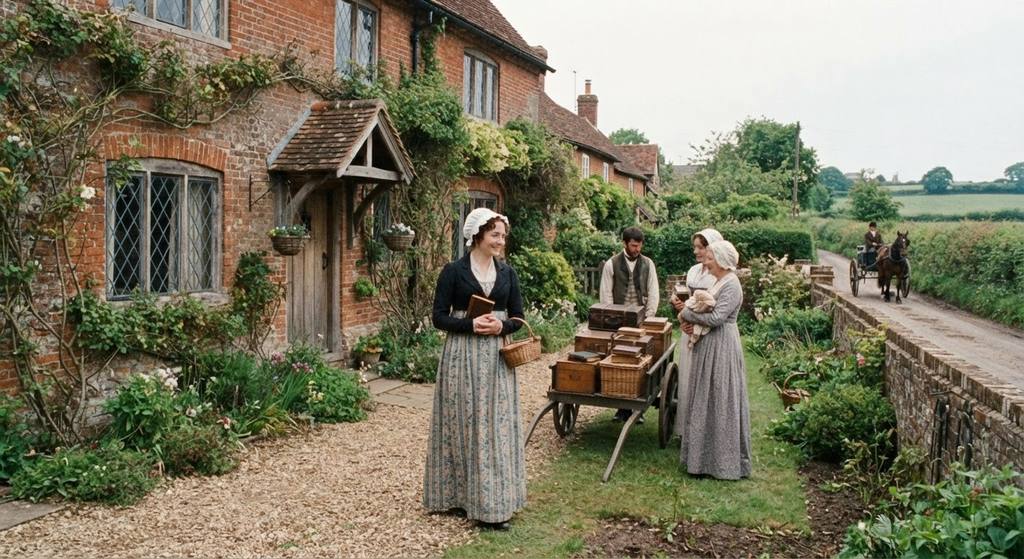
Settling at Chawton, 1809
Moves to Chawton Cottage, securing the domestic quiet required for her most creative output.
1811
Sense and Sensibility Published
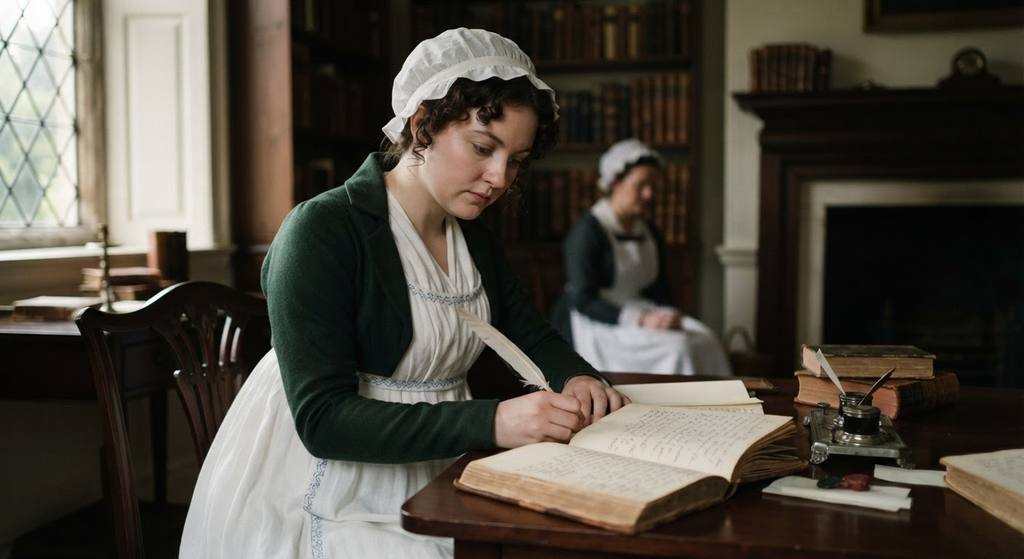
Sense and Sensibility Published, 1811
Publishes her debut novel anonymously under the title By a Lady.
1813
Pride and Prejudice Appears
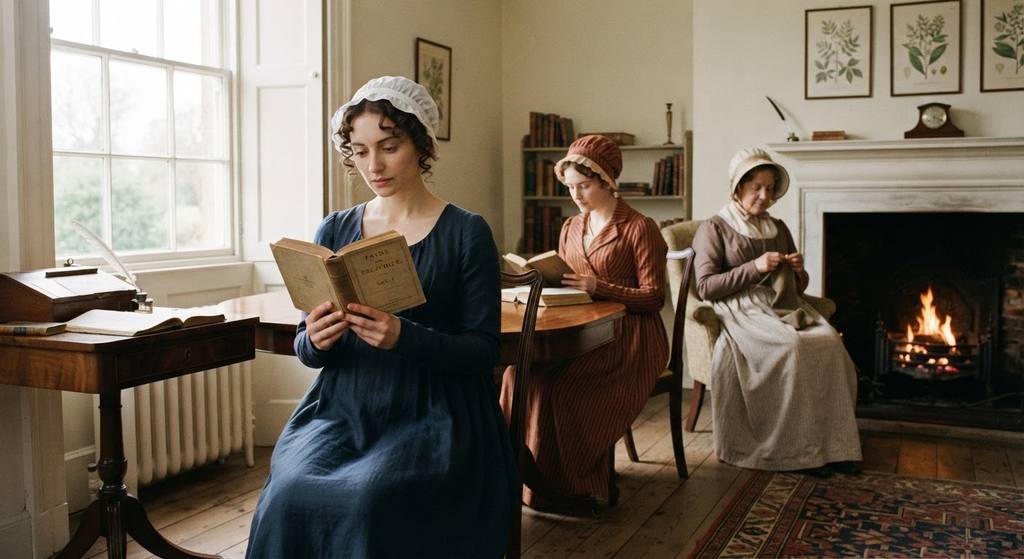
Pride and Prejudice Appears, 1813
Releases her second novel, earning widespread popularity among contemporary readers.
1815
Publication of Emma
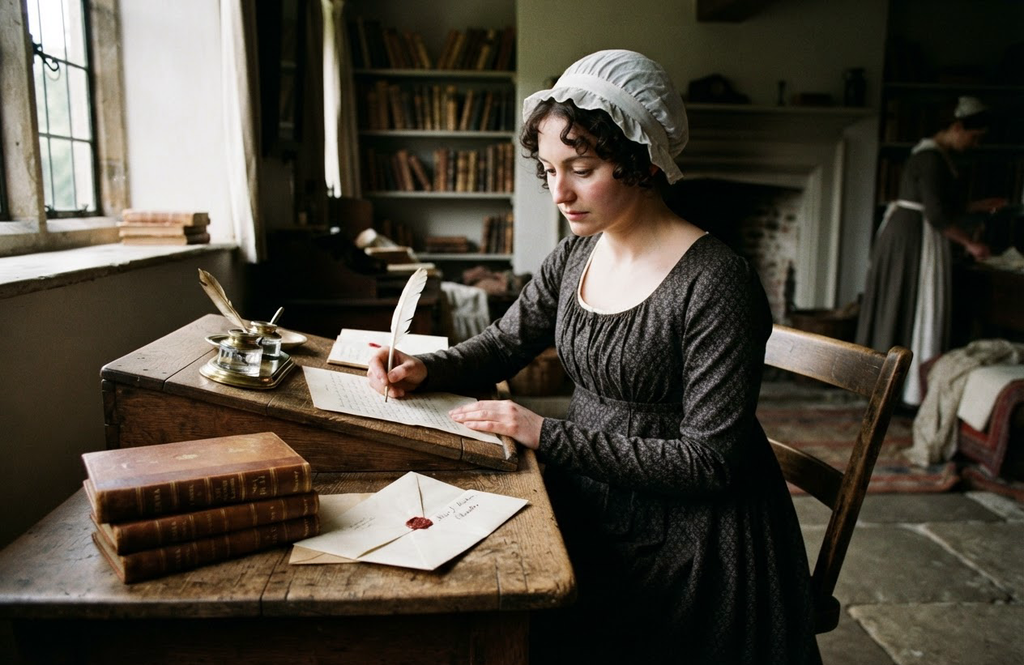
Publication of Emma, 1815
Publishes Emma, dedicated to the Prince Regent following a recommendation from his librarian.
1817
Passing in Winchester
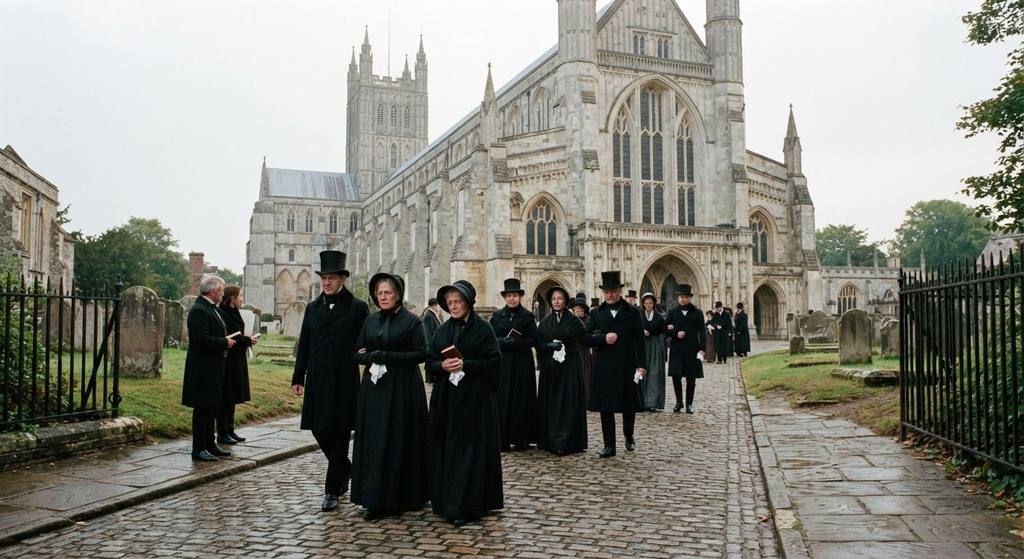
Passing in Winchester, 1817
Dies in Winchester at forty-one, leaving a timeless literary legacy.
The Austen Method
Six Pillars of Social Satire, Realism, and Narrative Innovation
Behind the elegant drawing rooms and courtship plots lies a radical approach to fiction. Jane Austen transformed the English novel by merging acute economic realism with revolutionary narrative techniques, laying bare the mechanics of society and self-delusion.
 Technique
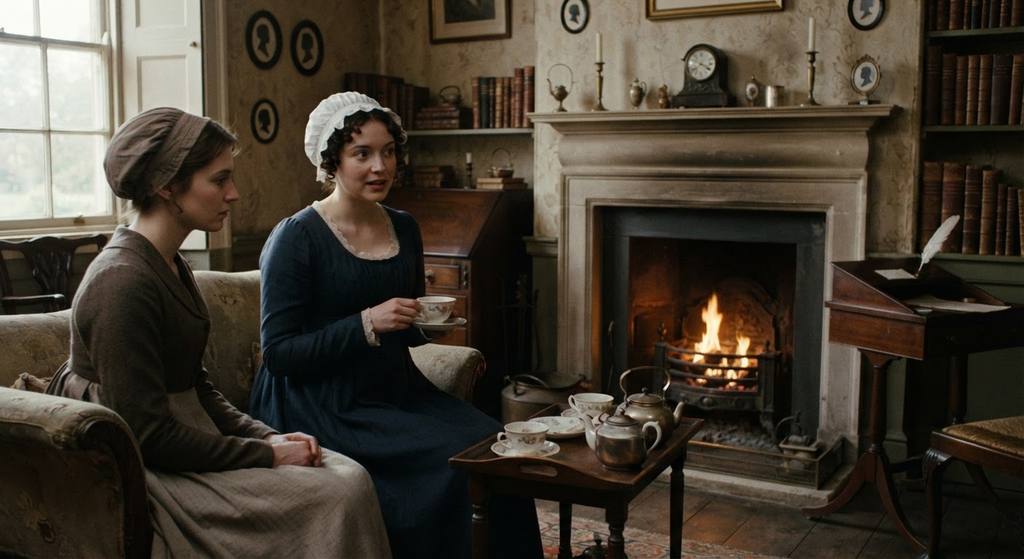
Free Indirect Discourse
Collapsing the distance between narrator and character mind
The Narrator's Voice
 Doctrine
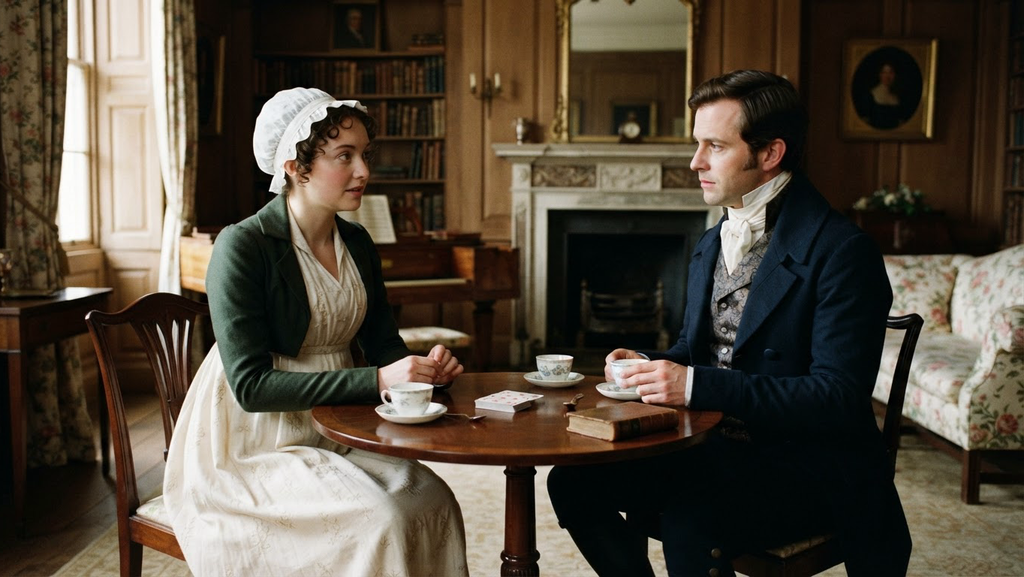
Economic Realism in Marriage
Balancing financial security with mutual affection
Security and Affection
 Satire
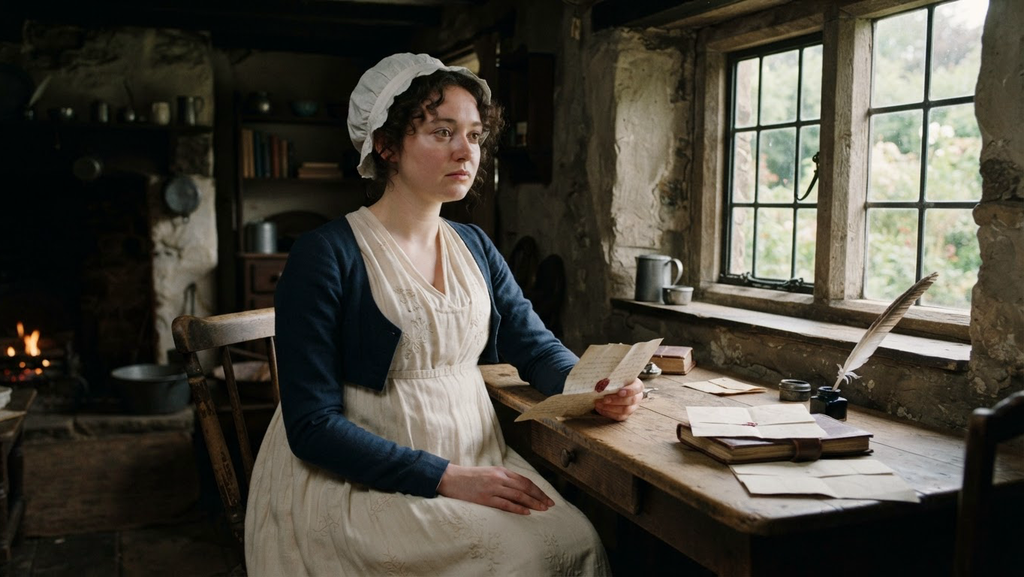
The Irony of Everyday Conduct
Unmasking hypocrisy through polite domestic conversation
Unmasking Hypocrisy
 Philosophy
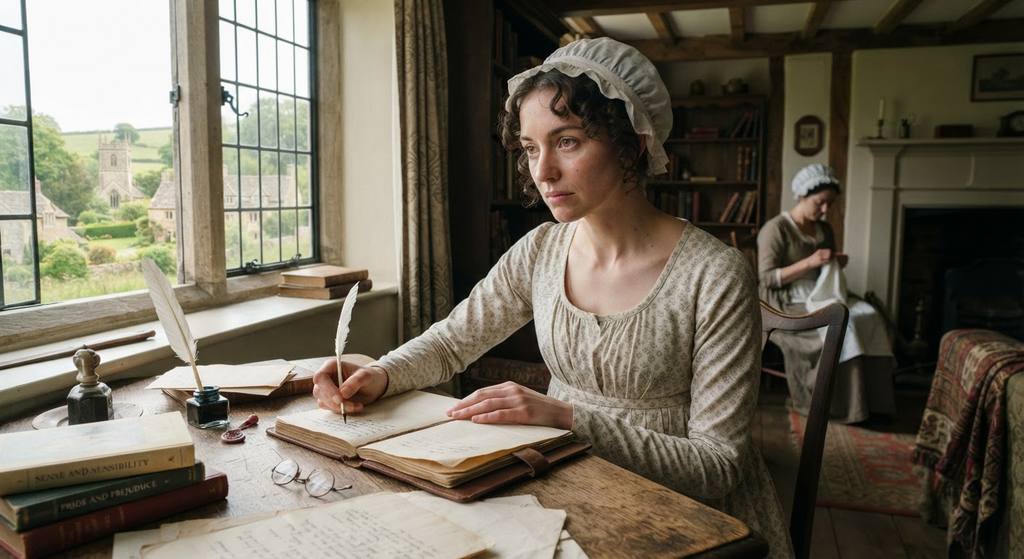
Self-Awareness and Correction
The painful necessity of unlearning pride and prejudice
Overcoming Pride and Prejudice
 Craft
CraftThe Miniaturist's Focus
Creating universal drama on 3 or 4 families in a country village
Village Life Drama
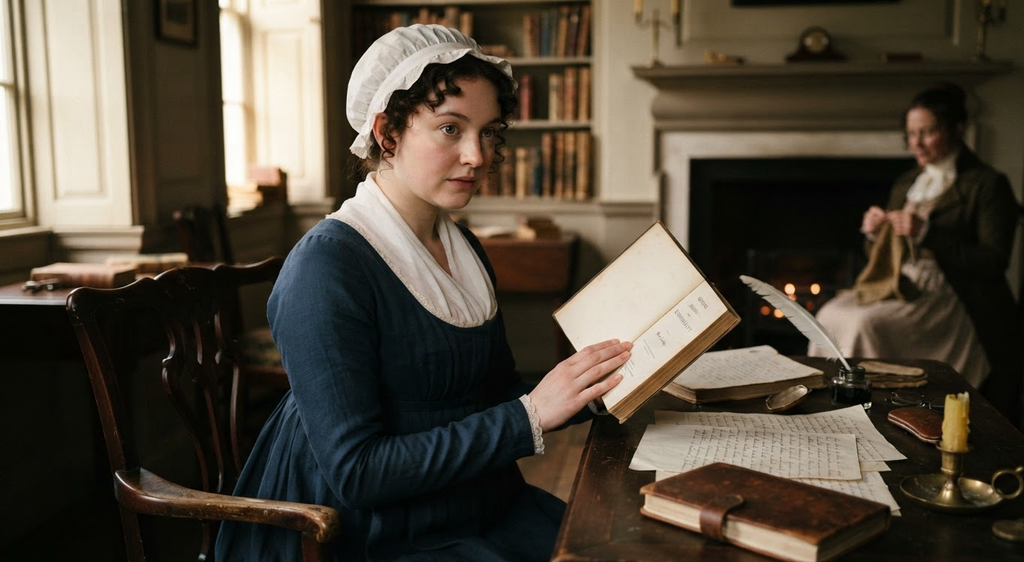 Identity
The Anonymity of 'By a Lady'
Navigating social propriety while claiming creative authority
Claiming Creative Authority
Free Indirect Discourse
Austen refined a narrative technique that blended third-person narration with a character's internal thoughts without explicit tag words. This allowed readers to experience a character's biases, self-deceptions, and subtle emotional shifts directly. In novels like Emma, this method forces the reader to share in the heroine's flawed judgments before realizing the truth alongside her.
Why it matters today: Examine your own perspective critically, recognizing how personal biases silently shape your narrative of reality.
“How did you develop free indirect discourse to show a character's inner self-delusion?”
What can you ask Jane?
Relationships & Respect
Character & Self-Awareness
Literary Craft & Independence
Try a live answer from Jane
Ask right here — no signup needed. The answer is generated live.
Live answer from Jane Austen — no login needed for your first question.
Jane Austen quotes — in her own words
13 of the lines Jane is remembered for, with the source for each one. Pick any quote and ask her what she actually meant by it.
Scroll sideways for more · Sources shown per quote; a few widely circulated lines are marked as attributed rather than verbatim.
Why Xminds is different
Related minds around Jane
No one thinks alone. These are the people who supported Jane — and the ones who pushed back. Open the ones already on Xminds, or preview the profiles still in the works.
Friendly minds
Teachers, family, students and allies who shaped Jane.
Literary contemporary who wrote glowing anonymous reviews praising her realistic depiction of modern life.

Royal admirer whose librarian requested that she dedicate her novel Emma to him.

Devoted older sister and primary confidante who preserved her letters and supported her writing throughout her life.

Modernist literary pioneer who celebrated Austen as one of the most flawless writers in the English language.
Opponents
Rivals, accusers and adversaries who tested Jane.
Contemporary writer who recorded critical Hampshire gossip describing young Austen as cold and pretentious.

Victorian author who famously criticized Austen's novels for lacking passion, poetry, and emotional depth.

American writer who frequently mocked Austen's work and declared that her books irritated him beyond endurance.
Learn from history
People who talked to Jane also explored:
What people say about Jane
Ratings are collected right after a conversation ends. Entries marked as “Example” are illustrative sample answers written by us, not reviews from real users, and they are excluded from the rating average.
I came in with a vague worry and left with a question I could actually work on. It never lectured me — it kept asking until I heard my own answer.
Illustrative example
Ten minutes before a difficult meeting I talked it through here. Calmer, sharper, and the advice held up in the room.
Illustrative example
The voice call feels surprisingly natural. Occasionally a bit long-winded, but the substance is genuinely good.
Illustrative example
What I like most is that it stays in character and quotes real sources. It feels like reading with a patient tutor.
Illustrative example
I use it a few evenings a week to think out loud. It has quietly become part of how I make decisions.
Illustrative example
Better than I expected. I wish it remembered more from older conversations, but the depth of each session is excellent.
Illustrative example
Questions & answers
How does this platform recreate conversations with Jane Austen?
The platform draws directly from Jane Austen's published novels, survived personal letters, and recorded family accounts. Every response reflects her documented philosophical views, Regency historical context, distinct ironical style, and sharp observations on human conduct without inventing unverified claims.
What topics can I discuss during a consultation with Jane Austen?
You can discuss navigating delicate social relationships, evaluating personal character, balancing romantic expectations with practical realities, and refining literary writing techniques. Jane Austen offers structured, thoughtful perspectives grounded in acute human observation and common sense.
Why did Jane Austen choose to publish her novels anonymously during her lifetime?
Jane Austen published anonymously, using signatures like 'By a Lady', because nineteenth-century English social conventions discouraged women of her class from seeking public fame. Anonymity protected her family's propriety while granting her creative independence to satirize contemporary social norms freely.
Can Jane Austen help modern readers resolve contemporary relationship questions?
Yes. While Regency social customs differed from today, Jane Austen understood timeless human traits like vanity, affection, self-deception, and prudence. Her insights help modern readers evaluate whether a partner offers genuine respect, emotional maturity, and shared moral standards.
Are the historical details provided by Jane Austen fully authentic?
All historical facts, literary citations, and biographical details rely on scholarly biographies by Deirdre Le Faye and Claire Tomalin. When modern historians dispute specific matters, such as her precise medical diagnosis, Jane Austen acknowledges those uncertainties openly.
Can I really chat with Jane Austen?
Yes. Xminds lets you chat with Jane Austen as an AI mentor: the Jane Austen AI is built from documented writings, speeches and biography, so you can ask Jane Austen anything and get an answer in character rather than a search-results page. The first messages are free and no download is needed.
Can I call Jane Austen and talk by voice?
You can. Press the call button to talk to Jane Austen in a live voice conversation — the Jane Austen AI voice replies in real time, and you can interrupt, follow up and switch language mid-call. Prefer typing? The same conversation works as text chat.
Is the Jane Austen chatbot free?
Starting is free: every visitor gets a free daily allowance of messages and voice minutes with the Jane Austen AI chatbot. Xminds Pro raises the limits for people who talk to their mentors every day.
How accurate is this Jane Austen AI?
Jane Austen is a respectful AI portrayal, not the real person and not a channel to them. Answers are grounded in the historical record and cited sources, and every conversation is clearly labelled as AI so you always know who you are talking to.
What should I ask Jane Austen about?
Bring a real situation. People come for advice from Jane Austen on the themes above, or treat it as an interview with Jane Austen about a decision they are facing. You can speak to Jane Austen about work, doubt or craft, and meet Jane Austen again tomorrow to continue the same thread — it is a conversation, not a Jane Austen simulator that repeats stock lines.
Also known as
Jane Austen appears under several names and spellings across languages and sources. You can search for any of these on Xminds:
- A Lady
- Author of Sense and Sensibility
Seek timeless clarity on character, independence, and human nature.
Begin your private conversation with Jane Austen today.
10 free messages a day • no signup needed

Talk to Jane
10 free messages a day • no signup needed