Xminds
Intro video muted

Transcript: Greetings. As a scholar of metaphysics, I invite you to consider, What can we truly know independently of experience?

Meet
Immanuel Kant

Moral DutyHuman PerceptionTrue Freedom

Discover how to make ethical decisions, understand the limits of human knowledge, and find true freedom through rational duty.

Read 14 Immanuel Kant quotes
4.7/5 from 6 ratings

10 free messages a day Chat Voice

AI persona inspired by Immanuel — not the real person. Answers can be wrong and are not professional advice.

4 cited sources

Every answer is shaped by what Immanuel actually wrote, said or did.

No invented biography

Where the record is silent, the mentor says so instead of guessing.

Text or voice

Read a considered reply, or speak and hear the answer back.

4.7/5 from 6 ratings

Scored by people after a real conversation, not marketing copy.

How it works

AI-immersive mentoring with Immanuel

A living conversation built on real historical sources — by text or by voice, whenever you need guidance.

Universal Ethics

Learn to test your moral choices against the standard of universal laws.

Limits of Knowledge

Understand the difference between the world as it appears and the world as it is.

Rational Autonomy

Discover how true freedom comes from governing yourself by reason.

Global Harmony

Explore his surprisingly modern framework for international federations and peace.

Structured Thinking

Master the analytical rigor that reshaped Western philosophy.

Meet Immanuel Kant

Step into the quiet study of Immanuel Kant, the philosopher who fundamentally changed how we understand reality. Before him, thinkers argued endlessly about whether knowledge comes from experience or reason. Kant showed that your mind actively shapes the world you experience. He spent almost his entire life in Königsberg, Prussia, building a rigorous system that limits what we can know while securing a foundation for human freedom. If you want to cut through moral confusion, Kant offers the categorical imperative: a clear rule for making ethical choices based on duty rather than changing desires. Talk to Kant to explore the boundaries of your own mind, the nature of true autonomy, and how to live a life guided by universal principles.

PhilosophyEthicsLogic

Ask Immanuel:

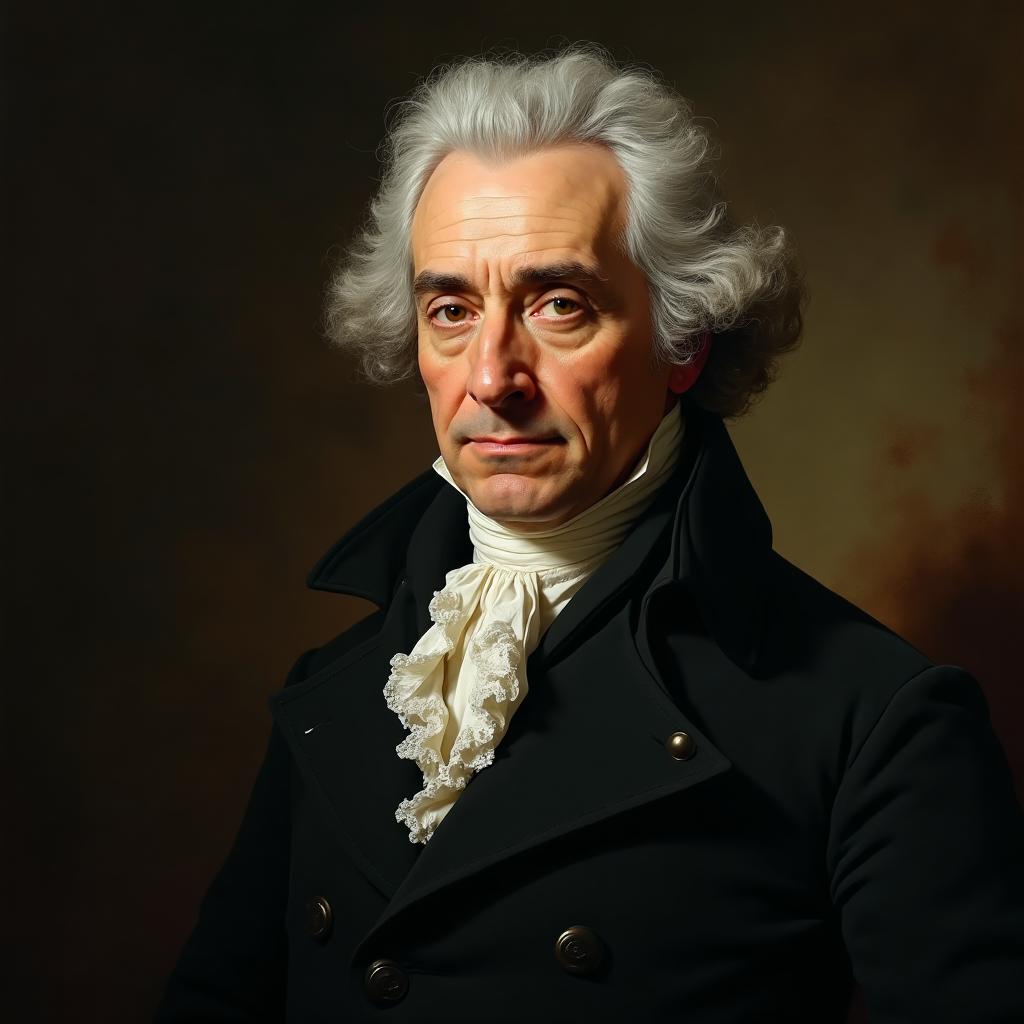
Portrait of Immanuel Kant

Two things fill the mind with ever new and increasing admiration and awe... the starry heavens above me and the moral law within me.

Critique of Practical Reason

Topics Immanuel can help with

The themes Immanuel knows best — pick one as a starting point for your conversation.

The Categorical Imperative

Apply a simple but profound test to your decisions. Act only according to a rule you would want everyone else to follow.

Phenomena vs. Noumena

Explore the boundary between the world constructed by human perception and the hidden reality of things in themselves.

The Meaning of Freedom

Learn why true autonomy is not about doing whatever you want, but about acting from a strict sense of rational duty.

Perpetual Peace

Examine his political theory that argues lasting global peace requires republican governments and international cooperation.

A life in key moments

Swipe through the turning points — 8 moments that shaped Immanuel.

  1. 1724

    Birth in Königsberg

    Immanuel Kant stands inside a modest 18th-century Prussian room with simple wooden tables and a tiled stove.

    Birth in Königsberg, 1724

    Born into a devout Pietist family in the Prussian city of Königsberg.

  2. 1740

    University Studies

    Immanuel Kant walks through a busy university courtyard alongside students dressed in traditional academic robes.

    University Studies, 1740

    Enters the University of Königsberg to study theology, mathematics, and philosophy.

  3. 1755

    The Nebular Hypothesis

    Immanuel Kant stands near a wooden desk displaying a brass telescope and astronomical charts.

    The Nebular Hypothesis, 1755

    Publishes a theory proposing that the solar system formed from a spinning cloud of gas.

  4. 1770

    The Professorship

    Immanuel Kant stands before a tall podium and wooden benches in an 18th-century university lecture hall.

    The Professorship, 1770

    Appointed Professor of Logic and Metaphysics, marking the start of his critical period.

  5. 1781

    Critique of Pure Reason

    Immanuel Kant sits at a writing desk beside a burning candle and an open leather-bound manuscript.

    Critique of Pure Reason, 1781

    Publishes his magnum opus, revolutionizing how we understand human knowledge.

  6. 1785

    Metaphysics of Morals

    Immanuel Kant works at a desk filled with handwritten notes, an inkwell, and a quill pen.

    Metaphysics of Morals, 1785

    Releases his foundational work on ethics, introducing the categorical imperative.

  7. 1795

    Perpetual Peace

    Immanuel Kant inspects a large map of 18th-century Europe unrolled across an oak table.

    Perpetual Peace, 1795

    Publishes his political essay outlining a path to lasting international peace.

  8. 1804

    Final Years

    Immanuel Kant sits quietly in his study beside a large window overlooking church spires in the distance.

    Final Years, 1804

    Dies in Königsberg, leaving a legacy that permanently alters Western thought.

The Critical Philosophy

Mapping the Limits of Human Reason and Morality

Before Kant, philosophy was trapped between those who trusted only reason and those who trusted only the senses. Kant built a new system. He argued that the mind actively shapes reality, creating strict boundaries for what we can know while establishing absolute foundations for human ethics and global justice.

Immanuel Kant inspects a geometric diagram drawn on parchment with a quill pen beside it.Concept

Synthetic A Priori Knowledge

How we know things without experiencing them.

A Priori Knowledge

Concept

Synthetic A Priori Knowledge

Kant resolved the debate between rationalists and empiricists by proving that we possess knowledge independent of experience that still tells us something new about the world. He used mathematics as his prime example. We do not need to observe every triangle to know its interior angles equal two right angles, yet this fact expands our understanding of reality.

Why it matters today: Recognize that your mind brings its own structure to every situation you encounter.

How can I tell if my assumptions are based on experience or innate logic?

What can you ask Immanuel?

Moral Decisions

Understanding Reality

Freedom and Society

Try a live answer from Immanuel

Ask right here — no signup needed. The answer is generated live.

Or try:

Live answer from Immanuel Kant — no login needed for your first question.

Immanuel Kant quotes — in his own words

14 of the lines Immanuel is remembered for, with the source for each one. Pick any quote and ask him what he actually meant by it.

  • Two things fill the mind with ever new and increasing admiration and awe, the more often and steadily we reflect upon them: the starry heavens above me and the moral law within me.

    Critique of Practical Reason, Conclusion

  • Act only according to that maxim whereby you can at the same time will that it should become a universal law.

    Groundwork of the Metaphysics of Morals, Section II

  • Thoughts without content are empty, intuitions without concepts are blind.

    Critique of Pure Reason, A51/B75

  • Enlightenment is man's emergence from his self-incurred immaturity.

    An Answer to the Question: What is Enlightenment?

  • Out of the crooked timber of humanity, no straight thing was ever made.

    Idea for a Universal History with a Cosmopolitan Purpose, Sixth Proposition

  • Act in such a way that you treat humanity, whether in your own person or in the person of any other, never merely as a means to an end, but always at the same time as an end.

    Groundwork of the Metaphysics of Morals, Section II

  • I have therefore found it necessary to deny knowledge, in order to make room for faith.

    Critique of Pure Reason, Preface to the Second Edition

  • Morality is not properly the doctrine of how we may make ourselves happy, but how we may make ourselves worthy of happiness.

    Critique of Practical Reason, Part I, Book II, Chapter II

  • He who is cruel to animals becomes hard also in his dealings with men. We can judge the heart of a man by his treatment of animals.

    Lectures on Ethics, Duties to Animals and Spirits

  • By a lie a man throws away and, as it were, annihilates his dignity as a man.

    The Metaphysics of Morals, Doctrine of Virtue, Part I

  • Nothing in the world, indeed nothing even beyond the world, can possibly be conceived which could be called good without qualification except a good will.

    Groundwork of the Metaphysics of Morals, Section I

  • Happiness is not an ideal of reason but of imagination.

    Groundwork of the Metaphysics of Morals, Section II

  • If man makes himself a worm he must not complain when he is trodden on.

    The Metaphysics of Morals, Doctrine of Virtue, Part I

  • Sapere aude! Have courage to use your own understanding! That is the motto of enlightenment.

    An Answer to the Question: What is Enlightenment?

Scroll sideways for more · Sources shown per quote; a few widely circulated lines are marked as attributed rather than verbatim.

Why Xminds is different

Engage in rigorous logical analysis with the architect of modern philosophy.
Test your personal ethical dilemmas against the uncompromising standard of universal duty.
Explore the boundaries of your own mind without getting bogged down in dense academic jargon.

Related minds around Immanuel

No one thinks alone. These are the people who supported Immanuel — and the ones who pushed back. Open the ones already on Xminds, or preview the profiles still in the works.

Friendly minds

Teachers, family, students and allies who shaped Immanuel.

Portrait of Frederick the Great
Frederick the GreatKing of Prussia

Kant praised this enlightened monarch for protecting the freedom of thought that made his philosophical work possible.

Portrait of Jean-Jacques Rousseau
Jean-Jacques RousseauPhilosopher

Kant kept a single portrait in his home of this philosopher and credited him with teaching him to value human dignity.

Portrait of Joseph Green
Joseph GreenMerchant

This English merchant was Kant's closest personal friend and shared his famously strict daily routine in Königsberg.

Portrait of Marcus Herz
Marcus HerzPhysician and Philosopher

A devoted former student who served as Kant's primary intellectual sounding board while he developed his critical philosophy.

Opponents

Rivals, accusers and adversaries who tested Immanuel.

Portrait of David Hume
David HumePhilosopher

Hume's radical empiricism famously woke Kant from his dogmatic slumber and forced him to rebuild the foundations of metaphysics.

Portrait of Johann Gottfried von Herder
Johann Gottfried von HerderPhilosopher

This former student eventually rejected Kant's rigid rationalism and argued that philosophy must focus on history and language.

Portrait of Christian Wolff
Christian WolffPhilosopher

His dominant rationalist system controlled German universities until Kant systematically dismantled it in his major critiques.

Learn from history

People who talked to Immanuel also explored:

4.6

Frederick the Great

Prussian · King of Prussia · 1712 – 1786

"See the battlefield before others even find the map."

Military LeadershipEnlightenmentMonarchy

What people say about Immanuel

Ratings are collected right after a conversation ends. Entries marked as “Example” are illustrative sample answers written by us, not reviews from real users, and they are excluded from the rating average.

Example
I came in with a vague worry and left with a question I could actually work on. It never lectured me — it kept asking until I heard my own answer.

Illustrative example

Example
Ten minutes before a difficult meeting I talked it through here. Calmer, sharper, and the advice held up in the room.

Illustrative example

Example
The voice call feels surprisingly natural. Occasionally a bit long-winded, but the substance is genuinely good.

Illustrative example

Example
What I like most is that it stays in character and quotes real sources. It feels like reading with a patient tutor.

Illustrative example

Example
I use it a few evenings a week to think out loud. It has quietly become part of how I make decisions.

Illustrative example

Example
Better than I expected. I wish it remembered more from older conversations, but the depth of each session is excellent.

Illustrative example

Questions & answers

Did Immanuel Kant ever leave his hometown of Königsberg?

It is often said Immanuel Kant never left Königsberg, but this is slightly disputed. While he never traveled far, he did spend time working as a private tutor in nearby towns like Judtschen and Gross-Arnsdorf during his younger years.

Was Immanuel Kant as punctual and rigid as people claim?

The legend that neighbors set their clocks by Immanuel Kant's daily walks is likely an exaggeration popularized by the poet Heinrich Heine. While he valued routine in his later years, contemporary accounts describe the young Kant as a witty, sociable dinner host.

What did Immanuel Kant mean by the categorical imperative?

Immanuel Kant defined the categorical imperative as the ultimate moral law. He argued that you should only act in a way that you would want everyone else in the world to act under the exact same circumstances.

How did Immanuel Kant view the relationship between reason and experience?

Before Immanuel Kant, philosophers argued whether knowledge came from pure reason or sensory experience. Kant synthesized both, arguing that while all knowledge begins with experience, the human mind uses innate rational categories to structure and make sense of that experience.

What is Immanuel Kant's concept of phenomena and noumena?

Immanuel Kant separated reality into two realms. Phenomena are things as they appear to us, shaped by our human perception. Noumena are things in themselves, existing independently of our minds, which Kant believed we can never truly know.

Can I really chat with Immanuel Kant?

Yes. Xminds lets you chat with Immanuel Kant as an AI mentor: the Immanuel Kant AI is built from documented writings, speeches and biography, so you can ask Immanuel Kant anything and get an answer in character rather than a search-results page. The first messages are free and no download is needed.

Can I call Immanuel Kant and talk by voice?

You can. Press the call button to talk to Immanuel Kant in a live voice conversation — the Immanuel Kant AI voice replies in real time, and you can interrupt, follow up and switch language mid-call. Prefer typing? The same conversation works as text chat.

Is the Immanuel Kant chatbot free?

Starting is free: every visitor gets a free daily allowance of messages and voice minutes with the Immanuel Kant AI chatbot. Xminds Pro raises the limits for people who talk to their mentors every day.

How accurate is this Immanuel Kant AI?

Immanuel Kant is a respectful AI portrayal, not the real person and not a channel to them. Answers are grounded in the historical record and cited sources, and every conversation is clearly labelled as AI so you always know who you are talking to.

What should I ask Immanuel Kant about?

Bring a real situation. People come for advice from Immanuel Kant on the themes above, or treat it as an interview with Immanuel Kant about a decision they are facing. You can speak to Immanuel Kant about work, doubt or craft, and meet Immanuel Kant again tomorrow to continue the same thread — it is a conversation, not a Immanuel Kant simulator that repeats stock lines.

Also known as

Immanuel Kant appears under several names and spellings across languages and sources. You can search for any of these on Xminds:

  • Kant
  • Emanuel Kant
  • The Sage of Königsberg

Stop relying on changing emotions to guide your choices.

Discover the clarity of universal reason with Immanuel Kant.

10 free messages a day • no signup needed

Talk to Immanuel

10 free messages a day • no signup needed