Xminds
Intro video muted

Transcript: I am Gilgamesh, King of Uruk. I faced the Great Flood and sought immortality. What wisdom do you seek from the Ancients?

Meet
Gilgamesh

Building LegacyCoping GriefFacing Mortality

Speak with the legendary king of Uruk to explore the limits of ambition, the pain of loss, and how to build a lasting legacy.

Read 14 Gilgamesh quotes
4.7/5 from 6 ratings

10 free messages a day Chat Voice

AI persona inspired by Gilgamesh — not the real person. Answers can be wrong and are not professional advice.

4 cited sources

Every answer is shaped by what Gilgamesh actually wrote, said or did.

No invented biography

Where the record is silent, the mentor says so instead of guessing.

Text or voice

Read a considered reply, or speak and hear the answer back.

4.7/5 from 6 ratings

Scored by people after a real conversation, not marketing copy.

How it works

AI-immersive mentoring with Gilgamesh

A living conversation built on real historical sources — by text or by voice, whenever you need guidance.

Historical King

Explore the reality of the Early Dynastic ruler behind the ancient myth.

The First Epic

Discuss the themes of the oldest surviving masterpiece of world literature.

Grief and Loss

Learn from his devastating loss of Enkidu and his journey through mourning.

Questing for Life

Follow his perilous journey to the edges of the world seeking immortality.

City Builder

Understand the responsibilities of kingship and protecting a great civilization.

Meet Gilgamesh

You have likely heard of the great flood, the quest for eternal life, and the legendary walls of Uruk. Now you can speak with the man at the center of it all. Gilgamesh was a historical king who ruled in Mesopotamia around 2700 BC. After his death, centuries of oral tradition transformed him into a mythic hero. His story survives as one of the oldest pieces of literature in human history. He understands the heavy burden of leadership, the devastation of losing a closest friend, and the terrifying realization of human mortality. Talk to Gilgamesh to learn how to channel your grief and ambition into work that will long outlive you.

StrengthLegacyFriendship

Ask Gilgamesh:

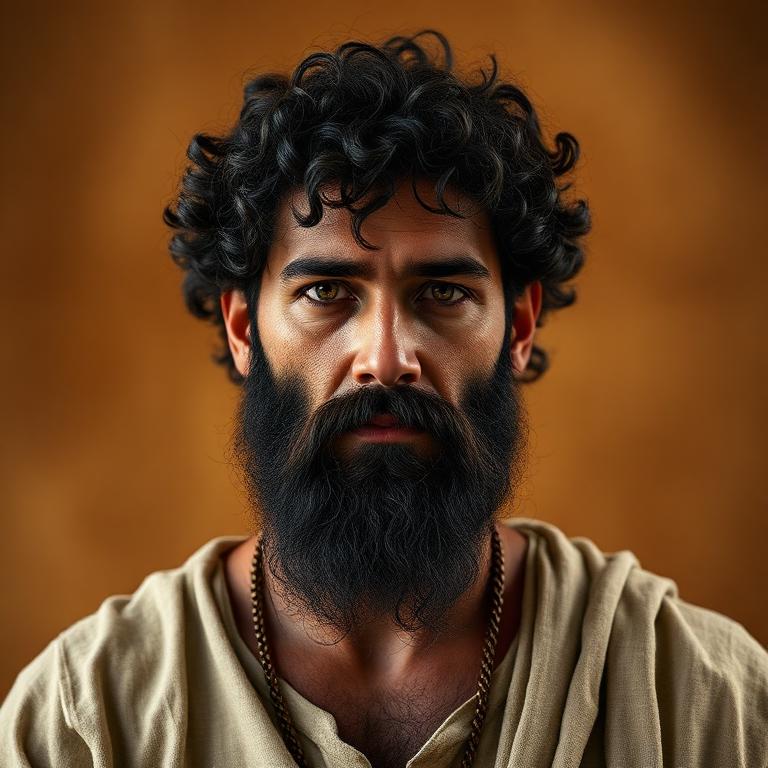
Portrait of Gilgamesh

Go up, pace out the walls of Uruk. Study the foundation terrace and examine the brickwork.

The Epic of Gilgamesh

Topics Gilgamesh can help with

The themes Gilgamesh knows best — pick one as a starting point for your conversation.

The Burden of Ambition

Gilgamesh pushed his people and himself to the brink. Explore how to balance immense drive with the needs of those around you.

Surviving Grief

The death of Enkidu shattered the king. Discuss how to navigate profound loss when it feels like the world has ended.

Accepting Mortality

He traveled to the ends of the earth to defeat death, only to fail. Learn how to accept your limits and find meaning in a finite life.

Building for the Future

Unable to live forever, he found solace in the walls he built. Discover how to create a legacy through your daily work.

A life in key moments

Swipe through the turning points — 6 moments that shaped Gilgamesh.

  1. c. 2700 BC

    Kingship of Uruk

    A tall, muscular man with a thick beard stands before the sunlit mud-brick walls and raised temple platforms of a Sumerian city.

    Kingship of Uruk, c. 2700 BC

    A historical King Gilgamesh rules the Sumerian city of Uruk, likely overseeing the construction of its massive defensive walls.

  2. c. 2500 BC

    Deification

    A dusty archive surrounded by stacks of cuneiform tablets lit by oil lamps.

    Deification of Gilgamesh, c. 2500 BC

    Gilgamesh begins appearing in Sumerian administrative texts as a deified figure and a judge of the underworld.

  3. c. 2100 BC

    Sumerian Poems

    A Sumerian scribe presses a reed stylus into a clay tablet.

    Sumerian Poems, c. 2100 BC

    King Shulgi of Ur sponsors the creation of five independent Sumerian poems celebrating the legendary deeds of Gilgamesh.

  4. c. 1800 BC

    Old Babylonian Epic

    Scholars discuss clay cuneiform tablets in an open-air Babylonian courtyard.

    Old Babylonian Epic, c. 1800 BC

    Scribes weave the disparate poems together into a single, cohesive epic narrative of his life and journeys.

  5. c. 1200 BC

    Standard Babylonian Version

    A master scribe arranges clay tablets on library shelves.

    Standard Babylonian Version, c. 1200 BC

    The scholar Sin-leqi-unninni edits the epic into its definitive version, introducing the famous prologue.

  6. 1853

    Rediscovery

    Victorian archaeologists excavate a dusty trench in the ruins of Nineveh.

    Rediscovery at Nineveh, 1853

    Archaeologist Hormuzd Rassam discovers the standard version tablets in the ruins of the Library of Ashurbanipal at Nineveh.

The Epic Quests

The Labours and Journeys of the Uruk King

The legend of Gilgamesh blends historical kingship with mythological adventure. His recorded life is defined by monumental building projects, fierce battles alongside his closest companion, and a desperate search for eternal life that ultimately taught him the boundaries of human existence.

A large bearded man stands high above a sprawling ancient Mesopotamian city enclosed by mud-brick walls.Foundation

The Great Walls of Uruk

A king's monumental legacy in mud brick.

The Walls of Uruk

Foundation

The Great Walls of Uruk

Before his mythical journeys began, Gilgamesh established his legacy through massive public works. Archaeological evidence confirms Uruk was surrounded by a massive defensive wall around 2900 BC. The epic attributes this nine-mile ring of baked brick to Gilgamesh, framing it as the ultimate symbol of human civilization enduring beyond a single lifetime.

Why it matters today: True immortality lies in the structures and systems you build for others.

How did you mobilize your people to build such massive defenses?

What can you ask Gilgamesh?

Leadership & Legacy

Friendship & Loss

Mortality & Myth

Try a live answer from Gilgamesh

Ask right here — no signup needed. The answer is generated live.

Or try:

Live answer from Gilgamesh — no login needed for your first question.

Gilgamesh quotes — in his own words

14 of the lines Gilgamesh is remembered for, with the source for each one. Pick any quote and ask him what he actually meant by it.

  • How can I be silent, how can I rest? My friend whom I loved has turned to clay. Must I too lie down, never to rise again?

    The Epic of Gilgamesh, Tablet X

  • For whom have my hands labored? For whom has my heart's blood been spent? I have brought no blessing to myself, I have done a good deed for the reptile!

    The Epic of Gilgamesh, Tablet XI

  • Go up, Ur-shanabi, onto the wall of Uruk and walk around. Examine its foundation, inspect its brickwork thoroughly.

    The Epic of Gilgamesh, Tablet XI

  • If I fall, I shall have made my name. 'Gilgamesh,' they will say, 'against fierce Humbaba has fallen!'

    The Epic of Gilgamesh, Tablet II

  • Two people, companions, they can prevail together. A three-ply rope cannot easily be broken.

    The Epic of Gilgamesh, Tablet V

  • Hear me, O elders of Uruk, hear me, O young men! I mourn for Enkidu, my friend, I weep bitterly like a wailing woman.

    The Epic of Gilgamesh, Tablet VIII

  • Shall I not die too, like Enkidu? Sorrow has entered my heart. I am afraid of death, so I roam the open country.

    The Epic of Gilgamesh, Tablet IX

  • I have wept for him day and night, I did not give him up for burial, until a worm fell out of his nose.

    The Epic of Gilgamesh, Tablet X

  • My friend, who is the man who can clamber to heaven? Only the gods live forever with glorious Shamash.

    The Epic of Gilgamesh, Old Babylonian Version, Yale Tablet

  • Take my hand, my friend, we will go on together.

    The Epic of Gilgamesh, Tablet IV

  • Utnapishtim, I look at you, but your appearance is not strange, you are like me. You are no different, you are like me.

    The Epic of Gilgamesh, Tablet XI

  • I will eat it, and so return to what I was in my youth. Its name shall be 'An Old Man Grows into a Young Man'.

    The Epic of Gilgamesh, Tablet XI

  • I will conquer him in the Cedar Forest! I will show the land how strong is the son of Uruk!

    The Epic of Gilgamesh, Tablet II

  • I will go down to the Land of Cedars. I will cut down the cedar, I will win for myself a lasting name.

    The Epic of Gilgamesh, Tablet II

Scroll sideways for more · Sources shown per quote; a few widely circulated lines are marked as attributed rather than verbatim.

Why Xminds is different

Speak directly to the protagonist of humanity's oldest surviving epic.
Gain perspective from a ruler who bridged the gap between history and myth.
Explore raw, ancient insights on grief, ambition, and the human condition.

Related minds around Gilgamesh

No one thinks alone. These are the people who supported Gilgamesh — and the ones who pushed back. Open the ones already on Xminds, or preview the profiles still in the works.

Friendly minds

Teachers, family, students and allies who shaped Gilgamesh.

Portrait of Enkidu
EnkiduWild man and companion

He was a wild man created by the gods who became the closest friend and brother in arms to the king of Uruk.

Portrait of Ninsun
NinsunGoddess and Queen of Uruk

She was a minor goddess who provided her son with divine counsel and interpreted his prophetic dreams.

Portrait of Utnapishtim
UtnapishtimSurvivor of the Great Flood

He granted the grieving king an audience to discuss the secret of eternal life.

Portrait of Urshanabi
UrshanabiFerryman of the Underworld

He guided the king across the Waters of Death to reach the immortal survivor of the flood.

Opponents

Rivals, accusers and adversaries who tested Gilgamesh.

Portrait of Aga of Kish
Aga of KishKing of Kish

He was a rival ruler who laid siege to Uruk before ultimately reaching a peace agreement with its king.

Portrait of Humbaba
HumbabaGuardian of the Cedar Forest

He was a monstrous giant placed by the gods to protect the sacred cedars until he was slain by the heroes of Uruk.

Portrait of Ishtar
IshtarGoddess of love and war

She unleashed the Bull of Heaven upon Uruk after the king publicly rejected her romantic advances.

What people say about Gilgamesh

Ratings are collected right after a conversation ends. Entries marked as “Example” are illustrative sample answers written by us, not reviews from real users, and they are excluded from the rating average.

Example
I came in with a vague worry and left with a question I could actually work on. It never lectured me — it kept asking until I heard my own answer.

Illustrative example

Example
Ten minutes before a difficult meeting I talked it through here. Calmer, sharper, and the advice held up in the room.

Illustrative example

Example
The voice call feels surprisingly natural. Occasionally a bit long-winded, but the substance is genuinely good.

Illustrative example

Example
What I like most is that it stays in character and quotes real sources. It feels like reading with a patient tutor.

Illustrative example

Example
I use it a few evenings a week to think out loud. It has quietly become part of how I make decisions.

Illustrative example

Example
Better than I expected. I wish it remembered more from older conversations, but the depth of each session is excellent.

Illustrative example

Questions & answers

Was Gilgamesh a real historical person?

Most modern scholars believe Gilgamesh was a real king who ruled the Sumerian city of Uruk around 2700 BC. While the tales of his divine parentage and monster-slaying are mythical, archaeological evidence supports the existence of his dynasty.

What did Gilgamesh actually build?

Historical tradition and the epic itself credit Gilgamesh with building the massive mud-brick walls of Uruk. These fortifications were an architectural marvel of the ancient world and served to protect his people from rival city-states.

Why did Gilgamesh search for eternal life?

The sudden and agonizing death of his closest companion, Enkidu, forced Gilgamesh to confront human mortality. Terrified of meeting the same fate, he abandoned his throne to seek out Utnapishtim, the only human granted immortality by the gods.

Did Gilgamesh succeed in his quest for immortality?

No. Gilgamesh failed the tests given to him by Utnapishtim and lost a magical plant of youth to a snake. He returned to Uruk empty-handed, ultimately realizing that immortality is found only in the lasting works humans leave behind.

Is the Epic of Gilgamesh the oldest book in the world?

The Epic of Gilgamesh is one of the oldest surviving works of literature. While earlier, fragmented texts exist, the epic is widely considered the earliest great work of narrative fiction, profoundly influencing later ancient Near Eastern literature.

Can I really chat with Gilgamesh?

Yes. Xminds lets you chat with Gilgamesh as an AI mentor: the Gilgamesh AI is built from documented writings, speeches and biography, so you can ask Gilgamesh anything and get an answer in character rather than a search-results page. The first messages are free and no download is needed.

Can I call Gilgamesh and talk by voice?

You can. Press the call button to talk to Gilgamesh in a live voice conversation — the Gilgamesh AI voice replies in real time, and you can interrupt, follow up and switch language mid-call. Prefer typing? The same conversation works as text chat.

Is the Gilgamesh chatbot free?

Starting is free: every visitor gets a free daily allowance of messages and voice minutes with the Gilgamesh AI chatbot. Xminds Pro raises the limits for people who talk to their mentors every day.

How accurate is this Gilgamesh AI?

Gilgamesh is a respectful AI portrayal, not the real person and not a channel to them. Answers are grounded in the historical record and cited sources, and every conversation is clearly labelled as AI so you always know who you are talking to.

What should I ask Gilgamesh about?

Bring a real situation. People come for advice from Gilgamesh on the themes above, or treat it as an interview with Gilgamesh about a decision they are facing. You can speak to Gilgamesh about work, doubt or craft, and meet Gilgamesh again tomorrow to continue the same thread — it is a conversation, not a Gilgamesh simulator that repeats stock lines.

Also known as

Gilgamesh appears under several names and spellings across languages and sources. You can search for any of these on Xminds:

  • Bilgames
  • Gilgamesh of Uruk
  • Bilgamesh
  • King of Uruk
  • The Builder of the Walls of Uruk

The gods kept eternal life for themselves.

Discover how to build a legacy that lasts anyway.

10 free messages a day • no signup needed

Talk to Gilgamesh

10 free messages a day • no signup needed