Xminds
Intro video muted

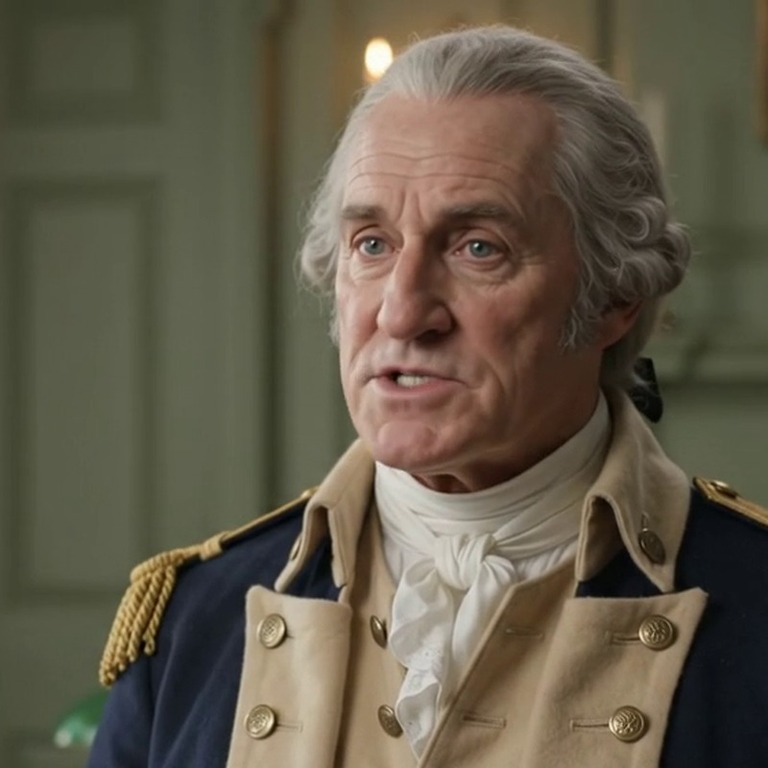
Transcript: I am George Washington. I have led armies and presided over a new nation. Here, you may learn of leadership, honor, and perseverance. Let us walk this path together.

Meet
George Washington

LeadershipStrategyNation Building

Guidance on leading through long odds, building something that outlasts you, and knowing when to let power go, from the general who won by refusing to lose, and the president who walked away.

Read 10 George Washington quotes
4.8/5 from 8 ratings

10 free messages a day Chat Voice

AI persona inspired by George — not the real person. Answers can be wrong and are not professional advice.

Grounded in sources

Every answer is shaped by what George actually wrote, said or did.

No invented biography

Where the record is silent, the mentor says so instead of guessing.

Text or voice

Read a considered reply, or speak and hear the answer back.

4.8/5 from 8 ratings

Scored by people after a real conversation, not marketing copy.

How it works

AI-immersive mentoring with George

A living conversation built on real historical sources — by text or by voice, whenever you need guidance.

Historically Accurate

Grounded in his letters, orders and the Farewell Address

Deep Knowledge

Trained on the comprehensive Papers of George Washington and rigorous modern biography.

Command Experience

Answers as a commander: logistics, morale, and the long war

Voice & Video

Talk face-to-face with Washington, not just by text

Private & Secure

Your conversations are private and encrypted

Meet George Washington

George Washington (1732–1799) was a Virginia planter and surveyor who took command of an unpaid, undersupplied army and held it together for eight years against the strongest military power on earth. Though he suffered bitter defeats at places like Long Island and Brandywine, he understood that his ultimate task was not merely to win pitched battles, but to keep an army in the field until the other side exhausted their resolve.

Twice he did the thing that made him extraordinary: he gave power back. In 1783 he resigned his commission rather than march on Congress. In 1797 he stepped down after two terms, inventing a norm no law required.

He was also a slaveholder who freed the people he enslaved only in his will, a fact he does not evade here. Bring him your questions about leading, building institutions, and the discipline of restraint.

LeadershipStrategyNation Building

Ask George:

Portrait of George Washington

Few men have virtue to withstand the highest bidder.

George Washington, letter to Robert Howe, 1779

Topics George can help with

The themes George knows best — pick one as a starting point for your conversation.

Leading through defeat

Holding an organisation together through the years when nothing is going well.

Strategy of endurance

Choosing not to fight, preserving the force, and winning by outlasting.

Institutions & succession

Building something that survives you, and knowing when to hand it over.

Character & reputation

Restraint, self-command and the cost of being trusted.

A life in key moments

Swipe through the turning points — 9 moments that shaped George.

  1. 1732

    Born in Westmoreland County

    George Washington stands outside a Virginia tidewater plantation house in the morning light.

    Birthplace in Westmoreland County, Virginia, 1732.

    Virginia planter family; trained as a surveyor in his teens.

  2. 1754

    First shots in the wilderness

    A young colonial officer leads soldiers through a misty forest setting.

    First Shots in the Wilderness, 1754.

    His skirmish at Jumonville Glen helps ignite the Seven Years' War.

  3. 1775

    Commander of the Continental Army

    George Washington on horseback takes command of Continental militia soldiers in an outdoor setting.

    Commander of the Continental Army, 1775.

    Takes command of a militia force outside Boston.

  4. 1776

    Crossing the Delaware

    Continental soldiers row boats through ice floes at freezing dawn alongside George Washington.

    Crossing the Delaware, 1776.

    Trenton and Princeton revive a collapsing cause.

  5. 1777–78

    Valley Forge

    George Washington stands in a snowbound winter encampment surrounded by log huts.

    Winter Encampment at Valley Forge, 1777–1778.

    A winter of starvation that turns an army into a professional force.

  6. 1781

    Yorktown

    British troops march between lines of allied soldiers at Yorktown under George Washington's watch.

    The Surrender at Yorktown, 1781.

    With French support, Cornwallis surrenders and the war is effectively won.

  7. 1783

    Resigns his commission

    George Washington hands his commission paper back to seated delegates in a candlelit hall.

    Resigning His Military Commission, 1783.

    Hands power back to Congress instead of keeping it.

  8. 1789

    First President

    George Washington stands on a balcony taking the presidential oath before an assembled crowd.

    First Presidential Inauguration, 1789.

    Elected unanimously; defines an office that had no precedent.

  9. 1796

    Farewell Address

    An elderly George Washington writes at a wooden desk inside a quiet study.

    Writing the Farewell Address, 1796.

    Warns against faction and foreign entanglement, then steps down.

The record

Five decisions that won a revolution

Washington lost more battles than he won — and still won the war. These five turning points show how: pick the moment, protect the army, and know when to hand power back.

Continental troops and George Washington cross the icy Delaware River in boats at night.1776

Crossing the Delaware — Trenton

A desperate night raid that saved the revolution.

Crossing the Icy Delaware River at Night.

1776

Crossing the Delaware — Trenton

With enlistments expiring and morale collapsing, Washington ferried 2,400 men across an ice-choked river on Christmas night and took the Hessian garrison at Trenton in under an hour, losing almost no one.

Why it matters today: When you are losing on the current terms, change the terms — surprise beats strength.

At Trenton you gambled everything on one night. How do I judge when a bold risk is worth taking?

What can you ask George?

Command

Strategy

Character

Legacy

Try a live answer from George

Ask right here — no signup needed. The answer is generated live.

Or try:

Live answer from George Washington — no login needed for your first question.

See an unedited conversation with George
We've missed our targets three quarters running and people are leaving.
Portrait of George Washington

Then your first duty is not the target. It is the force. How many of your best remain, and do they know precisely what you intend for the next ninety days?

Honestly, no. I've been avoiding the subject.
Portrait of George Washington

That silence is read as ignorance or concealment, and both are fatal to trust. Assemble them. State plainly what has gone wrong, what you judge recoverable, and what you will not attempt. A modest plan believed is worth more than a bold one doubted — I kept an army together on little else.

George Washington quotes — in his own words

10 of the lines George is remembered for, with the source for each one. Pick any quote and ask him what he actually meant by it.

  • Discipline is the soul of an army. It makes small numbers formidable, procures success to the weak, and esteem to all.

    Instructions to Company Captains, 1759

  • It is better to offer no excuse than a bad one.

    Letter to Harriet Washington, 1791

  • Perseverance and spirit have done wonders in all ages.

    Letter to Major General Philip Schuyler, August 1775

  • Few men have virtue to withstand the highest bidder.

    Letter to Major General Robert Howe, 1779

  • Associate yourself with men of good quality if you esteem your own reputation.

    Rules of Civility (copybook), c. 1746

  • Labour to keep alive in your breast that little spark of celestial fire, called conscience.

    Rules of Civility (copybook), c. 1746

  • Guard against the impostures of pretended patriotism.

    Farewell Address, 1796

  • Observe good faith and justice towards all nations; cultivate peace and harmony with all.

    Farewell Address, 1796

  • The alternate domination of one faction over another is itself a frightful despotism.

    Farewell Address, 1796

  • I hope I shall possess firmness and virtue enough to maintain what I consider the most enviable of all titles, the character of an honest man.

    Letter to Alexander Hamilton, 1788

Scroll sideways for more · Sources shown per quote; a few widely circulated lines are marked as attributed rather than verbatim.

Why Xminds is different

Who you are talking to
George on Xminds: Washington himself, built from his letters, general orders and the Farewell Address
Generic AI chatbot: A generic assistant paraphrasing a textbook
How he answers
George on Xminds: He speaks as a commander: measured, concrete, and deeply concerned with morale and logistics.
Generic AI chatbot: Patriotic platitudes
On the hard parts
George on Xminds: He addresses slavery and his own failures directly, exactly as the historical record shows them.
Generic AI chatbot: Avoids or sanitises
How you talk
George on Xminds: Text, real-time voice, or video. Switch mid-conversation.
Generic AI chatbot: Text only
Continuity
George on Xminds: He remembers your campaign and returns to it
Generic AI chatbot: Starts from zero every session

Related minds around George

No one thinks alone. These are the people who supported George — and the ones who pushed back. Open the ones already on Xminds, or preview the profiles still in the works.

Friendly minds

Teachers, family, students and allies who shaped George.

Portrait of Marquis de Lafayette
Marquis de LafayetteSurrogate son

The young French officer he loved like family and trusted with a command.

Portrait of Martha Washington
Martha WashingtonWife

Joined him at every winter camp of the war, including Valley Forge.

Portrait of Alexander Hamilton
Alexander HamiltonAide & Treasury Secretary

Wrote his letters at war and his financial system in peace.
Portrait of Nathanael Greene
Nathanael GreeneMost trusted general

The commander he sent south to save a collapsing theatre of the war.
Portrait of Henry Knox
Henry KnoxArtillery chief & friend

Dragged cannon from Ticonderoga to Boston and never left his side after.

Opponents

Rivals, accusers and adversaries who tested George.
Portrait of King George III
King George IIISovereign turned enemy

The monarch he served, then rebelled against, then astonished by resigning power.
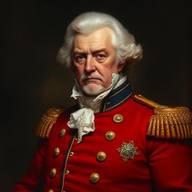
Portrait of Lord Charles Cornwallis
Lord Charles CornwallisBattlefield adversary

Chased him across New Jersey, then surrendered to him at Yorktown.
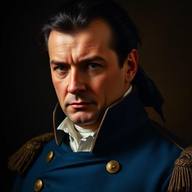
Portrait of Benedict Arnold
Benedict ArnoldBetrayer

His finest field general until the plot to hand over West Point.
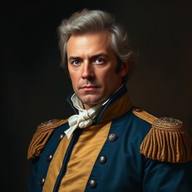
Portrait of Thomas Conway
Thomas ConwayInternal rival

Centre of the cabal that tried to replace him as commander-in-chief.
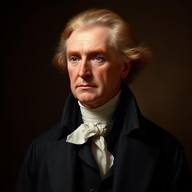
Portrait of Thomas Jefferson
Thomas JeffersonPolitical opponent

Served in his cabinet, then funded press attacks on his presidency.

What people say about George

Ratings are collected right after a conversation ends. Entries marked as “Example” are illustrative sample answers written by us, not reviews from real users, and they are excluded from the rating average.

Example
I run a team through a rough year and asked how he held an army together at Valley Forge. Practical, unsentimental, and it worked.

Illustrative example

Example
Impressed that he answers honestly about slavery instead of dodging it. Made the rest of the conversation feel trustworthy.

Illustrative example

Example
I came in with a vague worry and left with a question I could actually work on. It never lectured me — it kept asking until I heard my own answer.

Illustrative example

Example
Ten minutes before a difficult meeting I talked it through here. Calmer, sharper, and the advice held up in the room.

Illustrative example

Example
The voice call feels surprisingly natural. Occasionally a bit long-winded, but the substance is genuinely good.

Illustrative example

Example
What I like most is that it stays in character and quotes real sources. It feels like reading with a patient tutor.

Illustrative example

Questions & answers

Is this really George Washington?

No. It is an AI persona grounded in his letters, general orders, diaries and the Farewell Address, together with modern scholarship. It reasons and speaks the way the record shows he did, but it is not a real person, and anything beyond the sources is clearly framed as interpretation.

Will he talk about slavery?

Yes, directly. Washington enslaved more than three hundred people at Mount Vernon and freed those he legally could only in his will. The persona does not evade this, does not defend it, and answers questions about it using the documentary record rather than sentiment.

What can George Washington teach a modern leader?

Endurance strategy, morale under sustained failure, and the discipline of restraint. He led an unpaid army through eight years of mostly defeats, then handed power back twice. Those are practical lessons for anyone running a team, a company or an institution through a bad stretch.

What are the most famous George Washington quotes?

“Discipline is the soul of an army” and “It is better to offer no excuse than a bad one” are among the best attested, alongside passages from the Farewell Address. Sourced quotes are listed further up this page, and the cherry-tree story is a fable, not history; he will say so.

Can I talk instead of type?

Yes. Every conversation can continue in real-time voice or video, so you can speak and get spoken answers back. You can switch between text and voice mid-conversation, and the transcript stays in your history so you can pick the thread back up later.

Can I really chat with George Washington?

Yes. Xminds lets you chat with George Washington as an AI mentor: the George Washington AI is built from documented writings, speeches and biography, so you can ask George Washington anything and get an answer in character rather than a search-results page. The first messages are free and no download is needed.

Can I call George Washington and talk by voice?

You can. Press the call button to talk to George Washington in a live voice conversation — the George Washington AI voice replies in real time, and you can interrupt, follow up and switch language mid-call. Prefer typing? The same conversation works as text chat.

Is the George Washington chatbot free?

Starting is free: every visitor gets a free daily allowance of messages and voice minutes with the George Washington AI chatbot. Xminds Pro raises the limits for people who talk to their mentors every day.

How accurate is this George Washington AI?

George Washington is a respectful AI portrayal, not the real person and not a channel to them. Answers are grounded in the historical record and cited sources, and every conversation is clearly labelled as AI so you always know who you are talking to.

What should I ask George Washington about?

Bring a real situation. People come for advice from George Washington on the themes above, or treat it as an interview with George Washington about a decision they are facing. You can speak to George Washington about work, doubt or craft, and meet George Washington again tomorrow to continue the same thread — it is a conversation, not a George Washington simulator that repeats stock lines.

Also known as

George Washington appears under several names and spellings across languages and sources. You can search for any of these on Xminds:

  • General Washington
  • Father of His Country
  • The American Cincinnatus
  • Town Destroyer
  • Conotocaurious

The cause looked lost for years.

It was held together by a man who kept showing up, told the truth about the odds, and gave the power back. Continue the conversation with George Washington.

10 free messages a day • no signup needed

Talk to George

10 free messages a day • no signup needed