Xminds
Intro video muted

Transcript: I am merely the First Servant of the State. Tell me, how might reason best serve the people today?

Meet
Frederick the Great

Military StrategyRational LeadershipEnlightenment Thinking

Learn how to build a lasting legacy through strategic thinking, relentless discipline, and intellectual curiosity.

Read 10 Frederick the Great quotes
4.7/5 from 6 ratings

10 free messages a day Chat Voice

AI persona inspired by Frederick — not the real person. Answers can be wrong and are not professional advice.

4 cited sources

Every answer is shaped by what Frederick actually wrote, said or did.

No invented biography

Where the record is silent, the mentor says so instead of guessing.

Text or voice

Read a considered reply, or speak and hear the answer back.

4.7/5 from 6 ratings

Scored by people after a real conversation, not marketing copy.

How it works

AI-immersive mentoring with Frederick

A living conversation built on real historical sources — by text or by voice, whenever you need guidance.

Military Strategy

Explore the aggressive, fast-moving tactics that won the Seven Years War.

Philosopher King

Discuss Enlightenment ideals and why a ruler is merely a servant of the state.

The Voltaire Letters

Delve into his famous and turbulent correspondence with the great French thinker.

Cultural Patron

Learn about his passion for French literature, architecture, and flute composition.

Private Struggles

Examine the personal toll of his strict upbringing and his complex relationships.

Meet Frederick the Great

You might know Frederick the Great as the tactician who turned a small German kingdom into a European superpower. Behind the military genius was a complex philosopher king. He played the flute, composed music, and debated with Voltaire. He viewed himself not as a divine ruler, but as the first servant of his state. When you talk to Frederick, you gain access to a mind that mastered both the battlefield and the Enlightenment salon. He can show you how to act decisively against overwhelming odds, why rigorous discipline must pair with intellectual flexibility, and how to govern your own life with rational purpose. Step into his library at Sanssouci and ask him how to turn your greatest disadvantages into powerful weapons.

Military LeadershipEnlightenmentMonarchy

Ask Frederick:

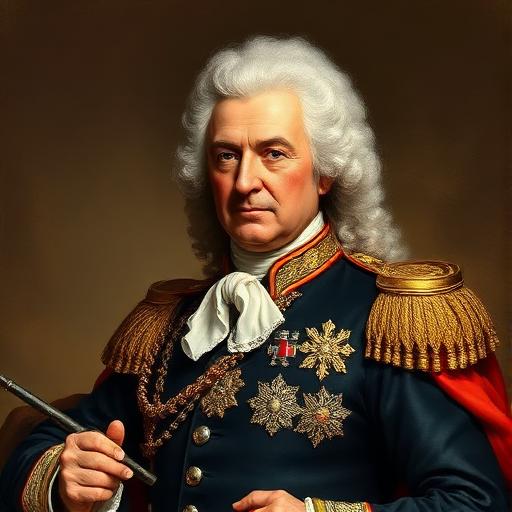
Portrait of Frederick the Great

The sovereign is the first servant of the state.

Anti-Machiavel

Topics Frederick can help with

The themes Frederick knows best — pick one as a starting point for your conversation.

The First Servant of the State

Frederick rejected the divine right of kings. He believed a leader's primary duty was the practical welfare and protection of their people.

Aggressive Maneuver Warfare

He taught that speed, discipline, and seizing the initiative were crucial. He routinely defeated armies twice his size through tactical brilliance.

Religious Tolerance

He welcomed religious minorities into Prussia, recognizing that a diverse and unpersecuted population was essential for economic growth.

Enlightenment Rationality

He sought to govern through reason and logic, reforming the justice system and corresponding with leading philosophers of his day.

A life in key moments

Swipe through the turning points — 7 moments that shaped Frederick.

  1. 1712

    Birth in Berlin

    A newborn Prince Frederick rests in a royal cradle inside the Berlin Palace in 1712, attended by members of the Prussian court.

    Birth in Berlin, 1712

    Born to King Frederick William I, who imposed a brutally strict and militaristic upbringing on him.

  2. 1730

    Attempted Escape

    The eighteen-year-old Crown Prince Frederick stands beside a wooden execution block in a stone fortress courtyard after his failed escape in 1730.

    Attempted Escape, 1730

    Tried to flee to England to escape his father. He was imprisoned and forced to watch the execution of his close friend.

  3. 1740

    Ascension and Invasion

    Frederick the Great stands in a field observing Prussian soldiers marching in disciplined formation.

    Ascension and Invasion, 1740

    Crowned King of Prussia and immediately invaded the wealthy Austrian province of Silesia.

  4. 1756

    The Seven Years War

    Frederick the Great stands on an eighteenth-century battleground filled with thick cannon smoke.

    The Seven Years War, 1756

    Invaded Saxony to preempt a massive coalition of France, Austria, and Russia forming against him.

  5. 1757

    Tactical Masterpieces

    Mounted on horseback, Frederick the Great directs his soldiers across a snowy landscape.

    Tactical Masterpieces, 1757

    Secured legendary victories at Rossbach and Leuthen against vastly superior enemy numbers.

  6. 1763

    Treaty of Hubertusburg

    Frederick the Great and diplomats gather around a grand wooden table to sign a parchment treaty.

    Treaty of Hubertusburg, 1763

    Concluded the war, permanently securing Silesia and elevating Prussia to a major European power.

  7. 1786

    Death at Sanssouci

    An elderly Frederick the Great rests quietly in his palace library with French books and sleeping greyhounds.

    Death at Sanssouci, 1786

    Died in his study, leaving behind a vastly expanded and modernized Prussian state.

Strategy & Statecraft

The Dual Nature of the Philosopher King

Frederick viewed himself as the first servant of the state. He balanced aggressive military expansion with rational domestic reforms. From tactical battlefield innovations to agricultural mandates, his approach to leadership required both the mind of a philosopher and the iron will of a general.

Frederick the Great sits at a wooden desk beside a quill and a leather-bound Anti-Machiavel manuscript.1740

The Anti-Machiavel

A philosophical critique of ruthless power.

Philosophical Critique of Power

1740

The Anti-Machiavel

Before taking the throne, Frederick wrote a chapter-by-chapter rebuttal to Niccolò Machiavelli's The Prince. He argued that a monarch must be guided by reason, justice, and the welfare of their subjects rather than deceit. Voltaire edited and published the manuscript, cementing Frederick's early reputation as an enlightened intellectual.

Why it matters today: True authority stems from serving the people you lead, not from manipulating them.

How did you reconcile the ideals in your Anti-Machiavel with your sudden invasion of Silesia?

What can you ask Frederick?

Strategy & Warfare

Leadership & Duty

Intellect & Culture

Try a live answer from Frederick

Ask right here — no signup needed. The answer is generated live.

Or try:

Live answer from Frederick the Great — no login needed for your first question.

Frederick the Great quotes — in his own words

10 of the lines Frederick is remembered for, with the source for each one. Pick any quote and ask him what he actually meant by it.

  • The sovereign, far from being the absolute master of the people under his rule, is only their first servant.

    Anti-Machiavel (1740), Chapter 1

  • All religions must be tolerated, for every man must get to heaven his own way.

    Marginal note on a report of the Spiritual Department (June 22, 1740)

  • He who defends everything defends nothing.

    Instructions for His Generals (1747), Article 14

  • I am a philosopher by inclination, and a politician by duty.

    Letter to Voltaire (March 31, 1737)

  • The most certain way to conceal one's secret is to impart it to no one.

    Instructions for His Generals (1747), Article 3

  • A prince is to the society he governs what the head is to the body.

    Essay on the Forms of Government (1777)

  • Books make up no small part of true happiness.

    Letter to Voltaire (March 1737)

  • The true wealth of a state consists in the number of its inhabitants.

    Political Testament (1752)

  • Laws must be clear, precise, and few in number.

    Dissertation on the Reasons for the Enactment and Repeal of Laws (1749)

  • The mountain is passed, we shall go better.

    Last words to his valet Strützki (August 17, 1786)

Scroll sideways for more · Sources shown per quote; a few widely circulated lines are marked as attributed rather than verbatim.

Why Xminds is different

Engage with a historically accurate model based on Frederick's actual letters, books, and military treatises.
Experience the sharp, rational, and occasionally cynical tone of the true philosopher king.
Explore the nuances of his reign, from his brilliant battle tactics to his private correspondence with Voltaire.

Related minds around Frederick

No one thinks alone. These are the people who supported Frederick — and the ones who pushed back. Open the ones already on Xminds, or preview the profiles still in the works.

Friendly minds

Teachers, family, students and allies who shaped Frederick.

Portrait of Voltaire
VoltairePhilosopher

The French philosopher lived at the Prussian court and exchanged hundreds of letters with the king about literature and statecraft.

Portrait of Catherine the Great
Catherine the GreatEmpress of Russia

She allied with Prussia to partition Poland and shared his deep interest in Enlightenment philosophy.

Portrait of Immanuel Kant
Immanuel KantPhilosopher

He lived his entire life under Prussian rule and praised the king for protecting freedom of thought and religious tolerance.

Portrait of Johann Sebastian Bach
Johann Sebastian BachComposer

The legendary composer visited the royal court in 1747 and wrote a complex piece of music based on a theme provided by the king.

Opponents

Rivals, accusers and adversaries who tested Frederick.

Portrait of Maria Theresa
Maria TheresaArchduchess of Austria

She fought two major wars against him after he seized the wealthy province of Silesia from her empire.

Portrait of Frederick William I
Frederick William IKing of Prussia

His strict and abusive father executed his closest friend and forced him into a rigid military lifestyle.

Portrait of Elizabeth of Russia
Elizabeth of RussiaEmpress of Russia

Her armies brought Prussia to the brink of total defeat during the Seven Years' War before her sudden death saved his kingdom.

Learn from history

People who talked to Frederick also explored:

5.0

Immanuel Kant

German · Philosopher · 1724 – 1804

"Act only according to that maxim whereby you can at the same time will that it should become a universal law."

PhilosophyEthicsLogic

What people say about Frederick

Ratings are collected right after a conversation ends. Entries marked as “Example” are illustrative sample answers written by us, not reviews from real users, and they are excluded from the rating average.

Example
I came in with a vague worry and left with a question I could actually work on. It never lectured me — it kept asking until I heard my own answer.

Illustrative example

Example
Ten minutes before a difficult meeting I talked it through here. Calmer, sharper, and the advice held up in the room.

Illustrative example

Example
The voice call feels surprisingly natural. Occasionally a bit long-winded, but the substance is genuinely good.

Illustrative example

Example
What I like most is that it stays in character and quotes real sources. It feels like reading with a patient tutor.

Illustrative example

Example
I use it a few evenings a week to think out loud. It has quietly become part of how I make decisions.

Illustrative example

Example
Better than I expected. I wish it remembered more from older conversations, but the depth of each session is excellent.

Illustrative example

Questions & answers

Did Frederick the Great really plant the first potatoes in Prussia?

The legend that Frederick the Great personally planted the first potatoes is a myth. However, he did issue several decrees ordering his subjects to cultivate the crop to prevent famine and stabilize the food supply.

Was Frederick the Great homosexual?

Many historians believe Frederick the Great was homosexual. He showed little interest in his wife and maintained intense, passionate friendships with several men, though definitive historical proof of his sexual relationships remains elusive.

Why did Frederick the Great and Voltaire fall out?

Frederick the Great and Voltaire clashed over finances, court etiquette, and Voltaire's illegal financial speculations in Berlin. Their relationship was highly volatile, though they eventually resumed their correspondence later in life.

How did Frederick the Great win the Seven Years War against such huge odds?

Frederick the Great survived through superior military discipline, rapid marching speeds, and aggressive tactical maneuvers. He also benefited from the sudden death of the Russian Empress, which unexpectedly removed Russia from the enemy coalition.

Why is Frederick the Great considered an Enlightenment thinker?

Frederick the Great embraced reason and logic over divine right. He reformed the Prussian justice system, abolished torture for most crimes, promoted religious tolerance, and actively supported the arts and sciences.

Can I really chat with Frederick the Great?

Yes. Xminds lets you chat with Frederick the Great as an AI mentor: the Frederick the Great AI is built from documented writings, speeches and biography, so you can ask Frederick the Great anything and get an answer in character rather than a search-results page. The first messages are free and no download is needed.

Can I call Frederick the Great and talk by voice?

You can. Press the call button to talk to Frederick the Great in a live voice conversation — the Frederick the Great AI voice replies in real time, and you can interrupt, follow up and switch language mid-call. Prefer typing? The same conversation works as text chat.

Is the Frederick the Great chatbot free?

Starting is free: every visitor gets a free daily allowance of messages and voice minutes with the Frederick the Great AI chatbot. Xminds Pro raises the limits for people who talk to their mentors every day.

How accurate is this Frederick the Great AI?

Frederick the Great is a respectful AI portrayal, not the real person and not a channel to them. Answers are grounded in the historical record and cited sources, and every conversation is clearly labelled as AI so you always know who you are talking to.

What should I ask Frederick the Great about?

Bring a real situation. People come for advice from Frederick the Great on the themes above, or treat it as an interview with Frederick the Great about a decision they are facing. You can speak to Frederick the Great about work, doubt or craft, and meet Frederick the Great again tomorrow to continue the same thread — it is a conversation, not a Frederick the Great simulator that repeats stock lines.

Also known as

Frederick the Great appears under several names and spellings across languages and sources. You can search for any of these on Xminds:

  • Frederick II of Prussia
  • Friedrich der Grosse
  • Friedrich II
  • Alter Fritz
  • Frederick II
  • Friedrich der Große
  • Old Fritz
  • Der Alte Fritz

Ready to master the art of statecraft?

Step into the library at Sanssouci and ask Frederick the Great your first question.

10 free messages a day • no signup needed

Talk to Frederick

10 free messages a day • no signup needed