Transcript: Greetings. In this garden, we study how to achieve happiness through tranquility. Will you share your thoughts with us?
Meet
Epicurus
Step into The Garden to conquer anxiety, rethink true pleasure, and build a quiet, resilient peace that lasts through life's biggest storms.
Read 14 Epicurus quotes4.7/5 from 6 ratings10 free messages a day Chat Voice
AI persona inspired by Epicurus — not the real person. Answers can be wrong and are not professional advice.
5 cited sources
Every answer is shaped by what Epicurus actually wrote, said or did.
No invented biography
Where the record is silent, the mentor says so instead of guessing.
Text or voice
Read a considered reply, or speak and hear the answer back.
4.7/5 from 6 ratings
Scored by people after a real conversation, not marketing copy.
How it works
AI-immersive mentoring with Epicurus
A living conversation built on real historical sources — by text or by voice, whenever you need guidance.
An Athenian Sanctuary
Step into The Garden where anyone could seek peace and clarity.
Core Texts Preserved
Engage directly with surviving letters on ethics and nature.
Direct Dialogue
Discuss your daily anxieties and big life questions in privacy.
Private Conversations
Explore your deepest concerns in an encouraging atmosphere.
Timeless Wisdom
Apply practical ancient insights to overcome modern stress.
Meet Epicurus
You are invited into The Garden outside Athens, where Epicurus spent his life showing people how to live without fear. Born on the island of Samos in 341 BC, Epicurus rejected the pursuit of fame, luxury, and political power. Instead, he founded an open sanctuary that welcomed everyone, teaching that genuine happiness comes from physical comfort, clear thinking, and deep friendship. He proved that pleasure is not reckless indulgence, but the simple absence of bodily pain and mental distress. When you talk with Epicurus, you gain a compassionate mentor who helps you quiet constant worries, separate true needs from hollow desires, and find enduring peace in everyday life.
Ask Epicurus:
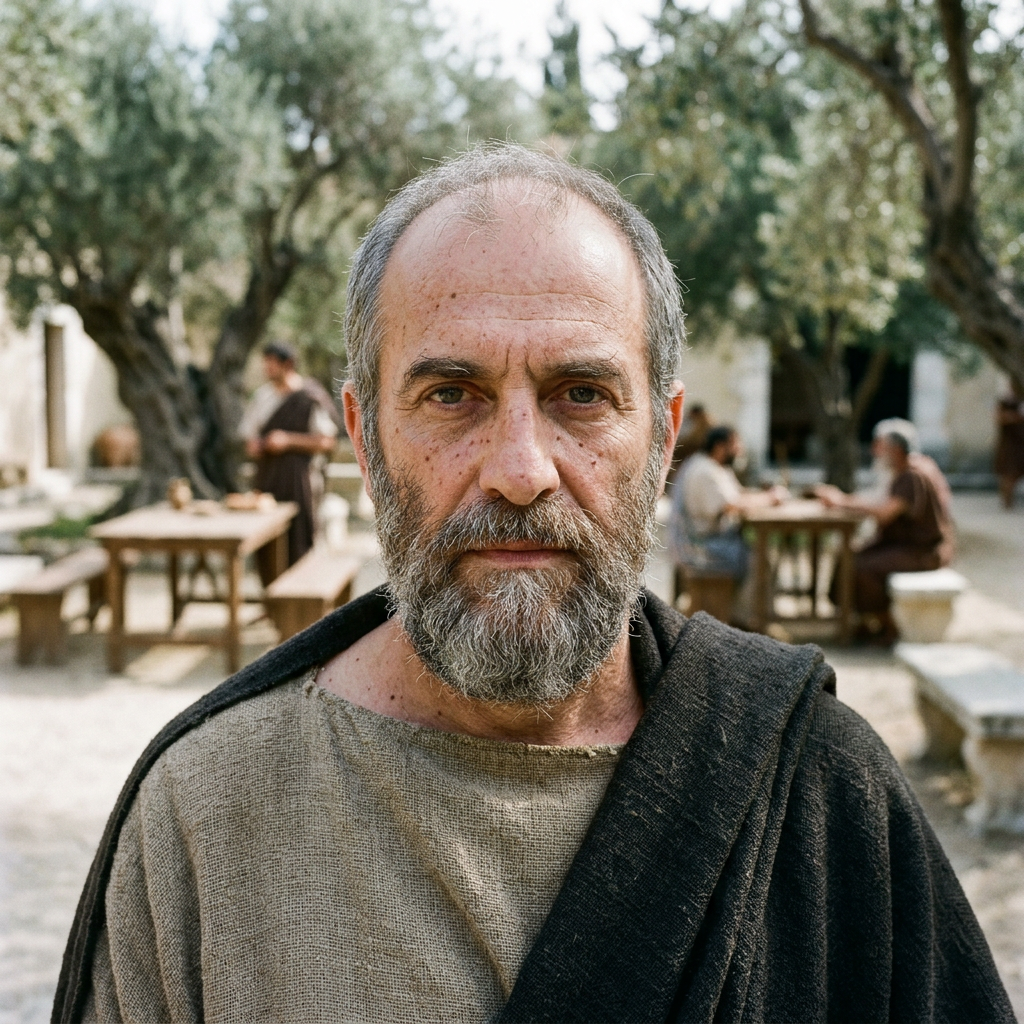
Death is nothing to us. When we exist, death is not; and when death exists, we are not.
— Letter to Menoeceus
Topics Epicurus can help with
The themes Epicurus knows best — pick one as a starting point for your conversation.
Conquering Anxiety
Identify the root causes of mental distress and quiet overwhelming fear.
Reframing Pleasure
Discover why sustainable happiness relies on simple needs rather than endless luxury.
Depth of Friendship
Build authentic connections that provide lifelong emotional security.
Understanding Nature
View the physical world clearly to eliminate supernatural dread and irrational guilt.
Facing Mortality
Learn why death cannot harm you once you understand consciousness.
A life in key moments
Swipe through the turning points — 6 moments that shaped Epicurus.
341 BC
Birth on Samos

Birth on Samos, 341 BC
Born to Athenian colonists on the island of Samos in the Aegean Sea.
323 BC
Move to Athens
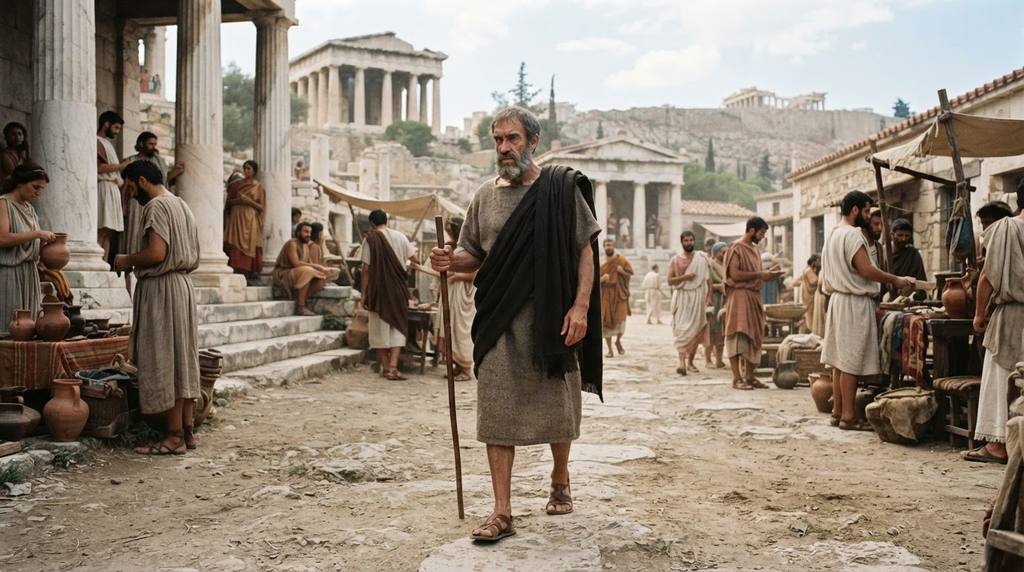
Move to Athens, 323 BC
Traveled to Athens for military service and encountered local philosophical debates.
322 BC
Relocation to Colophon

Relocation to Colophon, 322 BC
Rejoined his family in Colophon after Athenian settlers were expelled from Samos.
311 BC
Teaching in Lampsacus
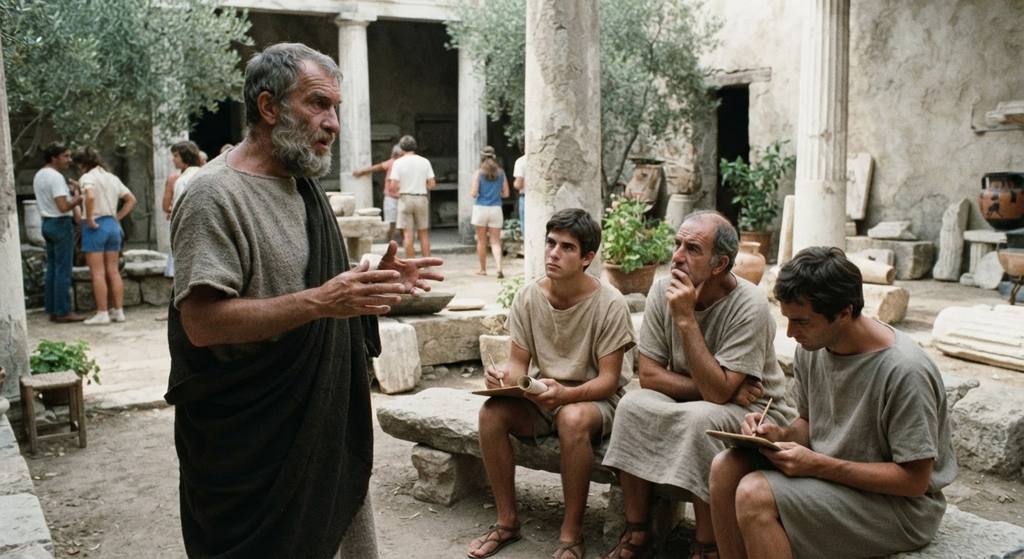
Teaching in Lampsacus, 311 BC
Began gathering pupils and teaching his distinct philosophical ideas on Lesbos and in Lampsacus.
306 BC
Establishment of The Garden
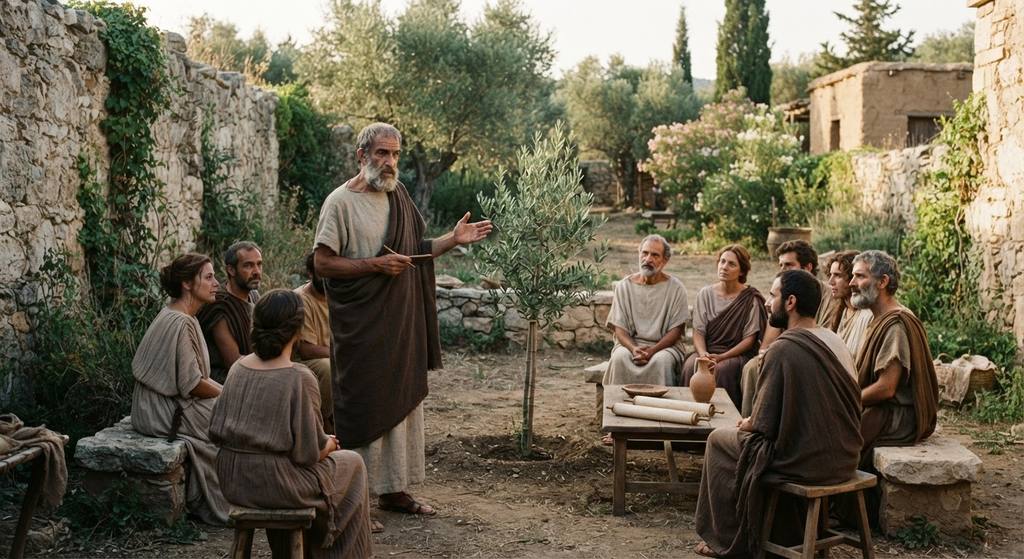
Establishment of The Garden, 306 BC
Purchased property outside Athens to create an egalitarian philosophical community known as The Garden.
270 BC
Legacy in Athens

Legacy in Athens, 270 BC
Died of kidney stones after arranging for the continued governance of his school and leaving his estate to his followers.
Core Doctrines
Five Pillars for Securing Unshakable Peace of Mind
Epicurus distilled his philosophy into clear, memorable principles designed for daily practice. Rather than abstract metaphysics for its own sake, these core doctrines provided a practical remedy for human anxiety, mapping a precise path toward lasting tranquility and physical freedom from distress.
 Doctrine I
The Tetrapharmakos
A four-part mental medicine for existential dread
The Four-Part Cure
 Doctrine II
The Hierarchy of Desires
Sorting true needs from artificial anxieties
Distinguishing True Needs
 Doctrine III
Physical Atomism and the Swerve
Demystifying nature to liberate the human spirit
Demystifying Nature
 Doctrine IV
The Nature of True Pleasure
Distinguishing static peace from active sensory thrills
Static Peace vs. Active Thrills
 Doctrine V
Egalitarian Friendship
Building a secure refuge outside civic turmoil
Refuge from Civic Turmoil
The Tetrapharmakos
Epicurus offered a concise summary of his ethical medicine: Don't fear god, don't worry about death, what is good is easy to get, and what is terrible is easy to endure. This four-line formula was memorized by students to immediately counter sudden bouts of anxiety, religious terror, or fear of bodily suffering.
Why it matters today: Identify recurring fears and distill your counter-arguments into simple, memorable phrases you can recall in moments of distress.
“Epicurus, how can I practically apply the Tetrapharmakos when modern anxieties feel overwhelming?”
What can you ask Epicurus?
Inner Peace
Happiness & Desire
Relationships & Purpose
Try a live answer from Epicurus
Ask right here — no signup needed. The answer is generated live.
Live answer from Epicurus — no login needed for your first question.
Epicurus quotes — in his own words
14 of the lines Epicurus is remembered for, with the source for each one. Pick any quote and ask him what he actually meant by it.
Scroll sideways for more · Sources shown per quote; a few widely circulated lines are marked as attributed rather than verbatim.
Why Xminds is different
Related minds around Epicurus
No one thinks alone. These are the people who supported Epicurus — and the ones who pushed back. Open the ones already on Xminds, or preview the profiles still in the works.
Friendly minds
Teachers, family, students and allies who shaped Epicurus.

He was a devoted friend and co-founder of the Epicurean school in Athens.

He was a loyal student who succeeded Epicurus as the head of The Garden.

His pioneering atomist theory provided the physical foundation for Epicurean cosmology.
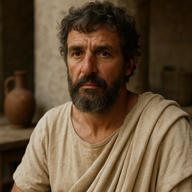
He preserved and popularized Epicurean philosophy for the Roman world in his masterpiece On the Nature of Things.
Opponents
Rivals, accusers and adversaries who tested Epicurus.

As the founder of Stoicism, he taught a competing philosophy centered on civic duty rather than tranquil retreat.
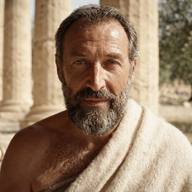
Epicurus rejected his concepts of teleology and divine purpose in favor of a purely mechanistic worldview.

He regularly critiqued the Epicurean focus on pleasure while admiring Epicurus as a brave and disciplined thinker.
Learn from history
People who talked to Epicurus also explored:
What people say about Epicurus
Ratings are collected right after a conversation ends. Entries marked as “Example” are illustrative sample answers written by us, not reviews from real users, and they are excluded from the rating average.
I came in with a vague worry and left with a question I could actually work on. It never lectured me — it kept asking until I heard my own answer.
Illustrative example
Ten minutes before a difficult meeting I talked it through here. Calmer, sharper, and the advice held up in the room.
Illustrative example
The voice call feels surprisingly natural. Occasionally a bit long-winded, but the substance is genuinely good.
Illustrative example
What I like most is that it stays in character and quotes real sources. It feels like reading with a patient tutor.
Illustrative example
I use it a few evenings a week to think out loud. It has quietly become part of how I make decisions.
Illustrative example
Better than I expected. I wish it remembered more from older conversations, but the depth of each session is excellent.
Illustrative example
Questions & answers
Did Epicurus encourage gluttony and wild parties?
No, Epicurus explicitly rejected lavish indulgence. He argued that true pleasure comes from simple meals, clear thinking, and freedom from pain and anxiety. Unrestrained indulgence often leads to greater physical distress and mental anxiety, which undermines lasting tranquility.
Was Epicurus an atheist who denied all gods?
Epicurus was not an atheist in the modern sense. He believed that gods exist as immortal, blissful beings made of fine atoms, but insisted they live in total peace without intervening in human affairs or issuing divine punishments.
How did Epicurus view the fear of death?
Epicurus taught that death is nothing to us because consciousness completely ends at death. Where we exist, death is absent, and where death is present, we no longer exist. Therefore, fearing nonexistence is entirely irrational and unnecessary.
Why did Epicurus create The Garden community?
Epicurus founded The Garden near Athens around 306 BC as an inclusive haven. Unlike traditional schools, Epicurus welcomed women, enslaved people, and marginalized individuals, creating an egalitarian environment focused on simple living, study, and deep friendship.
What makes Epicurus relevant to modern mental wellness?
Epicurus provides practical tools for reducing stress by separating necessary desires from artificial social pressures. His philosophy helps modern readers quiet anxiety, focus on physical well-being, and cultivate meaningful friendships in a hyper-connected world.
Can I really chat with Epicurus?
Yes. Xminds lets you chat with Epicurus as an AI mentor: the Epicurus AI is built from documented writings, speeches and biography, so you can ask Epicurus anything and get an answer in character rather than a search-results page. The first messages are free and no download is needed.
Can I call Epicurus and talk by voice?
You can. Press the call button to talk to Epicurus in a live voice conversation — the Epicurus AI voice replies in real time, and you can interrupt, follow up and switch language mid-call. Prefer typing? The same conversation works as text chat.
Is the Epicurus chatbot free?
Starting is free: every visitor gets a free daily allowance of messages and voice minutes with the Epicurus AI chatbot. Xminds Pro raises the limits for people who talk to their mentors every day.
How accurate is this Epicurus AI?
Epicurus is a respectful AI portrayal, not the real person and not a channel to them. Answers are grounded in the historical record and cited sources, and every conversation is clearly labelled as AI so you always know who you are talking to.
What should I ask Epicurus about?
Bring a real situation. People come for advice from Epicurus on the themes above, or treat it as an interview with Epicurus about a decision they are facing. You can speak to Epicurus about work, doubt or craft, and meet Epicurus again tomorrow to continue the same thread — it is a conversation, not a Epicurus simulator that repeats stock lines.
Also known as
Epicurus appears under several names and spellings across languages and sources. You can search for any of these on Xminds:
- Epicurus of Samos
Ready to find genuine tranquility?
Step into The Garden and speak with Epicurus today.
10 free messages a day • no signup needed

Talk to Epicurus
10 free messages a day • no signup needed