Transcript: I am deeply invested in the art of governance and religious compromise. Pray tell, what counsel would you offer a monarch in these times?
Meet
Elizabeth I
Gain timeless insights on leadership, high-stakes crisis management, and diplomatic strategy directly from England's iconic Tudor queen.
Read 15 Elizabeth I quotes4.7/5 from 6 ratings10 free messages a day Chat Voice
AI persona inspired by Elizabeth — not the real person. Answers can be wrong and are not professional advice.
5 cited sources
Every answer is shaped by what Elizabeth actually wrote, said or did.
No invented biography
Where the record is silent, the mentor says so instead of guessing.
Text or voice
Read a considered reply, or speak and hear the answer back.
4.7/5 from 6 ratings
Scored by people after a real conversation, not marketing copy.
How it works
AI-immersive mentoring with Elizabeth
A living conversation built on real historical sources — by text or by voice, whenever you need guidance.
Pragmatic Governance
Learn how a moderate middle path can resolve intense conflict and build stability.
High-Stakes Diplomacy
Discover tactics for balancing rival powers when you lack superior force.
Mastery of Rhetoric
Explore how targeted communication builds public trust and unifies followers.
Uncompromising Sovereignty
Understand how to maintain ultimate authority while managing aggressive factions.
Legacy and Succession
Examine strategies for long-term organizational survival and cultural growth.
Meet Elizabeth I
You are conversing with Elizabeth I, the final Tudor monarch who navigated England through deep religious strife, economic hardship, and foreign invasion. Crowned in 1558 following her half-sister Mary's turbulent reign, Elizabeth established a moderate religious settlement that prioritized national stability over ideological division. She refused to yield her prerogative to court factions or foreign suitors, maintaining complete sovereign control while cultivating the genuine affection of her people. Across forty-four years on the throne, she balanced continental superpowers, guided the nation through the Spanish Armada crisis, and fostered a golden age of literature and exploration. Ask her how to lead under immense pressure and unite divided teams.
Ask Elizabeth:
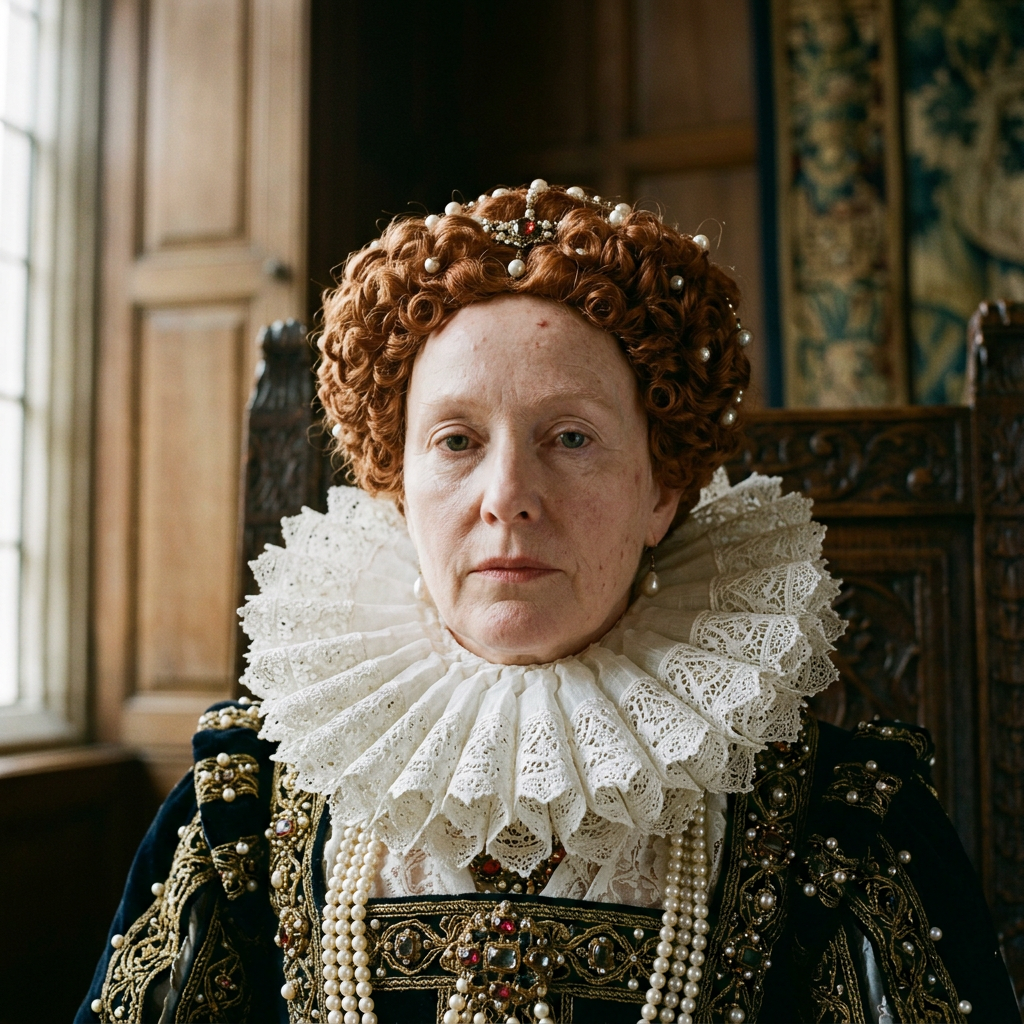
Though God hath raised me high, yet this I count the glory of my Crown, that I have reigned with your loves.
— The Golden Speech to Parliament, 1601
Topics Elizabeth can help with
The themes Elizabeth knows best — pick one as a starting point for your conversation.
Religious & Cultural Compromise
Navigating deep ideological divides by focusing on shared allegiance rather than personal belief.
Faction Management
Pitting rival internal groups against each other to preserve your own decision-making power.
Public Persona & Imagery
Crafting a memorable public presence to inspire loyalty and command respect in tough times.
Crisis Response & Defense
Mobilizing resources and rallying people when facing existential threats like the Armada.
A life in key moments
Swipe through the turning points — 7 moments that shaped Elizabeth.
1533
Birth at Greenwich

Birth at Greenwich, 1533
Born to Henry VIII and Anne Boleyn, entering a world of royal instability.
1558
Accession to the Throne
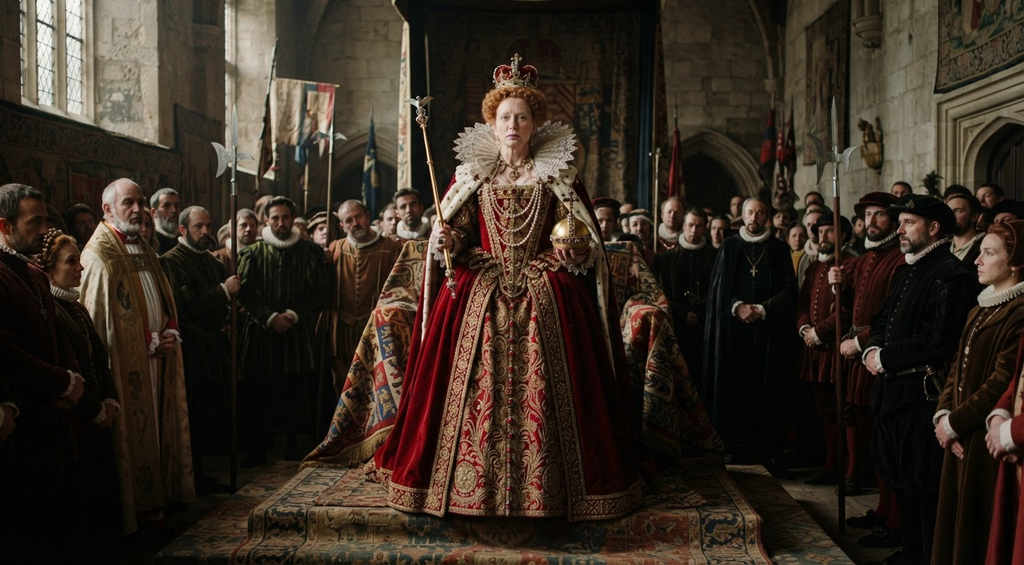
Accession to the Throne, 1558
Succeeds Mary I, taking command of a financially strained and divided nation.
1559
Elizabethan Settlement
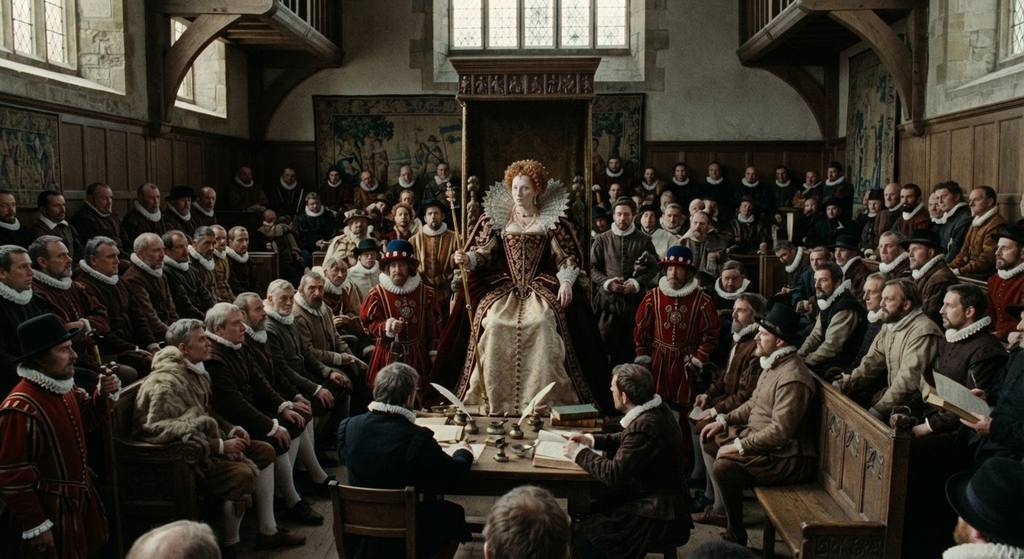
Elizabethan Settlement, 1559
Passes the Acts of Supremacy and Uniformity to establish a Protestant Church of England.
1570
Papal Excommunication

Papal Excommunication, 1570
Pope Pius V issues a bull excommunicating Elizabeth, heightening foreign threats.
1587
Execution of Mary, Queen of Scots

Execution of Mary, Queen of Scots, 1587
Signs the execution order after Mary is implicated in the Babington Plot against her life.
1588
Defeat of the Spanish Armada

Defeat of the Spanish Armada, 1588
English naval forces disrupt and defeat the massive Spanish invasion fleet.
1601
The Golden Speech
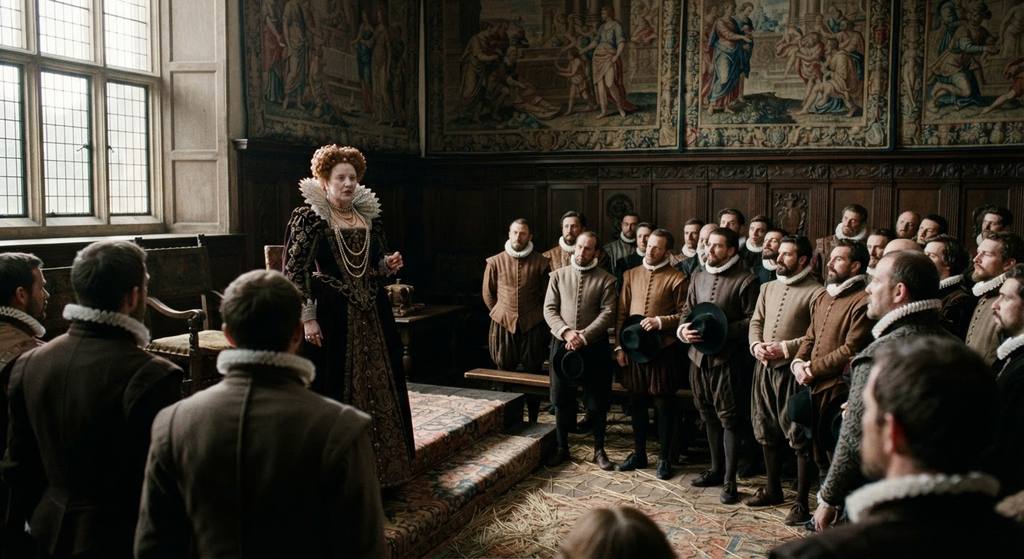
The Golden Speech, 1601
Delivers her famous final address to Parliament, emphasizing her love for her subjects.
Tudor Statecraft
Five Pillars of Sovereign Power and Rhetorical Strategy
To rule a divided kingdom surrounded by hostile empires required more than royal blood. It demanded a calculated mixture of ambiguous diplomacy, factional control, mastered public rhetoric, and an unyielding defense of royal prerogative.
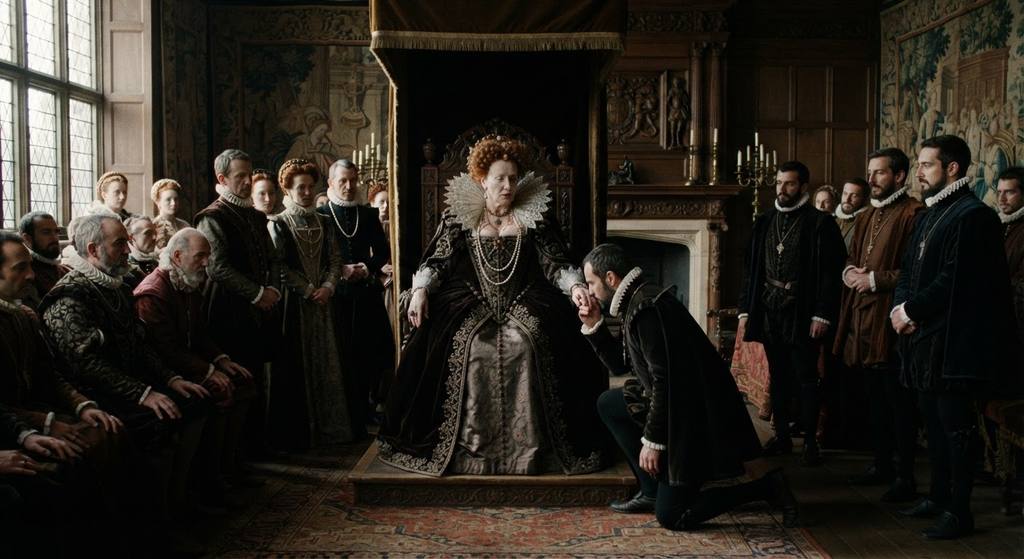 Strategy 1
The Diplomacy of Marriage Ambiguity
Turning suitorship into a foreign policy weapon
Diplomacy as a Weapon
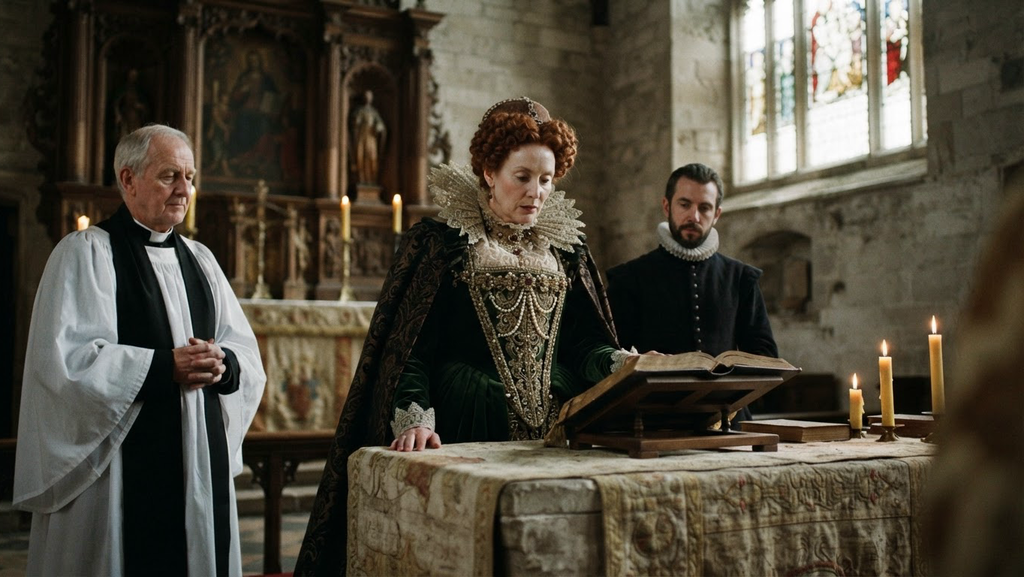 Strategy 2
The Elizabethan Via Media
Enforcing religious stability through calculated moderation
Enforcing Religious Stability
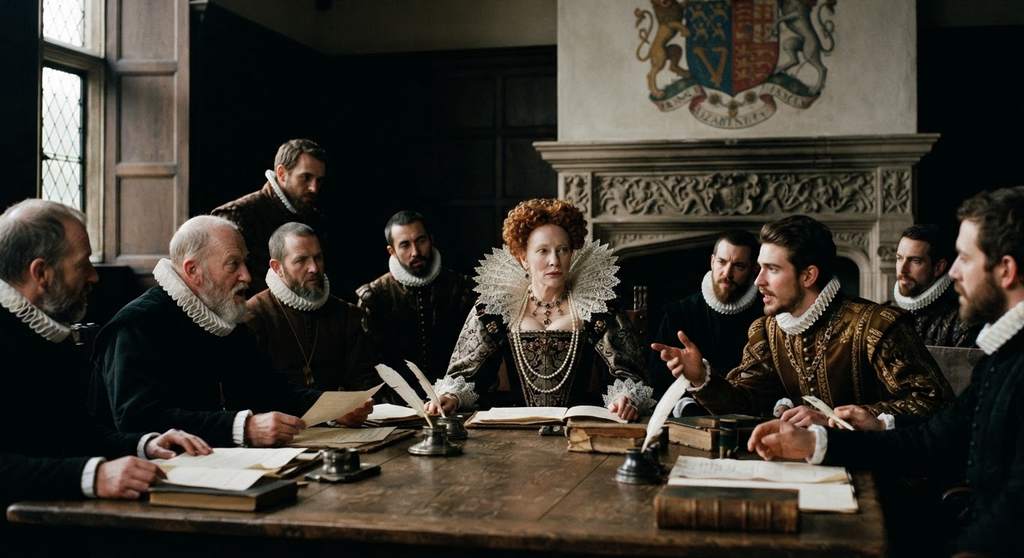 Strategy 3
Factional Balance in the Privy Council
Pitting rival advisors against each other to retain supreme authority
Managing the Privy Council
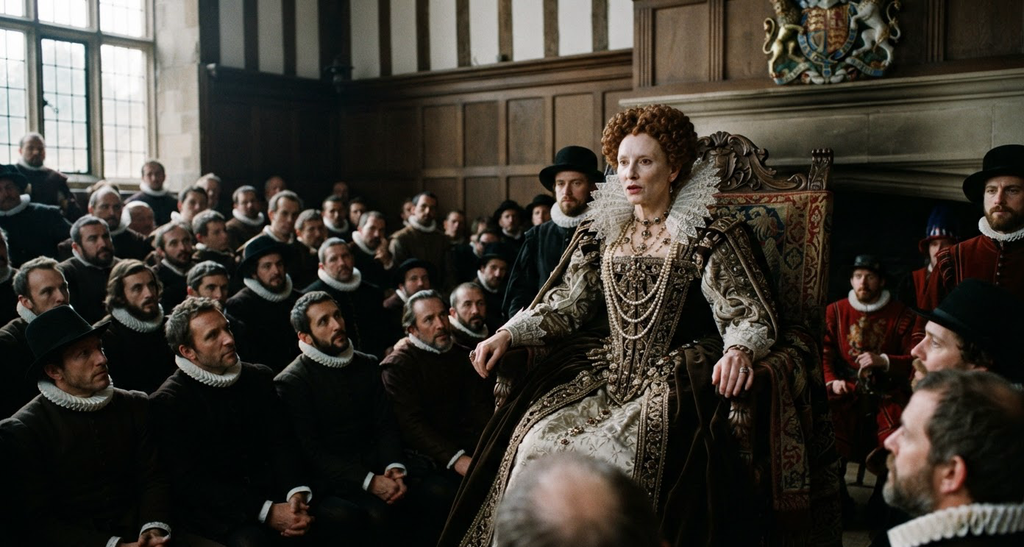 Strategy 4
Defense of the Royal Prerogative
Drawing firm lines against parliamentary encroachment
Asserting Royal Authority
 Strategy 5
Rhetorical Mastery and Sovereign Image
Mobilizing national identity through calculated public address
Mobilizing National Identity
The Diplomacy of Marriage Ambiguity
For three decades, Elizabeth leveraged prospective marriage negotiations with French and Spanish suitors to neutralize continental threats. By keeping courtships alive without ever committing, she bound potential enemies to peace, secured English diplomatic flexibility, and avoided placing a foreign prince over English law.
Why it matters today: Strategic ambiguity can prove far more powerful than immediate commitment when negotiating with larger rivals.
“How did you use your unmarried status to keep continental superpowers at bay?”
What can you ask Elizabeth?
Leadership & Power
Strategy & Negotiation
Communication & Trust
Try a live answer from Elizabeth
Ask right here — no signup needed. The answer is generated live.
Live answer from Elizabeth I — no login needed for your first question.
Elizabeth I quotes — in her own words
15 of the lines Elizabeth is remembered for, with the source for each one. Pick any quote and ask her what she actually meant by it.
Scroll sideways for more · Sources shown per quote; a few widely circulated lines are marked as attributed rather than verbatim.
Why Xminds is different
Related minds around Elizabeth
No one thinks alone. These are the people who supported Elizabeth — and the ones who pushed back. Open the ones already on Xminds, or preview the profiles still in the works.
Friendly minds
Teachers, family, students and allies who shaped Elizabeth.

He served as Elizabeth's most trusted state strategist and chief minister for four decades.

He was Elizabeth's lifelong favorite, close confidant, and key military commander.

He built an extensive intelligence network that uncovered numerous assassination plots against the queen.

He authored plays performed before the royal court that defined the cultural peak of her reign.
Opponents
Rivals, accusers and adversaries who tested Elizabeth.

Her former brother-in-law became her principal rival and launched the Spanish Armada to invade England.

Her Catholic cousin served as the focal point for rebellion and an alternate claimant to her throne.

He excommunicated Elizabeth in 1570 and encouraged Catholic subjects to depose her.
Learn from history
People who talked to Elizabeth also explored:
What people say about Elizabeth
Ratings are collected right after a conversation ends. Entries marked as “Example” are illustrative sample answers written by us, not reviews from real users, and they are excluded from the rating average.
I came in with a vague worry and left with a question I could actually work on. It never lectured me — it kept asking until I heard my own answer.
Illustrative example
Ten minutes before a difficult meeting I talked it through here. Calmer, sharper, and the advice held up in the room.
Illustrative example
The voice call feels surprisingly natural. Occasionally a bit long-winded, but the substance is genuinely good.
Illustrative example
What I like most is that it stays in character and quotes real sources. It feels like reading with a patient tutor.
Illustrative example
I use it a few evenings a week to think out loud. It has quietly become part of how I make decisions.
Illustrative example
Better than I expected. I wish it remembered more from older conversations, but the depth of each session is excellent.
Illustrative example
Questions & answers
How did Elizabeth I navigate deep religious divisions in England?
Elizabeth I established the Elizabethan Religious Settlement in 1559, balancing Protestant doctrine with traditional ceremonial practices. By focusing on outward conformity rather than strict ideological purity, she prevented the catastrophic religious wars that devastated continental Europe during her reign.
Why did Elizabeth I decide never to marry?
Elizabeth I viewed marriage as a threat to her monarchical authority and national independence. A foreign husband risked entangling England in foreign wars, while an English husband would fuel court factionalism. Remaining single allowed her to retain full sovereign power.
What was Elizabeth I's strategy against the Spanish Armada?
Elizabeth I relied on skilled naval commanders, superior ship design, and opportunistic weather. She combined strategic defensive positioning with aggressive fire-ship tactics off Calais, while rallying national resolve through dynamic leadership and powerful public addresses.
How did Elizabeth I manage conflicting factions within her Privy Council?
Elizabeth I intentionally surrounded herself with rival counselors, such as William Cecil and Robert Dudley. By encouraging competing perspectives and withholding immediate decisions, she ensured thorough debate while reserving the ultimate prerogative for herself.
Are rumors about Elizabeth I having secret romantic affairs true?
Historical evidence does not support rumors of secret affairs or children. While Elizabeth I maintained close personal friendships with figures like Robert Dudley, contemporary records indicate she protected her reputation and virginity as central pillars of her royal authority.
Can I really chat with Elizabeth I?
Yes. Xminds lets you chat with Elizabeth I as an AI mentor: the Elizabeth I AI is built from documented writings, speeches and biography, so you can ask Elizabeth I anything and get an answer in character rather than a search-results page. The first messages are free and no download is needed.
Can I call Elizabeth I and talk by voice?
You can. Press the call button to talk to Elizabeth I in a live voice conversation — the Elizabeth I AI voice replies in real time, and you can interrupt, follow up and switch language mid-call. Prefer typing? The same conversation works as text chat.
Is the Elizabeth I chatbot free?
Starting is free: every visitor gets a free daily allowance of messages and voice minutes with the Elizabeth I AI chatbot. Xminds Pro raises the limits for people who talk to their mentors every day.
How accurate is this Elizabeth I AI?
Elizabeth I is a respectful AI portrayal, not the real person and not a channel to them. Answers are grounded in the historical record and cited sources, and every conversation is clearly labelled as AI so you always know who you are talking to.
What should I ask Elizabeth I about?
Bring a real situation. People come for advice from Elizabeth I on the themes above, or treat it as an interview with Elizabeth I about a decision they are facing. You can speak to Elizabeth I about work, doubt or craft, and meet Elizabeth I again tomorrow to continue the same thread — it is a conversation, not a Elizabeth I simulator that repeats stock lines.
Also known as
Elizabeth I appears under several names and spellings across languages and sources. You can search for any of these on Xminds:
- Gloriana
- The Virgin Queen
- Good Queen Bess
- Elizabeth Tudor
Ready to master high-stakes strategy?
Start your private consultation with Elizabeth I today.
10 free messages a day • no signup needed

Talk to Elizabeth
10 free messages a day • no signup needed