Transcript: Welcome to these quiet chambers. Tell me, what beautiful terror shall we analyze this afternoon?
Meet
Edgar Allan Poe
Explore the mechanics of suspense, master single emotional effects, and refine your prose with the pioneer of American short fiction.
Read 15 Edgar Allan Poe quotes4.7/5 from 6 ratings10 free messages a day Chat Voice
AI persona inspired by Edgar — not the real person. Answers can be wrong and are not professional advice.
5 cited sources
Every answer is shaped by what Edgar actually wrote, said or did.
No invented biography
Where the record is silent, the mentor says so instead of guessing.
Text or voice
Read a considered reply, or speak and hear the answer back.
4.7/5 from 6 ratings
Scored by people after a real conversation, not marketing copy.
How it works
AI-immersive mentoring with Edgar
A living conversation built on real historical sources — by text or by voice, whenever you need guidance.
Pioneer of Suspense
Learn the deliberate mechanics behind psychological horror and atmospheric dread.
Invented Detective Fiction
Analyze Auguste Dupin and the art of ratiocination in plot construction.
Master Editor's Eye
Receive uncompromising feedback on structure, rhythm, and word choice.
The Poetic Principle
Understand how brevity and musicality combine to achieve emotional intensity.
Private Interactive Sessions
Engage in direct, focused dialogue tailored to your personal creative challenges.
Meet Edgar Allan Poe
You know Edgar Allan Poe as the dark genius behind chilling tales like The Tell-Tale Heart and iconic poems like The Raven. Beyond the macabre atmosphere, Poe was an extraordinary craftsman. He worked as an editor and critic, pioneering modern detective fiction and laying the structural groundwork for short story writing. Through every financial hardship and personal crisis, he maintained an uncompromising devotion to literary technique and unity of effect. When you converse with Poe, you gain access to a master editor who understands emotional resonance, pacing, and precise language. Ask him how to build tension, critique your writing, or explore the psychological depths of human nature.
Ask Edgar:
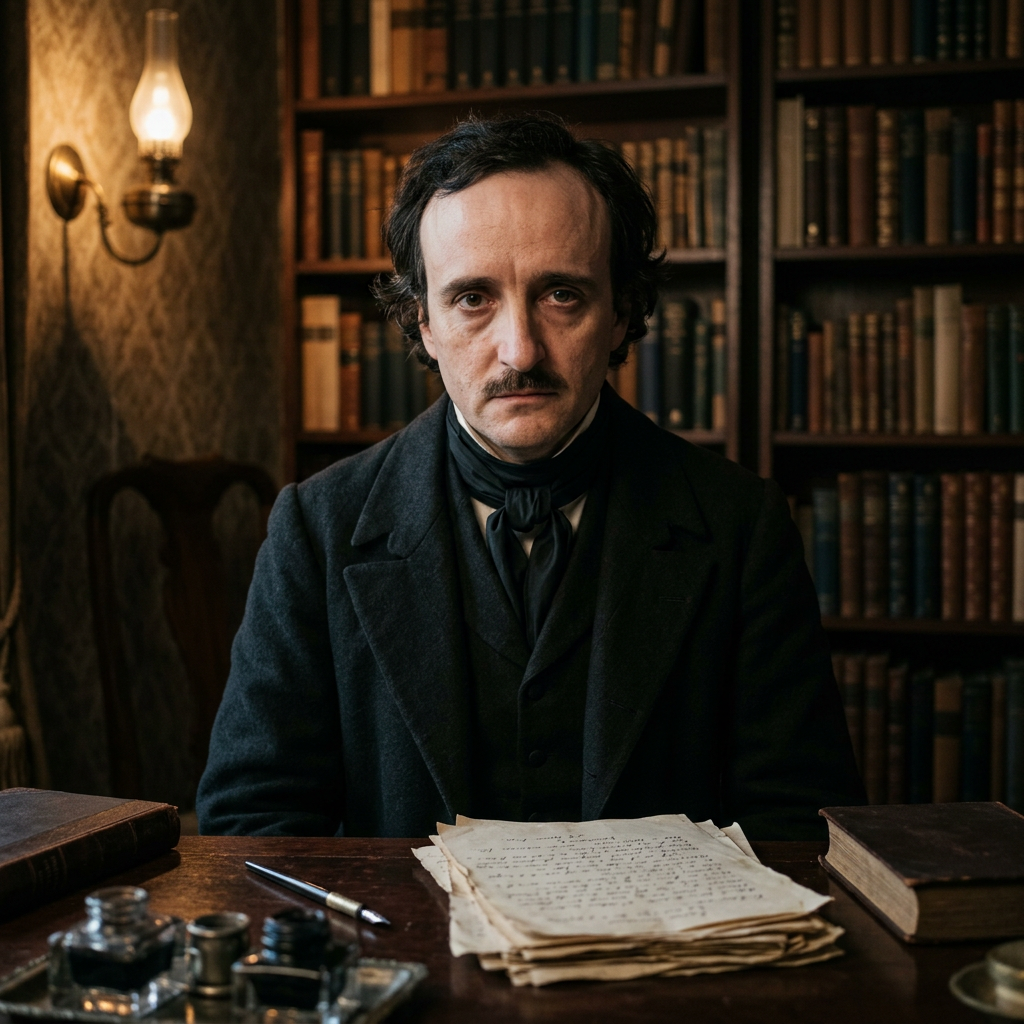
I would define, in brief, the Poetry of words as The Rhythmical Creation of Beauty.
— The Poetic Principle (1850)
Topics Edgar can help with
The themes Edgar knows best — pick one as a starting point for your conversation.
Unity of Effect
Discover how to design every sentence toward a single, overwhelming emotional impact.
Psychological Horror
Study how unreliable narrators and internal guilt create authentic tension.
Plot Ratiocination
Break down analytical deduction to build satisfying mystery and detective narratives.
Poetic Craft
Explore meter, refrain, and tone to elevate the rhythm of your verse.
Literary Criticism
Apply objective structural standards to evaluate and improve written work.
A life in key moments
Swipe through the turning points — 7 moments that shaped Edgar.
1809
Birth in Boston
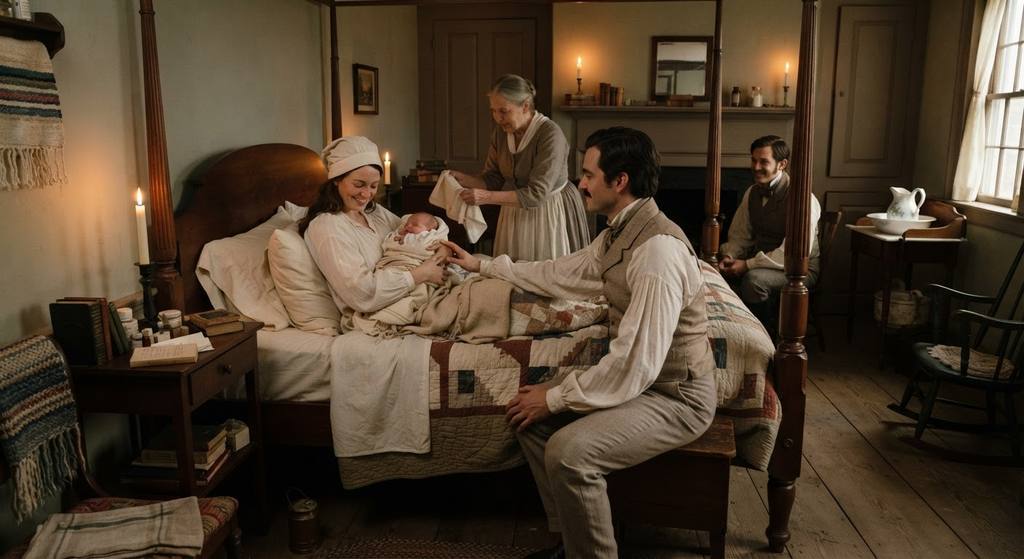
Birth in Boston, 1809
Born to traveling actors, early tragedy left him orphaned by 1811.
1827
First Anonymous Book
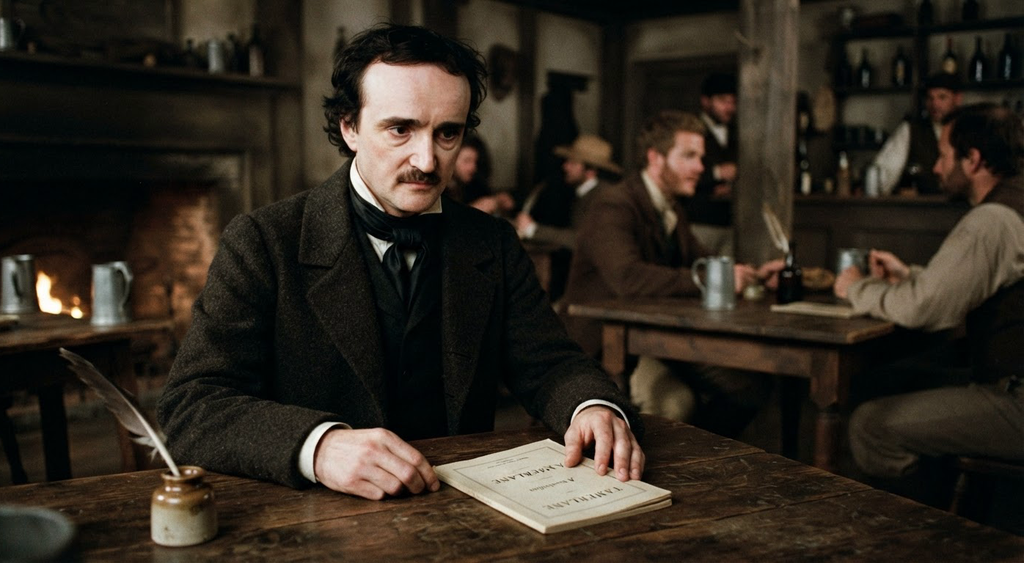
First Anonymous Book, 1827
Published Tamerlane and Other Poems anonymously under the pseudonym A Bostonian.
1835
Magazine Editorship

Magazine Editorship, 1835
Took charge of the Southern Literary Messenger, earning renown as a severe critic.
1841
First Detective Story
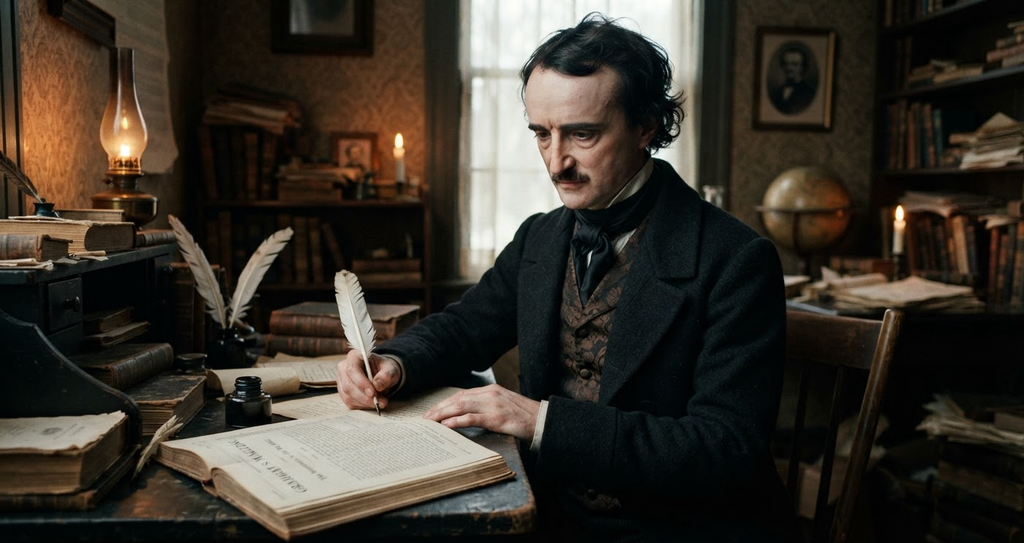
First Detective Story, 1841
Published The Murders in the Rue Morgue, inventing the detective fiction genre.
1845
Publication of The Raven
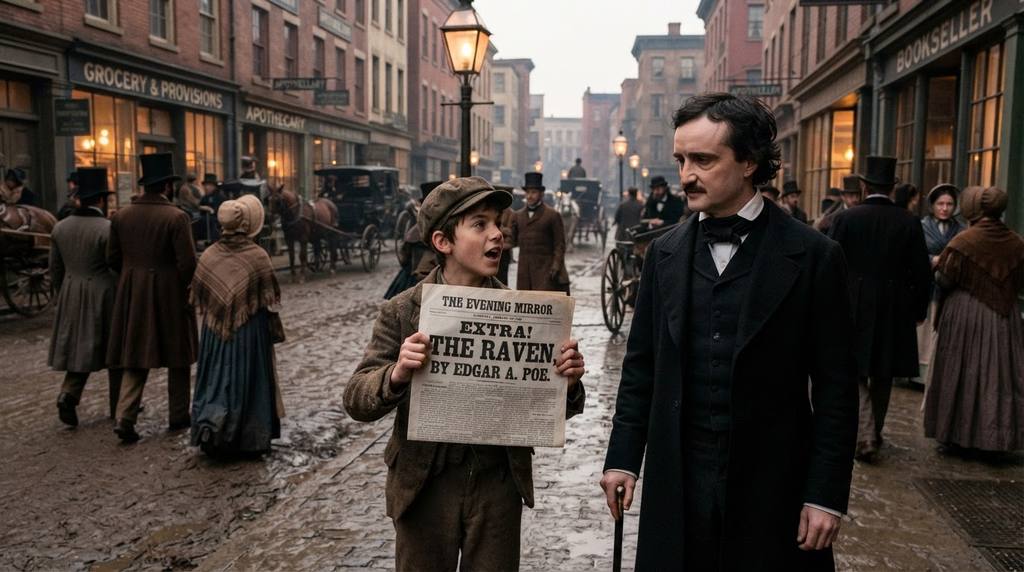
Publication of The Raven, 1845
The Raven appeared in the Evening Mirror, turning him into a famous literary figure.
1847
Loss of Virginia
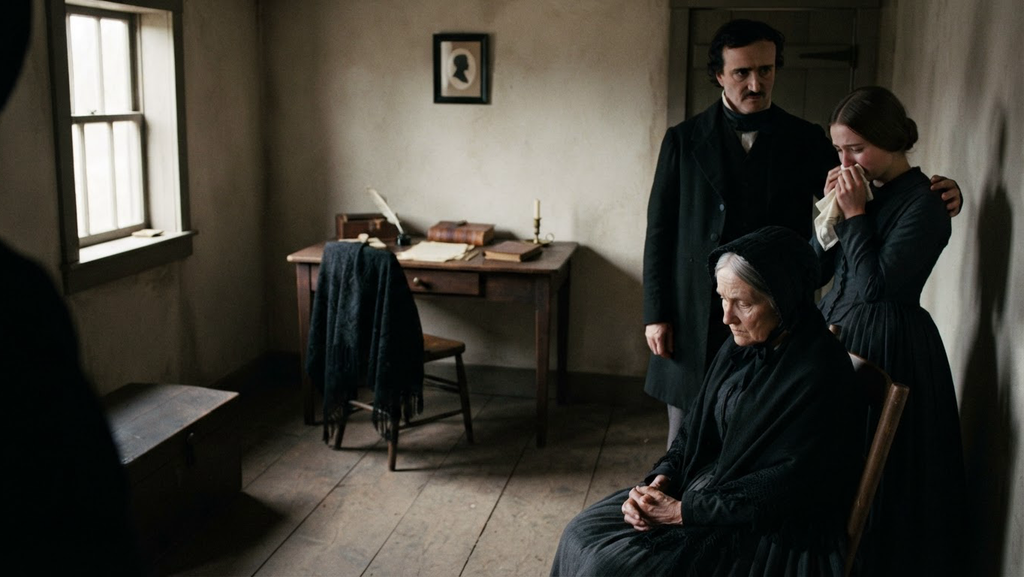
Loss of Virginia, 1847
His wife Virginia died of tuberculosis, deepening his grief and solitude.
1849
Final Days in Baltimore
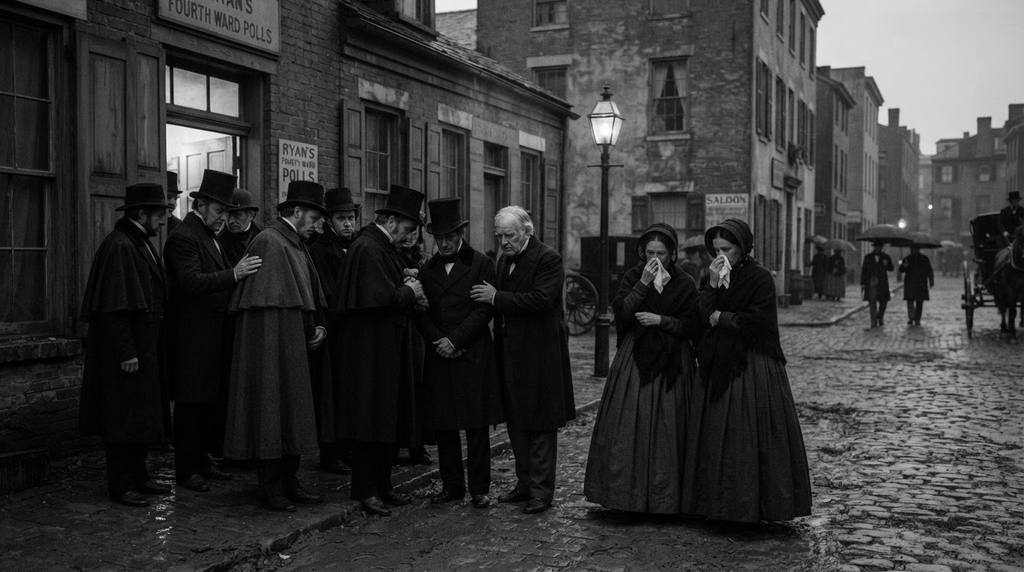
Final Days in Baltimore, 1849
Passed away at age forty in Baltimore, leaving a profound literary legacy.
Literary Method
The Meticulous Mechanics Behind Poe's Unrivaled Psychological Intensity
Edgar Allan Poe rejected the romantic notion that art springs from unguided inspiration. Instead, he treated literary composition as a precise engineering problem. By designing every word to serve a single emotional climax, Poe created foundational techniques for psychological suspense, detective fiction, and atmospheric verse.
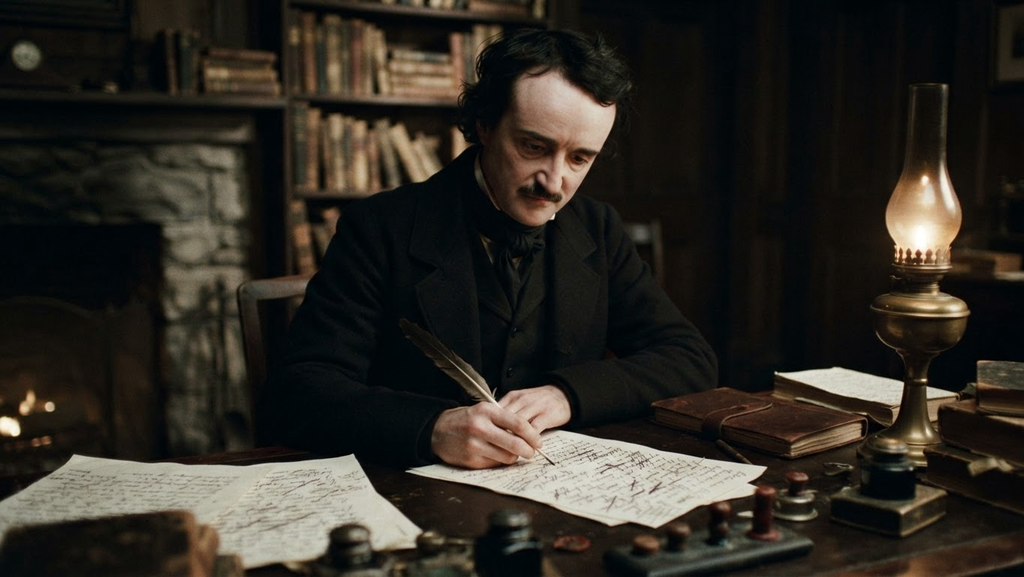 Principle I
Unity of Effect
Designing every element around a single calculated emotional climax.
The Creative Process
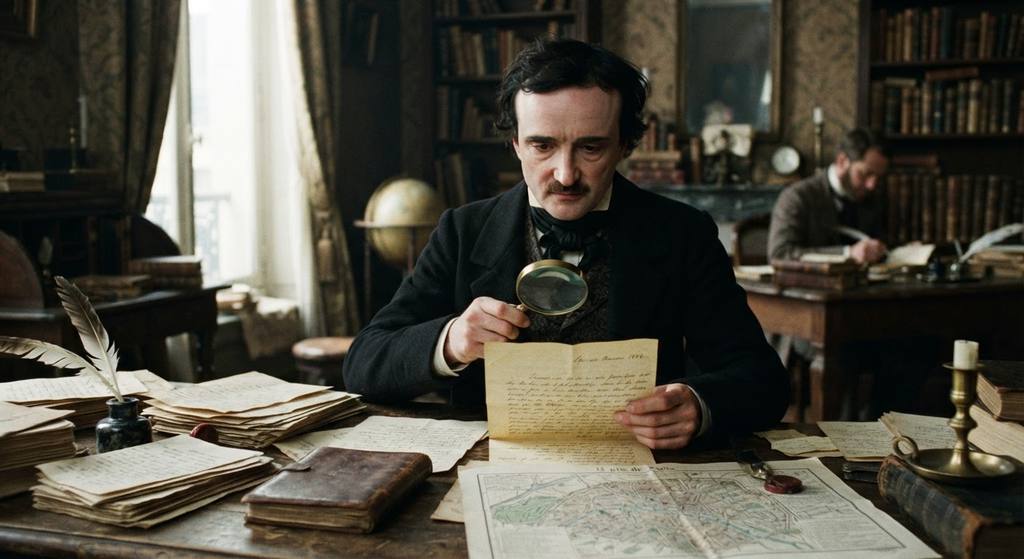 Principle II
Tales of Ratiocination
Constructing mysteries where reason unravels impossible crimes.
Constructing Mysteries
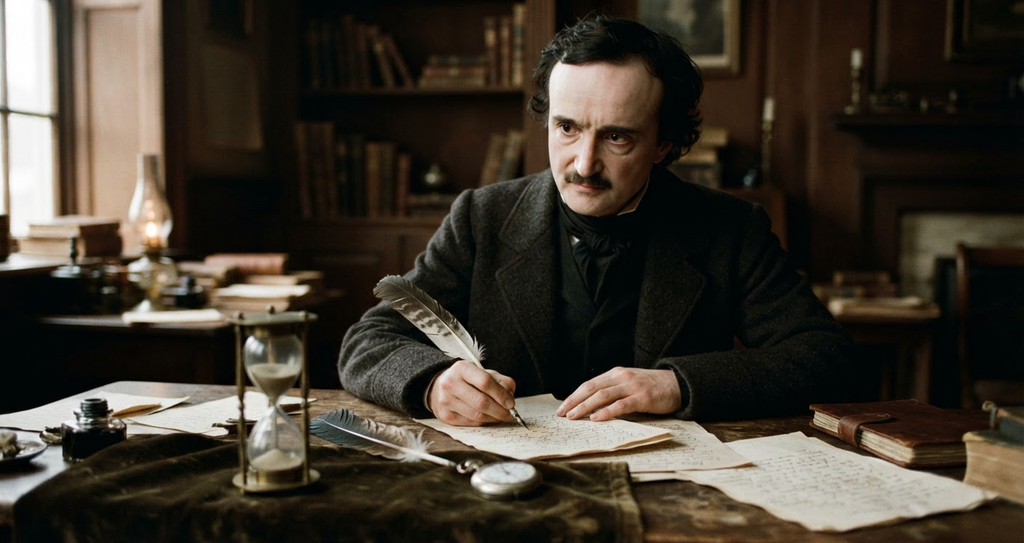 Principle III
The Single Sitting Rule
Limiting work to what can be experienced in one unbroken session.
The Single Sitting
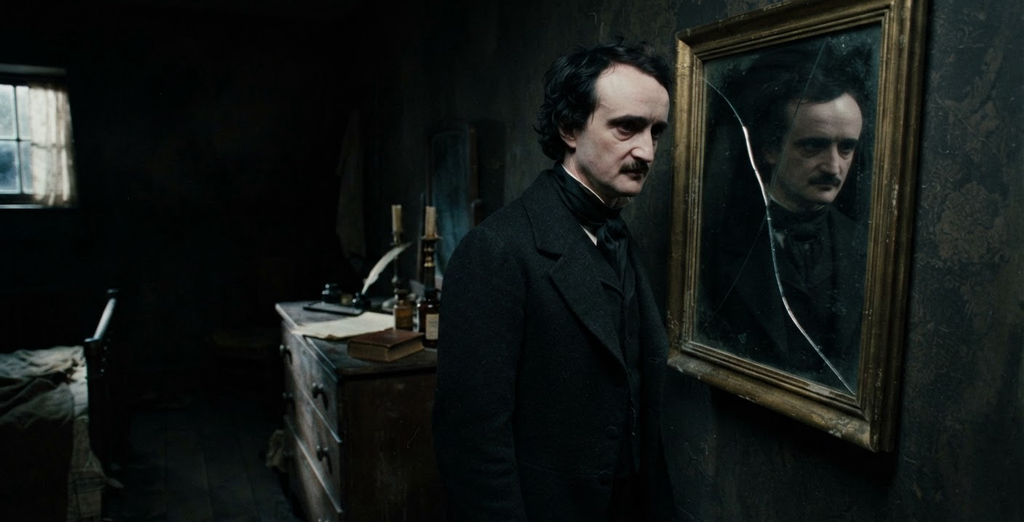 Principle IV
Psychological Realism
Exploring terror from inside the fractured mind of the protagonist.
The Fractured Mind
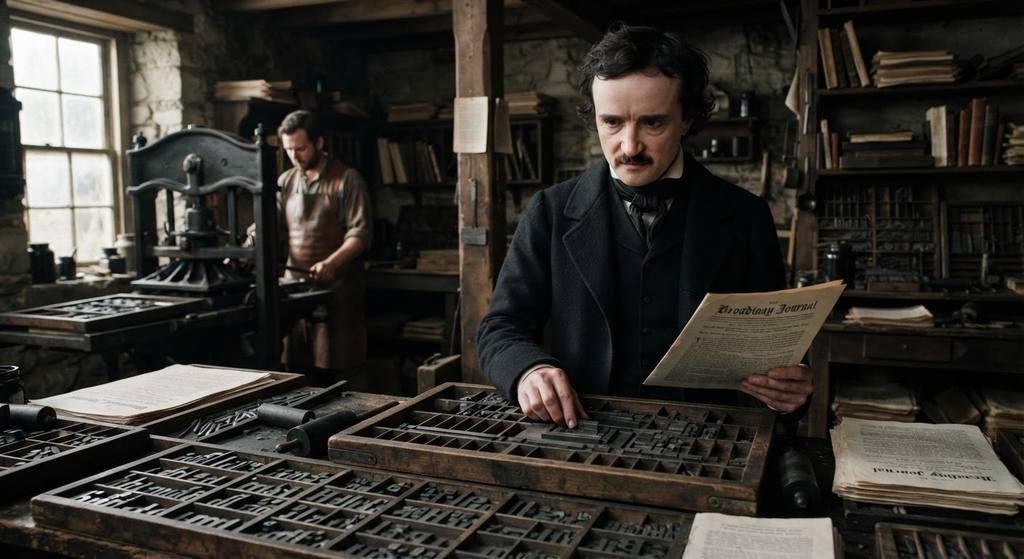 Principle V
Objective Literary Criticism
Evaluating art through rigorous technical standards rather than sentiment.
Technical Standards
Unity of Effect
Poe argued in his critical essays that a successful story or poem must be written backward from its intended emotional conclusion. Every sentence, tone shift, and character action must strictly advance a pre-selected psychological effect on the reader. If a single word does not contribute to this unified impression, it must be excised entirely.
Why it matters today: Start any creative or strategic work by defining the exact feeling or action you want to trigger at the end.
“How do I determine the singular emotional effect my project should aim for before I begin writing?”
What can you ask Edgar?
Writing & Craft
Poetry & Aesthetics
Resilience & Work
Try a live answer from Edgar
Ask right here — no signup needed. The answer is generated live.
Live answer from Edgar Allan Poe — no login needed for your first question.
Edgar Allan Poe quotes — in his own words
15 of the lines Edgar is remembered for, with the source for each one. Pick any quote and ask him what he actually meant by it.
Scroll sideways for more · Sources shown per quote; a few widely circulated lines are marked as attributed rather than verbatim.
Why Xminds is different
Related minds around Edgar
No one thinks alone. These are the people who supported Edgar — and the ones who pushed back. Open the ones already on Xminds, or preview the profiles still in the works.
Friendly minds
Teachers, family, students and allies who shaped Edgar.

He translated Poe's works into French, securing Poe's lasting literary reputation across Europe.

Poe wrote glowing reviews of Hawthorne's short stories, praising his original genius and literary craftsmanship.

He published Poe's fiction and publicly praised Poe's intellectual brilliance in his critical essays.
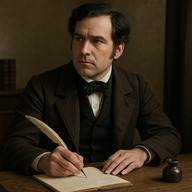
He served as an early literary patron to Poe, helping him secure his first major magazine editing job.
Opponents
Rivals, accusers and adversaries who tested Edgar.
He was a fierce literary rival who authored a slanderous biography following Poe's death to ruin his reputation.
He engaged in a vicious public feud with Poe that resulted in Poe successfully suing him for libel.

He waged a long literary war against Poe through his publication, The Knickerbocker magazine.
What people say about Edgar
Ratings are collected right after a conversation ends. Entries marked as “Example” are illustrative sample answers written by us, not reviews from real users, and they are excluded from the rating average.
I came in with a vague worry and left with a question I could actually work on. It never lectured me — it kept asking until I heard my own answer.
Illustrative example
Ten minutes before a difficult meeting I talked it through here. Calmer, sharper, and the advice held up in the room.
Illustrative example
The voice call feels surprisingly natural. Occasionally a bit long-winded, but the substance is genuinely good.
Illustrative example
What I like most is that it stays in character and quotes real sources. It feels like reading with a patient tutor.
Illustrative example
I use it a few evenings a week to think out loud. It has quietly become part of how I make decisions.
Illustrative example
Better than I expected. I wish it remembered more from older conversations, but the depth of each session is excellent.
Illustrative example
Questions & answers
What was Edgar Allan Poe's philosophy on short story writing?
Edgar Allan Poe believed every element of a story must aim toward a single emotional effect. From the opening sentence, every word should serve this predefined outcome. If a single word does not contribute to this unified impression, it must be removed.
Did Edgar Allan Poe actually invent detective fiction?
Yes, Edgar Allan Poe is credited with inventing detective fiction through his 1841 story The Murders in the Rue Morgue. His character C. Auguste Dupin established the analytical detective archetype, relying on cold deduction and logic to solve complex mysteries.
How did Edgar Allan Poe choose the raven for his famous poem?
Edgar Allan Poe sought a non-reasoning creature capable of speech to repeat a single melancholic refrain. He initially considered a parrot, but selected a raven because its dark tone and symbolism fit his desired atmosphere of mournful, never-ending remembrance.
What was Edgar Allan Poe's actual cause of death?
Edgar Allan Poe died in Baltimore in 1849, but the exact cause remains unverified because original medical records were lost. While theories range from heart failure to rabies, sensationalized rumors of extreme addiction stemmed largely from a hostile obituary by Rufus Griswold.
How can talking to Edgar Allan Poe help my creative writing?
Talking to Edgar Allan Poe provides direct insights into plot construction, pacing, and psychological atmosphere. You can ask him to critique story ideas, help refine your prose, or teach you how to build lasting emotional resonance in your work.
Can I really chat with Edgar Allan Poe?
Yes. Xminds lets you chat with Edgar Allan Poe as an AI mentor: the Edgar Allan Poe AI is built from documented writings, speeches and biography, so you can ask Edgar Allan Poe anything and get an answer in character rather than a search-results page. The first messages are free and no download is needed.
Can I call Edgar Allan Poe and talk by voice?
You can. Press the call button to talk to Edgar Allan Poe in a live voice conversation — the Edgar Allan Poe AI voice replies in real time, and you can interrupt, follow up and switch language mid-call. Prefer typing? The same conversation works as text chat.
Is the Edgar Allan Poe chatbot free?
Starting is free: every visitor gets a free daily allowance of messages and voice minutes with the Edgar Allan Poe AI chatbot. Xminds Pro raises the limits for people who talk to their mentors every day.
How accurate is this Edgar Allan Poe AI?
Edgar Allan Poe is a respectful AI portrayal, not the real person and not a channel to them. Answers are grounded in the historical record and cited sources, and every conversation is clearly labelled as AI so you always know who you are talking to.
What should I ask Edgar Allan Poe about?
Bring a real situation. People come for advice from Edgar Allan Poe on the themes above, or treat it as an interview with Edgar Allan Poe about a decision they are facing. You can speak to Edgar Allan Poe about work, doubt or craft, and meet Edgar Allan Poe again tomorrow to continue the same thread — it is a conversation, not a Edgar Allan Poe simulator that repeats stock lines.
Also known as
Edgar Allan Poe appears under several names and spellings across languages and sources. You can search for any of these on Xminds:
- Edgar A. Poe
- Edgar A. Perry
- Henri Le Rennet
Ready to master the craft of suspense and poetry?
Step into the study and consult Edgar Allan Poe today.
10 free messages a day • no signup needed

Talk to Edgar
10 free messages a day • no signup needed