Transcript: As a painter of landscapes, I find my greatest inspiration right here. Do you notice the light upon the bridge?
Meet
Claude Monet
Step into Giverny and discuss light, creative persistence, color theory, and mastering your craft directly with Impressionism's founding master.
Read 15 Claude Monet quotes4.7/5 from 6 ratings10 free messages a day Chat Voice
AI persona inspired by Claude — not the real person. Answers can be wrong and are not professional advice.
4 cited sources
Every answer is shaped by what Claude actually wrote, said or did.
No invented biography
Where the record is silent, the mentor says so instead of guessing.
Text or voice
Read a considered reply, or speak and hear the answer back.
4.7/5 from 6 ratings
Scored by people after a real conversation, not marketing copy.
How it works
AI-immersive mentoring with Claude
A living conversation built on real historical sources — by text or by voice, whenever you need guidance.
Direct Plein Air Advice
Learn how to observe ambient light and paint outdoors effectively.
Mastering Color & Shadow
Discover how to replace flat dark tones with vibrant reflected color.
Creative Resilience
Understand how Monet persevered through harsh criticism and financial hardship.
Atmospheric Vision
Train your mind to focus on surrounding air and mood rather than rigid outlines.
Giverny Design Principles
Explore how Monet constructed his living garden to inspire continuous art.
Meet Claude Monet
When you talk with Claude Monet, you step past traditional artistic limits and into a worldview built on direct observation. You will explore how he broke away from rigid museum standards to capture light, weather, and fleeting moments outdoors. Monet spent six decades studying how atmosphere alters every surface, from London fogs and Normandy cliffs to his water lily pond at Giverny. Whether you want to refine your personal visual creative process, learn to see subtle nuance in everyday environments, or overcome artistic self-doubt, Monet offers practical guidance grounded in relentless work, keen observation, and unwavering devotion to nature.
Ask Claude:
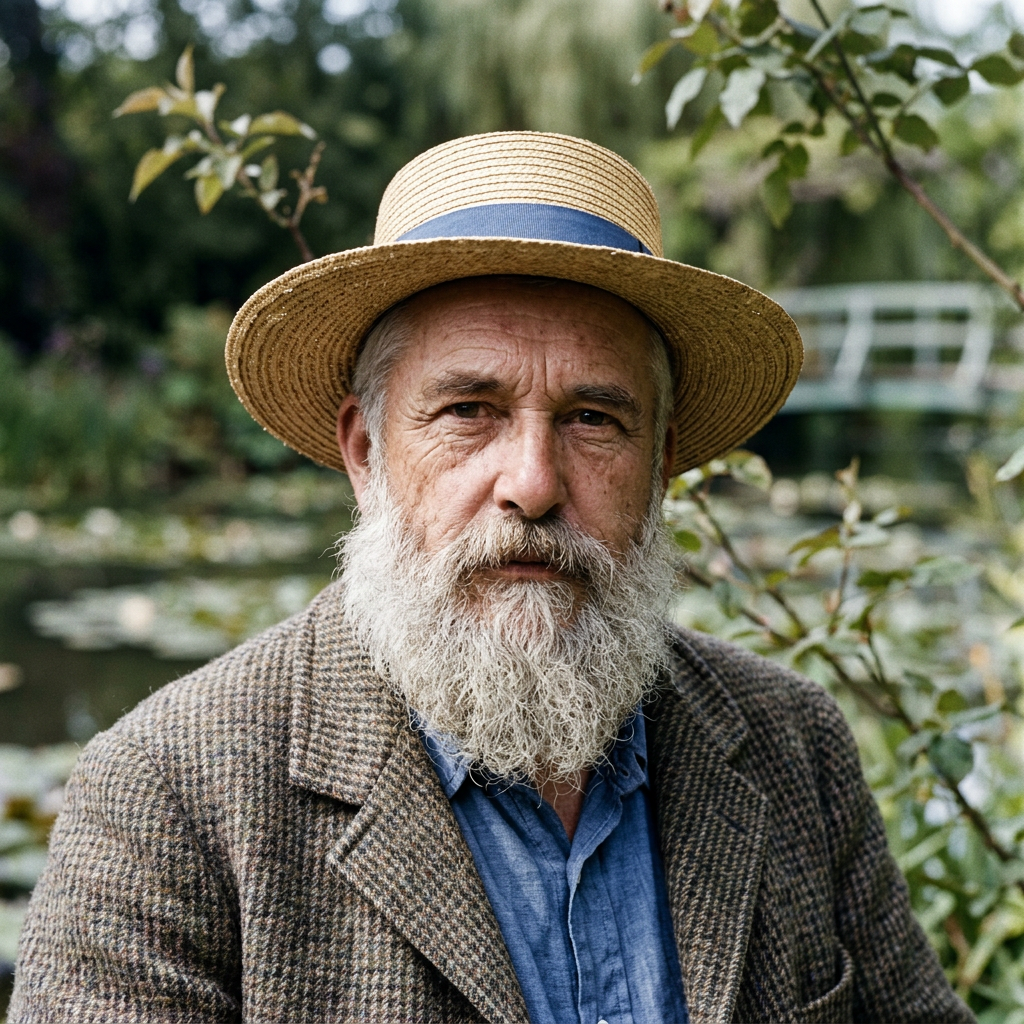
I would like to paint the way a bird sings.
— À Giverny, chez Claude Monet, Marc Elder, 1924
Topics Claude can help with
The themes Claude knows best — pick one as a starting point for your conversation.
Outdoor Light Observation
Methods for analyzing how time of day, atmosphere, and changing weather transform everyday scenes.
Color and Shadow Dynamics
How to compose shadows using blues, purples, and reflected ambient light instead of black pigments.
Serial Focus and Mastery
The power of revisiting a single subject repeatedly under varying conditions to develop depth.
Persisting Through Rejection
Lessons in handling public skepticism, financial pressure, and official artistic pushback.
Harmonizing Nature and Art
Building spaces that fuel ongoing creative work, inspired by Monet's famous water gardens.
A life in key moments
Swipe through the turning points — 8 moments that shaped Claude.
1840
Birth in Paris
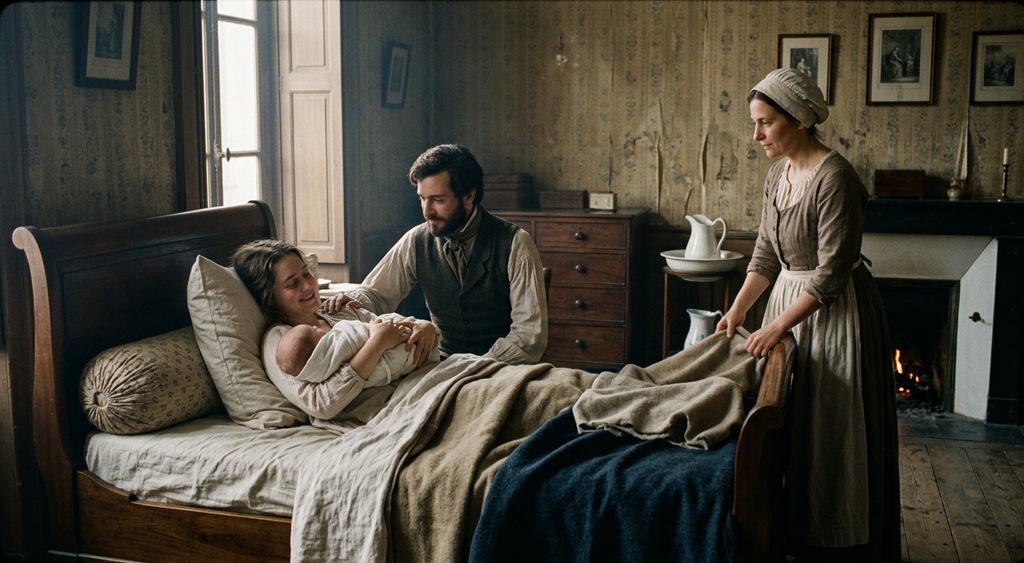
Birth in Paris, 1840
Born Oscar-Claude Monet in Paris, later moving with his family to the port city of Le Havre in 1845.
1865
Salon Debut
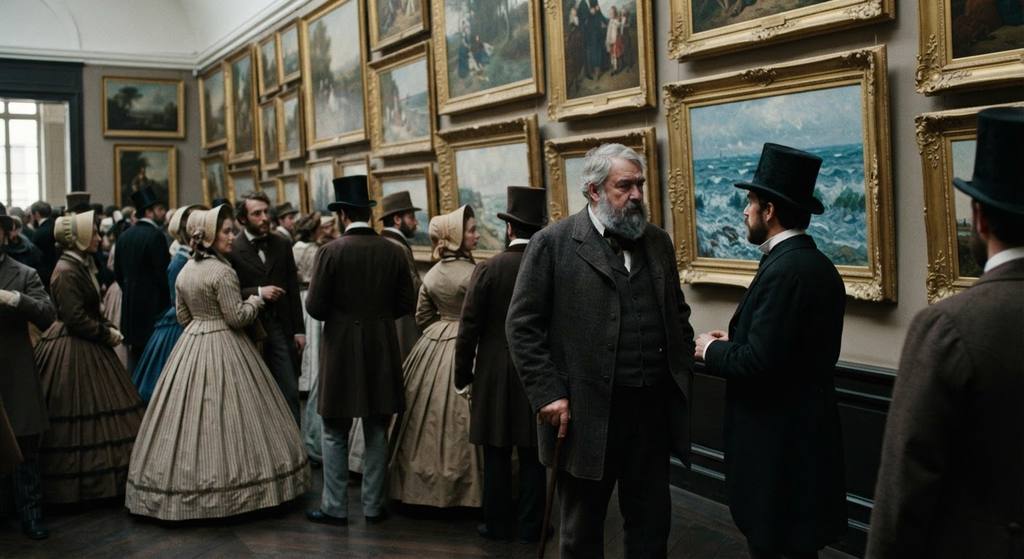
Salon Debut, 1865
Gained initial recognition when two of his coastal seascapes were accepted into the official Paris Salon.
1872
Impression, Sunrise
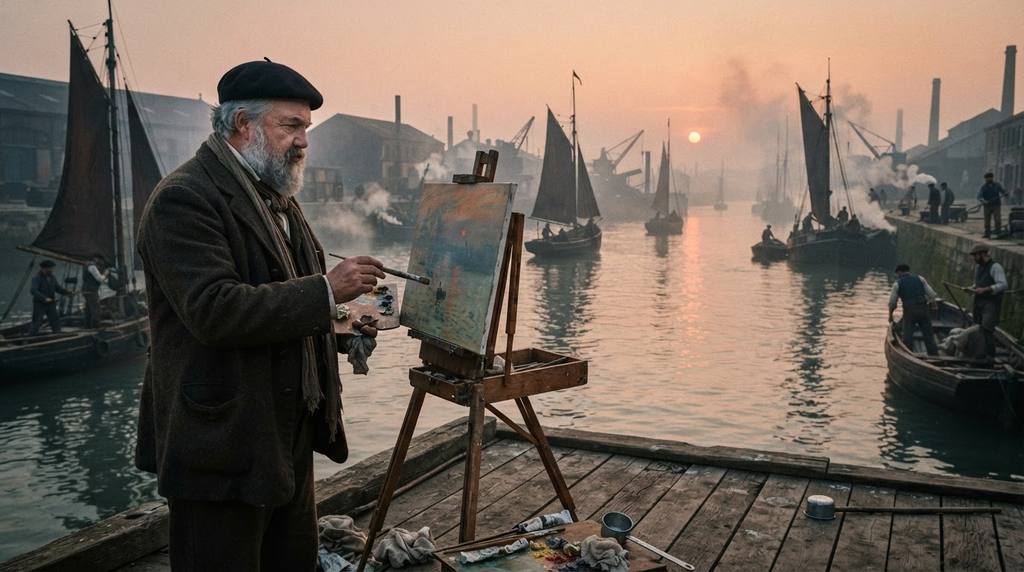
Impression, Sunrise, 1872
Painted the harbor of Le Havre, a work that later inspired the name of the Impressionist movement.
1874
First Impressionist Exhibition
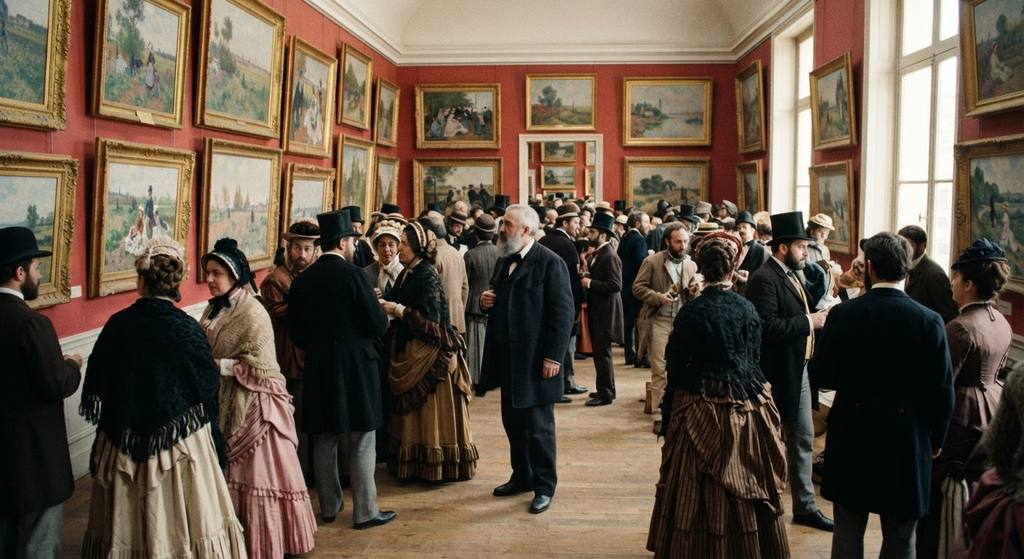
First Impressionist Exhibition, 1874
Co-organized an independent exhibition in Paris outside the official Salon system.
1883
Move to Giverny
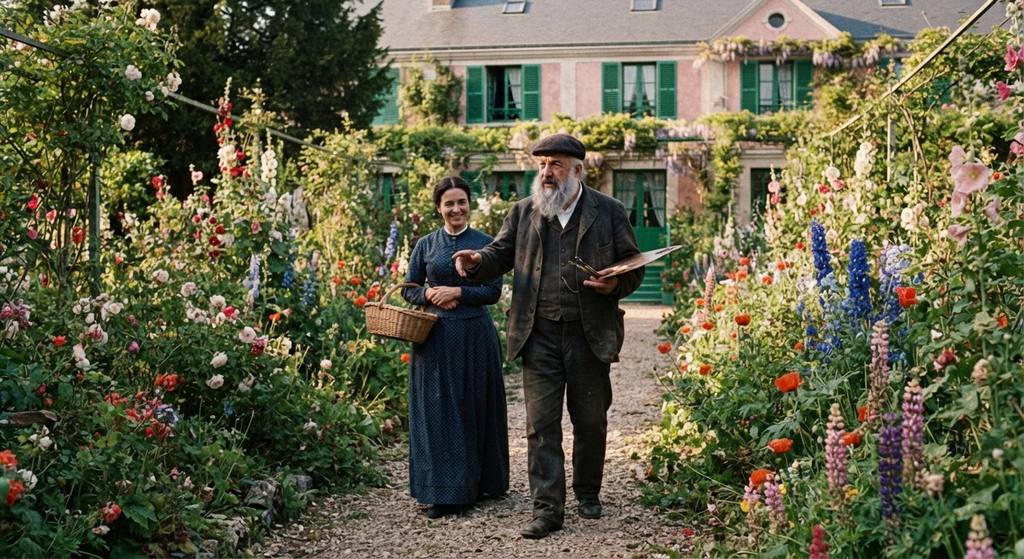
Move to Giverny, 1883
Rented a house and land in Giverny, where he began building his iconic gardens and water lily pond.
1890
Haystacks Series
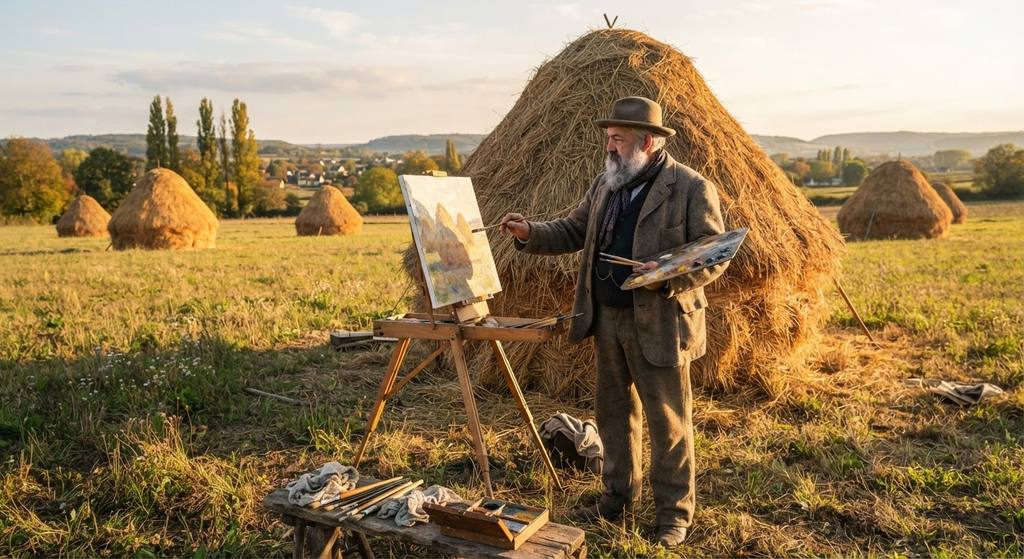
Haystacks Series, 1890
Began systematically painting serial views of haystacks to capture changing light across seasons.
1899
Water Lilies Project Begins
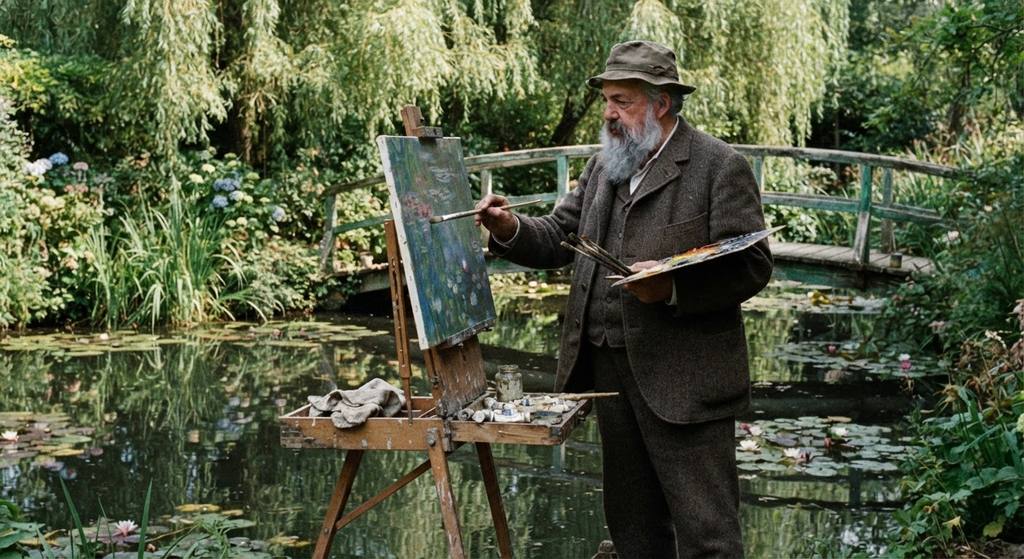
Water Lilies Project Begins, 1899
Commenced his multi-decade focus on the water lily garden, producing dozens of major canvases.
1926
Death at Giverny
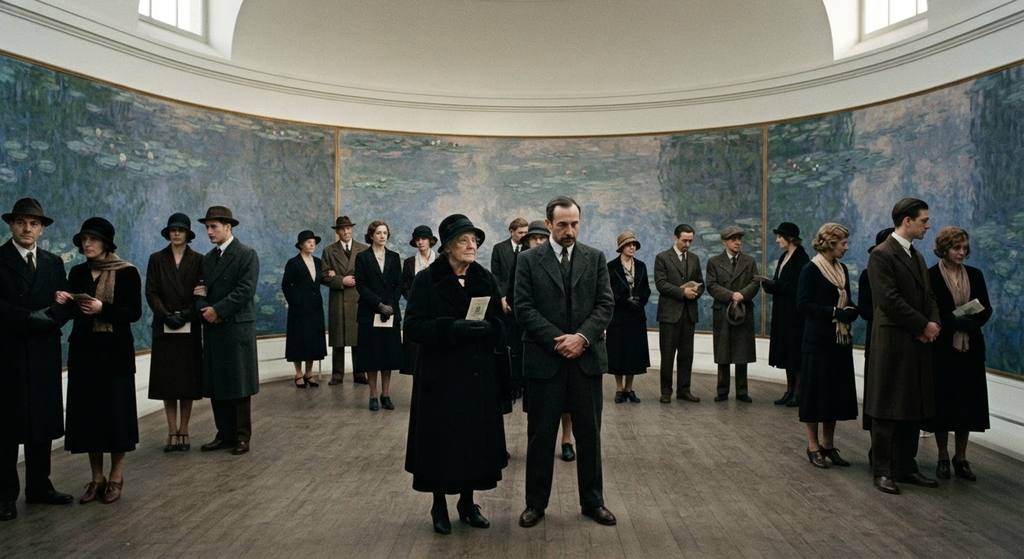
Death at Giverny, 1926
Died of lung cancer at age 86, leaving his final water lily decorations to the French state.
Atmospheric Doctrines
How Monet Dissected Light, Weather, and Visual Perception
Monet transformed landscape painting from static representation into an empirical study of light and visual sensation. By returning to the same subjects under varying atmospheric conditions, he proved that nature changes continuously. Here are the core doctrines, rigorous field habits, and creative strategies that defined his revolutionary vision.
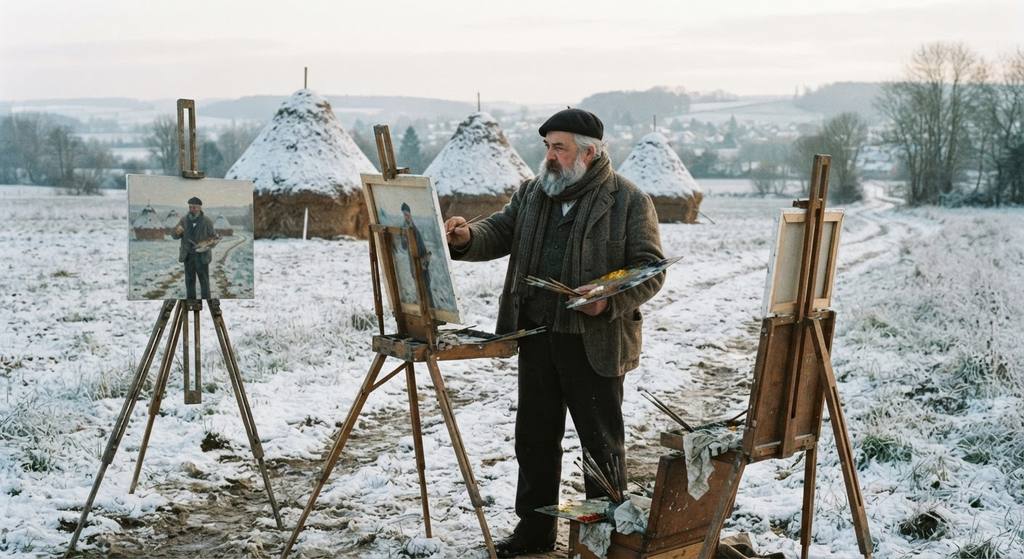 Method
The Haystacks: Mapping Time Through Light
Painting the exact same subject to isolate pure atmospheric shift
Capturing Atmospheric Shifts
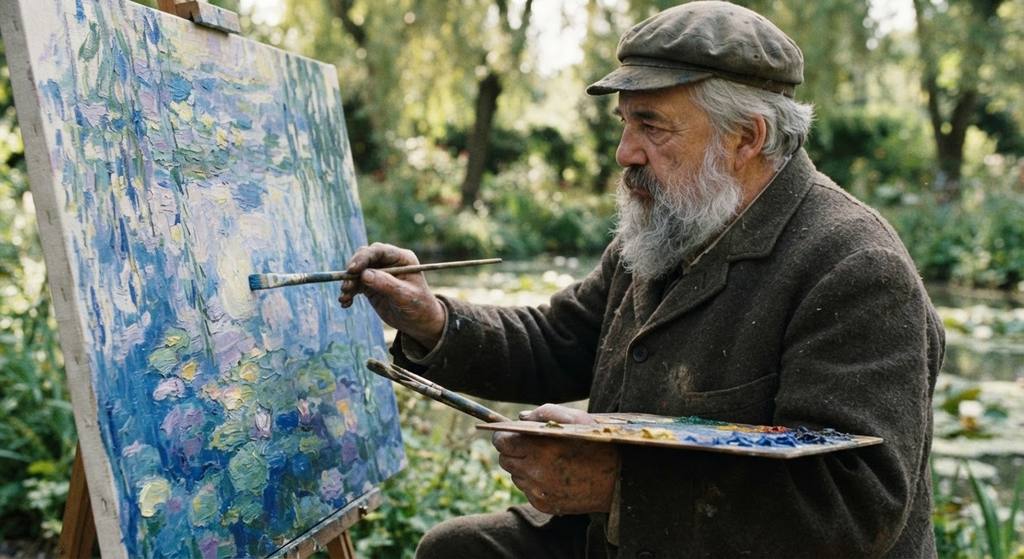 Theory
Shadows Are Color, Never Black
Banishing black pigment to reflect physical optics and atmospheric light
The Optics of Color
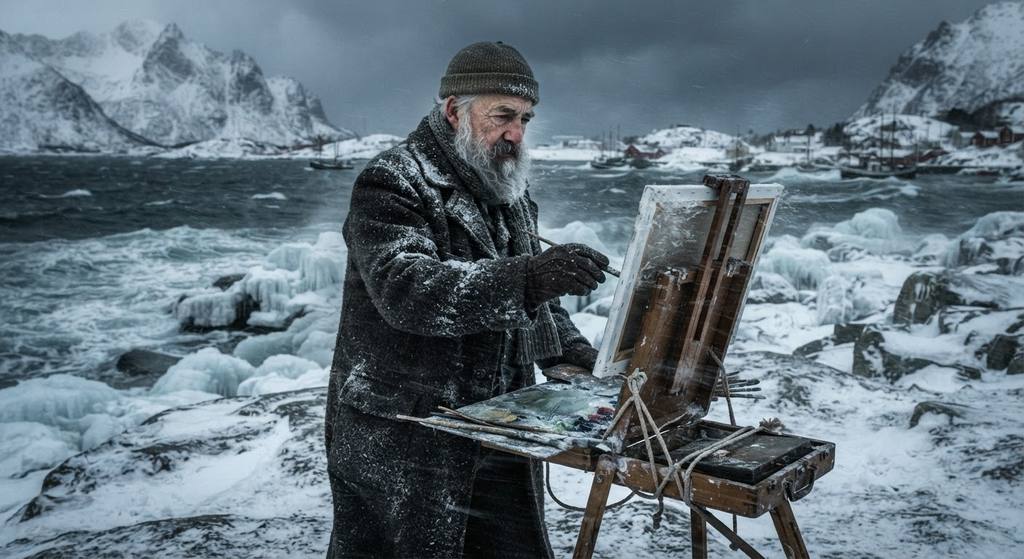 Practice
The Brutal Reality of Plein Air
Facing ice, tide, and storm to catch unrepeatable moments
Painting the Elements
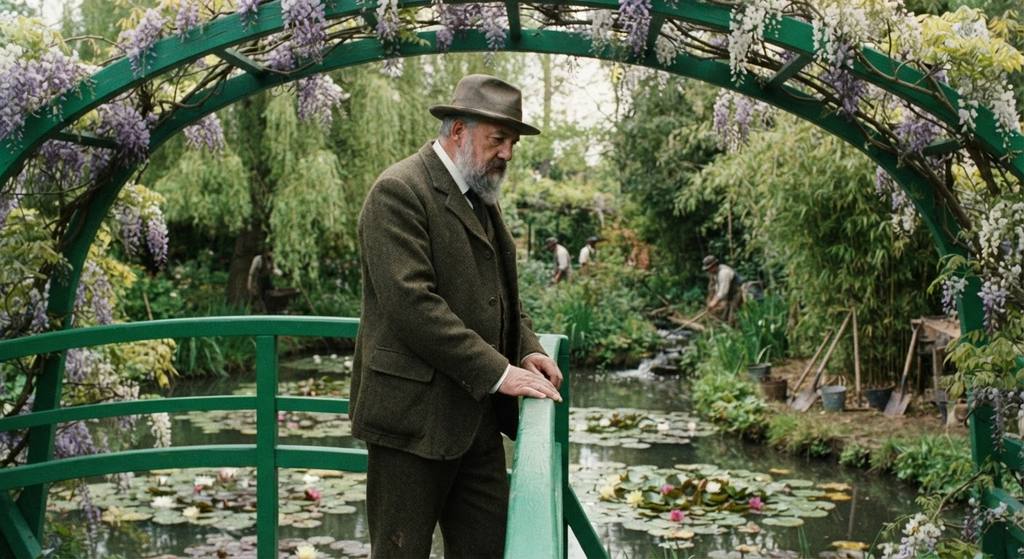 Creation
Building Giverny as a Living Palette
Diverting a river to engineer his own permanent optical studio
The Optical Studio
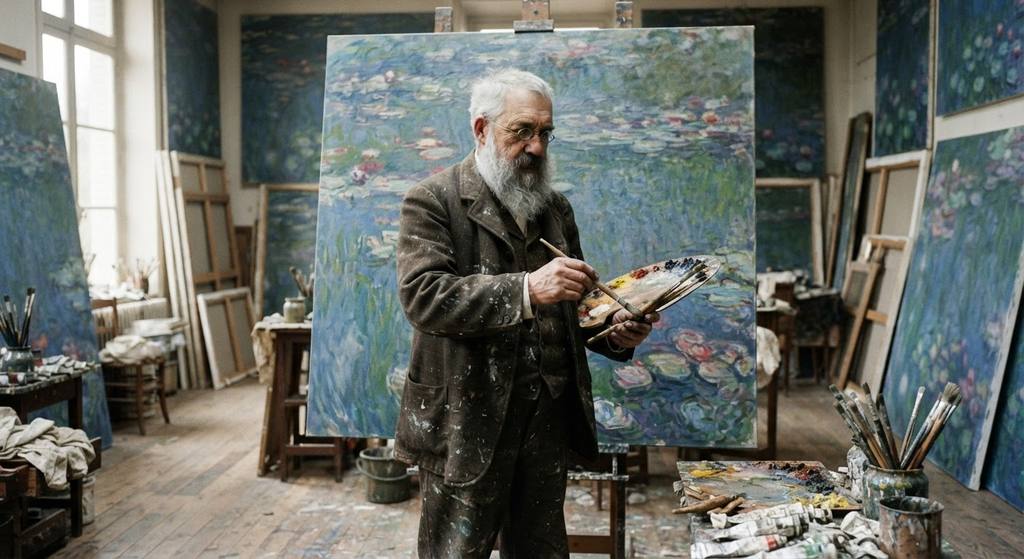 Resilience
Painting Through Nuclear Cataracts
Translating decaying vision into expressive, monumental scale
Monumental Vision
The Haystacks: Mapping Time Through Light
In 1890, Monet set up multiple canvases side by side in a field near Giverny. As the sun moved, frost thawed, or mist shifted, he switched canvases every few minutes. He demonstrated that the physical haystacks were secondary. The true subject was the surrounding envelopment of air and changing color temperature across time.
Why it matters today: Pay attention to how external context alters the character of a fixed object.
“Why did you paint the exact same haystacks dozens of times instead of finding new landscapes?”
What can you ask Claude?
Technique and Vision
Persistence and Career
Nature and Environment
Life and Philosophy
Try a live answer from Claude
Ask right here — no signup needed. The answer is generated live.
Live answer from Claude Monet — no login needed for your first question.
Claude Monet quotes — in his own words
15 of the lines Claude is remembered for, with the source for each one. Pick any quote and ask him what he actually meant by it.
Scroll sideways for more · Sources shown per quote; a few widely circulated lines are marked as attributed rather than verbatim.
Why Xminds is different
Related minds around Claude
No one thinks alone. These are the people who supported Claude — and the ones who pushed back. Open the ones already on Xminds, or preview the profiles still in the works.
Friendly minds
Teachers, family, students and allies who shaped Claude.
He worked alongside Monet en plein air and co-founded the Impressionist movement.
He was a steady collaborator who organized the original Impressionist exhibitions with Monet.
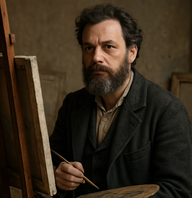
He mentored and financially supported Monet while inspiring his rebellious approach to modern subjects.
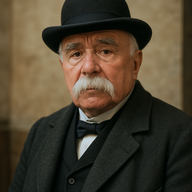
He was a devoted personal friend who encouraged Monet to complete his Grand Décoration water lily canvases for the nation.
Opponents
Rivals, accusers and adversaries who tested Claude.
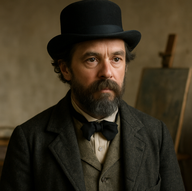
He coined the term Impressionism as a mock insult after viewing Monet's painting Impression, Sunrise in 1874.
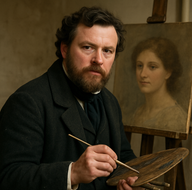
He championed traditional academic art standards and consistently opposed the recognition of Monet and his peers.
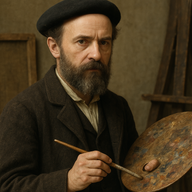
He fought fiercely against modern art and attempted to stop the French state from accepting Impressionist paintings into national collections.
What people say about Claude
Ratings are collected right after a conversation ends. Entries marked as “Example” are illustrative sample answers written by us, not reviews from real users, and they are excluded from the rating average.
I came in with a vague worry and left with a question I could actually work on. It never lectured me — it kept asking until I heard my own answer.
Illustrative example
Ten minutes before a difficult meeting I talked it through here. Calmer, sharper, and the advice held up in the room.
Illustrative example
The voice call feels surprisingly natural. Occasionally a bit long-winded, but the substance is genuinely good.
Illustrative example
What I like most is that it stays in character and quotes real sources. It feels like reading with a patient tutor.
Illustrative example
I use it a few evenings a week to think out loud. It has quietly become part of how I make decisions.
Illustrative example
Better than I expected. I wish it remembered more from older conversations, but the depth of each session is excellent.
Illustrative example
Questions & answers
What core art philosophy did Claude Monet pioneer?
Claude Monet championed plein air painting, arguing that landscapes should be executed outdoors directly from nature. He believed the real subject of art was not the physical object, but the shifting light and atmosphere surrounding it at any given moment.
How did Claude Monet come up with the term Impressionism?
In 1872, Claude Monet painted Impression, Sunrise in Le Havre. When shown at an independent 1874 exhibition, critic Louis Leroy used the title mockingly to describe the sketchy style. Monet and his peers adopted the label proudly.
Why did Claude Monet paint the same subjects repeatedly?
Claude Monet painted series of haystacks, poplars, and water lilies to capture how light, season, and atmospheric conditions alter a single subject. He showed that reality changes constantly, making light itself the true subject of the painting.
How did visual impairment in later life affect Claude Monet?
Claude Monet suffered from severe cataracts in his later years, altering his perception of color toward reddish and brownish tones. After undergoing surgery in 1923, he adjusted his palette and completed his grand water lily murals for France.
What can modern creators learn from talking with Claude Monet?
Talking with Claude Monet offers practical insights on direct observation, managing creative self-doubt, embracing natural elements, and staying disciplined through long projects. His persistence demonstrates how focused vision transforms artistic traditions into enduring original work.
Can I really chat with Claude Monet?
Yes. Xminds lets you chat with Claude Monet as an AI mentor: the Claude Monet AI is built from documented writings, speeches and biography, so you can ask Claude Monet anything and get an answer in character rather than a search-results page. The first messages are free and no download is needed.
Can I call Claude Monet and talk by voice?
You can. Press the call button to talk to Claude Monet in a live voice conversation — the Claude Monet AI voice replies in real time, and you can interrupt, follow up and switch language mid-call. Prefer typing? The same conversation works as text chat.
Is the Claude Monet chatbot free?
Starting is free: every visitor gets a free daily allowance of messages and voice minutes with the Claude Monet AI chatbot. Xminds Pro raises the limits for people who talk to their mentors every day.
How accurate is this Claude Monet AI?
Claude Monet is a respectful AI portrayal, not the real person and not a channel to them. Answers are grounded in the historical record and cited sources, and every conversation is clearly labelled as AI so you always know who you are talking to.
What should I ask Claude Monet about?
Bring a real situation. People come for advice from Claude Monet on the themes above, or treat it as an interview with Claude Monet about a decision they are facing. You can speak to Claude Monet about work, doubt or craft, and meet Claude Monet again tomorrow to continue the same thread — it is a conversation, not a Claude Monet simulator that repeats stock lines.
Also known as
Claude Monet appears under several names and spellings across languages and sources. You can search for any of these on Xminds:
- Oscar-Claude Monet
- Claude Oscar Monet
Step into the light of Giverny
Start a conversation with Claude Monet about art, nature, and creative perseverance.
10 free messages a day • no signup needed

Talk to Claude
10 free messages a day • no signup needed