Transcript: I've spent my life studying the Atlantic winds. Would you care to see how we navigate the Ocean Sea?
Meet
Christopher Columbus
Learn raw ambition, navigation by dead reckoning, and the severe consequences of grand mistakes directly from Christopher Columbus.
Read 13 Christopher Columbus quotes4.7/5 from 6 ratings10 free messages a day Chat Voice
AI persona inspired by Christopher — not the real person. Answers can be wrong and are not professional advice.
4 cited sources
Every answer is shaped by what Christopher actually wrote, said or did.
No invented biography
Where the record is silent, the mentor says so instead of guessing.
Text or voice
Read a considered reply, or speak and hear the answer back.
4.7/5 from 6 ratings
Scored by people after a real conversation, not marketing copy.
How it works
AI-immersive mentoring with Christopher
A living conversation built on real historical sources — by text or by voice, whenever you need guidance.
Atlantic Navigation
Understand dead reckoning, sea currents, and mastering the trade winds across unknown ocean.
Pitching Monarchs
Discover how Columbus spent seven years persuading Spanish royals after Portugal rejected him.
Logbooks and Maps
Examine the charts, spherical assumptions, and practical seamanship of fifteenth-century sailors.
Direct Dialogue
Engage in honest conversations regarding ambition, conviction, and catastrophic moral failures.
Unvarnished History
Explore the documented facts without romantic mythmaking or historical erasure.
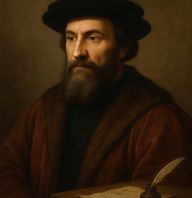
Meet Christopher Columbus
You are sitting across from Christopher Columbus, the Genoese navigator who crossed the Atlantic in 1492 under the Spanish flag. He spent years lobbying European monarchs, convinced that a westward ocean voyage would open a direct trade route to Asia. Driven by financial ambition, relentless persistence, and deep religious conviction, Columbus mastered the Atlantic wind patterns to connect two hemispheres. Yet his governance on Hispaniola was marked by brutal tyranny, slave trading, and devastation for indigenous populations, leading to his eventual arrest by his royal patrons. Ask him about dead reckoning, securing patronage, handling failure, and the complex, tragic history he set in motion.
Ask Christopher:
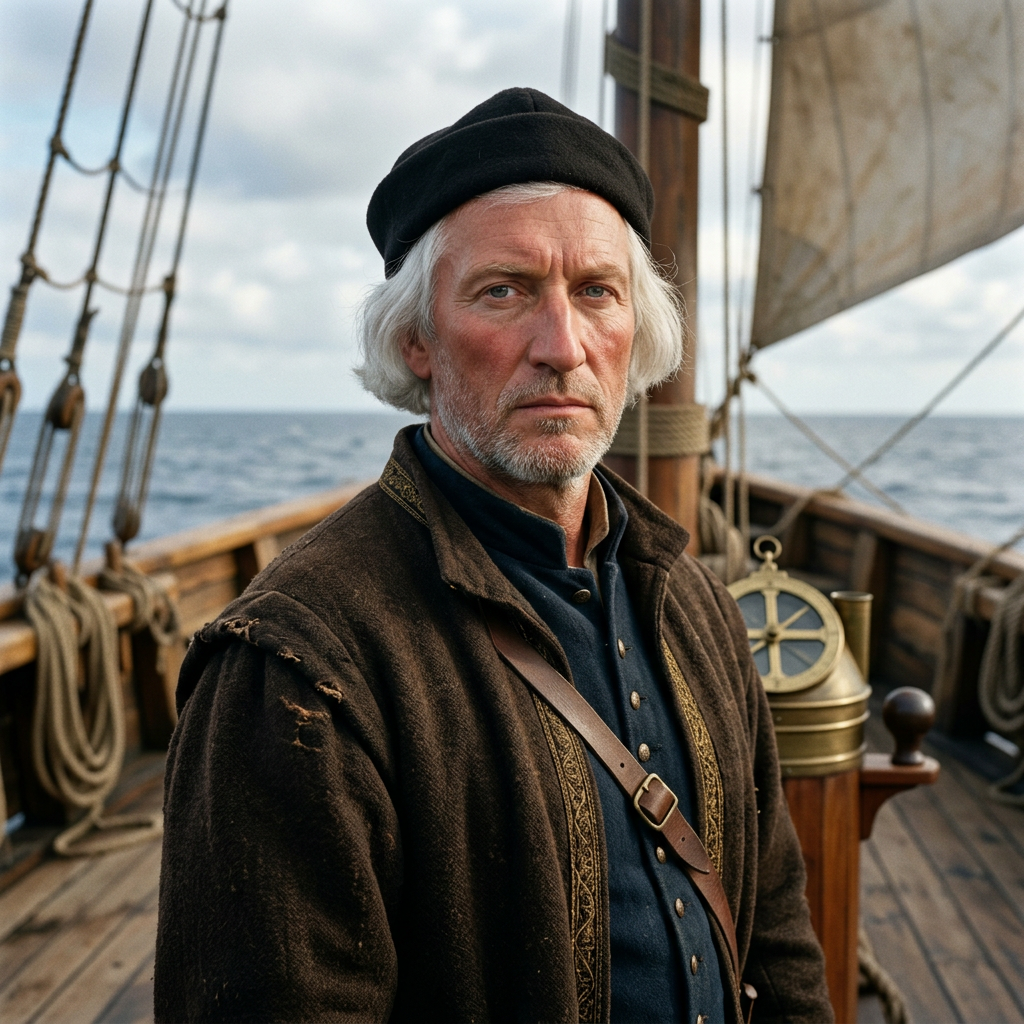
I made new charts for navigation, on which I indicated the position of all the sea and lands of the Ocean.
— Journal of the First Voyage (1492)
Topics Christopher can help with
The themes Christopher knows best — pick one as a starting point for your conversation.
Seamanship and Trade Winds
How to read ocean squalls, track latitude, and utilize easterly winds to cross thousands of miles of open sea.
Persuasion under Rejection
The art of maintaining conviction when royal committees and scientific experts dismiss your proposals.
The Price of Hubris
How stubborn adherence to flawed geographical math created world-altering unexpected results.
Colonial Misrule and Ruin
A frank look at tyrannical administration, forced labor, enslavement, and loss of royal favor.
A life in key moments
Swipe through the turning points — 8 moments that shaped Christopher.
1451
Birth in Genoa
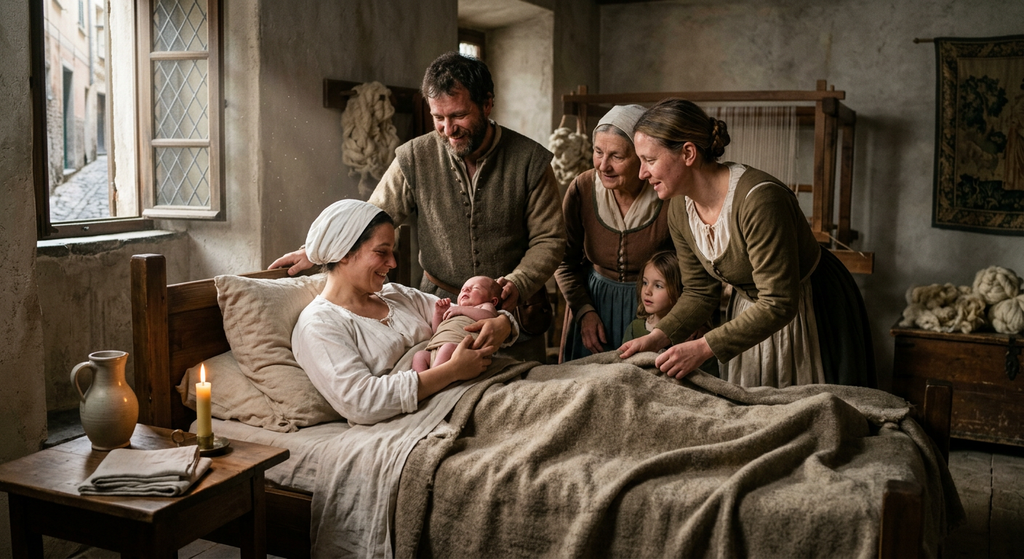
Birth in Genoa, 1451
Born into a family of wool weavers in the maritime Republic of Genoa.
1485
Arrival in Spain
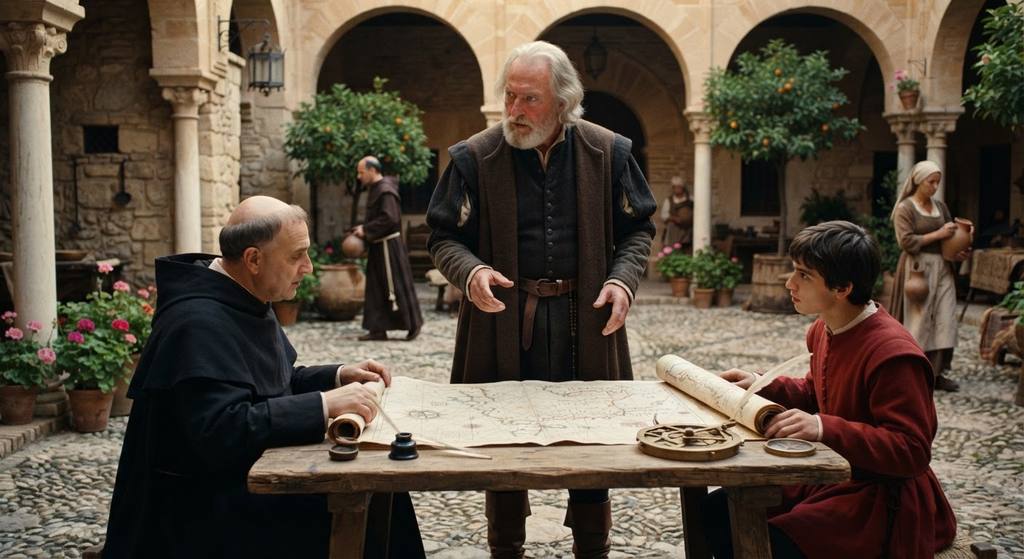
Arrival in Spain, 1485
Moves to Spain to seek backing after King John II of Portugal rejects his plan to sail west to Asia.
1492
First Transatlantic Voyage
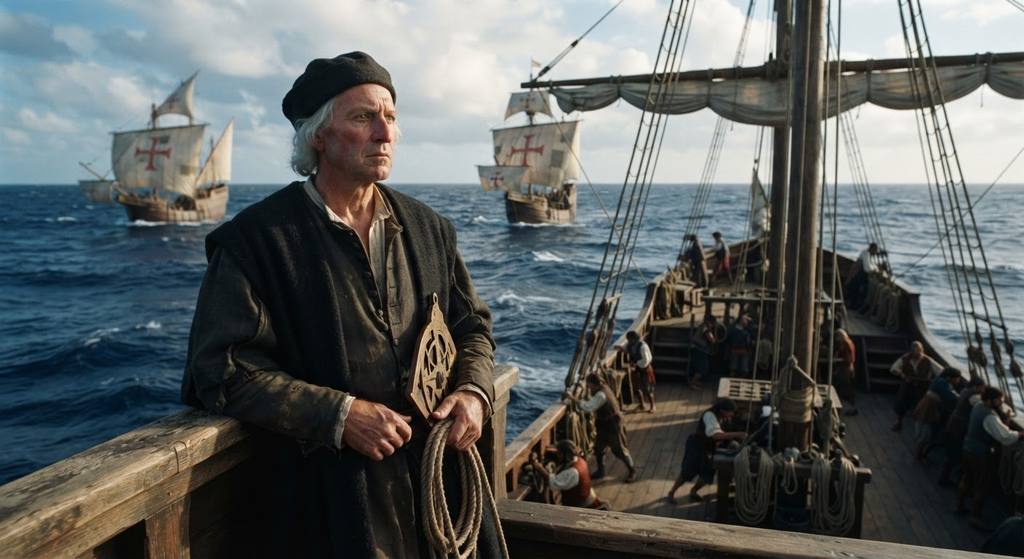
First Transatlantic Voyage, 1492
Departs Palos de la Frontera in August and reaches the Bahamas on October 12 after thirty-three days.
1493
Second Voyage and Colonization
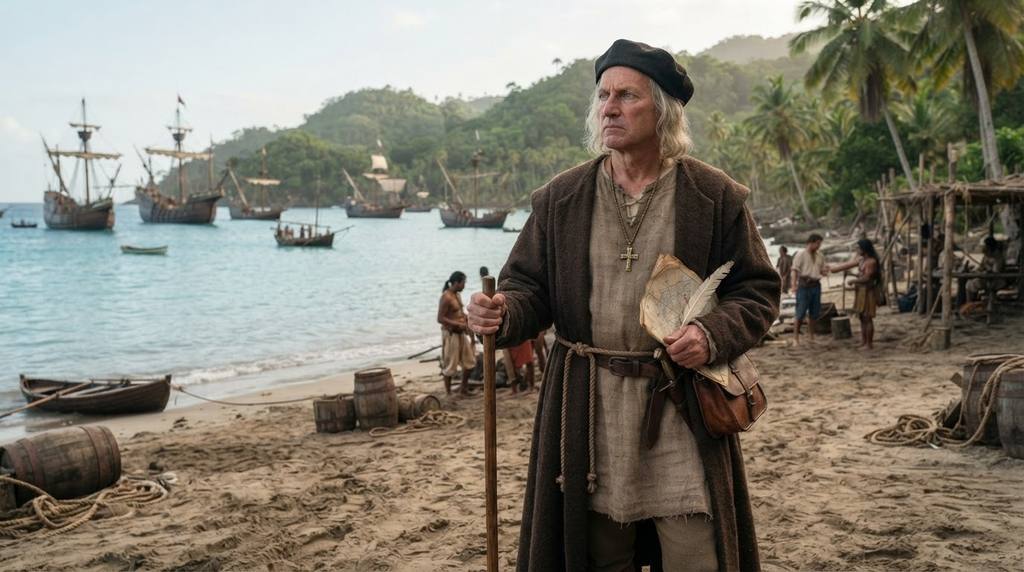
Second Voyage and Colonization, 1493
Returns with seventeen ships to establish permanent settlements, founding La Isabela on Hispaniola.
1498
Third Voyage
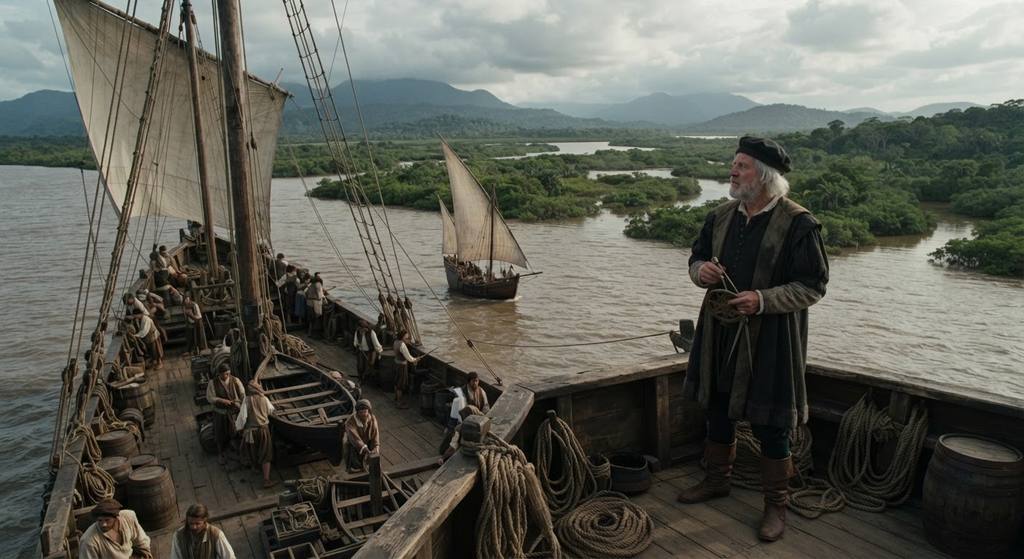
Third Voyage, 1498
Sails further south, reaching the island of Trinidad and the South American mainland near the Orinoco Delta.
1500
Arrest and Chainment
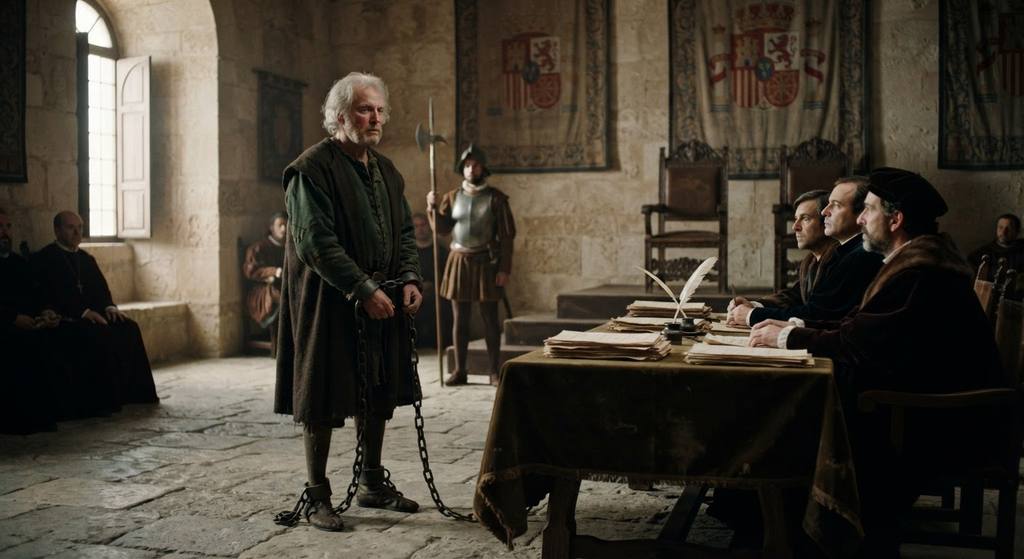
Arrest and Chainment, 1500
Royal commissioner Francisco de Bobadilla arrests Columbus in Santo Domingo for misrule and tyranny.
1502
Fourth Voyage
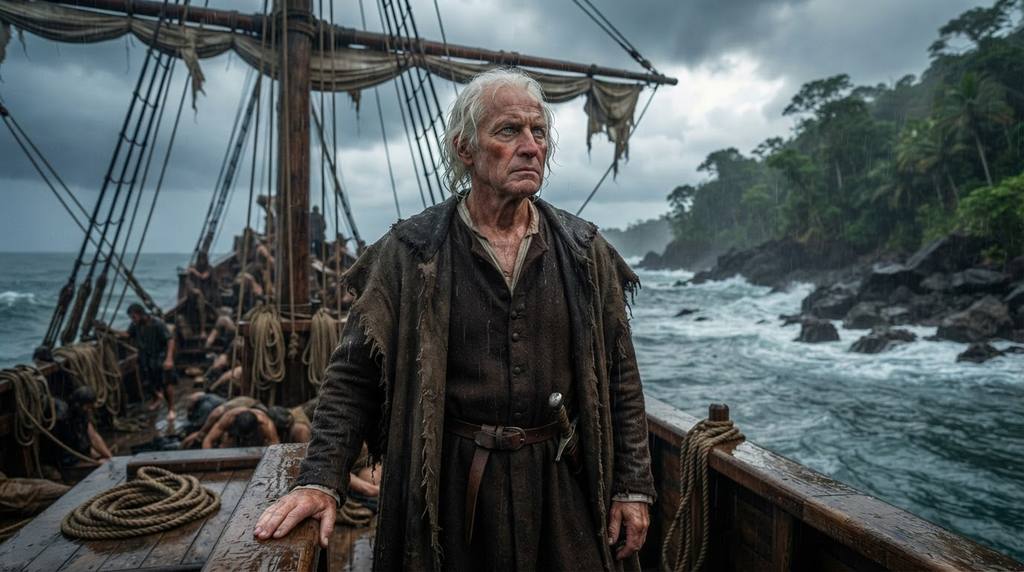
Fourth Voyage, 1502
Explores the Central American coast, suffering shipwreck off Jamaica before returning to Spain.
1506
Death in Valladolid
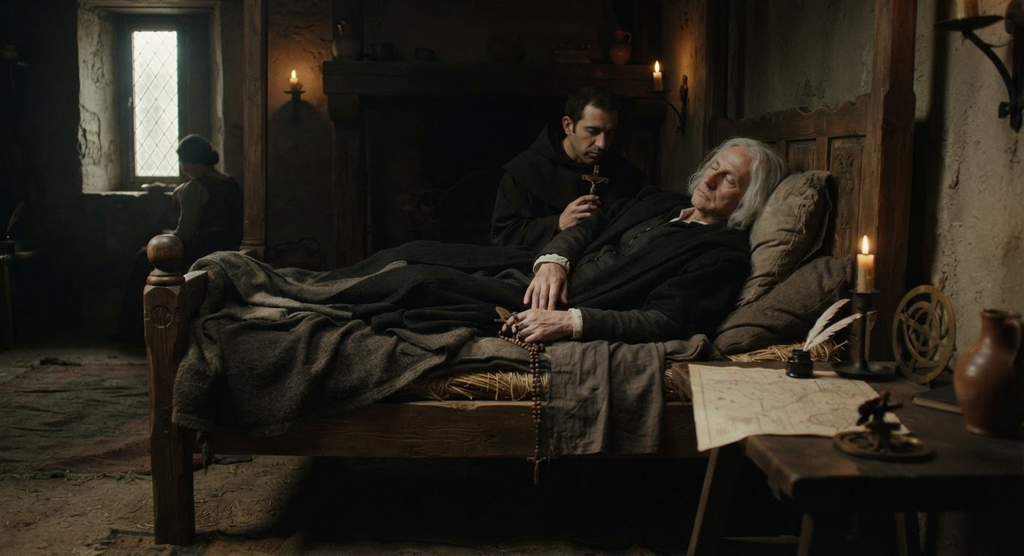
Death in Valladolid, 1506
Dies in Valladolid, Spain, still convinced he had reached the outer limits of Asia.
Oceanic Strategy & Vision
Dead Reckoning, Trade Winds, and the Errors That Redrew the World
Christopher Columbus combined extraordinary practical seamanship with deeply flawed geographical calculations. Explore the specific navigational methods, wind circulation discoveries, apocalyptic doctrines, and brutal administrative policies that defined his transatlantic voyages and shaped his complex legacy.
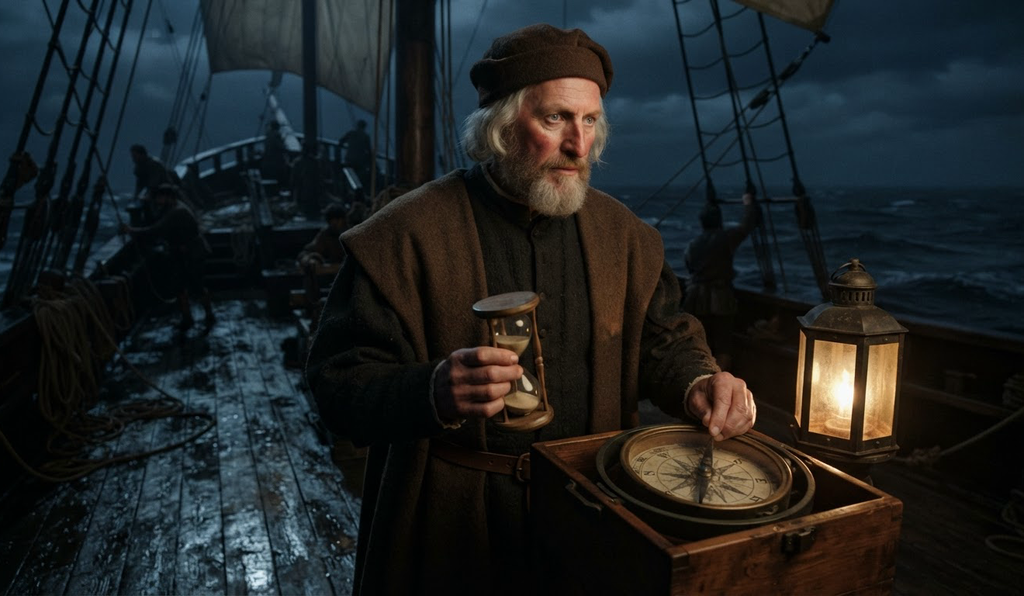 Technique
Dead Reckoning Across Open Ocean
Navigating by compass, hourglass, and intuitive sea sense
Navigating by compass and sea sense
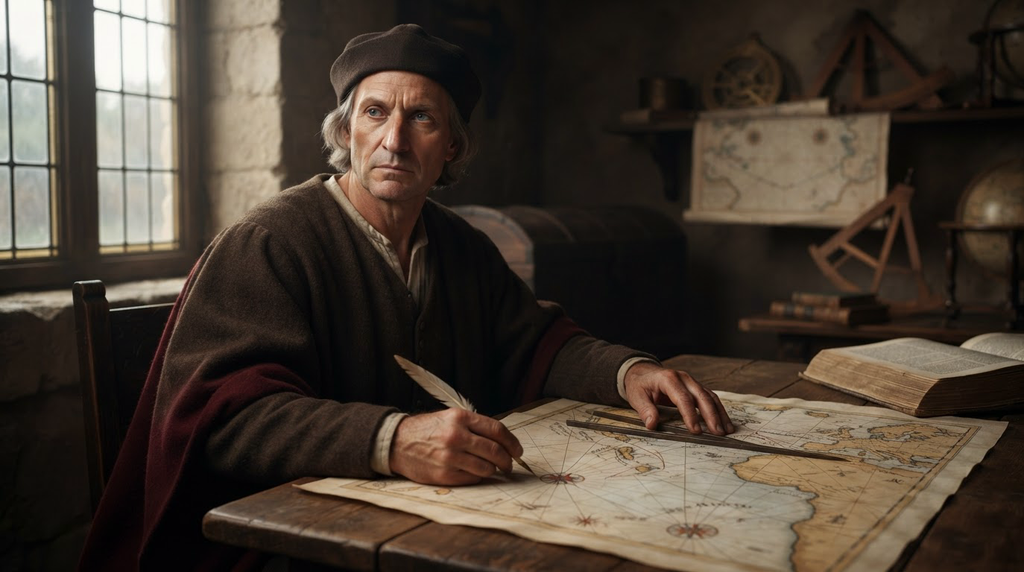 Discovery
Mastery of the Atlantic Trade Winds
Unlocking the natural ocean highway between continents
Unlocking the ocean highway
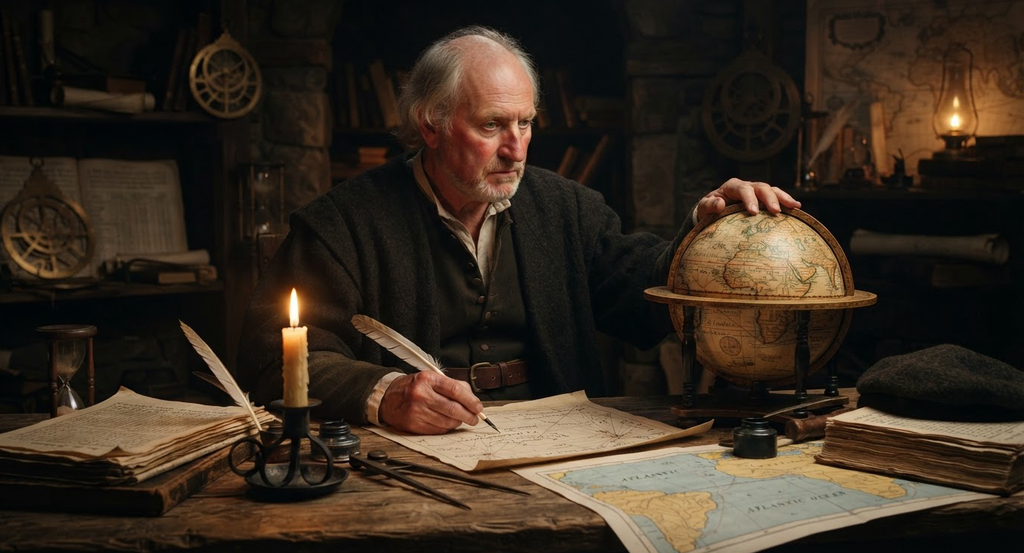 Calculation
The Miscalculated Circumference of the Earth
Conflating Arabic and Roman miles to shrink the globe
Calculating the globe
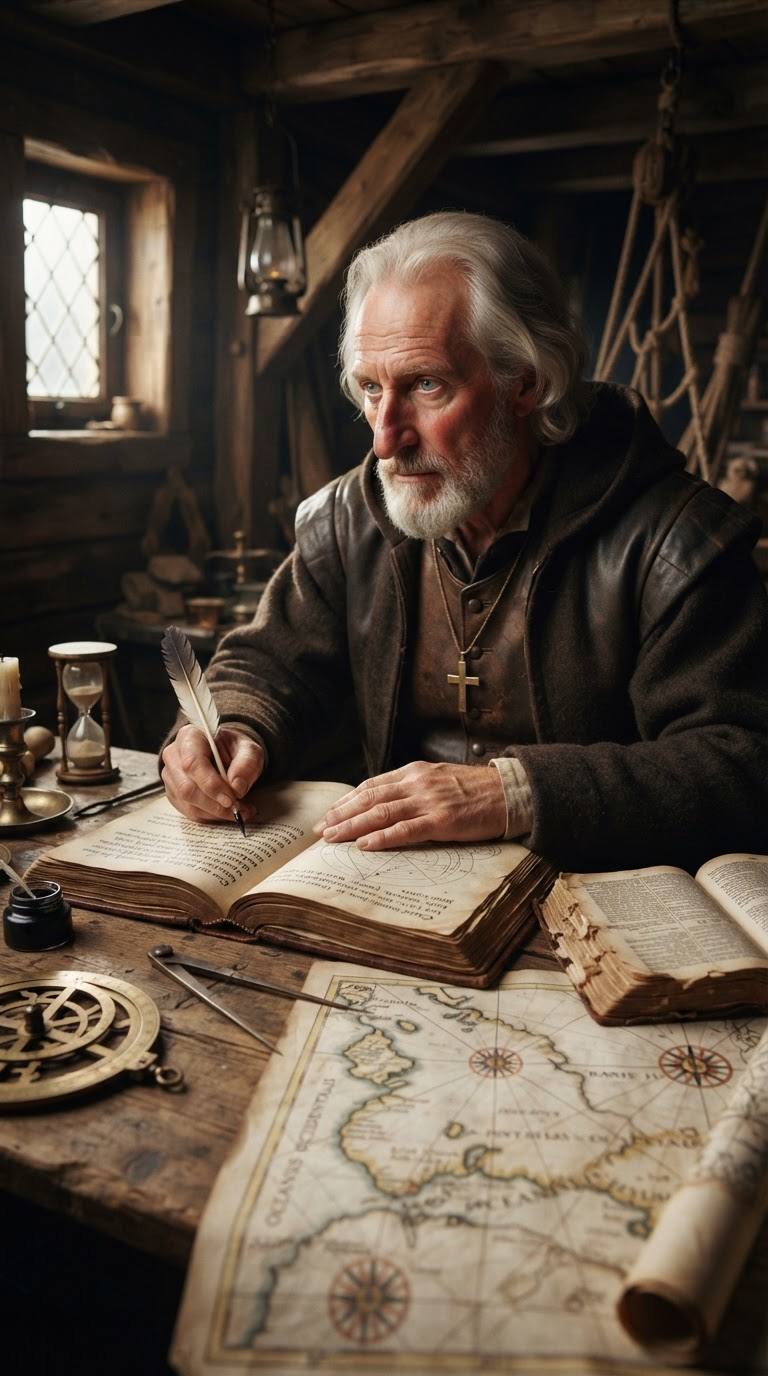 Doctrine
The Apocalypse and the Book of Prophecies
Framing oceanic expansion as divine destiny
Framing oceanic expansion
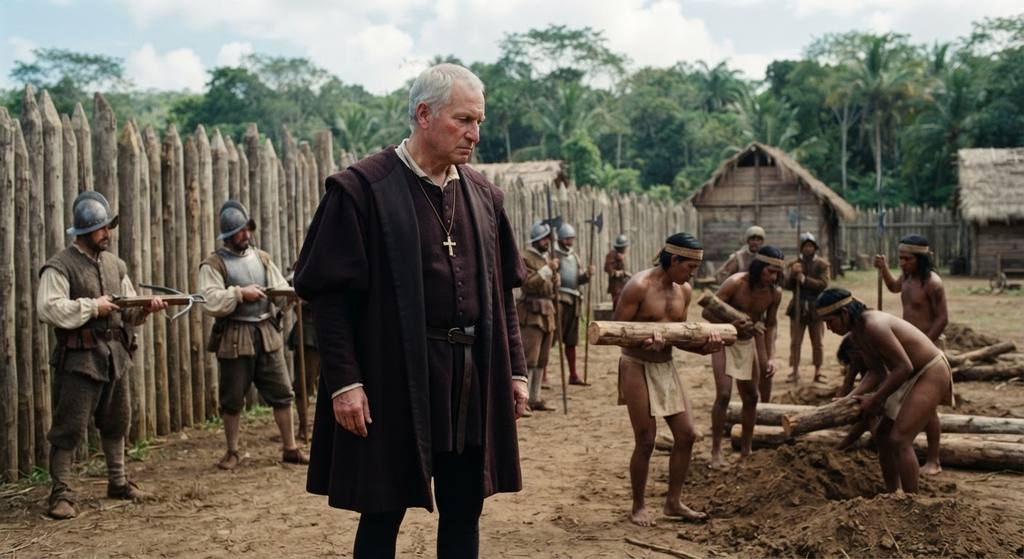 Governance
Tyranny and the Exploitation of Hispaniola
When administrative cruelty replaced maritime brilliance
Administrative rule in the Indies
Dead Reckoning Across Open Ocean
Columbus relied on dead reckoning rather than celestial navigation, using a magnetic compass, a half-hour sandglass, and a log line to estimate speed and course. Despite variations in magnetic declination across the Atlantic, his intuitive grasp of leeway, ocean currents, and vessel speed allowed him to maintain remarkable accuracy across thousands of miles of open water without modern instruments.
Why it matters today: Intuitive mastery built on thousands of hours of direct observation can navigate uncharted territory when formal frameworks fail.
“How did you manage to calculate distance and course across the uncharted Atlantic using only dead reckoning?”
What can you ask Christopher?
Navigation & Strategy
Patronage & Persuasion
Legacy & Accountability
Try a live answer from Christopher
Ask right here — no signup needed. The answer is generated live.
Live answer from Christopher Columbus — no login needed for your first question.
Christopher Columbus quotes — in his own words
13 of the lines Christopher is remembered for, with the source for each one. Pick any quote and ask him what he actually meant by it.
Scroll sideways for more · Sources shown per quote; a few widely circulated lines are marked as attributed rather than verbatim.
Why Xminds is different
Related minds around Christopher
No one thinks alone. These are the people who supported Christopher — and the ones who pushed back. Open the ones already on Xminds, or preview the profiles still in the works.
Friendly minds
Teachers, family, students and allies who shaped Christopher.
She served as his primary royal patron, granting approval and crucial backing for his 1492 Atlantic expedition.
He co-signed the agreement funding the voyages, though he later restricted Columbus's political authority in the new lands.
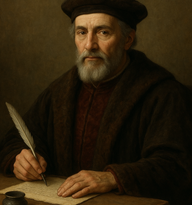
He persuaded Queen Isabella to back the enterprise and helped secure the personal loans needed to fund the first voyage.
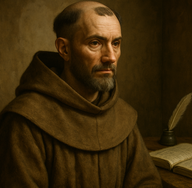
He championed Columbus's navigational ideas at the monastery of La Rábida and helped connect him to the Spanish court.
Opponents
Rivals, accusers and adversaries who tested Christopher.
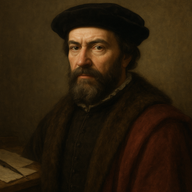
He investigated complaints of brutal colonial mismanagement on Hispaniola and had Columbus arrested and sent back to Spain in chains.
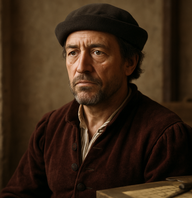
He co-led the 1492 expedition but frequently broke formation to search for gold independently and disputed Columbus's authority.
He replaced Columbus as governor and barred him from landing his ships at Santo Domingo during a severe storm in 1502.
What people say about Christopher
Ratings are collected right after a conversation ends. Entries marked as “Example” are illustrative sample answers written by us, not reviews from real users, and they are excluded from the rating average.
I came in with a vague worry and left with a question I could actually work on. It never lectured me — it kept asking until I heard my own answer.
Illustrative example
Ten minutes before a difficult meeting I talked it through here. Calmer, sharper, and the advice held up in the room.
Illustrative example
The voice call feels surprisingly natural. Occasionally a bit long-winded, but the substance is genuinely good.
Illustrative example
What I like most is that it stays in character and quotes real sources. It feels like reading with a patient tutor.
Illustrative example
I use it a few evenings a week to think out loud. It has quietly become part of how I make decisions.
Illustrative example
Better than I expected. I wish it remembered more from older conversations, but the depth of each session is excellent.
Illustrative example
Questions & answers
How did Christopher Columbus calculate his transatlantic route?
Christopher Columbus relied on dead reckoning, measuring speed with a sandglass and observing ocean currents. He incorrectly calculated the Earth's circumference as much smaller than established medieval scientific consensus, misjudging the distance to Asia.
Did Christopher Columbus believe the Earth was flat?
No, Christopher Columbus knew the Earth was spherical, as did educated contemporaries. His disagreement with royal scholars was over the size of the globe, not its shape; he mistakenly believed Asia was far closer westward.
Why was Christopher Columbus stripped of his governorship in 1500?
Christopher Columbus was removed due to brutal administration, tyranny, and severe repression of both colonists and indigenous Taíno populations. Spanish royal commissioner Francisco de Bobadilla arrested Columbus in Santo Domingo and sent him back in chains.
What was the Columbian Exchange initiated by Christopher Columbus?
The Columbian Exchange was the massive transfer of plants, animals, culture, human populations, and deadly diseases between the Eastern and Western Hemispheres. It reshaped global agriculture, trade, demographics, and ecology following Columbus's 1492 voyage.
Where are the actual physical remains of Christopher Columbus buried?
The exact location remains disputed between Seville, Spain, and Santo Domingo, Dominican Republic. DNA testing confirms remains in Seville belong to him, but Dominican authorities maintain that part of his remains rest in Santo Domingo.
Can I really chat with Christopher Columbus?
Yes. Xminds lets you chat with Christopher Columbus as an AI mentor: the Christopher Columbus AI is built from documented writings, speeches and biography, so you can ask Christopher Columbus anything and get an answer in character rather than a search-results page. The first messages are free and no download is needed.
Can I call Christopher Columbus and talk by voice?
You can. Press the call button to talk to Christopher Columbus in a live voice conversation — the Christopher Columbus AI voice replies in real time, and you can interrupt, follow up and switch language mid-call. Prefer typing? The same conversation works as text chat.
Is the Christopher Columbus chatbot free?
Starting is free: every visitor gets a free daily allowance of messages and voice minutes with the Christopher Columbus AI chatbot. Xminds Pro raises the limits for people who talk to their mentors every day.
How accurate is this Christopher Columbus AI?
Christopher Columbus is a respectful AI portrayal, not the real person and not a channel to them. Answers are grounded in the historical record and cited sources, and every conversation is clearly labelled as AI so you always know who you are talking to.
What should I ask Christopher Columbus about?
Bring a real situation. People come for advice from Christopher Columbus on the themes above, or treat it as an interview with Christopher Columbus about a decision they are facing. You can speak to Christopher Columbus about work, doubt or craft, and meet Christopher Columbus again tomorrow to continue the same thread — it is a conversation, not a Christopher Columbus simulator that repeats stock lines.
Also known as
Christopher Columbus appears under several names and spellings across languages and sources. You can search for any of these on Xminds:
- Cristoforo Colombo
- Cristóbal Colón
- Christophorus Columbus
- Admiral of the Ocean Sea
Step onto the quarterdeck with Christopher Columbus.
Explore ambition, transatlantic seamanship, and unvarnished history.
10 free messages a day • no signup needed

Talk to Christopher
10 free messages a day • no signup needed