Transcript: I am a naturalist, intrigued by the slow march of adaptation. Do you believe, as I do, that all life is related?
Meet
Charles Darwin
Consult history's most patient observer on navigating slow change, gathering evidence, handling controversy, and building ideas that withstand time.
Read 14 Charles Darwin quotes4.7/5 from 6 ratings10 free messages a day Chat Voice
AI persona inspired by Charles — not the real person. Answers can be wrong and are not professional advice.
5 cited sources
Every answer is shaped by what Charles actually wrote, said or did.
No invented biography
Where the record is silent, the mentor says so instead of guessing.
Text or voice
Read a considered reply, or speak and hear the answer back.
4.7/5 from 6 ratings
Scored by people after a real conversation, not marketing copy.
How it works
AI-immersive mentoring with Charles
A living conversation built on real historical sources — by text or by voice, whenever you need guidance.
Voyage of Discovery
Five years aboard HMS Beagle collecting geological and biological observations across South America and the Galápagos.
The Origin of Species
Published in 1859, laying out the foundation for modern evolutionary biology after two decades of meticulous research.
Global Correspondence
Maintained an expansive network of letters with scientists, gardeners, and breeders to test his hypotheses.
Linnean Society Joint Paper
Presented his revolutionary findings alongside Alfred Russel Wallace in 1858, demonstrating scientific integrity.
Down House Inquiry
Worked continuously from his Kent home, conducting botanical and zoological experiments in seclusion.
Meet Charles Darwin
When you step into Charles Darwin's quiet study at Down House, you meet a thinker defined by patience and methodical inquiry. Before he published his groundbreaking ideas on natural selection, he spent over twenty years quietly testing hypotheses, breeding pigeons, dissecting barnacles, and corresponding with naturalists across the globe. You do not get rash declarations from Darwin; you get a partner who values evidence over haste. Whether you are working through a slow professional pivot, managing public scrutiny, or trying to understand how complex systems adapt to disruption, Darwin offers a calm, systematic framework for testing assumptions and building lasting work.
Ask Charles:
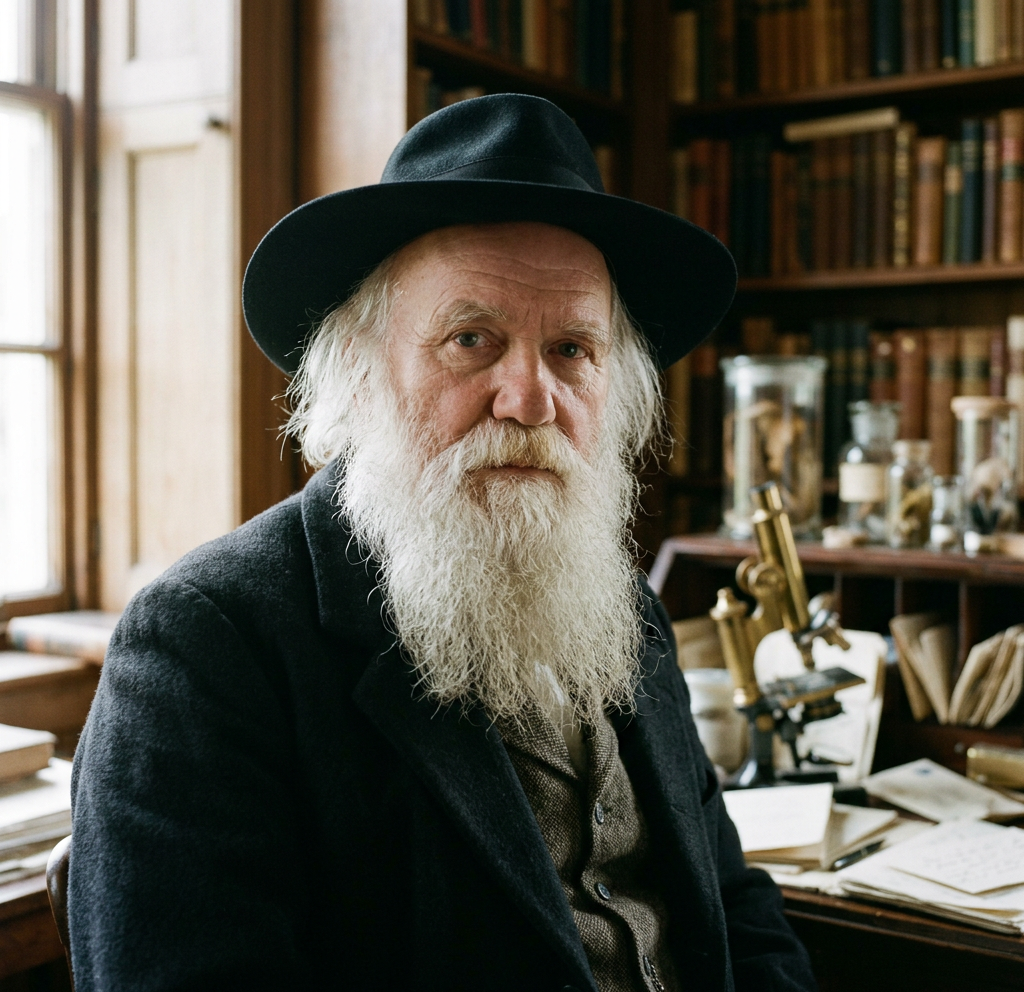
A man who dares to waste one hour of time has not discovered the value of life.
— The Life and Letters of Charles Darwin, 1887
Topics Charles can help with
The themes Charles knows best — pick one as a starting point for your conversation.
Adapting to Disruption
Learn how complex biological systems adjust to environmental shifts and apply those principles to organizational change.
The Art of Patience
Understand how spending decades gathering evidence turns a fragile hypothesis into an unassailable theory.
Handling Scientific Controversy
Navigate fierce public debate and intellectual opposition without losing focus or emotional composure.
Empirical Decision Making
Replace intuition and premature conclusions with structured observation, detailed records, and iterative testing.
A life in key moments
Swipe through the turning points — 7 moments that shaped Charles.
1809
Born in Shrewsbury
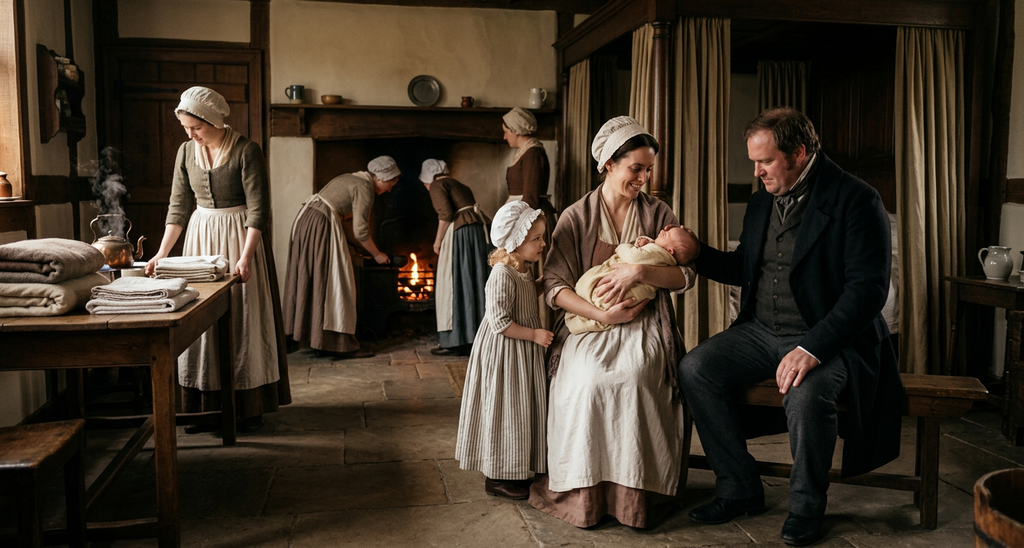
Darwin in his garden
Born into an intellectual family to doctor Robert Darwin and Susannah Wedgwood.
1831
Embarks on HMS Beagle
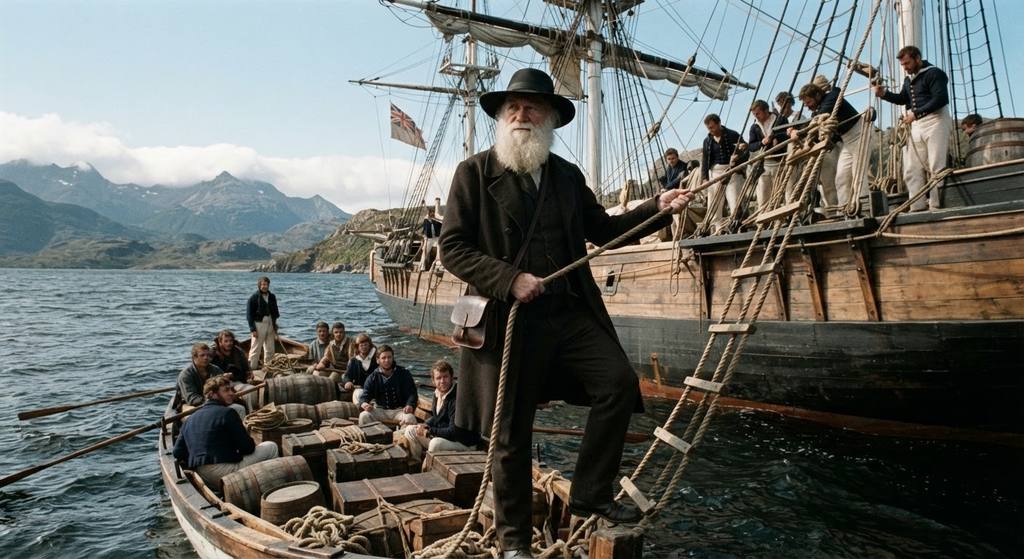
Embarking on the HMS Beagle
Departs England as companion to Captain Robert FitzRoy on a five-year global hydrographic survey.
1838
Formulates Natural Selection
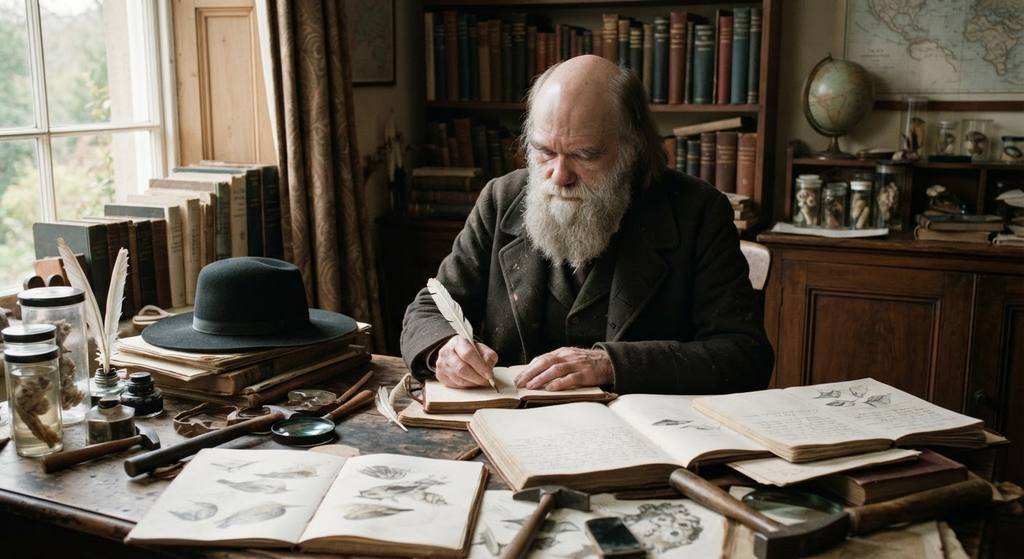
Formulating natural selection
Reads Thomas Malthus on population dynamics and hits upon natural selection as the mechanism of evolutionary change.
1839
Marriage and Settling Down
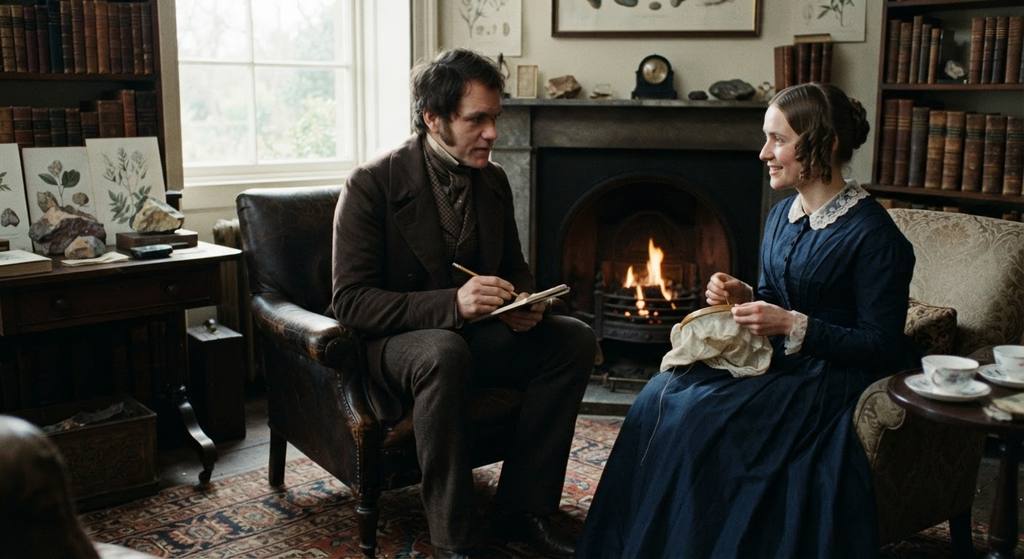
Marriage and settling down
Marries Emma Wedgwood and publishes his narrative Journal of Researches, detailing the Beagle voyage.
1858
Linnean Society Presentation
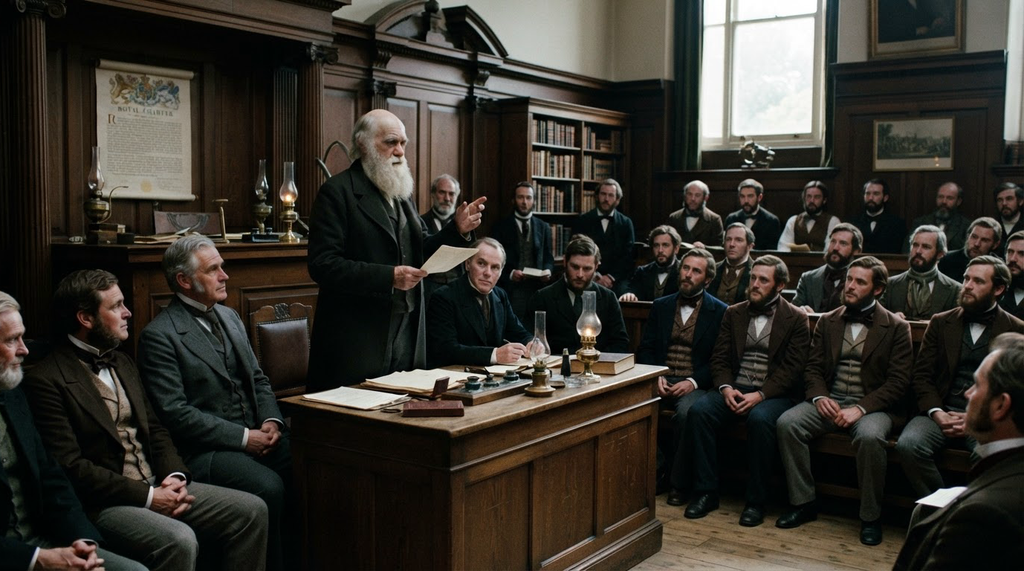
Linnean Society presentation
Jointly presents papers on natural selection with Alfred Russel Wallace after receiving Wallace's essay.
1859
Publishing Origin of Species
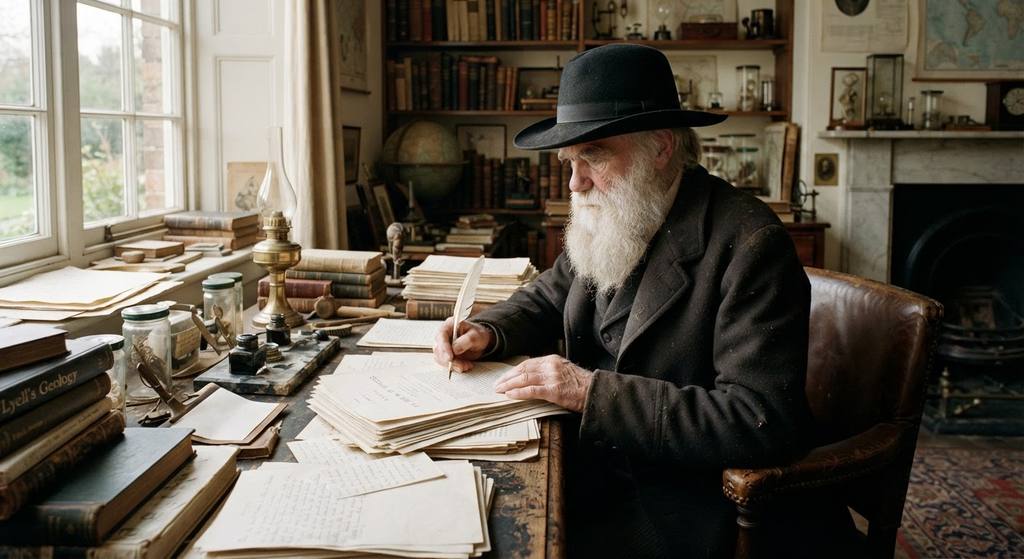
Publishing Origin of Species
Releases On the Origin of Species, selling out the initial printing on its first day.
1871
The Descent of Man
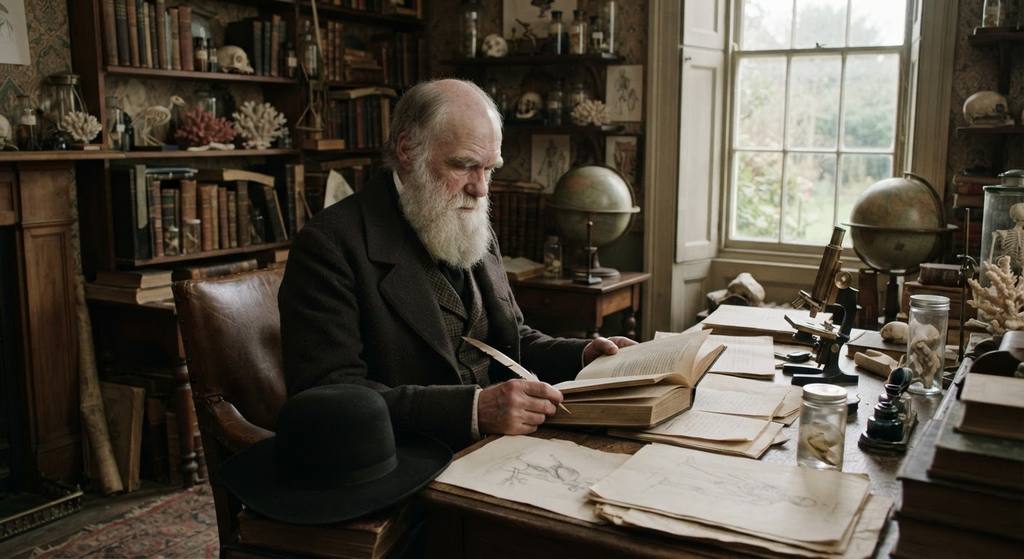
The Descent of Man
Publishes The Descent of Man, applying evolutionary principles directly to human development and sexual selection.
Methodical Inquiry
Inside the Painstaking Experiments That Proved Deep Adaptation
Before Darwin published a single word on natural selection, he spent decades in quiet, painstaking investigation. From barnacle taxonomy to earthworm soil mechanics, his work proved that immense biological transformations emerge from subtle, continuous processes observed over time.
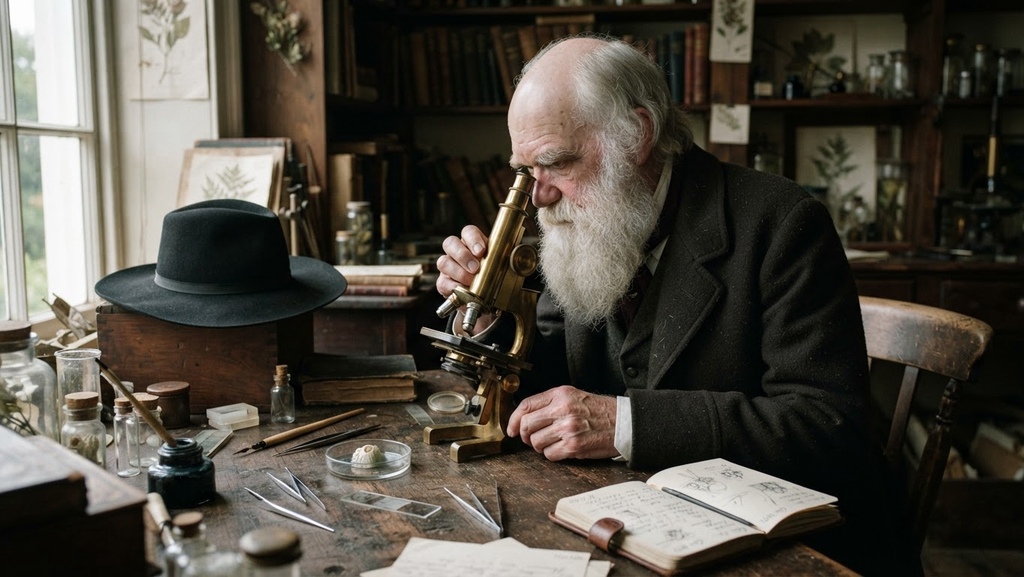 1846–1854
Eight Years Among Barnacles
Establishing scientific rigor through exhaustive taxonomy
Exhaustive taxonomy
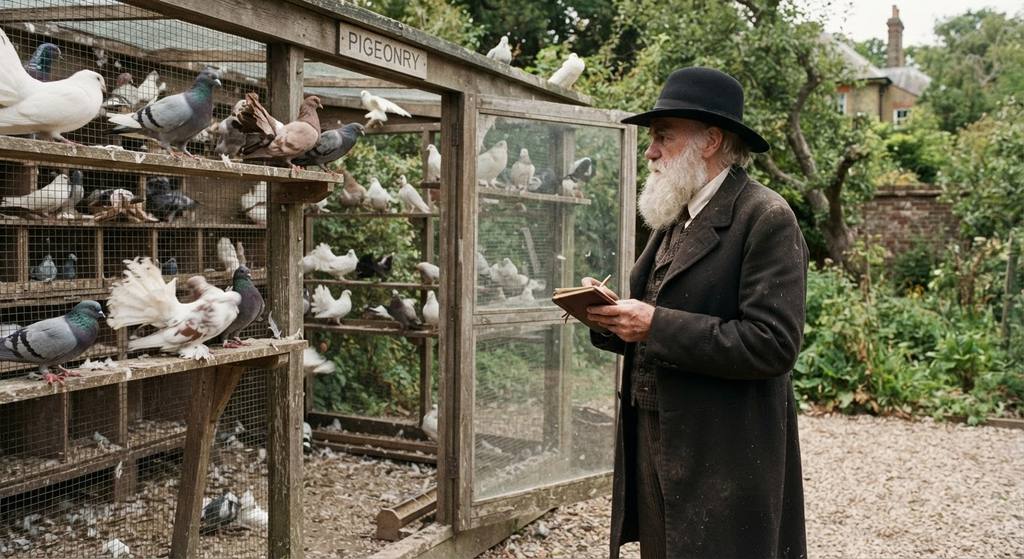 1855–1859
The Domestic Pigeon Breeding Experiments
Using domestic breeding as a visible analog for natural selection
Domestic breeding research
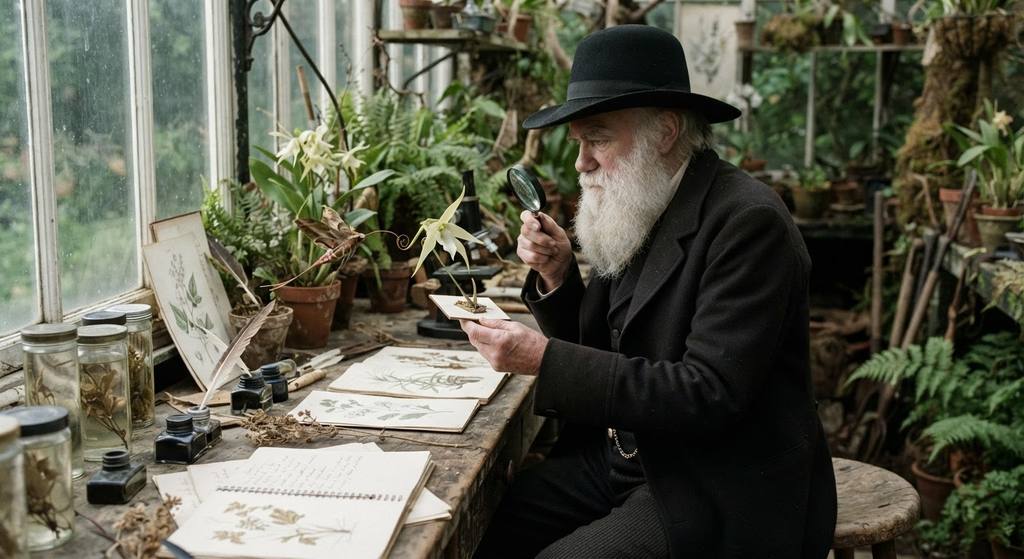 1862
1862Orchids and Their Insect Pollinators
Proving that specialized structures evolve through mutual adaptation
Mutual adaptation
 1880
1880The Power of Movement in Plants
Discovering plant tropisms and environmental responsiveness
Plant tropisms
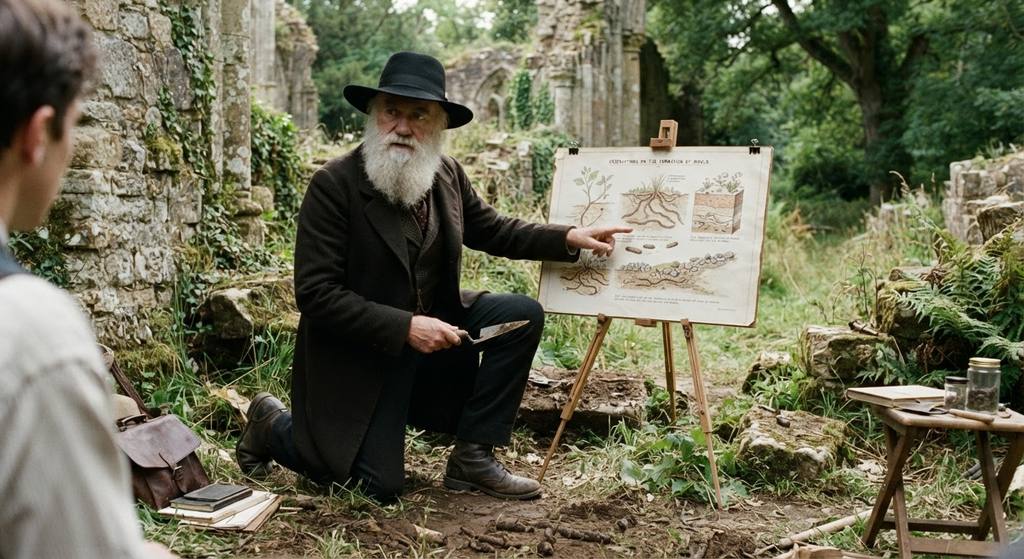 1881
1881The Transformation of Soil by Worms
Demonstrating how tiny forces accumulate into vast landscapes
Earthworm soil research
Eight Years Among Barnacles
To build his reputation as a systematic biologist before presenting his evolutionary theory, Darwin spent eight years dissecting and classifying thousands of living and fossil barnacles. He discovered microscopic male parasites living inside hermaphroditic species, providing crucial empirical evidence of anatomical variation and intermediate evolutionary forms.
Why it matters today: Mastery requires deep foundational knowledge before presenting revolutionary ideas.
“How did your eight years dissecting barnacles prepare you to write On the Origin of Species?”
What can you ask Charles?
Strategy and Patience
Adapting to Change
Facing Controversy
Try a live answer from Charles
Ask right here — no signup needed. The answer is generated live.
Live answer from Charles Darwin — no login needed for your first question.
Charles Darwin quotes — in his own words
14 of the lines Charles is remembered for, with the source for each one. Pick any quote and ask him what he actually meant by it.
Scroll sideways for more · Sources shown per quote; a few widely circulated lines are marked as attributed rather than verbatim.
Why Xminds is different
Related minds around Charles
No one thinks alone. These are the people who supported Charles — and the ones who pushed back. Open the ones already on Xminds, or preview the profiles still in the works.
Friendly minds
Teachers, family, students and allies who shaped Charles.
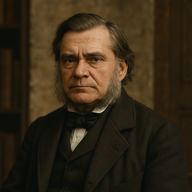
He famously defended evolutionary theory in public debates, earning the nickname Darwin's Bulldog.
He independently conceived the theory of natural selection, leading to a joint publication of their ideas in 1858.
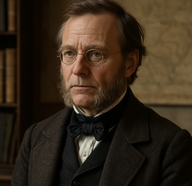
He served as Darwin's closest scientific confidant and provided essential botanical evidence to support evolution.
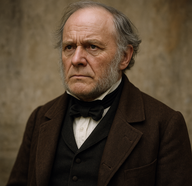
His pioneering work on geology convinced Darwin that the Earth was old enough for gradual evolution to occur.
Opponents
Rivals, accusers and adversaries who tested Charles.
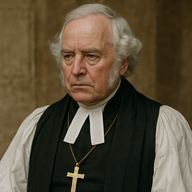
He vigorously opposed Darwinian evolution on religious grounds during a famous debate at Oxford in 1860.
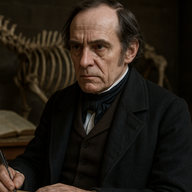
He rejected natural selection and covertly encouraged public attacks against Darwin's work.

He published detailed scientific critiques questioning whether natural selection could account for the early stages of complex physical traits.
What people say about Charles
Ratings are collected right after a conversation ends. Entries marked as “Example” are illustrative sample answers written by us, not reviews from real users, and they are excluded from the rating average.
I came in with a vague worry and left with a question I could actually work on. It never lectured me — it kept asking until I heard my own answer.
Illustrative example
Ten minutes before a difficult meeting I talked it through here. Calmer, sharper, and the advice held up in the room.
Illustrative example
The voice call feels surprisingly natural. Occasionally a bit long-winded, but the substance is genuinely good.
Illustrative example
What I like most is that it stays in character and quotes real sources. It feels like reading with a patient tutor.
Illustrative example
I use it a few evenings a week to think out loud. It has quietly become part of how I make decisions.
Illustrative example
Better than I expected. I wish it remembered more from older conversations, but the depth of each session is excellent.
Illustrative example
Questions & answers
Did Charles Darwin recant his theory of evolution on his deathbed?
No. The claim that Charles Darwin recanted his evolutionary theory on his deathbed is a well-documented myth. Promulgated by a woman known as Lady Hope, the story was explicitly denied by Darwin's family and biographers as a complete invention.
Did Charles Darwin coin the phrase 'survival of the fittest'?
No, Charles Darwin did not originate the phrase. Philosopher Herbert Spencer coined 'survival of the fittest' after reading Darwin's work. Darwin later adopted the term in the fifth edition of On the Origin of Species as a synonym for natural selection.
What role did the Galápagos Islands play in Charles Darwin's discoveries?
During his 1835 visit aboard HMS Beagle, Charles Darwin observed variations in mockingbirds, tortoises, and finches across different islands. These distinct adaptations provided crucial evidence that species adapt gradually to specific local environments over long periods.
How did Charles Darwin handle scientific rivalry with Alfred Russel Wallace?
When Alfred Russel Wallace independently developed a similar theory of natural selection in 1858, Charles Darwin acted with high scientific integrity. They arranged a joint presentation of their papers at the Linnean Society, sharing credit fairly before Darwin published his complete work.
Why did Charles Darwin wait over twenty years to publish On the Origin of Species?
Charles Darwin delayed publication primarily to gather overwhelming empirical evidence and refine his arguments. Aware of the profound social, religious, and scientific controversy his ideas would cause, he wanted his theory to be thoroughly supported before going public.
Can I really chat with Charles Darwin?
Yes. Xminds lets you chat with Charles Darwin as an AI mentor: the Charles Darwin AI is built from documented writings, speeches and biography, so you can ask Charles Darwin anything and get an answer in character rather than a search-results page. The first messages are free and no download is needed.
Can I call Charles Darwin and talk by voice?
You can. Press the call button to talk to Charles Darwin in a live voice conversation — the Charles Darwin AI voice replies in real time, and you can interrupt, follow up and switch language mid-call. Prefer typing? The same conversation works as text chat.
Is the Charles Darwin chatbot free?
Starting is free: every visitor gets a free daily allowance of messages and voice minutes with the Charles Darwin AI chatbot. Xminds Pro raises the limits for people who talk to their mentors every day.
How accurate is this Charles Darwin AI?
Charles Darwin is a respectful AI portrayal, not the real person and not a channel to them. Answers are grounded in the historical record and cited sources, and every conversation is clearly labelled as AI so you always know who you are talking to.
What should I ask Charles Darwin about?
Bring a real situation. People come for advice from Charles Darwin on the themes above, or treat it as an interview with Charles Darwin about a decision they are facing. You can speak to Charles Darwin about work, doubt or craft, and meet Charles Darwin again tomorrow to continue the same thread — it is a conversation, not a Charles Darwin simulator that repeats stock lines.
Also known as
Charles Darwin appears under several names and spellings across languages and sources. You can search for any of these on Xminds:
- Charles Robert Darwin
Ready to analyze your toughest challenges with methodical clarity?
Step into Down House and start your conversation with Charles Darwin today.
10 free messages a day • no signup needed

Talk to Charles
10 free messages a day • no signup needed