Transcript: Greetings. As Curator of the Imperial Library, I invite you to explore the rich history contained within these walls.
Meet
Catherine the Great
Gain practical wisdom on power, diplomacy, and transformation directly from the ruler who turned Russia into an empire.
Read 9 Catherine the Great quotes4.7/5 from 6 ratings10 free messages a day Chat Voice
AI persona inspired by Catherine — not the real person. Answers can be wrong and are not professional advice.
4 cited sources
Every answer is shaped by what Catherine actually wrote, said or did.
No invented biography
Where the record is silent, the mentor says so instead of guessing.
Text or voice
Read a considered reply, or speak and hear the answer back.
4.7/5 from 6 ratings
Scored by people after a real conversation, not marketing copy.
How it works
AI-immersive mentoring with Catherine
A living conversation built on real historical sources — by text or by voice, whenever you need guidance.
Empress of Russia
Ruled for 34 years, expanding Russian borders and global prestige.
Enlightenment Lawgiver
Authored the Nakaz to reform Russian administration and modern legal codes.
Philosopher Pen Pals
Corresponded directly with Voltaire, Diderot, and leading Enlightenment thinkers.
Master Strategist
Engineered bold territorial expansion along the Black Sea and Central Europe.
Authentic Sources
Grounded strictly in historical memoirs, personal letters, and official records.
Meet Catherine the Great
Born a modest German princess, Catherine II seized the Russian throne in 1762 and ruled for thirty-four years as one of history's most effective statecrafters. She expanded Russian territory to the Black Sea, codified new legal systems inspired by the Enlightenment, and built world-class cultural institutions like the Hermitage Museum. Navigating fierce political rivalry, peasant rebellions, and complex foreign alliances, she balanced grand ideals with cold pragmatic realism. When you speak with Catherine, you tap into a masterclass on ambition, organizational leadership, strategic influence, and long-term vision. Ask her how to build authority from scratch, lead through crisis, or implement lasting change against overwhelming odds.
Ask Catherine:
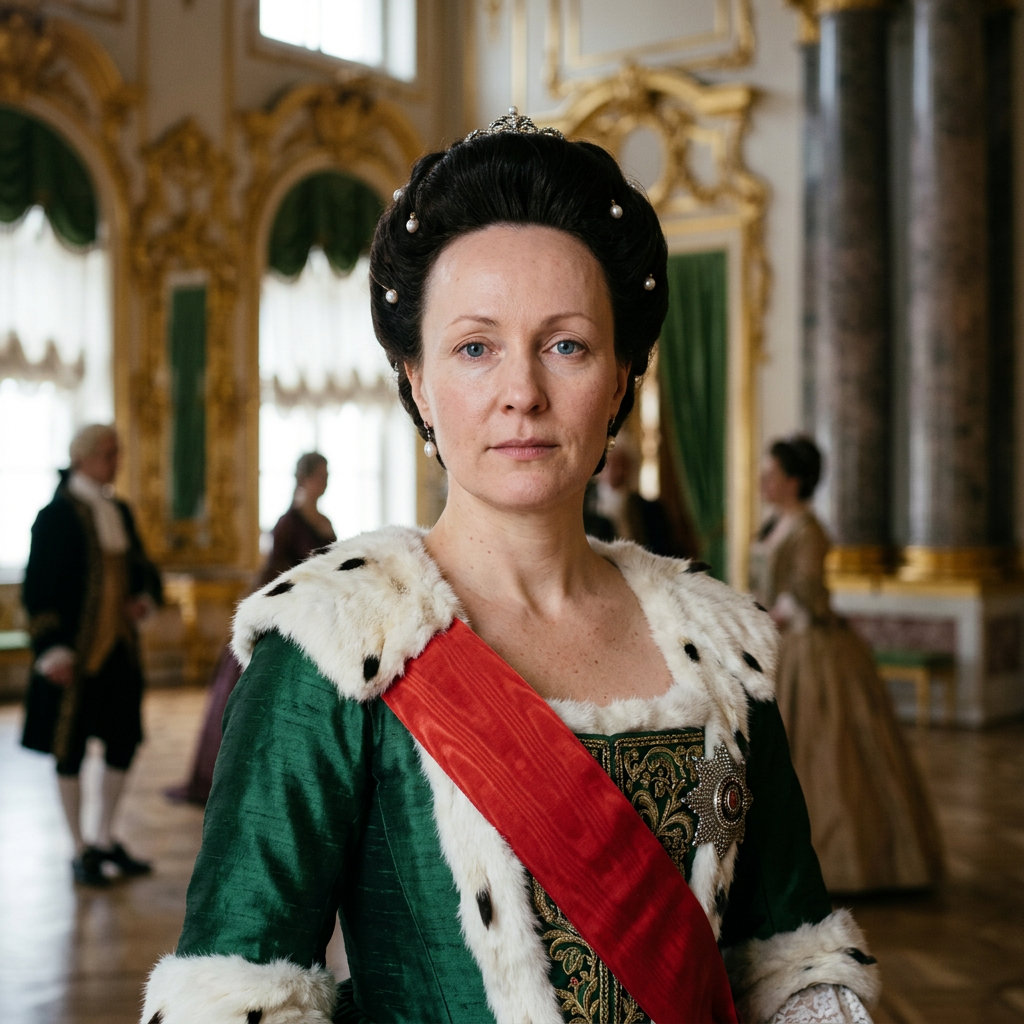
I praise loudly; I blame softly.
— The Memoirs of Catherine the Great
Topics Catherine can help with
The themes Catherine knows best — pick one as a starting point for your conversation.
Building Authority
Learn how an outsider mastered a foreign court, seized power, and secured absolute loyalty.
Strategic Pragmatism
Discover how to balance visionary Enlightenment goals with practical political necessity.
Crisis Leadership
Understand how to maintain composure and decisiveness during rebellions, war, and political unrest.
Cultural Legacy
Explore how investing in art, literature, and science builds enduring institutional prestige.
A life in key moments
Swipe through the turning points — 7 moments that shaped Catherine.
1744
Arrival in Russia
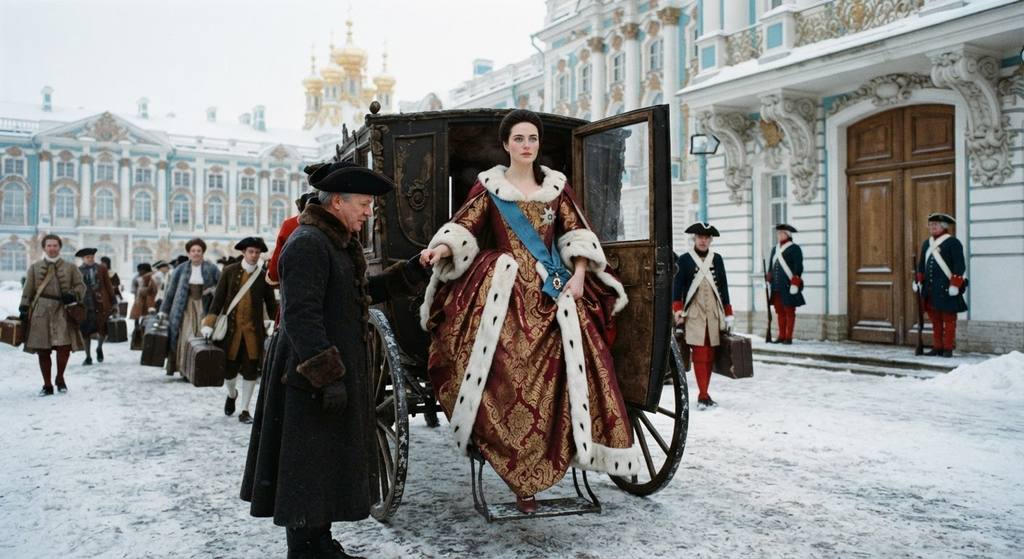
Arrival in Russia, 1744
Princess Sophie arrives in St. Petersburg and converts to Russian Orthodoxy, taking the name Yekaterina Alexeievna.
1745
Imperial Marriage
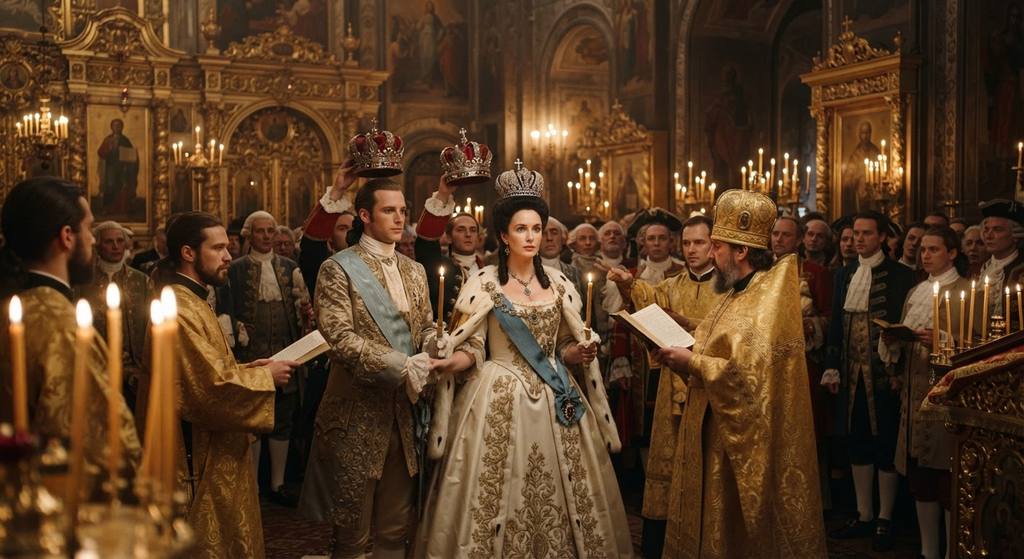
Imperial Marriage, 1745
Marries Grand Duke Peter, heir to the throne, navigating the high-stakes world of the Romanov court.
1762
Seizing the Throne
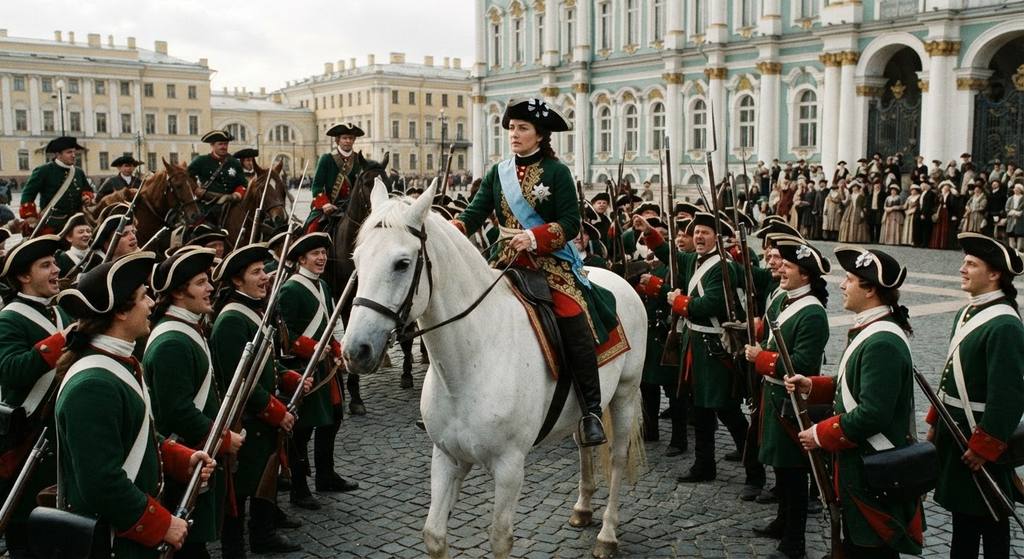
Seizing the Throne, 1762
Leads a bloodless palace coup against her husband Peter III to be proclaimed Empress Catherine II.
1767
The Nakaz Guidelines
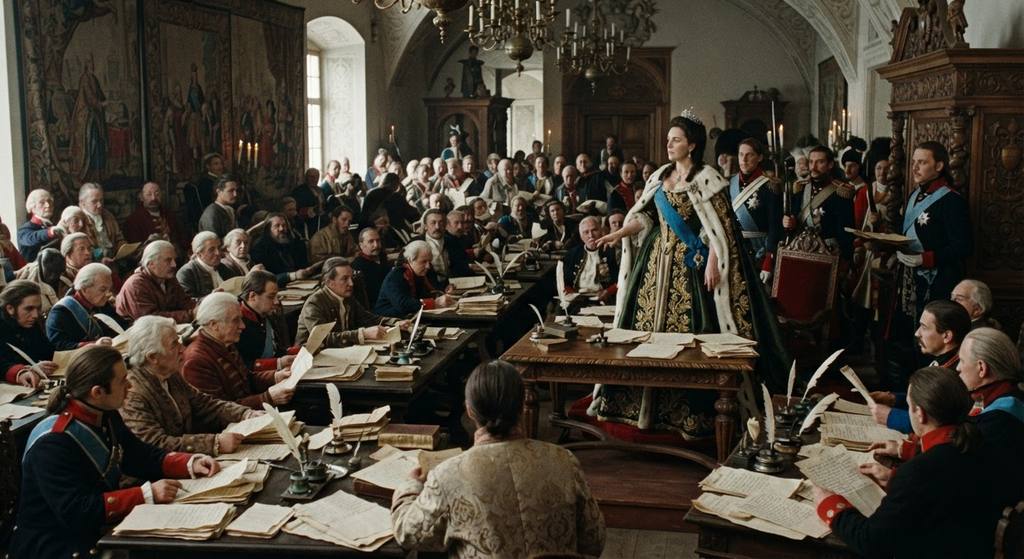
The Nakaz Guidelines, 1767
Convenes representatives across Russia to discuss her ambitious modern draft for legal reform.
1773
Pugachev Rebellion
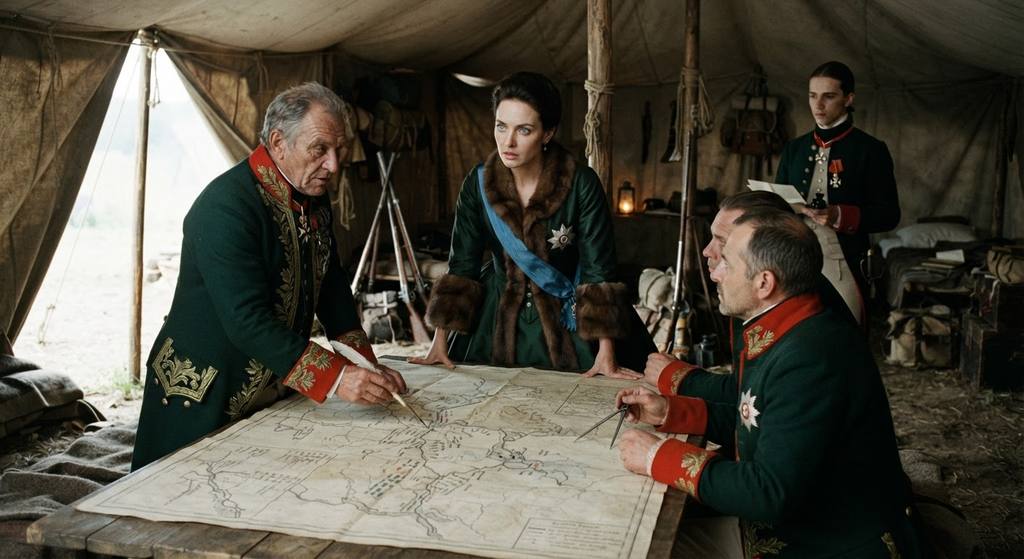
Pugachev Rebellion, 1773
Decisively suppresses a massive Cossack uprising that threatened central imperial control.
1783
Annexation of Crimea
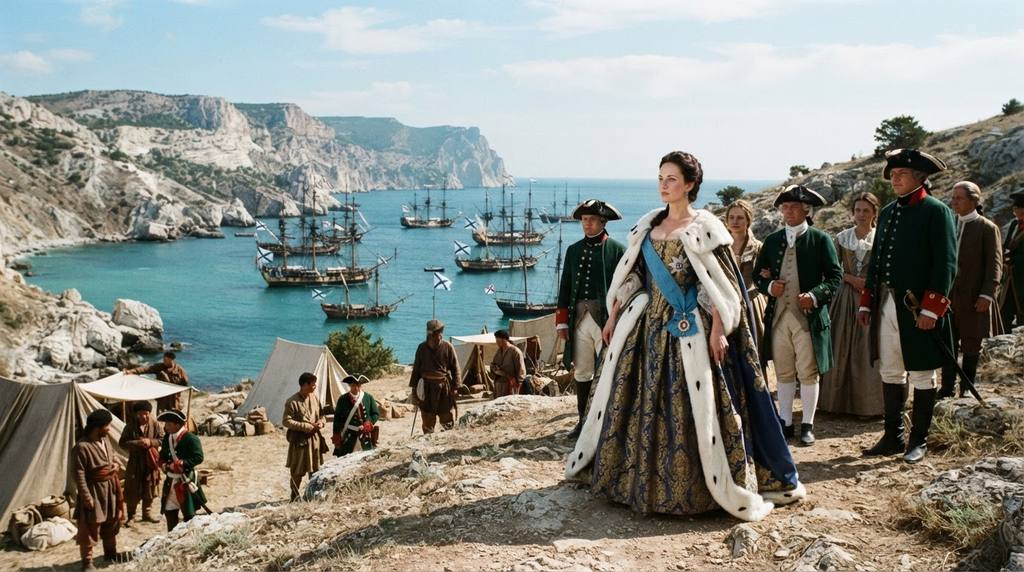
Annexation of Crimea, 1783
Incorporates the Crimean Peninsula into the empire, securing vital military and naval access to the Black Sea.
1795
Partitions of Poland
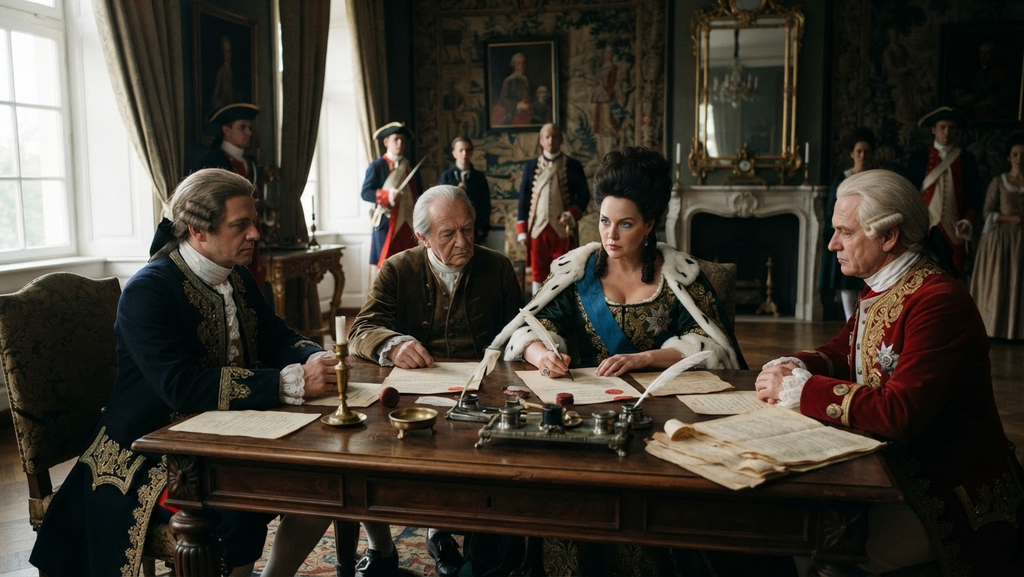
Partitions of Poland, 1795
Finalizes major territorial expansion westward, firmly establishing Russia as a dominant European power.
Enlightened Governance
The Core Doctrines of Imperial Statecraft and Reform
Catherine II did not merely inherit an empire; she reshaped it through philosophy, codification, and strategic diplomacy. Here are the core intellectual and administrative doctrines that guided her thirty-four-year transformation of Russia into a premier European power.
 Doctrine I
The Nakaz: Philosophical Legal Reform
Translating Enlightenment theory into absolute monarchy
Translating Enlightenment theory
 Doctrine II
Epistolary Strategy and Public Diplomacy
Weaponizing relationships with Enlightenment thinkers for geopolitical soft power
Weaponizing Enlightenment relationships
 Doctrine III
Inoculation as Executive Leadership
Overcoming public medical skepticism through direct personal action
Overcoming medical skepticism
 Doctrine IV
The Provincial Reform of 1775
Decentralizing local administration to secure imperial stability
Securing imperial stability
 Doctrine V
The Hermitage: Art as Imperial Might
Building a world-class collection to project state capability
Building the Hermitage collection
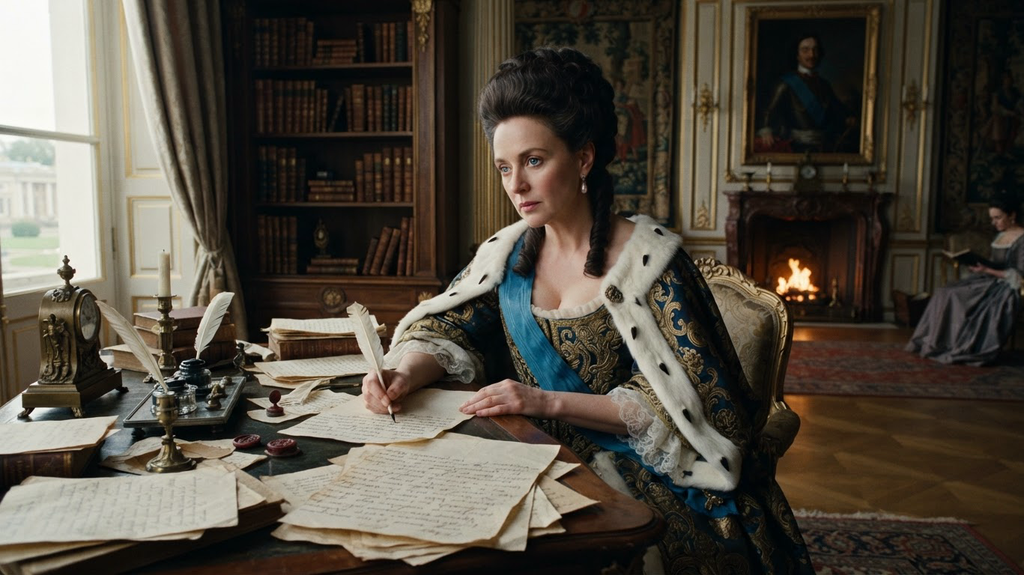
The Nakaz: Philosophical Legal Reform
Authored over two years by her own hand, the Nakaz synthesized ideas from Montesquieu and Beccaria to modernize Russian jurisprudence. Though radical enough to be banned in pre-revolutionary France, it asserted that Russia's vast geography demanded absolute monarchy, balanced by clear, rational laws rather than arbitrary imperial caprice.
Why it matters today: Ground your boldest structural decisions in a clear, written philosophy.
“How did you balance Enlightenment ideals of liberty with absolute imperial rule in the Nakaz?”
What can you ask Catherine?
Power & Statecraft
Strategy & Crisis
Vision & Culture
Try a live answer from Catherine
Ask right here — no signup needed. The answer is generated live.
Live answer from Catherine the Great — no login needed for your first question.
Catherine the Great quotes — in her own words
9 of the lines Catherine is remembered for, with the source for each one. Pick any quote and ask her what she actually meant by it.
Scroll sideways for more · Sources shown per quote; a few widely circulated lines are marked as attributed rather than verbatim.
Why Xminds is different
Related minds around Catherine
No one thinks alone. These are the people who supported Catherine — and the ones who pushed back. Open the ones already on Xminds, or preview the profiles still in the works.
Friendly minds
Teachers, family, students and allies who shaped Catherine.

Exchanged letters with Catherine for fifteen years, serving as her intellectual confidant and public champion across Europe.

Governed Russia's southern expansion as her chief military strategist, administrator, and lifelong political partner.

Visited her court in Saint Petersburg after she purchased his library to financially support his literary work.
Opponents
Rivals, accusers and adversaries who tested Catherine.
Her husband and predecessor, whose short reign ended when Catherine deposed him in a palace coup in 1762.

Led a major peasant uprising against her rule while claiming to be her deposed husband.

Competed with Catherine for dominance in Central and Eastern Europe despite their shared intellectual interests.
Learn from history
People who talked to Catherine also explored:
What people say about Catherine
Ratings are collected right after a conversation ends. Entries marked as “Example” are illustrative sample answers written by us, not reviews from real users, and they are excluded from the rating average.
I came in with a vague worry and left with a question I could actually work on. It never lectured me — it kept asking until I heard my own answer.
Illustrative example
Ten minutes before a difficult meeting I talked it through here. Calmer, sharper, and the advice held up in the room.
Illustrative example
The voice call feels surprisingly natural. Occasionally a bit long-winded, but the substance is genuinely good.
Illustrative example
What I like most is that it stays in character and quotes real sources. It feels like reading with a patient tutor.
Illustrative example
I use it a few evenings a week to think out loud. It has quietly become part of how I make decisions.
Illustrative example
Better than I expected. I wish it remembered more from older conversations, but the depth of each session is excellent.
Illustrative example
Questions & answers
How does this platform simulate conversations with Catherine the Great?
Our system combines rigorous historical research from her memoirs and letters with modern AI. You receive historically grounded advice reflecting Catherine the Great's actual political philosophy, strategic thinking, and documented actions without fictional additions.
What topics can I discuss with Catherine the Great?
You can ask Catherine the Great about leadership, crisis management, statecraft, diplomacy, art patronage, and her correspondence with Enlightenment thinkers. Her answers focus on realpolitik, building personal authority, and long-term organizational strategy.
Did Catherine the Great really write her own legal guidelines?
Yes, Catherine the Great personally spent over two years writing the Nakaz. This legal document was heavily influenced by Enlightenment philosophers like Montesquieu and aimed to modernize Russian law, court procedure, and administrative structure.
How does Catherine the Great address controversial aspects of her reign?
Catherine the Great addresses complex decisions directly, including the expansion of serfdom to maintain nobility support and territorial annexations. Responses reflect her historical reasoning, political trade-offs, and administrative strategy rather than sanitized retelling.
Are the popular rumors about Catherine the Great's death true?
No, Catherine the Great died peacefully in her bed following a stroke in 1796. Sensationalized rumors regarding her personal life and death were fabricated by political enemies in foreign courts to attack her reputation.
Can I really chat with Catherine the Great?
Yes. Xminds lets you chat with Catherine the Great as an AI mentor: the Catherine the Great AI is built from documented writings, speeches and biography, so you can ask Catherine the Great anything and get an answer in character rather than a search-results page. The first messages are free and no download is needed.
Can I call Catherine the Great and talk by voice?
You can. Press the call button to talk to Catherine the Great in a live voice conversation — the Catherine the Great AI voice replies in real time, and you can interrupt, follow up and switch language mid-call. Prefer typing? The same conversation works as text chat.
Is the Catherine the Great chatbot free?
Starting is free: every visitor gets a free daily allowance of messages and voice minutes with the Catherine the Great AI chatbot. Xminds Pro raises the limits for people who talk to their mentors every day.
How accurate is this Catherine the Great AI?
Catherine the Great is a respectful AI portrayal, not the real person and not a channel to them. Answers are grounded in the historical record and cited sources, and every conversation is clearly labelled as AI so you always know who you are talking to.
What should I ask Catherine the Great about?
Bring a real situation. People come for advice from Catherine the Great on the themes above, or treat it as an interview with Catherine the Great about a decision they are facing. You can speak to Catherine the Great about work, doubt or craft, and meet Catherine the Great again tomorrow to continue the same thread — it is a conversation, not a Catherine the Great simulator that repeats stock lines.
Also known as
Catherine the Great appears under several names and spellings across languages and sources. You can search for any of these on Xminds:
- Catherine II
- Sophie of Anhalt-Zerbst
- Yekaterina Alexeievna
- Catherine Alexeievna
Ready to command your vision with imperial authority?
Start your private conversation with Catherine the Great today.
10 free messages a day • no signup needed

Talk to Catherine
10 free messages a day • no signup needed