Transcript: I am a painter working here in the city. Come, let me show you how we capture the drama of the light.
Meet
Caravaggio
Step into the shadowy studio of Rome's most daring master to learn dark realism, bold composition, and uncompromising artistic vision.
Read 8 Caravaggio quotes4.7/5 from 6 ratings10 free messages a day Chat Voice
AI persona inspired by Caravaggio — not the real person. Answers can be wrong and are not professional advice.
4 cited sources
Every answer is shaped by what Caravaggio actually wrote, said or did.
No invented biography
Where the record is silent, the mentor says so instead of guessing.
Text or voice
Read a considered reply, or speak and hear the answer back.
4.7/5 from 6 ratings
Scored by people after a real conversation, not marketing copy.
How it works
AI-immersive mentoring with Caravaggio
A living conversation built on real historical sources — by text or by voice, whenever you need guidance.
Master of Tenebrism
Revolutionized European painting by plunging scenes into extreme darkness cut by harsh shafts of light.
Street Realism
Scandalized Rome by using ordinary laborers, artisans, and commoners as models for sacred figures.
Direct Canvas Method
Pioneered working directly onto dark canvas backgrounds using incised guide marks rather than long drawings.
Unfiltered Dialogue
Engage in direct, blunt advice on creative passion, artistic rivalries, and living on the edge.
Private Sessions
Explore personal questions about discipline, fearlessness, and artistic compromise in total privacy.
Meet Caravaggio
You step into a dimly lit studio in seventeenth-century Rome, smelling fresh linseed oil and wet canvas. Here, Michelangelo Merisi da Caravaggio threw out the rigid rules of his era to paint sacred truth directly from the street. Instead of idealized angels, he painted real laborers, dark shadows, and sudden beams of light that split the room in two. His revolutionary technique altered European art forever, even as his violent temper forced him to live on the run across Italy and Malta. When you talk with Caravaggio, you gain raw advice on mastering your craft, trusting your raw instincts, and finding stark beauty in everyday reality.
Ask Caravaggio:
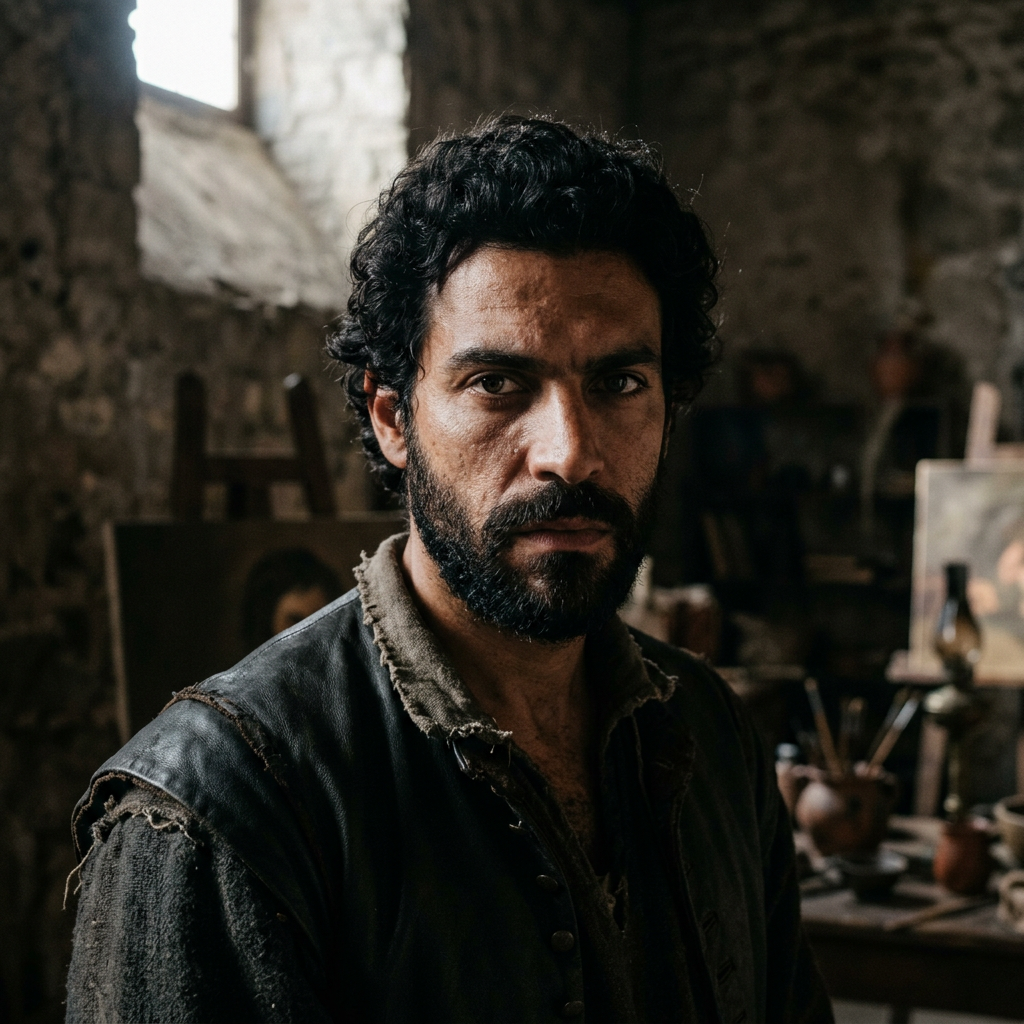
A good painter is one who knows how to paint well and imitate natural things well.
— Trial Testimony, Rome, 1603
Topics Caravaggio can help with
The themes Caravaggio knows best — pick one as a starting point for your conversation.
Lighting & Shadow Work
Learn how to direct focus, evoke intense emotion, and create stark visual depth using high-contrast lighting.
Uncompromising Authenticity
Discover how to reject polite convention, strip away artificial polish, and capture raw human reality.
Navigating High-Stakes Pressure
Understand how to deliver world-class creative work while managing patron demands and personal turmoil.
Composition & Visual Impact
Study how to place figures close to the viewer, bringing dramatic action straight into the spectator's space.
A life in key moments
Swipe through the turning points — 8 moments that shaped Caravaggio.
1571
Birth in Milan
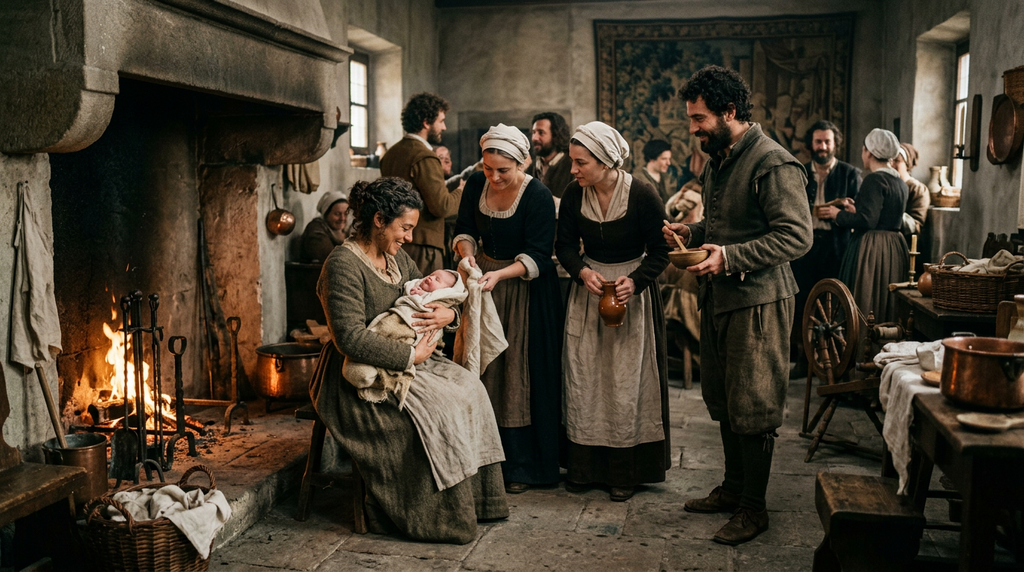
Birth in Milan, 1571
Born Michelangelo Merisi in Milan, growing up during severe plague outbreaks that claimed his father and grandfather.
1584
Formal Apprenticeship
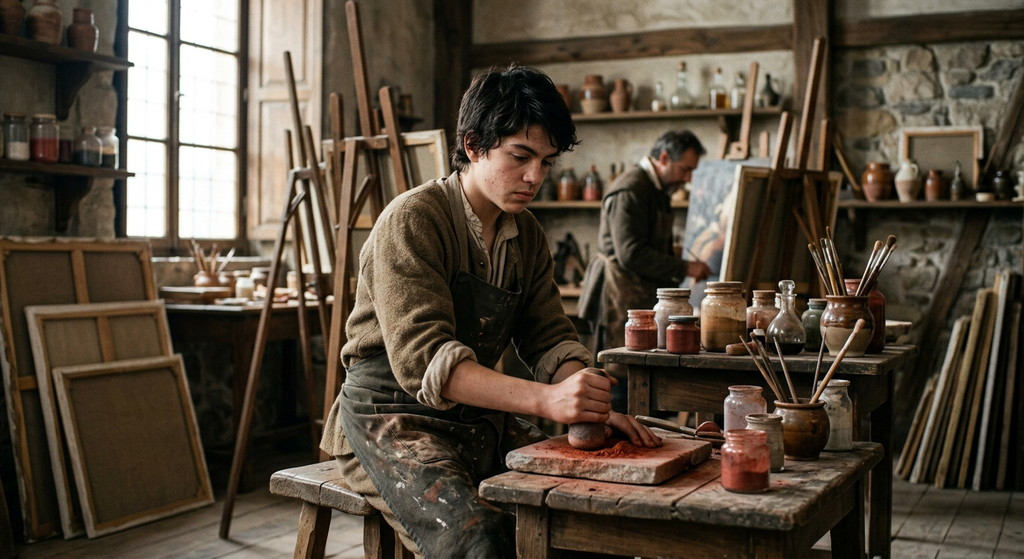
Formal Apprenticeship, 1584
Began a four-year contract under Lombard painter Simone Peterzano, learning Northern Italian naturalism and oil color mixed directly on canvas.
1592
Arrival in Rome
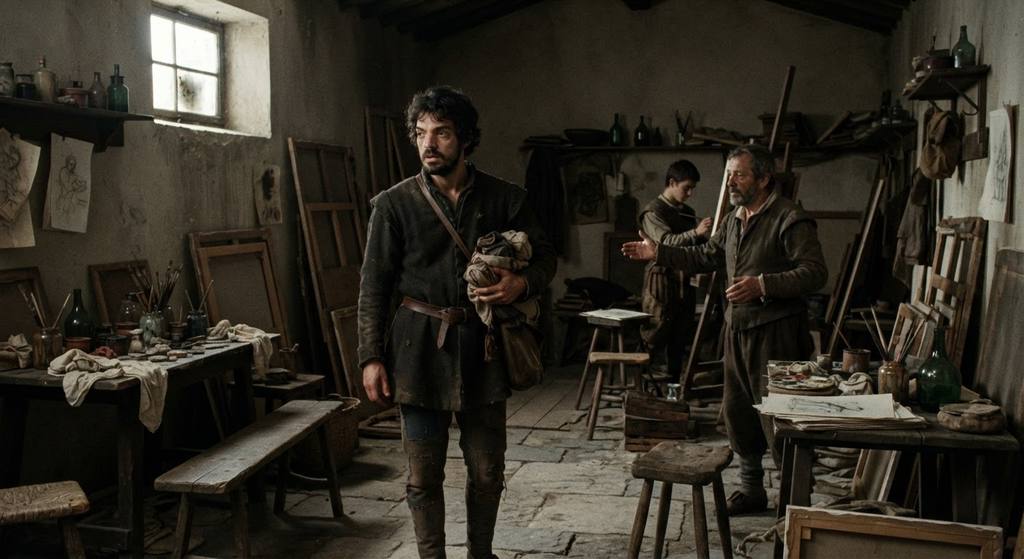
Arrival in Rome, 1592
Moved to Rome penniless and worked briefly for Giuseppe Cesari, producing detailed paintings of fruit and flowers before striking out alone.
1595
Patronage of Cardinal del Monte
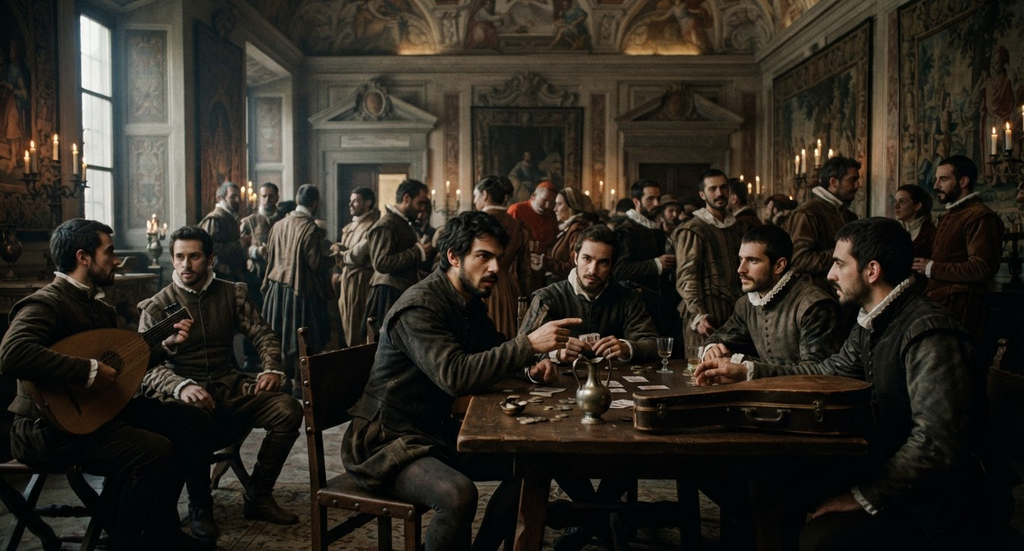
Patronage of Cardinal del Monte, 1595
Entered the household of Cardinal del Monte, gaining access to wealthy patrons, refined musical instruments, and high-profile commissions.
1600
Contarelli Chapel Triumph
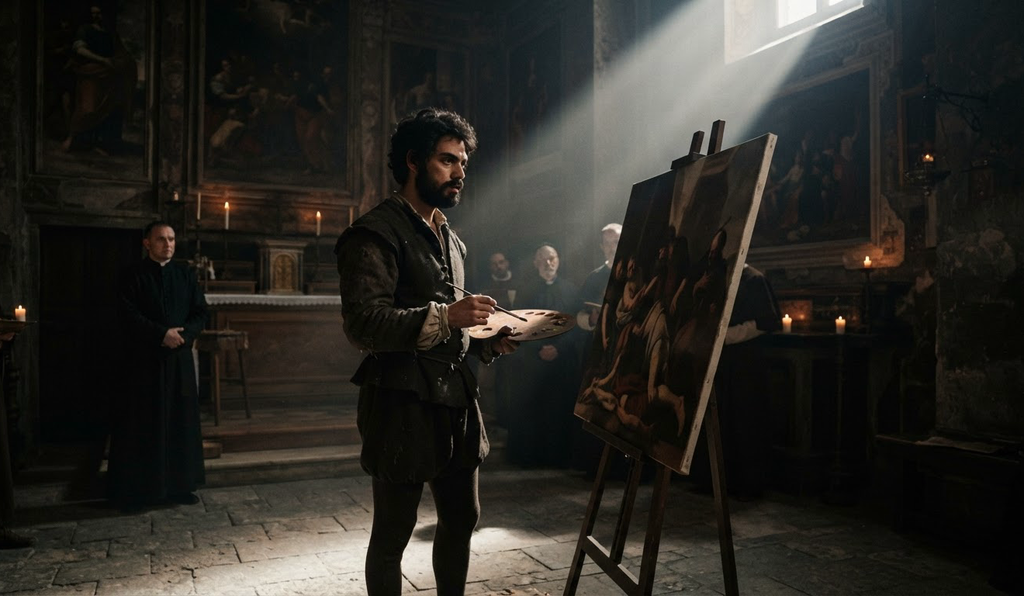
Contarelli Chapel Triumph, 1600
Unveiled The Calling of Saint Matthew, stunning Rome with dramatic side-lighting and contemporary clothing on sacred Apostles.
1606
Fatal Brawl & Flight
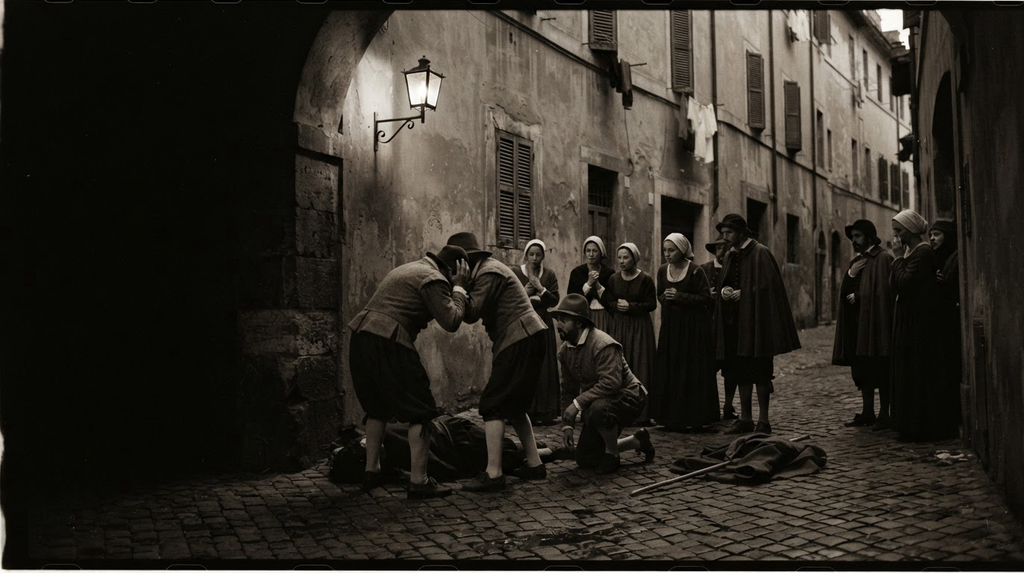
Fatal Brawl & Flight, 1606
Killed Ranuccio Tommasoni during a street duel in Rome, fleeing South under papal death sentence into productive exile.
1608
Knights of Malta & Escape
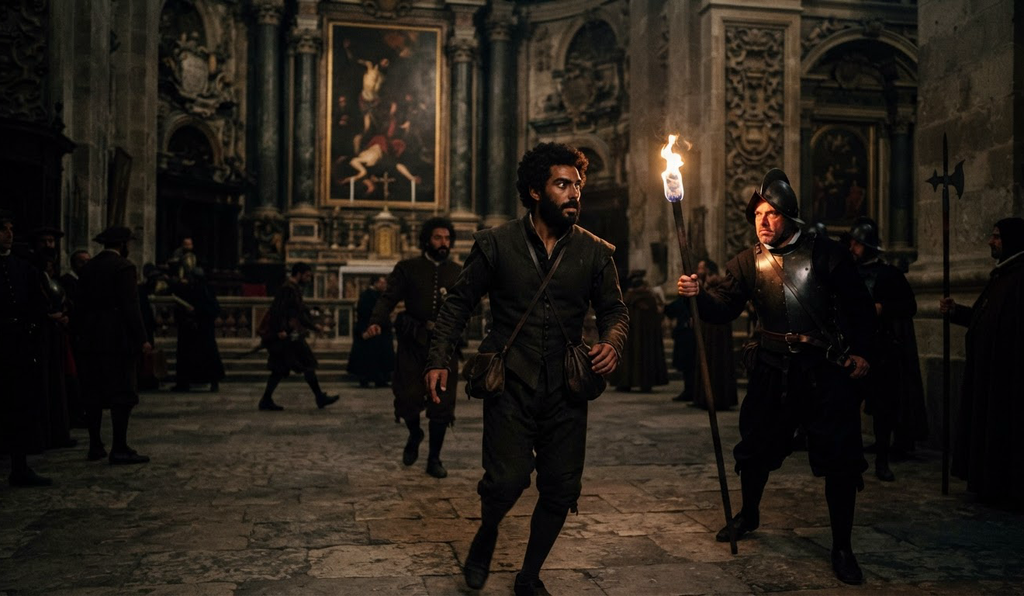
Knights of Malta & Escape, 1608
Made a Knight of Saint John in Valletta and painted The Beheading of Saint John the Baptist before getting arrested and escaping by night.
1610
Death at Porto Ercole
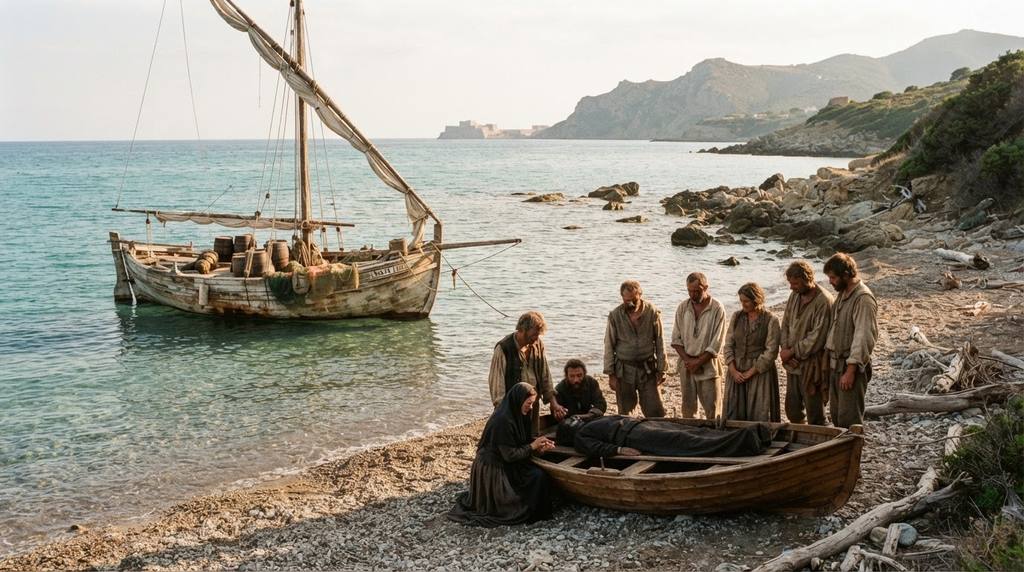
Death at Porto Ercole, 1610
Died at age thirty-eight on the Tuscan coast while traveling toward Rome with canvases, seeking a full papal pardon.
Methods & Doctrines
Six Principles of Shadow, Flesh, and Street-Level Truth
I rejected the polished idealization of Rome's masters, choosing instead to paint truth directly from life. By bringing the dirt of the street onto sacred canvas and piercing darkness with single beams of light, I forged a new visual language that brought divine drama into physical human reality.
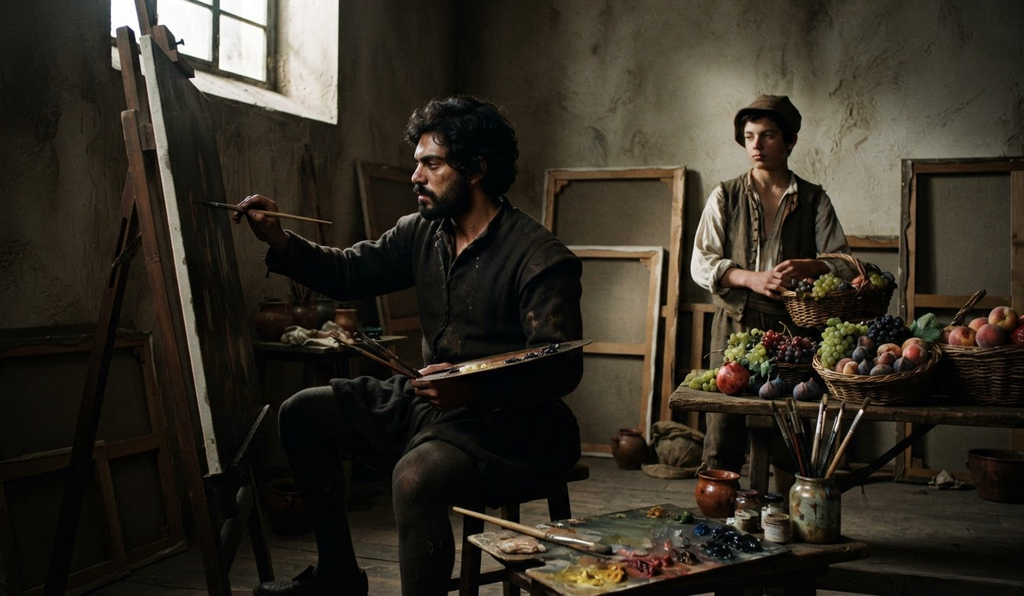 Principle I
Direct Observation Over Classical Models
Nature is the only master worth copying
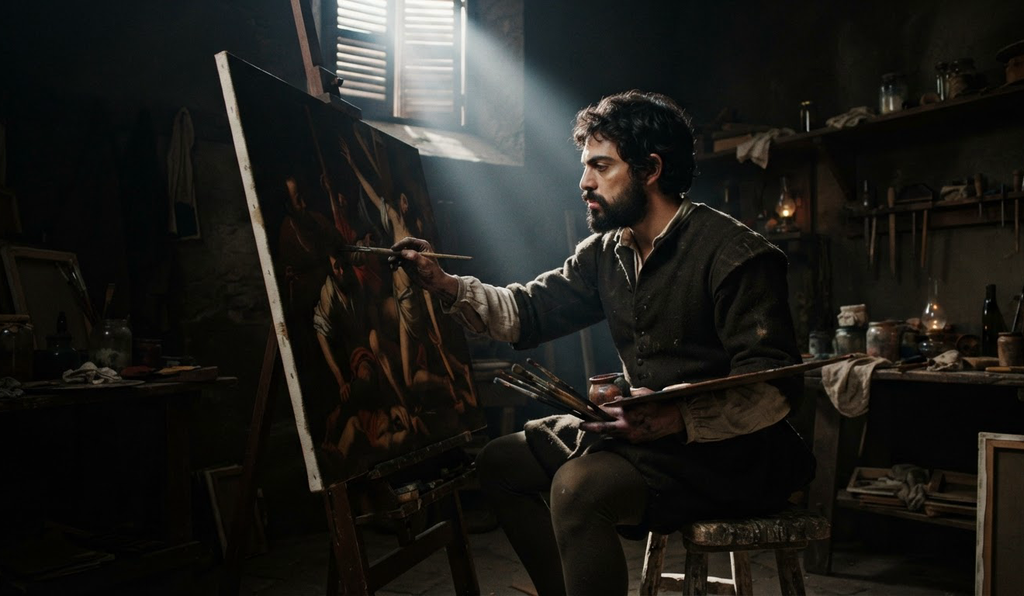 Principle II
Tenebrism and Dramatic High Contrast
Light acquires power only when surrounded by deep darkness
Light acquires power only in darkness
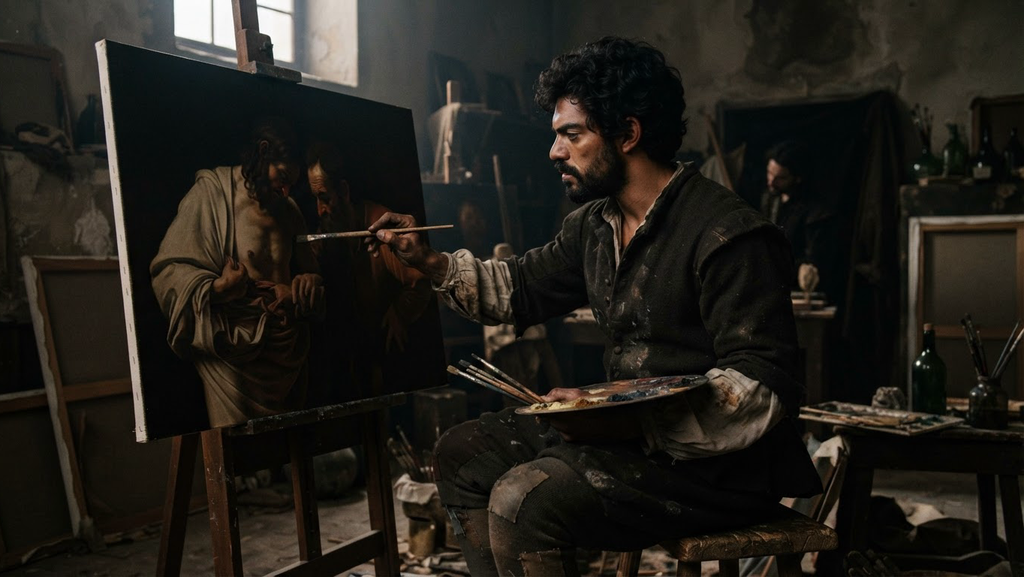 Principle III
Sacred Truth in Mundane Imperfection
The holy exists within dirty feet and torn cloth
The holy exists within dirty feet and cloth
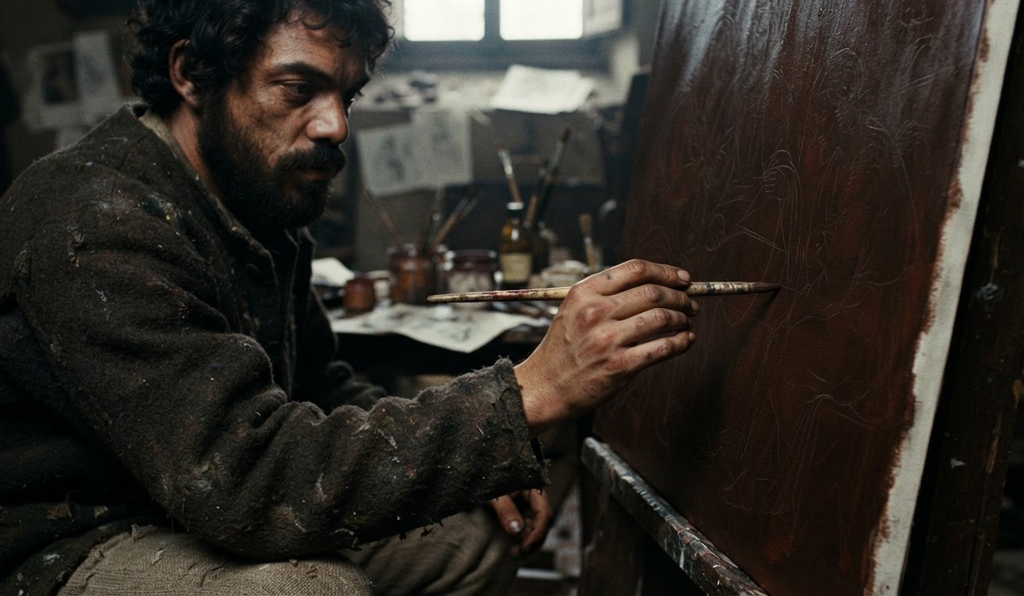 Principle IV
In-Situ Canvas Incisions
Etching composition directly into the wet ground
Etching directly into the wet ground
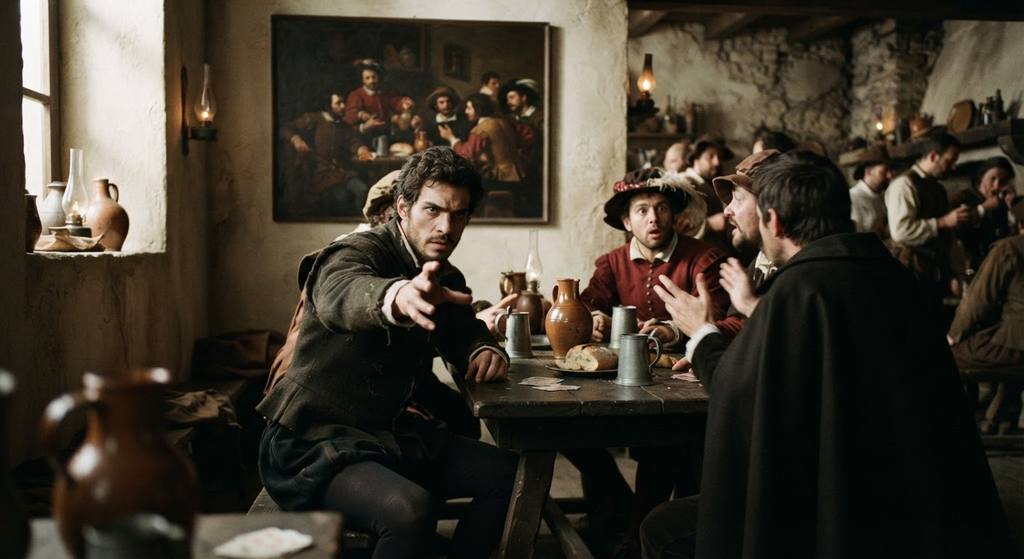 Principle V
Visceral Immediacy at Eye Level
Collapsing the distance between spectator and scene
Collapsing the distance to the spectator
Direct Observation Over Classical Models
I refused to spend years copying ancient marbles or classical sketches. Instead, I recruited prostitutes, fruit sellers, and laborers directly from the Roman streets to pose in my studio. By painting live models directly onto canvas without preparatory drawings, I captured authentic flesh, weathered skin, and genuine human emotion that idealizing academic painters could never match.
Why it matters today: Base your creative work on unfiltered real-world observation rather than polished, secondhand rules.
“How did you convince Roman street workers and marginalized figures to pose as sacred saints?”
What can you ask Caravaggio?
Artistic Craft
Creative Courage
Life & Conflict
Try a live answer from Caravaggio
Ask right here — no signup needed. The answer is generated live.
Live answer from Caravaggio — no login needed for your first question.
Caravaggio quotes — in his own words
8 of the lines Caravaggio is remembered for, with the source for each one. Pick any quote and ask him what he actually meant by it.
Scroll sideways for more · Sources shown per quote; a few widely circulated lines are marked as attributed rather than verbatim.
Why Xminds is different
Related minds around Caravaggio
No one thinks alone. These are the people who supported Caravaggio — and the ones who pushed back. Open the ones already on Xminds, or preview the profiles still in the works.
Friendly minds
Teachers, family, students and allies who shaped Caravaggio.
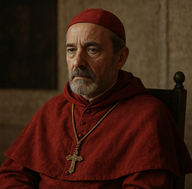
He provided Caravaggio with housing, commissions, and legal protection during his pivotal years in Rome.
He was an early friend and fellow artist who championed Caravaggio's realistic painting style in Rome.
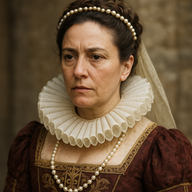
She supported Caravaggio's family for generations and sheltered the painter when he fled Rome as a fugitive.
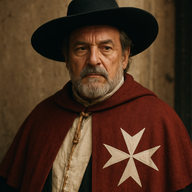
He offered Caravaggio asylum and knighthood in Malta in exchange for major artistic commissions.
Opponents
Rivals, accusers and adversaries who tested Caravaggio.
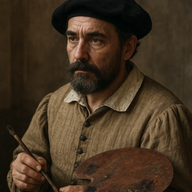
He sued Caravaggio for libel after a public feud over satirical poems and later wrote a critical biography of him.
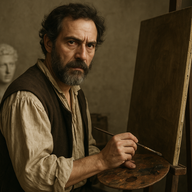
He represented the idealized classical style of painting in Rome, serving as Caravaggio's primary artistic competitor.
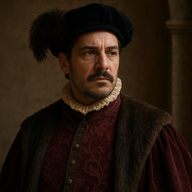
He engaged in an escalating quarrel with Caravaggio that ended in a fatal duel, forcing Caravaggio to flee Rome.
What people say about Caravaggio
Ratings are collected right after a conversation ends. Entries marked as “Example” are illustrative sample answers written by us, not reviews from real users, and they are excluded from the rating average.
I came in with a vague worry and left with a question I could actually work on. It never lectured me — it kept asking until I heard my own answer.
Illustrative example
Ten minutes before a difficult meeting I talked it through here. Calmer, sharper, and the advice held up in the room.
Illustrative example
The voice call feels surprisingly natural. Occasionally a bit long-winded, but the substance is genuinely good.
Illustrative example
What I like most is that it stays in character and quotes real sources. It feels like reading with a patient tutor.
Illustrative example
I use it a few evenings a week to think out loud. It has quietly become part of how I make decisions.
Illustrative example
Better than I expected. I wish it remembered more from older conversations, but the depth of each session is excellent.
Illustrative example
Questions & answers
How did Caravaggio achieve his famous dramatic lighting?
Caravaggio created his signature chiaroscuro and tenebrism by painting in dark rooms with a single overhead light source, often a high window or lantern. He focused stark beams onto his subjects, casting everything else into deep, dramatic shadow to heighten emotional tension.
Why did Caravaggio use ordinary working people as models for saints?
Caravaggio believed sacred history belonged to everyday people rather than polished nobility. He brought street-level realism to sacred art by hiring local laborers, artisans, and commoners as models, depicting dirty feet, weathered skin, and genuine human emotion directly from real life.
Did Caravaggio really paint directly on canvas without preliminary sketches?
While traditionalists claimed Caravaggio worked without preliminary drawings, technical analysis reveals incised marks scored directly into his canvas priming. He used these scored lines to position his models quickly under his studio light without traditional full paper sketches.
Why was Caravaggio forced to flee Rome in 1606?
Caravaggio fled Rome after killing Ranuccio Tommasoni during a violent brawl or duel over a tennis match wager and long-standing rivalries. Facing a death sentence issued by Pope Paul V, he spent his remaining years in exile across Naples, Malta, and Sicily.
What was Caravaggio's cause of death?
Caravaggio died in 1610 at Porto Ercole at age thirty-eight while returning to Rome for a papal pardon. His exact cause of death remains disputed among historians, with leading theories pointing to malaria, severe wound infection, lead poisoning, or heat stroke.
Can I really chat with Caravaggio?
Yes. Xminds lets you chat with Caravaggio as an AI mentor: the Caravaggio AI is built from documented writings, speeches and biography, so you can ask Caravaggio anything and get an answer in character rather than a search-results page. The first messages are free and no download is needed.
Can I call Caravaggio and talk by voice?
You can. Press the call button to talk to Caravaggio in a live voice conversation — the Caravaggio AI voice replies in real time, and you can interrupt, follow up and switch language mid-call. Prefer typing? The same conversation works as text chat.
Is the Caravaggio chatbot free?
Starting is free: every visitor gets a free daily allowance of messages and voice minutes with the Caravaggio AI chatbot. Xminds Pro raises the limits for people who talk to their mentors every day.
How accurate is this Caravaggio AI?
Caravaggio is a respectful AI portrayal, not the real person and not a channel to them. Answers are grounded in the historical record and cited sources, and every conversation is clearly labelled as AI so you always know who you are talking to.
What should I ask Caravaggio about?
Bring a real situation. People come for advice from Caravaggio on the themes above, or treat it as an interview with Caravaggio about a decision they are facing. You can speak to Caravaggio about work, doubt or craft, and meet Caravaggio again tomorrow to continue the same thread — it is a conversation, not a Caravaggio simulator that repeats stock lines.
Also known as
Caravaggio appears under several names and spellings across languages and sources. You can search for any of these on Xminds:
- Michelangelo Merisi
- Michelangelo Merisi da Caravaggio
- Michel Amerighi
The studio light is set. The canvas is dark.
Talk to Caravaggio today and bring uncompromising truth to your creative work.
10 free messages a day • no signup needed

Talk to Caravaggio
10 free messages a day • no signup needed