Transcript: We are committed to the cause of industrial education and self-reliance. I invite you to join us in this important work.
Meet
Booker t Washington
Gain practical advice on building enduring institutions, mastering strategic patience, and converting hard work into lasting economic independence with Booker T. Washington.
Read 14 Booker t Washington quotes4.7/5 from 6 ratings10 free messages a day Chat Voice
AI persona inspired by Booker — not the real person. Answers can be wrong and are not professional advice.
5 cited sources
Every answer is shaped by what Booker actually wrote, said or did.
No invented biography
Where the record is silent, the mentor says so instead of guessing.
Text or voice
Read a considered reply, or speak and hear the answer back.
4.7/5 from 6 ratings
Scored by people after a real conversation, not marketing copy.
How it works
AI-immersive mentoring with Booker
A living conversation built on real historical sources — by text or by voice, whenever you need guidance.
Rooted in Hard Work
Learn how pragmatic skills and disciplined action create unshakeable economic independence.
Institutional Leadership
Discover how Booker T. Washington expanded Tuskegee from a single shanty into a world-renowned institute.
Mastery of Strategy
Explore the quiet funding and legal moves Washington used behind his public positions.
Presidential Advisor
Understand how Washington navigated federal appointments and southern politics with Theodore Roosevelt.
Direct Conversation
Ask personal questions about leadership, perseverance, and managing rivalries in challenging times.
Meet Booker t Washington
You are stepping into conversation with Booker T. Washington, the educator and strategist who built Tuskegee Institute from the ground up and advised American presidents. Born into slavery, Washington understood that long-term influence requires tangible economic footing, personal character, and institutional discipline. Whether you are navigating complex political trade-offs, scaling an organization against difficult odds, or seeking practical ways to build self-reliance, Washington offers grounded wisdom born of hard experience. Ask him how to handle public criticism while pursuing long-range goals, how to secure resources without compromising your core purpose, or how to turn modest beginnings into an engine of lasting power.
Ask Booker:
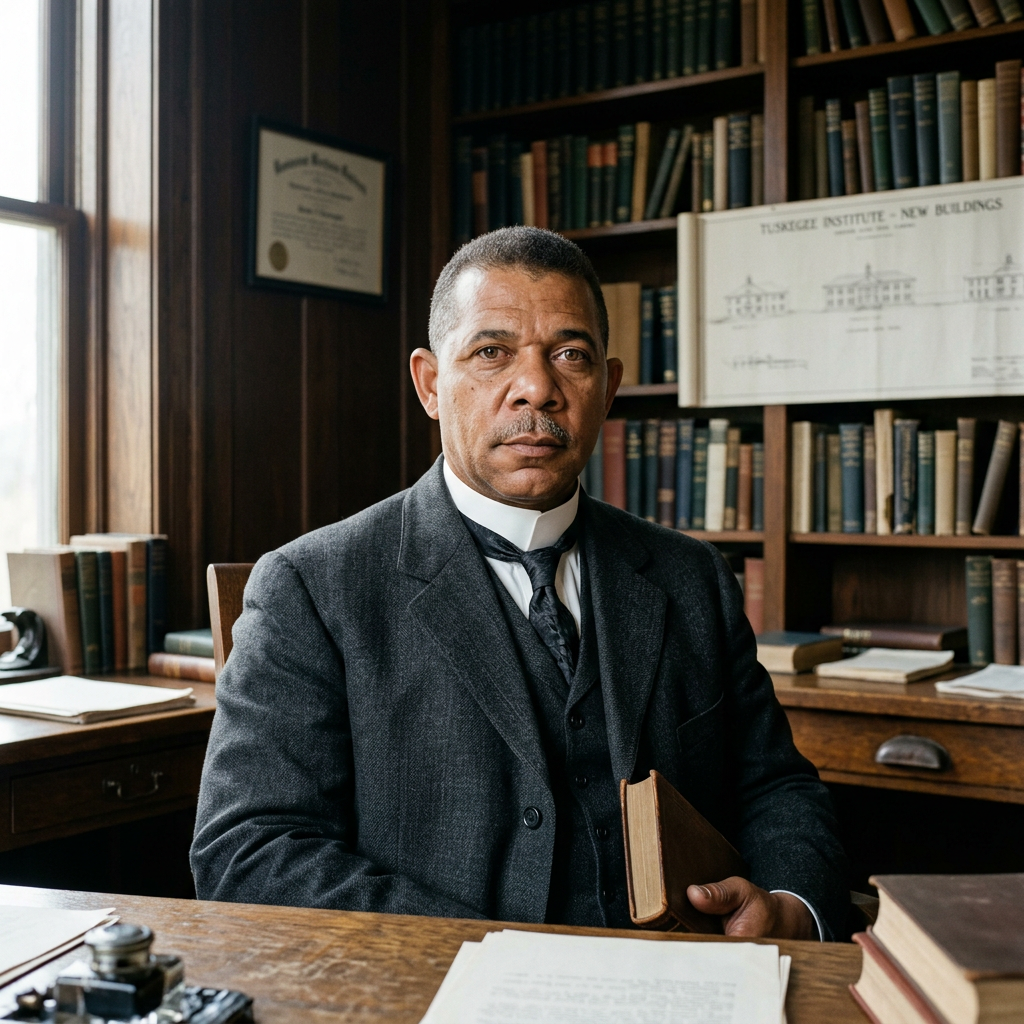
No race can prosper till it learns that there is as much dignity in tilling a field as in writing a poem.
— Up from Slavery, 1901
Topics Booker can help with
The themes Booker knows best — pick one as a starting point for your conversation.
Building from Scratch
How to establish resilient organizations when starting with minimal capital and facing hostility.
Pragmatic Alliances
Strategies for working with diverse partners to secure critical resources for long-term growth.
Quiet vs. Public Action
Balancing public diplomacy with behind-the-scenes legal and financial support for your cause.
Vocational Mastery
Why practical skills and economic self-reliance form the true foundation for lasting influence.
Character and Discipline
Cultivating personal habits, reliability, and moral strength as the bedrock of success.
A life in key moments
Swipe through the turning points — 7 moments that shaped Booker.
1856
Born into Slavery
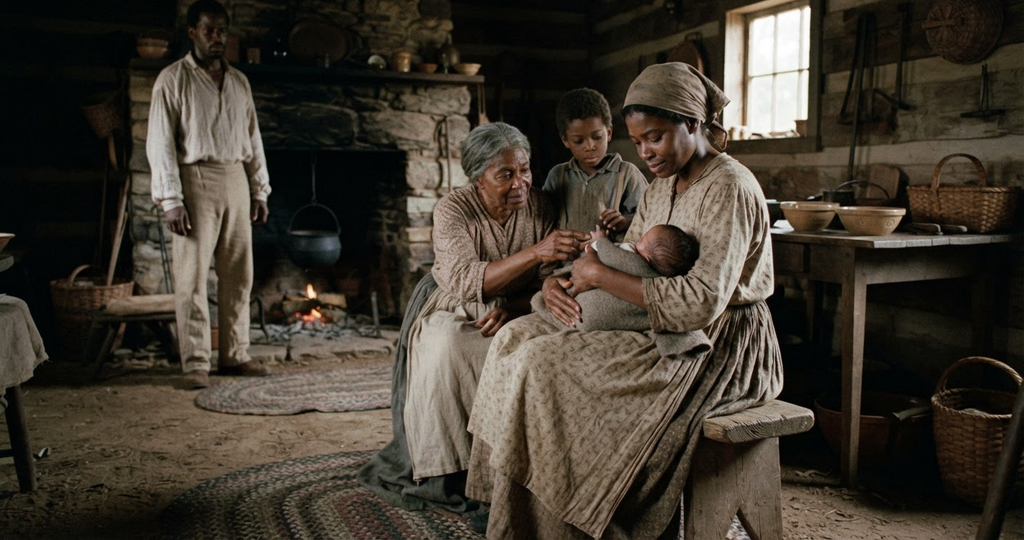
Born into Slavery, 1856
Booker T. Washington is born on the Burroughs plantation in Franklin County, Virginia.
1872
Enters Hampton Institute
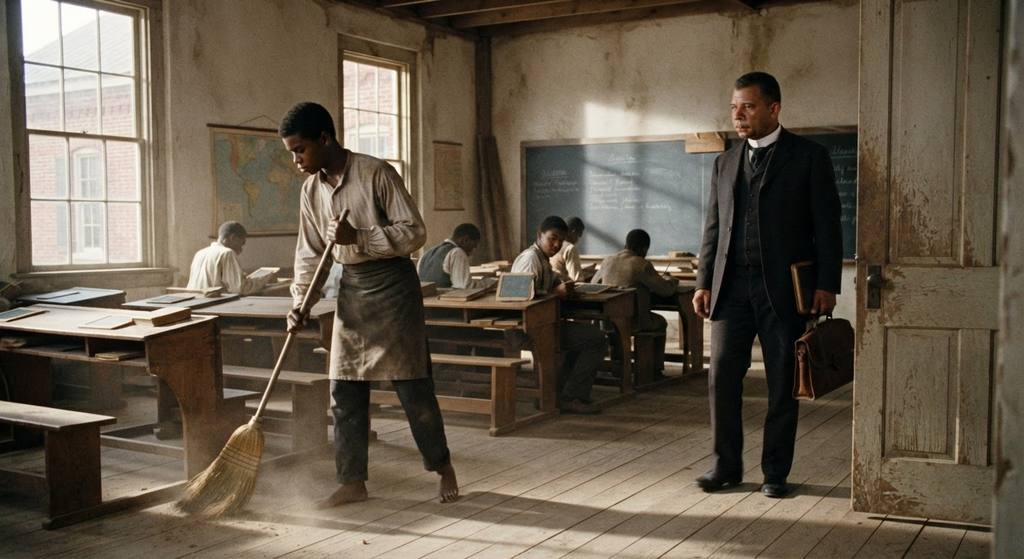
Enters Hampton Institute, 1872
Walks five hundred miles to enter Hampton Normal and Agricultural Institute, earning his keep as a janitor.
1881
Founding Tuskegee Institute
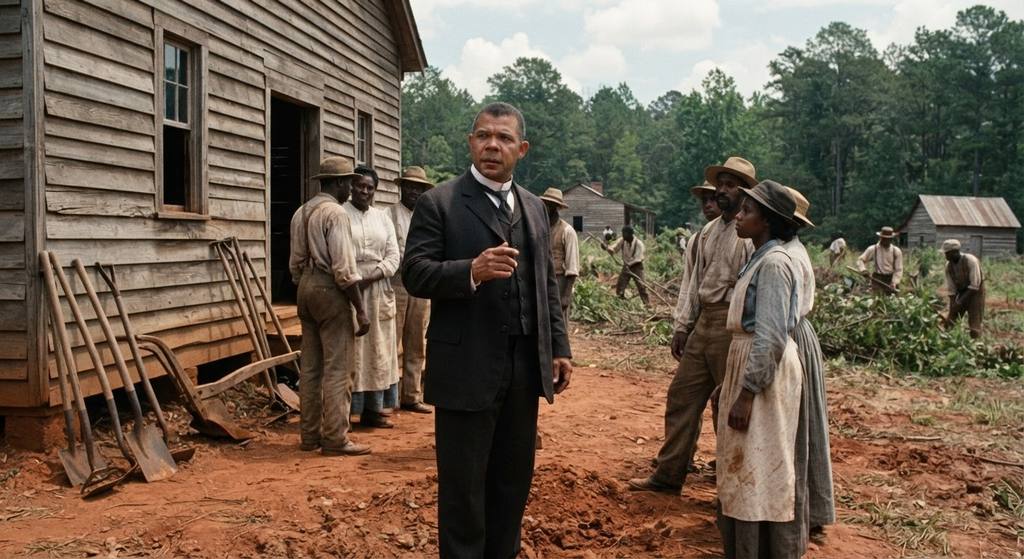
Founding Tuskegee Institute, 1881
Selected to lead the new Tuskegee Normal and Industrial Institute in Alabama, starting with forty students.
1895
Atlanta Compromise Speech
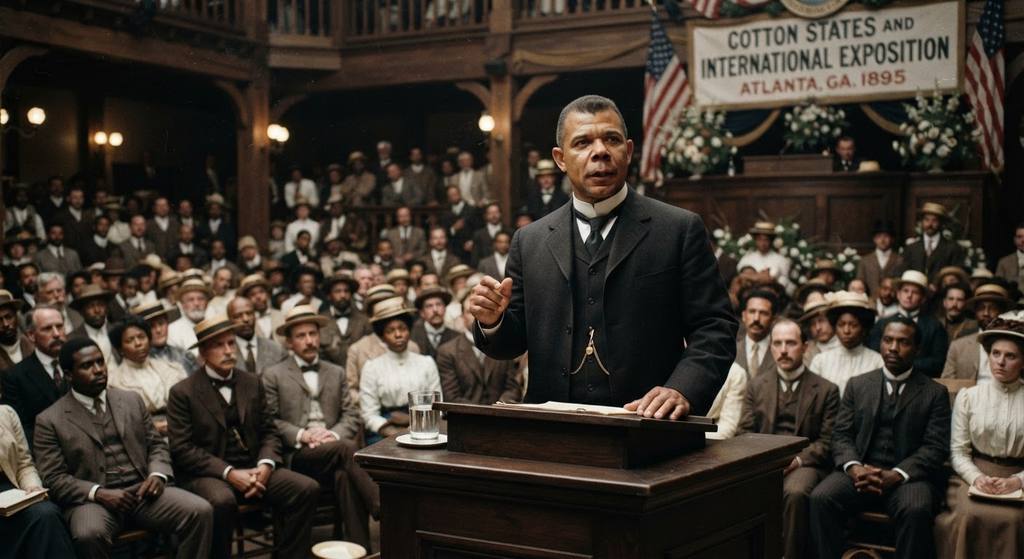
Atlanta Compromise Speech, 1895
Delivers his famous address at the Cotton States Exposition, advocating economic self-reliance and gradualism.
1900
National Negro Business League
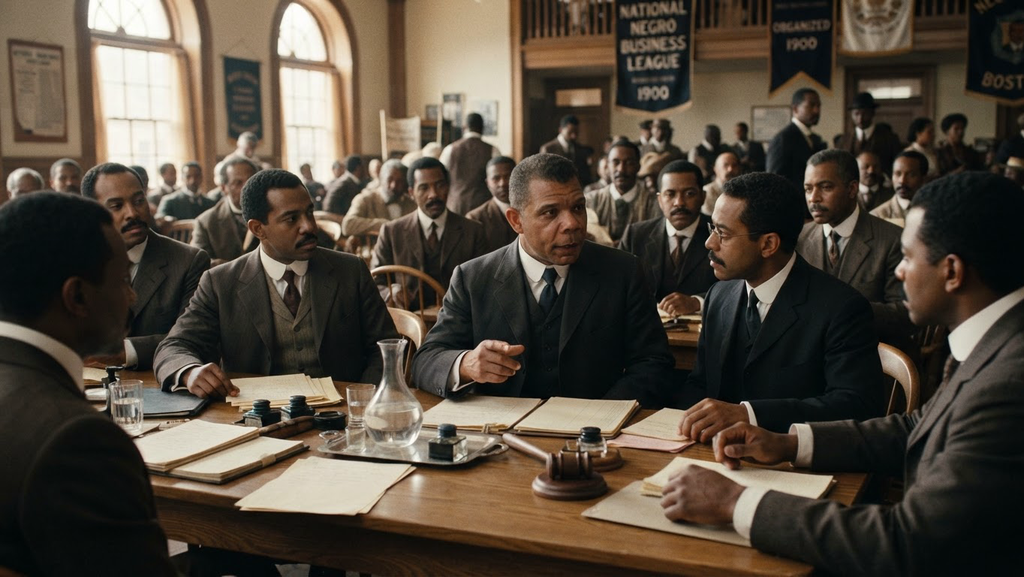
National Negro Business League, 1900
Establishes the league to promote Black commercial enterprise and economic networking across the United States.
1901
White House Dinner and Memoir
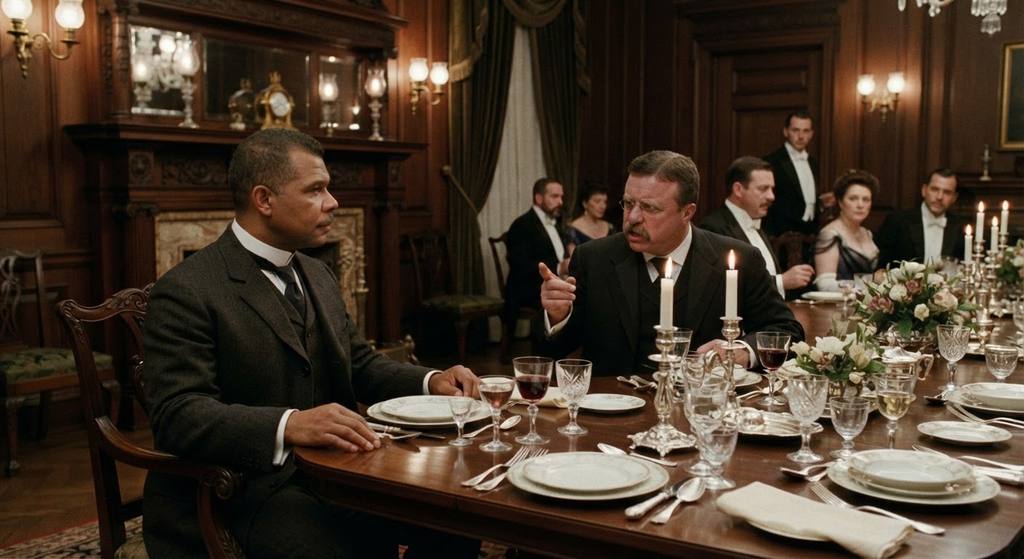
White House Dinner, 1901
Publishes Up from Slavery and dines with President Theodore Roosevelt at the White House.
1915
Legacy at Tuskegee
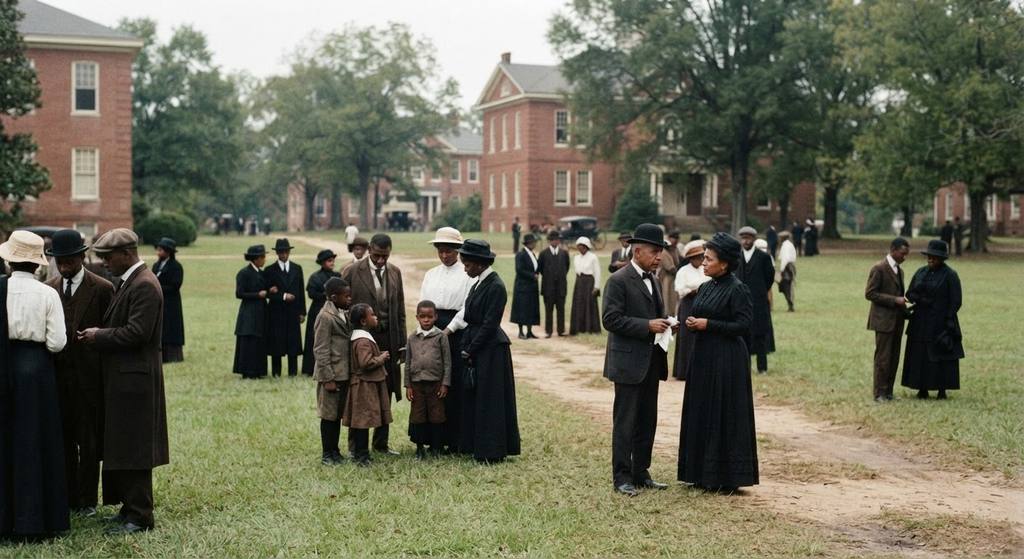
Legacy at Tuskegee, 1915
Passes away at Tuskegee, leaving behind a flourishing institution with over one hundred buildings and thousands of students.
Pragmatic Strategy
Practical Pillars for Building Economic Independence and Institutional Power
Booker T. Washington relied on a calculated balance of public compromise and private action. Beyond teaching trades, his strategy focused on converting practical skills into tangible property, leveraging capital without surrendering institutional control, and protecting legal battles through secret alliances.
 Framework
The Philosophy of Hand and Head
Transforming practical trades into durable economic capital
Building Economic Capital
 Strategy
The Tuskegee Machine
Building a silent network of patronage and national influence
Building National Influence
 Resistance
The Underground Legal Battles
Funding constitutional challenges beneath a mask of public gradualism
Funding Constitutional Challenges
 Enterprise
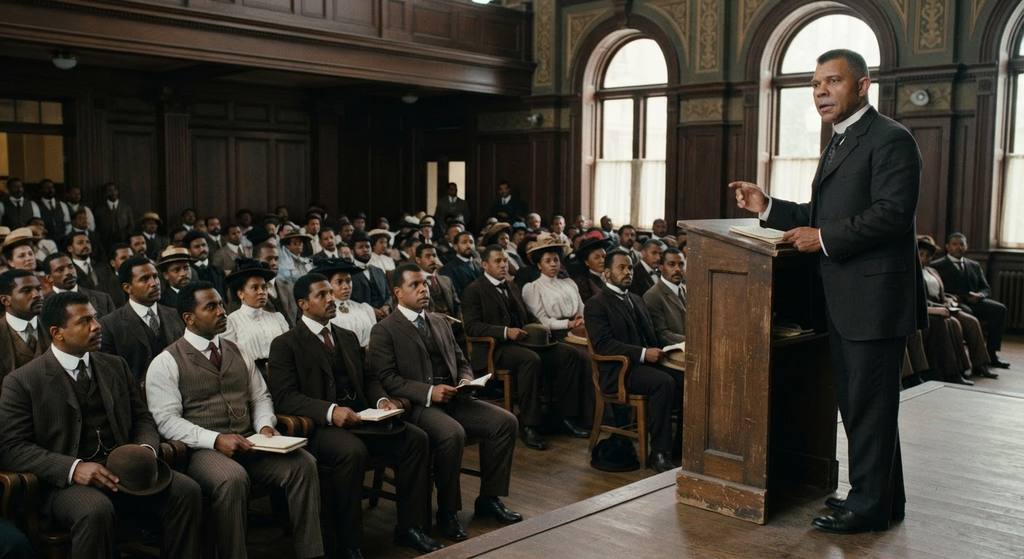
The Commercial League Strategy
Mobilizing business enterprise as a shield against political marginalization
Mobilizing Business Enterprise
 Scale
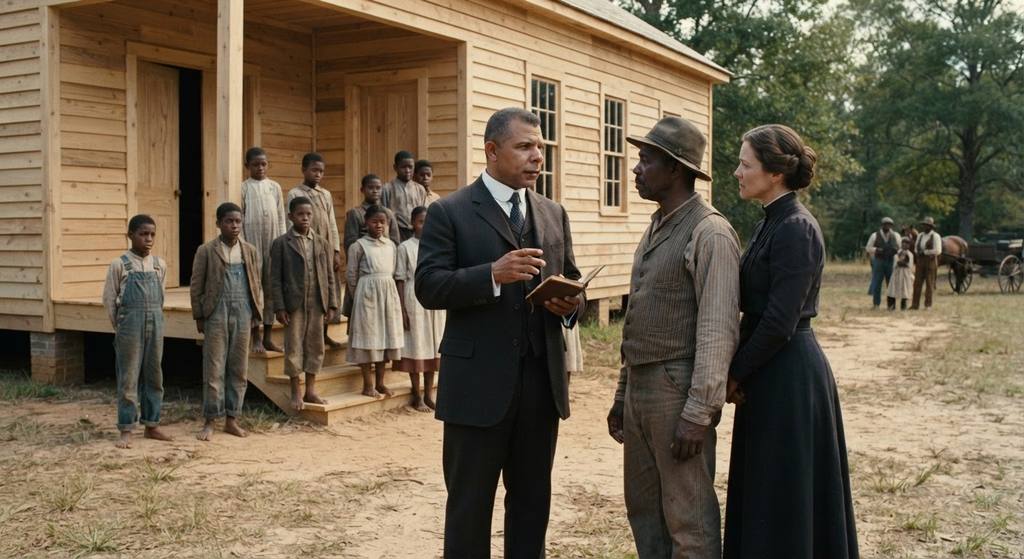
ScaleThe Rosenwald School Model
Structuring matching grants to force public investment in education
Structuring Public Investment
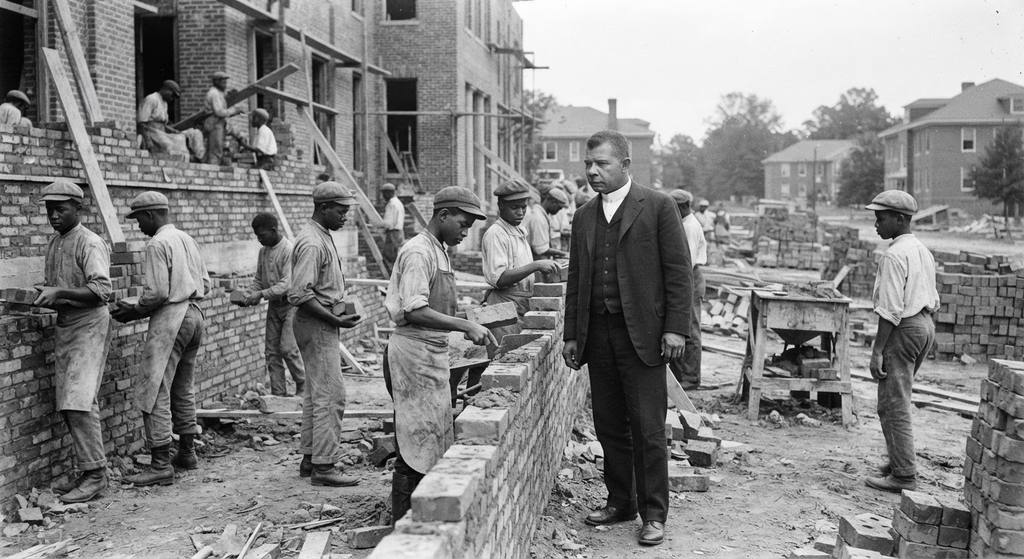
The Philosophy of Hand and Head
At Tuskegee, students did not merely study textbooks; they manufactured the bricks used to construct campus buildings, grew their own food, and mastered specialized trades. Washington argued that mastering tangible skills earned immediate economic leverage in the southern marketplace. Physical labor was framed not as subjection, but as the foundational stepping stone to property ownership and self-reliance.
Why it matters today: Ground your value in practical, indispensable skills before attempting to claim broader influence.
“How do I balance immediate skill-building with long-term ambition when starting with few resources?”
What can you ask Booker?
Leadership & Strategy
Resource Development
Character & Resilience
Try a live answer from Booker
Ask right here — no signup needed. The answer is generated live.
Live answer from Booker t Washington — no login needed for your first question.
Booker t Washington quotes — in his own words
14 of the lines Booker is remembered for, with the source for each one. Pick any quote and ask him what he actually meant by it.
Scroll sideways for more · Sources shown per quote; a few widely circulated lines are marked as attributed rather than verbatim.
Why Xminds is different
Related minds around Booker
No one thinks alone. These are the people who supported Booker — and the ones who pushed back. Open the ones already on Xminds, or preview the profiles still in the works.
Friendly minds
Teachers, family, students and allies who shaped Booker.

He provided substantial financial donations to the Tuskegee Institute and strongly backed Washington's emphasis on industrial education.

He relied on Washington for advice on Southern political appointments and hosted him at the White House for dinner in 1901.

He partnered with Washington to fund and build thousands of primary schools for Black children across the rural South.

He mentored Washington during his student years at Hampton and personally recommended him to lead the new school at Tuskegee.
Opponents
Rivals, accusers and adversaries who tested Booker.
He openly opposed Washington's Atlanta Compromise speech, advocating for immediate political equality and liberal arts education over vocational training.

She strongly condemned Washington's quiet strategy, arguing that his public silence on lynchings failed to protect Black lives.

He launched fierce editorial attacks against Washington's leadership and actively disrupted his public speeches in protest of his moderate stance.
Learn from history
People who talked to Booker also explored:
What people say about Booker
Ratings are collected right after a conversation ends. Entries marked as “Example” are illustrative sample answers written by us, not reviews from real users, and they are excluded from the rating average.
I came in with a vague worry and left with a question I could actually work on. It never lectured me — it kept asking until I heard my own answer.
Illustrative example
Ten minutes before a difficult meeting I talked it through here. Calmer, sharper, and the advice held up in the room.
Illustrative example
The voice call feels surprisingly natural. Occasionally a bit long-winded, but the substance is genuinely good.
Illustrative example
What I like most is that it stays in character and quotes real sources. It feels like reading with a patient tutor.
Illustrative example
I use it a few evenings a week to think out loud. It has quietly become part of how I make decisions.
Illustrative example
Better than I expected. I wish it remembered more from older conversations, but the depth of each session is excellent.
Illustrative example
Questions & answers
What was Booker T. Washington's main philosophy on education?
Booker T. Washington advocated for practical, industrial, and vocational training alongside moral character development. He believed that acquiring trade skills, property ownership, and economic independence provided the most secure foundation for African American uplift and long-term equality in society.
How did Booker T. Washington respond to segregation and Jim Crow laws?
While Booker T. Washington publicly urged compromise and patience to avoid racial violence, he secretly financed legal challenges against disenfranchisement, segregation laws, and unequal transportation facilities. His public posture emphasizing economic growth masked discreet civil rights advocacy.
What was the nature of the debate between Booker T. Washington and W. E. B. Du Bois?
The debate centered on strategy. Booker T. Washington prioritized practical trades and economic self-reliance, believing political rights would naturally follow. W. E. B. Du Bois argued for immediate political equality and higher academic education for the top intellects, known as the Talented Tenth.
What was the significance of Booker T. Washington's 1895 Atlanta address?
Delivered at the Cotton States Exposition, Booker T. Washington's Atlanta Compromise speech urged Black citizens to focus on agricultural and industrial progress while accepting social separation temporarily. It won national acclaim from white leaders and established Washington as a premier national leader.
How did Booker T. Washington build and expand Tuskegee Institute?
Booker T. Washington started Tuskegee in 1881 with minimal state funding, forty students, and dilapidated buildings. Through relentless fundraising, cultivating northern philanthropists, and having students construct their own campus buildings, he transformed Tuskegee into a thriving, world famous institution.
Can I really chat with Booker t Washington?
Yes. Xminds lets you chat with Booker t Washington as an AI mentor: the Booker t Washington AI is built from documented writings, speeches and biography, so you can ask Booker t Washington anything and get an answer in character rather than a search-results page. The first messages are free and no download is needed.
Can I call Booker t Washington and talk by voice?
You can. Press the call button to talk to Booker t Washington in a live voice conversation — the Booker t Washington AI voice replies in real time, and you can interrupt, follow up and switch language mid-call. Prefer typing? The same conversation works as text chat.
Is the Booker t Washington chatbot free?
Starting is free: every visitor gets a free daily allowance of messages and voice minutes with the Booker t Washington AI chatbot. Xminds Pro raises the limits for people who talk to their mentors every day.
How accurate is this Booker t Washington AI?
Booker t Washington is a respectful AI portrayal, not the real person and not a channel to them. Answers are grounded in the historical record and cited sources, and every conversation is clearly labelled as AI so you always know who you are talking to.
What should I ask Booker t Washington about?
Bring a real situation. People come for advice from Booker t Washington on the themes above, or treat it as an interview with Booker t Washington about a decision they are facing. You can speak to Booker t Washington about work, doubt or craft, and meet Booker t Washington again tomorrow to continue the same thread — it is a conversation, not a Booker t Washington simulator that repeats stock lines.
Also known as
Booker t Washington appears under several names and spellings across languages and sources. You can search for any of these on Xminds:
- Booker Taliaferro Washington
Ready to build enduring strength from the ground up?
Start your conversation with Booker T. Washington today.
10 free messages a day • no signup needed

Talk to Booker
10 free messages a day • no signup needed