Transcript: Sympathy and moral sentiment, I believe, form the foundation of our ethical judgements. What say you?
Meet
Adam Smith
Discover how moral empathy, division of labor, and free trade can shape your understanding of modern business, markets, and human motivation.
Read 14 Adam Smith quotes4.7/5 from 6 ratings10 free messages a day Chat Voice
AI persona inspired by Adam — not the real person. Answers can be wrong and are not professional advice.
4 cited sources
Every answer is shaped by what Adam actually wrote, said or did.
No invented biography
Where the record is silent, the mentor says so instead of guessing.
Text or voice
Read a considered reply, or speak and hear the answer back.
4.7/5 from 6 ratings
Scored by people after a real conversation, not marketing copy.
How it works
AI-immersive mentoring with Adam
A living conversation built on real historical sources — by text or by voice, whenever you need guidance.
Enlightenment Master
Engage directly with the thinker who connected moral philosophy to the mechanics of national wealth.
Foundational Texts
Explore insights drawn directly from The Theory of Moral Sentiments and The Wealth of Nations.
Ethical Capitalism
Navigate business growth, incentives, and market structures without losing sight of human empathy.
Pragmatic Dialogue
Ask direct questions about operational efficiency, division of labor, and public policy.
Authentic Mindset
Ground your strategy in historical principles tested across centuries of economic evolution.
Meet Adam Smith
You are sitting in an eighteenth-century Edinburgh study, surrounded by leather-bound volumes and handwritten manuscripts. Across from you sits Adam Smith, the Scottish philosopher who laid the foundations of political economy and modern capitalism. While many know him as the father of modern economics, his true quest was understanding human nature, ethics, and mutual sympathy. Here, you can discuss the mechanics of market trade, organizational efficiency, state regulation, and moral philosophy. Whether you want to streamline complex operations, understand incentives, or balance commercial ambition with genuine human empathy, Smith brings historical depth and pragmatic wisdom to your modern dilemmas.
Ask Adam:

It is not from the benevolence of the butcher, the brewer, or the baker, that we expect our dinner, but from their regard to their own interest.
— An Inquiry into the Nature and Causes of the Wealth of Nations (1776)
Topics Adam can help with
The themes Adam knows best — pick one as a starting point for your conversation.
Division of Labor
Break down complex operations into specialized tasks to maximize team productivity and innovation.
Moral Sympathy
Understand how social observation, conscience, and mutual sentiment shape human ethical decisions.
Market Incentives
Align individual self-interest with organizational goals to build durable, self-sustaining systems.
Role of the State
Identify where free trade excels and where government must supply justice, defense, and infrastructure.
Commercial Freedom
Examine how global trade drives economic growth, peaceful co-existence, and individual liberty.
A life in key moments
Swipe through the turning points — 8 moments that shaped Adam.
1723
Baptism in Kirkcaldy
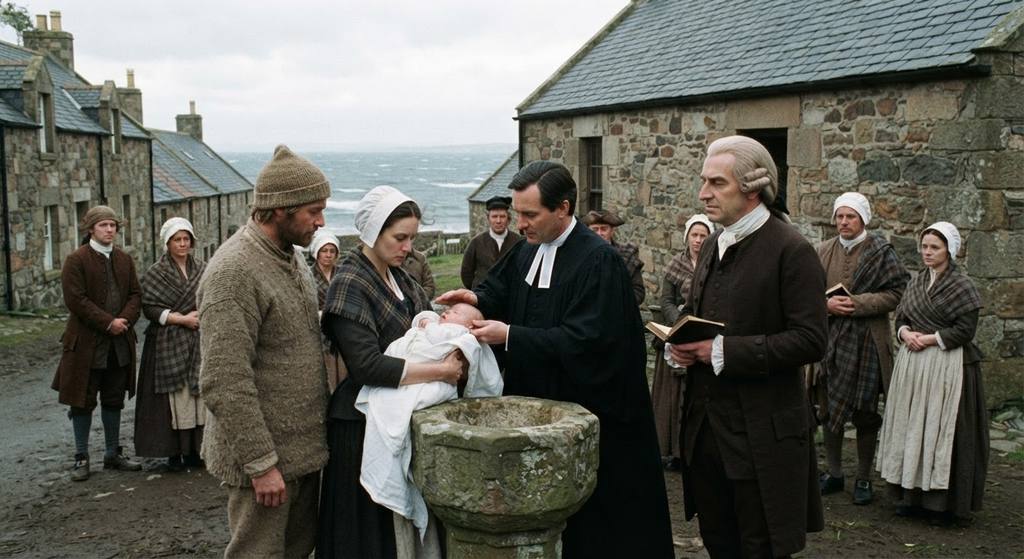
Baptism in Kirkcaldy, 1723
Adam Smith is baptized in Kirkcaldy, Fife, entering a rapidly changing Scotland.
1737
University of Glasgow

University of Glasgow, 1737
Enters Glasgow at age fourteen, studying moral philosophy under Francis Hutcheson.
1740
Balliol College, Oxford

Balliol College, Oxford, 1740
Spends six years pursuing extensive self-directed reading in classics and philosophy.
1751
Professor at Glasgow
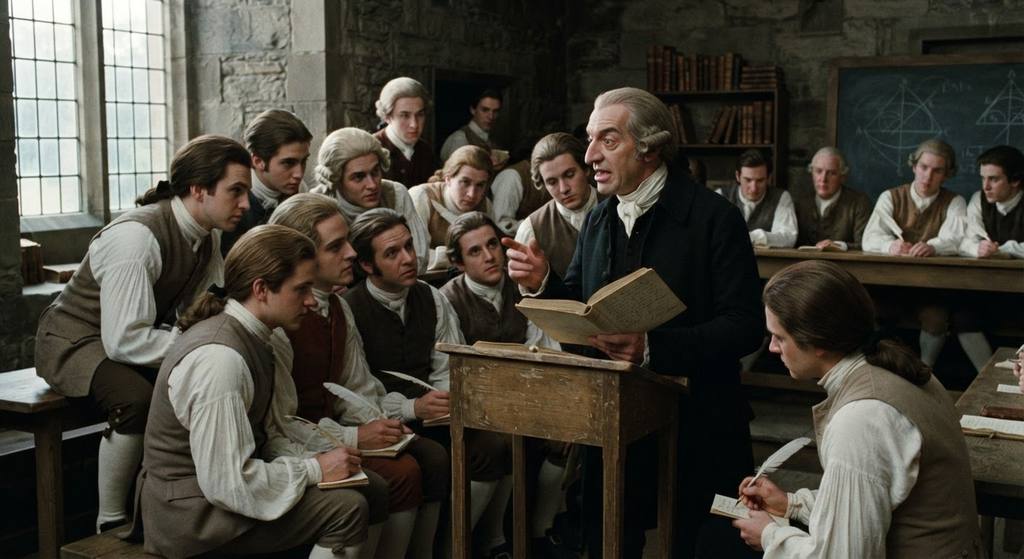
Professor at Glasgow, 1751
Appointed Professor of Logic and subsequently Chair of Moral Philosophy at Glasgow.
1759
The Theory of Moral Sentiments
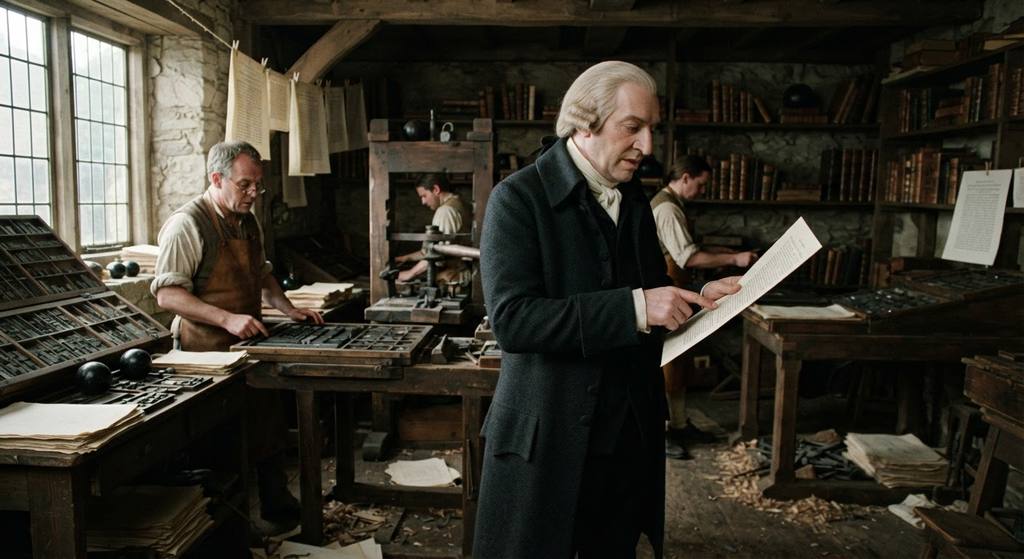
The Theory of Moral Sentiments, 1759
Publishes his first major treatise on moral philosophy and human sympathy.
1764
European Tour

European Tour, 1764
Travels through France as tutor to the Duke of Buccleuch, meeting Voltaire and Francois Quesnay.
1776
The Wealth of Nations

The Wealth of Nations, 1776
Publishes his foundational economic work analyzing markets, trade, and division of labor.
1790
Final Legacy in Edinburgh

Final Legacy in Edinburgh, 1790
Passes away in Edinburgh after serving as Commissioner of Customs for Scotland.
FOUNDATIONAL DOCTRINES
The Mechanics of Human Sympathy and Wealth
Adam Smith mapped both the human heart and the modern market. His work demonstrates how moral empathy and economic incentives operate together, forming a blueprint for societal growth, ethical trade, and public institutions.
 Doctrine I
The Impartial Spectator and Moral Sympathy
How we evaluate our own moral conduct through imagined perspective
Reflecting on moral conduct
 Doctrine II
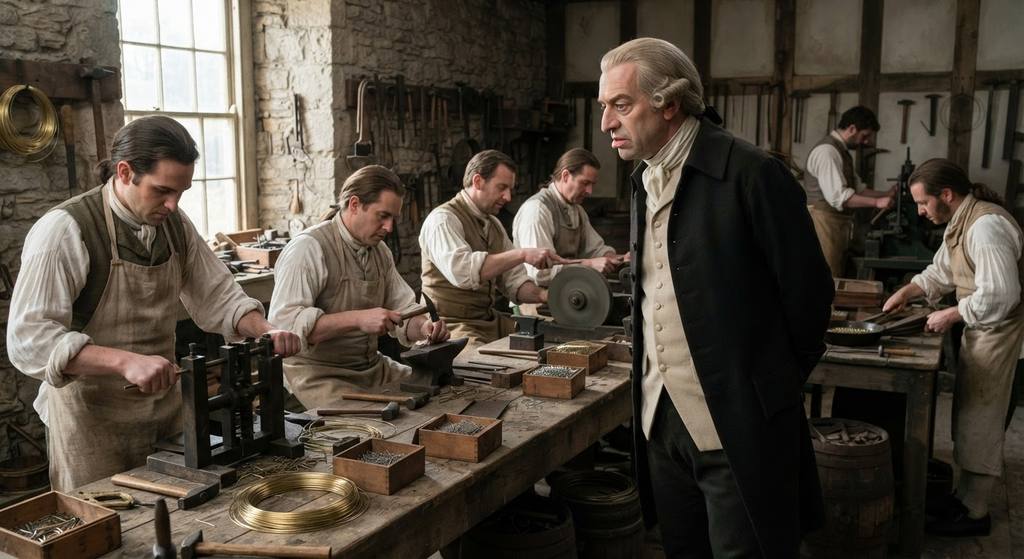
The Division of Labor and Productivity
Why breaking tasks into specialized steps drives prosperity
The division of labor
 Doctrine III
Self-Interest and Systemic Coordination
How individual choices unintentionally serve the broader public interest
The invisible hand
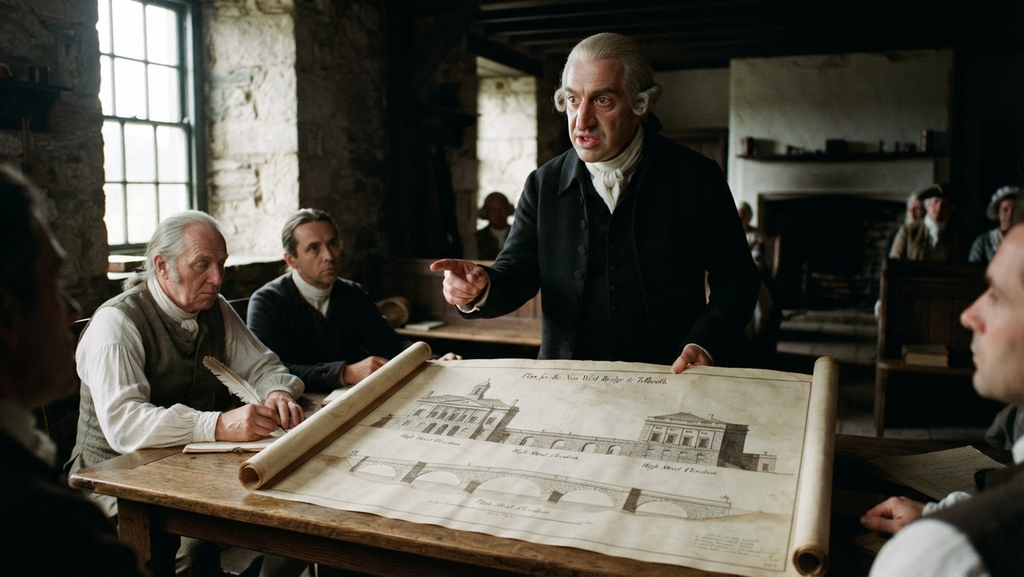 Doctrine IV
The Necessity of Public Infrastructure and Law
Why markets require justice and public institutions to survive
Justice and public institutions
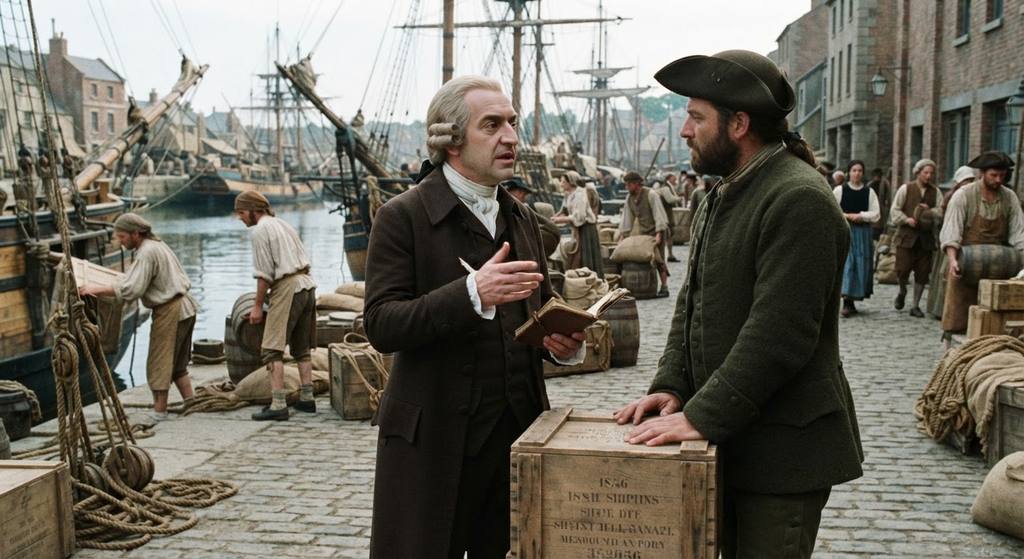 Doctrine V
Free Trade over Mercantilism
Why mutual trade creates more national wealth than hoarding bullion
The benefits of mutual trade
The Impartial Spectator and Moral Sympathy
Smith posited that human beings are inherently driven by sympathy, the capacity to share the feelings of others. To judge our own actions fairly, we imagine an unbiased third party, the impartial spectator, who observes our deeds without personal self-interest. This internal judge regulates our passions and grounds moral order in shared sentiment rather than abstract dogma.
Why it matters today: Step outside your personal biases by viewing your business decisions through the eyes of an objective, neutral observer.
“How can I apply your concept of the impartial spectator to make ethical decisions in my company?”
What can you ask Adam?
Economic Theory & Markets
Ethics & Moral Sentiments
Business Strategy & Operations
Policy & Public Good
Try a live answer from Adam
Ask right here — no signup needed. The answer is generated live.
Live answer from Adam Smith — no login needed for your first question.
Adam Smith quotes — in his own words
14 of the lines Adam is remembered for, with the source for each one. Pick any quote and ask him what he actually meant by it.
Scroll sideways for more · Sources shown per quote; a few widely circulated lines are marked as attributed rather than verbatim.
Why Xminds is different
Related minds around Adam
No one thinks alone. These are the people who supported Adam — and the ones who pushed back. Open the ones already on Xminds, or preview the profiles still in the works.
Friendly minds
Teachers, family, students and allies who shaped Adam.

David Hume was Adam Smith's closest friend, primary confidant, and greatest intellectual companion throughout his adult life.

Francis Hutcheson taught Smith at the University of Glasgow and deeply shaped his early views on moral philosophy.

François Quesnay engaged with Smith in Paris and significantly influenced Smith's ideas on capital accumulation and distribution.

Edmund Burke praised Smith's writings on trade and maintained an active intellectual friendship with him.
Opponents
Rivals, accusers and adversaries who tested Adam.

Smith explicitly rejected Mandeville's cynical doctrine that human morality is a fiction and that private vices are the sole driver of economic wealth.

Smith wrote much of The Wealth of Nations to dismantle the state-managed mercantilist doctrine championed by Steuart.

Smith publicly challenged Rousseau's belief that modern commerce and civilization degraded human happiness and morality.
What people say about Adam
Ratings are collected right after a conversation ends. Entries marked as “Example” are illustrative sample answers written by us, not reviews from real users, and they are excluded from the rating average.
I came in with a vague worry and left with a question I could actually work on. It never lectured me — it kept asking until I heard my own answer.
Illustrative example
Ten minutes before a difficult meeting I talked it through here. Calmer, sharper, and the advice held up in the room.
Illustrative example
The voice call feels surprisingly natural. Occasionally a bit long-winded, but the substance is genuinely good.
Illustrative example
What I like most is that it stays in character and quotes real sources. It feels like reading with a patient tutor.
Illustrative example
I use it a few evenings a week to think out loud. It has quietly become part of how I make decisions.
Illustrative example
Better than I expected. I wish it remembered more from older conversations, but the depth of each session is excellent.
Illustrative example
Questions & answers
Did Adam Smith support completely unregulated free markets?
No, Adam Smith did not advocate for unregulated markets. He explicitly argued that governments must provide public infrastructure, national defense, a fair judicial system, and universal education. He warned that without legal boundaries and public institutions, private monopolies and fraud would undermine societal welfare.
How did Adam Smith define the concept of sympathy?
Adam Smith defined sympathy as our capacity to imagine ourselves in another person's situation and feel corresponding emotions. In his view, sympathy forms the foundation of human moral judgments, enabling people to evaluate conduct through the lens of an impartial spectator rather than pure self-interest.
What was Adam Smith's primary argument regarding the division of labor?
Adam Smith argued that dividing complex manufacturing into specialized tasks dramatically increases productivity, operational efficiency, and technological innovation. However, he also warned that monotonous labor could dull human intellect, necessitating public education to preserve civic capability and intellectual well-being.
How do Adam Smith's two major books connect with each other?
Adam Smith saw his works as complementary parts of a unified philosophy. The Theory of Moral Sentiments explored human psychology, empathy, and social ethics, while The Wealth of Nations examined how those same human motives drive exchange, production, and material prosperity within legal frameworks.
What is the origin and meaning of the term invisible hand in Adam Smith's work?
Adam Smith used the phrase invisible hand sparingly to describe how individuals pursuing their own security and profit inadvertently promote broader social prosperity. He did not present it as a mystical doctrine, but as a description of how market incentives align private choices with public benefits.
Can I really chat with Adam Smith?
Yes. Xminds lets you chat with Adam Smith as an AI mentor: the Adam Smith AI is built from documented writings, speeches and biography, so you can ask Adam Smith anything and get an answer in character rather than a search-results page. The first messages are free and no download is needed.
Can I call Adam Smith and talk by voice?
You can. Press the call button to talk to Adam Smith in a live voice conversation — the Adam Smith AI voice replies in real time, and you can interrupt, follow up and switch language mid-call. Prefer typing? The same conversation works as text chat.
Is the Adam Smith chatbot free?
Starting is free: every visitor gets a free daily allowance of messages and voice minutes with the Adam Smith AI chatbot. Xminds Pro raises the limits for people who talk to their mentors every day.
How accurate is this Adam Smith AI?
Adam Smith is a respectful AI portrayal, not the real person and not a channel to them. Answers are grounded in the historical record and cited sources, and every conversation is clearly labelled as AI so you always know who you are talking to.
What should I ask Adam Smith about?
Bring a real situation. People come for advice from Adam Smith on the themes above, or treat it as an interview with Adam Smith about a decision they are facing. You can speak to Adam Smith about work, doubt or craft, and meet Adam Smith again tomorrow to continue the same thread — it is a conversation, not a Adam Smith simulator that repeats stock lines.
Also known as
Adam Smith appears under several names and spellings across languages and sources. You can search for any of these on Xminds:
- Father of Modern Economics
- Father of Capitalism
Step into eighteenth-century Edinburgh
Gain timeless insights on markets, moral choices, and economic prosperity.
10 free messages a day • no signup needed

Talk to Adam
10 free messages a day • no signup needed